Home 2024 (Page 9)

ADT Director Named to Z-Wave Board

Andrew Weir, ADT’s Director of Hardware Engineering at ADT, was recently named to the Z-Wave Board of Directors.

He lauded the Z-Wave Alliance’s stringent certification programme, which grants the Z-Wave-certified badge only to products that meet the highest standards of interoperability and quality.

“This certification ensures that all Z-Wave devices deliver reliable performance well before they are ever paired with ADT,” Weir said. “That provides essential confidence for us and for our customers.”

Founded in 2005, the Z-Wave Alliance – a global consortium dedicated to the advancement of Z-Wave technology – has more than 700 member companies, ranging from large multinationals to cutting-edge start-ups. It encourages innovation by providing resources to its members, including technical assistance, development tools and access to a network of industry experts.

When connecting an ADT security system, for example, with other smart home devices, it’s easy to take for granted that everything works together seamlessly and securely. There’s no need to juggle multiple apps or struggle to keep all the components in sync. This is powered by Z-Wave, a wireless communication protocol that creates a unified, secure network, making homes both smarter and safer.

ADT has long embraced Z-Wave for its ease and interoperability. This means that Z-Wave-certified devices — including lights, locks, thermostats and more — work together out of the box to ensure an efficient smart home setup.

The company’s approach extends beyond simply integrating Z-Wave products. ADT is a principal member of the Z-Wave Alliance and there have been numerous ADT employees on the Alliance’s board of directors.

“Our involvement with the Alliance means that we get to play a ground-level role in pushing the state-of-the-art, guaranteeing that ADT systems continue to work flawlessly with the widest variety of smart home solutions,” said Tim Rader, ADT’s Vice President of Product Engineering Quality and Labs.

“ADT and the Z-Wave Alliance will keep pushing the frontiers of interoperability and innovation,” Rader said. “As Z-Wave continues to evolve with Long Range, AI and more, we will stay proactively involved in the pursuit of even more sophisticated and user-friendly solutions.”

In the coming years, ADT plans to work with Z-Wave to empower fully autonomous homes, where every device across an entire property intuitively adapts to the user’s habits and needs. Long Range and AI-enabled products will optimize energy use, security and comfort across distances, creating a truly intelligent and connected living environment.

Increasing Appetite for Electronic Home Locks to Drive Sales to $5.6 B by 2030

The global electronic home locks market size is expected to reach USD 5.68 billion by 2030, registering to grow at a CAGR of 8.1% from 2024 to 2030 according to a new report by Grand View Research, Inc. High demand for home automation and advanced security technologies, such as electronics home locks, is expected to be the key factors driving the market. Rising construction activities in developed countries including U.S., Germany, U.K., and France are also expected to assist in growth of this market.

Moreover, integration of innovative technologies, such as Near-Field Communication (NFC), Bluetooth, and voice and face recognition, is expected to boost the product demand. North America was the dominant regional market in 2018 and is estimated to retain its leading position throughout the forecast period.

Geographical spread

The growth is attributed to the rapid expansion of the construction industry, especially in residential sector, in the region. However, Asia Pacific is projected to witness the fastest growth over the forecast period due to high demand for advanced security solutions. The product demand is driven by the increasing residential construction activities, the trend of home automation, and disposable income levels in the region. In addition, a rising number of branded retail outlets, especially in India and China, is anticipated to contribute to the market in growth. The keypad segment held the largest market revenue share of 45.8% in 2023, although the biometrics segment is beginning to show movement.

 Smart phone and exposure to digital media help drive the market

Residential segment dominated the market in 2023. The growing concern for home security has driven homeowners to seek advanced security solutions, with electronic locks offering enhanced protection through features like remote access, biometric recognition, and real-time alerts.

Prominent companies in the electronic home locks market, and mentioned by the researchers include, Assa Abloy; Vivint; Honeywell; Allegion; Dormakaba; Godrej; Spectrum Brands; Samsung; Salto Systems; and Master Lock Company.

ASSA ABLOY Acquires Level Lock in the US

ASSA ABLOY has acquired Level Lock, a technology solutions business based in Redwood City, California. “This acquisition is an exciting technological addition to the ASSA ABLOY Group and will provide complementary growth opportunities,” says Nico Delvaux, President and CEO of ASSA ABLOY.

“The acquisition of Level Lock complements ASSA ABLOY’s technology portfolio and strengthens our digital offering across multiple businesses in the Americas division,” says Lucas Boselli, Executive Vice President of ASSA ABLOY and Head of the Americas Division. “Their innovative platform provides an easy transition from mechanical locking to digital access solutions with minimal effort.”

Level Lock was founded in 2016 and has some 70 employees. The main office is located in Redwood City, California, USA. Sales for 2023 amounted to about MUSD 16.

Billions of Dollars in Fines for Google and Apple from European Court

After a 14-year legal process, the EU Court has upheld a fine of 2.4 billion euros against Google, which is accused of abusing its position in internet search.

According to the ruling, the company directed visitors exclusively to its own Google Shopping service through search results in 13 European countries, causing significant harm to competitors.

This decision confirms the EU Commission’s previous ruling from 2017, which imposed the same fine on Google. Google had appealed this decision, which has now been officially rejected.

Apple also received a hefty fine and will have to return 13 billion euros to the Irish government due to illegal state aid.

The EU Court also upheld the European Commission’s 2016 decision that Ireland had granted illegal state aid of 13 billion euros to Apple, which the company now has to repay. This aid concerned the tax treatment of profits from Apple’s activities outside the US.

Axis Begins Roll Out of FIPS 140-3 Level 3 Compliant Line-up

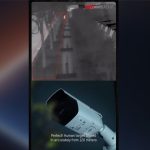
With the introduction of the Axis Q1809-LE bullet camera, Axis is starting to deliver on its promise to provide FIPS 140-3 Level 3-compliant products under the Federal Information Processing Standards.

The FIPS 140-3 standard specifies security requirements for cryptographic modules that process and ensure the confidentiality and integrity of data. The move improves the cyber security posture of customers in US and Canadian federal agencies and critical infrastructure who must meet FIPS 140-3-compliancy requirements.

Axis stakes its claim to be the first to launch a network security device with an embedded discrete secure element validated to the state-of-the-art FIPS 140-3 Standard Level 3. Thus, Axis customers in government and critical infrastructure can be assured that their devices live up to the security levels defined by the US National Institute of Standards and Technology (NIST) and required by law. FIPS 140-3 certification assesses four levels of security. At Level 3, hardware is expected to prevent tampering, and access must be identity based. The embedded discrete secure element, Edgelock SE052F, is from NXP Semiconductors, a world leader in secure connectivity solutions for embedded applications and known for its trusted security solutions, including securing today’s smartphones, bank cards and passports.

More devices with FIPS 140-3-validated secure elements on the way

Going forward, Axis will continue to expand its range of FIPS 140-3 certified devices by embedding the new secure element in all its upcoming network products. FIPS 140-3-compliance will be available for use cases ranging from surveillance to business optimization (through analytics), to access control, and audio. Even organisations that are not required to comply with the high FIPS standards will benefit as they can also be confident that their systems are interoperable and will meet long-term security requirements.

Protection from the inside out

Ongoing investment in a portfolio equipped with industry-standard cryptographic computing modules is part of a multi-layer Axis strategy. Secure storage and computing of cryptographic keys is just one component of the hardware-based cyber security platform Axis Edge Vault. Axis Edge Vault also includes features like secure boot, and the IEEE 802.1AR-compliant Axis device ID that verifies the identity and authenticity of Axis devices.

Honeywell Collaborates With Cisco on AI Project

Honeywell has entered into a collaboration with Cisco on an AI-powered solution that automatically adapts building systems based on fluctuating usage levels, reducing energy consumption and optimising the environment for worker productivity and comfort.

By combining Honeywell Forge Sustainability+ for Buildings and Cisco Spaces, the joint effort uses AI and machine learning to help monitor assets to adjust heating, ventilation and air conditioning (HVAC) systems based on real-time occupancy for a single building or an entire campus.

Cisco Spaces collects occupancy and environmental data from Cisco network infrastructure, environmental sensors, collaboration devices and third-party IoT devices without the need to add additional hardware. Honeywell Forge Sustainability+ for Buildings then uses this information to help improve energy efficiency and provide insights on building utilisation. Together with Honeywell’s latest Optimizer Advanced Controller for Buildings, this real-time occupancy data can help further improve energy efficiency for greater resiliency.

Room temperatures, lighting and ventilation are autonomously adjusted based on where people are in the building and customer selected controls. This ultimately helps automate daily building operations, optimise energy use and drive employee comfort while monitoring GHG emissions.

Fine-tuning by harnessing the power of AI

“Buildings have historically been a substantial contributor to overall carbon emissions, but with the rise of hybrid work, operators now have the opportunity to take a fresh look at addressing their environmental impact by moving their HVAC systems away from consistent 9-to-5 schedules,” said Greg Turner, Chief Technology Officer of Honeywell’s Building Automation segment. “By tapping into a building’s existing technology infrastructure and harnessing the power of AI to fine-tune heating and cooling according to zone occupancy levels, our collaboration with Cisco empowers building owners to gain control of their environment and significantly curb emissions.”

The collaboration is part of Honeywell’s broader effort to help companies reduce their buildings’ environmental footprint and supports Honeywell’s alignment of its portfolio to three compelling megatrends, including automation and energy transition. It is also enabled by Cisco’s Country Digital Acceleration programme, a global initiative that collaborates with government and private sector leaders to build sustainable, secure and inclusive communities powered by ethical and innovative technology solutions.

An era of real-time data insights

“The convergence of IT and OT infrastructures, seamlessly interoperable with leading building management system (BMS) platforms, ushers in an era of real-time data insights that can optimise energy usage, regardless of building age or retrofit status,” said Wes Sylvester, Vice President of Cisco’s Industry Solutions Group. “By working closely with Honeywell, we’re enabling building operators with enhanced visibility and control over operational data, setting a new standard for energy efficiency and reduced environmental impact.”

Unlock new possibilities for digital access management, indoors or outdoors

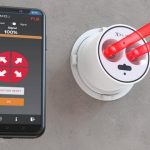
London, September 2024 –Fences, gates, storage cages, racks, containers, tool cabinets and other non-standard openings often require restricted access and greater control. In many cases, they are secured with mechanical locking, rather than connected to an access control system, creating workflow inefficiencies. For these openings – and many more, in all types of premises – the new Aperio® P100 Wireless Padlock now provides convenient, connected digital protection.

Wireless cylinders, escutcheons, security locks and locking handles can control access through many different types of opening. But they fall short when it comes to protecting several key spaces around industrial, commercial and other premises, where time-consuming mechanical security and manual checking are often still in use. The result is inefficiency in workflows and higher costs to the business.

Now, with the new Aperio P100 Padlock, there is a digital solution. It brings flexible control to new places, whatever access or security management system is running. Businesses can say goodbye to security gaps and mechanical solutions at storage cages, cabinets or gates – guarding inventory, protecting sensitive areas, or tightening up health and safety protocols.

“By adding the P100 Wireless Padlock to the Aperio family of battery-powered digital devices, we give customers the opportunity to extend control and coverage quickly and cost-efficiently,” says Robert Eriksson, Head of Wireless Door Lock Product Management at ASSA ABLOY Opening Solutions EMEIA. “Organizations can secure and simplify access like never before. With ASSA ABLOY, they digitalize with confidence.”

Compatibility, reliability and a choice of credentials

As with every device in the Aperio range, compatibility comes as standard with the P100 Padlock. When extending an access system with Aperio, facility managers continue to manage every lock and user from their existing interface and a single database. They can deploy an Aperio device at almost any interior access point — including wooden, metal and glass doors, as well as cabinets, cupboards, server racks and now, indoor and outdoor gates, fences and cages with the new P100.

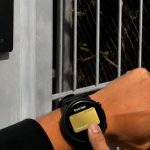
For administrator flexibility, all Aperio devices work with the widest range of RFID technologies and protocols, in both Online and Offline mode. Mobile credentials offer optional keyless access for even greater convenience: Users already carry their smartphone everywhere and Aperio Mobile Access supports NFC unlocking, which is easy and intuitive. Users simply present their phone at the device. They don’t even need to open an app.

The new Aperio P100 is IP66-rated for added durability and weatherproofing. Typical battery life is two years under normal conditions. And to make management simpler for security teams, Aperio’s audit trail support ensures they always know who accessed which areas, and when – making incident investigation faster. Remote unlocking in online mode keeps them in control from anywhere, even in an emergency.

“Aperio already works with over 100 different security, building management and access control systems around the world — and this number is still growing,” Eriksson adds.

“The new P100 Wireless Padlock brings the award-winning Aperio technology to a whole new range of indoor and outdoor applications, to help businesses get their access ready for what’s ahead.”

To learn more about Aperio® wireless digital access, visit https://campaigns.assaabloyopeningsolutions.eu/aperio

XPR Access Control Multi-Technology Readers

The Future of Secure and Inovative Access Control Solutions

XPR’s multi-technology readers are engineered to support a wide range of credentials, making them an ideal choice for organizations with diverse access needs. Whether your facility uses Mifare Encrypted cards, Proximity cards, Smart cards, or even Mobile ID, XPR’s readers are equipped to handle them all. This adaptability ensures that as your security needs to evolve or your technology upgrades, XPR readers remain relevant and functional.

Seamless Integration

One of the standout features of XPR readers is their ability to integrate seamlessly with existing access control systems. Organizations can enhance their security infrastructure without the need for a complete overhaul. XPR’s multi-technology readers are designed to work harmoniously with various access control platforms, offering a straightforward upgrade path that leverages your current system’s capabilities.

Enhanced Security Features

Security is at the core of XPR’s design philosophy. The multi-technology readers are equipped with advanced encryption protocols and tamper protection, ensuring that access credentials are protected against unauthorized duplication and interception. Additionally, these readers provide real-time monitoring and alerts, offering enhanced situational awareness and response capabilities.

Built for Extreme Conditions

Built to withstand various environmental conditions, XPR’s readers are crafted from high-quality polycarbonate copolymer that ensure durability and long-term performance. From high-traffic areas to outdoor installations, these readers are engineered to operate reliably in diverse settings, minimizing maintenance and replacement costs.

Future-Proof Technology

As technology continues to advance, XPR’s multi-technology readers are designed with future-proofing in mind. Their modular architecture allows for easy upgrades and integration with emerging technologies, ensuring that your access control system remains cutting-edge for years to come.

Environmental Responsibility

In addition to their technological advantages, XPR is committed to environmental sustainability. The multi-technology readers are manufactured with eco-friendly practices and materials, aligning with the global push towards greener, more sustainable technology solutions.

Conclusion

The XPR Access Control Multi-Technology Readers represent a significant leap forward in access control technology, offering unmatched flexibility, enhanced security, and future-proof capabilities. By integrating these readers into your security infrastructure, you are not only investing in a versatile and reliable solution but also preparing your organization for the evolving landscape of access control technology.

For more information on XPR’s multi-technology readers and how they can transform your security system, visit https://www.xprgroup.com or contact us on a.andevski@xprgroup.com for a personalized consultation.

AUREL MSR: Why Aren’t All Gas Sensors Mounted at the Same Height?


Different gas characteristics and complex interactions in the environment mean that not all gases are detected at the same height. The height and positioning of a gas sensor are therefore of crucial importance for detecting dangerous gases and vapours early on.

Why are gas sensors mounted at different heights?

Gas density

Not all gases are detected at the same height, as gases concentrate at different heights due to their density. A gas may be heavier or lighter than the air. Heavy gases tend to sink downward, while lighter gases rise upward. As a result, a heavy gas that remains near the floor will not be detected in higher areas and a light gas that rises upward will not be detected near the floor.

For example, carbon monoxide in the garage is measured at almost the same density as air and at breathing height. Carbon dioxide, on the other hand, has a relative density of 1.53 and is measured near the floor. Methane has a relative density of 0.56, moves quickly to the ceiling and is measured in that area.

Gas distribution

Gas distribution in the environment is also of crucial importance. The way in which a gas is distributed in a room depends on various factors, such as ventilation, temperature and the position of the source.

The concentration of gases is thus higher near the potential source than it is near the floor or ceiling. Positioning the gas sensor correctly ensures that a hazardous gas concentration will be detected immediately, before it spreads through the room.

Reaction times and sensitivity

Different reaction times and gas sensor sensitivity are also of crucial importance. A gas sensor located near the floor will react to gas that accumulates there faster than a gas sensor near the ceiling.

What else affects the gas sensor height?

Environmental conditions: Environmental conditions in the industry vary. By placing gas sensors at a variety of heights, differences in temperature, air current, or gas distribution, for example, are easier to detect.

Adapting to process requirements: Some processes require gas sensors to be placed in specific locations in order to monitor and control the relevant parameters. This is particularly true of complex production environments such as beverage manufacturing and automatic processing machines. The atmospheres in these areas are often made up of inert gas, which changes the specific density of gases relative to one another. One example of this is measuring oxygen in an argon atmosphere.

Safety standards: Placing gas sensors at different heights helps to ensure safety by monitoring potential hazards or gas leakages on different levels of a building or a plant and triggering an immediate alarm in the event of a hazard. These safety standards may be required by standards. So for example, a sensor height of 1.5-1.8 m is defined in garages for measuring carbon monoxide.

How are the gas sensors mounted?

The gas sensors are mounted in housing that protects them from outside influences. For comprehensive IP protection, the housing is installed with the gas sensor head pointing down. If the gas sensor is mounted at the wrong height, for example, the gas cannot be detected early. If the gas sensor is mounted mechanically incorrectly, the sensor’s IP protection is not guaranteed. It must also be clarified whether there is an air current and whether the gas sensor should be mounted on the ceiling or floor.

In garages, for example, there is a static current. A sensor here can detect the gases within a radius of 7-11 m, corresponding to approx. 400 m².

Which type of connection does MSR-Electronic offer?

MSR-Electronic uses a 3-conductor system for analogue gas sensor connections and a 4-conductor system for bus connections. The 3-conductor connector for the 4-20 mA connection is a stable connection type for an analogue connection. Each individual gas sensor is connected to the controller by means of complex wiring.

With the bus connection, on the other hand, only one cable is placed leading from the controller to the area being monitored. The individual bus users, such as “small light bulbs”, are mounted on a string of lights. The gas sensors are addressed here and communicate digitally with the controller.

VIVOTEK: 83 Fixed Camera Built for Magic, Priced for Value

The 9383 is your gateway to smarter security. As our first AI camera in the C-Series, it boasts an advanced Sony image sensor coupled with STARVIS 2 technology, delivering 2.5x greater dynamic range and light sensitivity. With Smart VCA, Vision Object Analytics, and Deep Search capabilities, it’s a powerhouse of AI intelligence, making your security solutions simpler, smarter, and safer.

  • 30 fps @ 2560×1920
  • 265 Compression Technology with Smart Stream III
  • SNV (Supreme Night Visibility) for Low Light Conditions
  • WDR Pro for Unparalleled Visibility in Extremely Bright and Dark Environments
  • 30M Smart IR III
  • Signed Firmware and Secure Boot
  • Smart Motion Detection
  • Trend Micro IoT Security
  • Smart VCA and Vision Object Analytics


AI Powerhouse

Class-leading AI features in our entry-tier series, providing you with advanced analytics and vision object analytics capabilities for unmatched security solutions. Enhance your investigative efficiency with potent data revealed by the 83 series, identifying people and vehicles by their distinctive attributes such as color, gender, and type. Simplify searches and minimize redundant results with precise object tracing.

Object Detection Performance

Class-leading AI Processor effortlessly manages over 25 detection objects for advanced AI analytics.

Smart VCA: AI-Powered Video Analytics on Edge

Empowers the 83 series to collect more valuable scene awareness data than traditional frame-difference-based video motion detection. Operating as edge-based applications, Smart VCA also minimizes bandwidth and storage usage. Smart VCA is designed to improve efficiency and reduce operators’ workloads.

Imaging Performance

Daylight Clarity

Enjoy class-leading image performance with the 9383 camera. Its advanced Sony image sensor and STARVIS 2 technology deliver stunning daytime visuals with vibrant colors and balanced exposure. Benefit from a 2.5x increase in dynamic range and light sensitivity for clear, vivid details in any lighting condition

Enhanced Visibility in Harsh Lighting

Superior image quality with WDR technology. Even in challenging scenarios like an office setting with sunlight streaming through the window, the 83 series maintains clear visibility, minimizing glare and shadowing for enhanced detail and accuracy in surveillance footage.

Night Vision

Exceptional low-light color performance with sharper, non-overblown imagery around light sources. The 83 series ensures balanced exposure between dark and bright regions, delivering evenly-lit, well-exposed footage with balanced contrast. Enjoy clear and visible images, even within LED backlit displays, for enhanced surveillance effectiveness.

Cybersecurity

Signed Firmware – VIVOTEK Authorized Firmware

VIVOTEK’s signed firmware requires a digital signature in the firmware and verification of the signature by VIVOTEK, thereby ensuring that users can trust the firmware has not been tampered with. A device with signed firmware can validate the firmware before allowing installation. By applying the signed certificates and keys to the firmware, quarantine that all data are secured and encrypted without any exposure and alter risk from hackers.

Secure Boot – Secure from the Beginning

By applying VIVOTEK’s signed firmware, the camera can securely startup step by step. Secure boot is a mechanism that protects the firmware of the product installed. During the boot up process, secure boot blocks unauthenticated or tampered code. Additionally, signed firmware ensures that camera restores safely to factory default, and secure boot ensures that unauthenticated code is rejected, protecting the camera system from attacks or infections by malicious external code.

Secure VADP – Enhanced Security for 3rd Party Integration

VIVOTEK Application Development Platform (VADP) provides an open platform that enables developers to add on features for specific scenarios or applications with VIVOTEK’s cameras. Securing the VADP with enhanced security is critical. Applying Secure VADP with digital signature and encryption capabilities makes it safer and more reliable for third-party integration.