Home Articles posted by a&s Adria (Page 210)

Partizan Cameras in Al Barsha

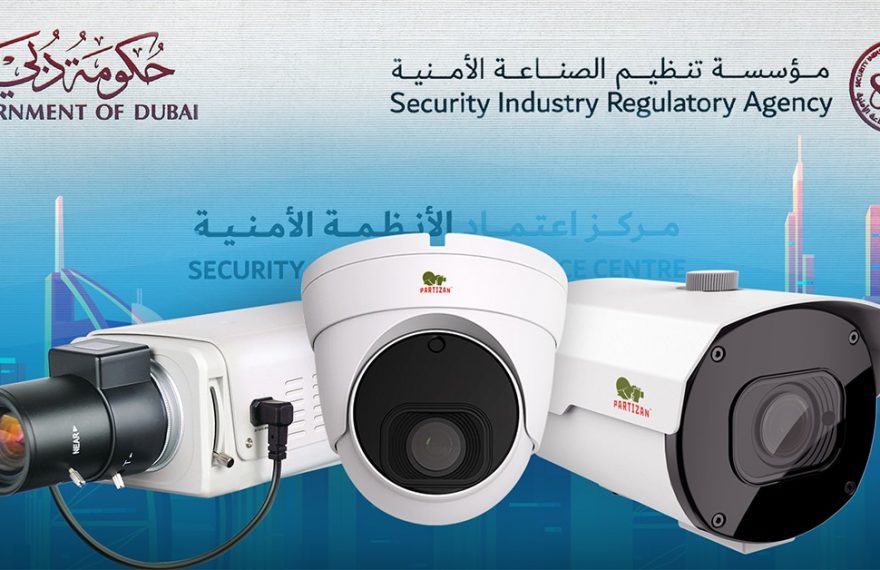
Partizan has implemented another good project in UAE, Dubai, which is approved by Dubai police and local consultants. Partizan’s local customer, one of the biggest system integrators in the area, had installed 50+ cameras to the new residential building in Al Barsha, straight after Mall of the Emirates.

Partizan True WDR cameras have a very high sensitivity and great wide dynamic range in small body size with minimum weight. It is makes these cameras ideal for indoor installation in different lighting and placement conditions.
2 MP AHD cameras by Partizan is an excellent Full HD dome cameras for indoor video surveillance. The 1/2.8″ Full HD Sony Ultra sensor gives you a clear image and high detailing of the video during the day and high quality of the picture at a distance of up to 20 meters at night.

When you are buying Partizan, you are buying peace of mind with best in class support without brakes, 3 years warranty for all models, and many more bonuses, which will make your life and business safer.

In France, SMARTair® access control plays a key role in school safety planning

London, April 2019 – The school gate is more than just a physical barrier. The moment a child passes through, the school assumes their duty of care. That’s why regulations in France stipulate schools must verify the identity of everyone who enters. And the gate is where SMARTair® now begins its work at Lycée Kreisker, in Brittany.

This large, mixed-age school had high standards for a prospective new access control system. The security of the site and safety of students and staff who use it every day was a must.

The school also wanted to get rid of keys. Their previous, stressful solution involved managing two separate key systems. However, managers assumed any user-friendly electronic system would break the budget. They also assumed an electronic access system would be too complicated to manage and take too long to deliver and install.

Wireless access control from JPM
The cost-effective answer was an access control system with battery-powered locks. The first phase of SMARTair® system installation is now complete. SMARTair® readers control access through the main school gate — a critical first line of defence against intrusion. Classrooms and the intern room are protected with SMARTair® wireless escutcheons. Around 2,000 credentials have been issued to staff and students.

Basic administration is carried out in-house by non-technical staff, with the easy-to-use SMARTair® software. System configuration and maintenance was easily and affordably outsourced. So, for example, selected doors can be pre-programmed to remain open between 9am and 5pm, but require a credential for out-of-hours access.

Affordability was another issue, and common to many public sector institutions. At Lycée Kreisker, there was insufficient budget for an elaborate, expensive access control system, as wired systems can be. With SMARTair® there’s no wiring around the door, so installation is fast and unobtrusive. There are multiple SMARTair® devices to protect different types of opening, so minimal alterations to existing doors are required.

France’s PPMS
SMARTair® plays a key role in the Lycée’s regulatory duty to protect staff and students during an emergency, including terrorism or natural disaster: the “plan for implementing security” (or PPMS)*.

SMARTair® ensures only authorised people enter the building. Under the PPMS, real-time control enabled by SMARTair® also allows staff and children to be safely confined within locked classrooms, should they need to await emergency services.

With the myth that powerful access control must be expensive now shattered, Lycée Kresiker plans to extend the SMARTair® installation to all doors. The process of becoming keyless — and stress-free — is under way.

To learn more about how SMARTair® can make your school safer — and save you time and expense — visit https://campaigns.assaabloyopeningsolutions.eu/smartair-schools

Rigorous SECOTA test for the security of safes

A safe is usually a purchase for life. But how secure are certified safes? And are the burglary tests carried out by specialised laboratories at all comparable in view of the large number of different types of safe constructions and multitude of interpretation possibilities that can arise when reading a Standard?

In the independent SECOTA (Security, Equivalent, Certification, Organization, Testing and Auditing) project, laboratories, testing and certification bodies and other representatives from the physical security and insurance industry are working together to clarify these issues. The aim is to increase transparency for customers and insurers in a confusing market.

Comparison tests start

After extensive preparations, the comparison tests will now begin. In March and April 2019, test institutes from six countries will be using angle grinders, oxy acetylene torches and other typical burglar tools to test a total of 126 specimens produced specifically for the tests. Each laboratory will carry out 35 tests with various tools under the independent supervision of SECOTA.

“The tests are designed in such a way that a certain basic knowledge of safe barrier materials and the handling of burglary tools is required,” explains project manager Falko Adomat, who is one of the initiators of SECOTA as Deputy Managing Director of the European Security Systems Association (ESSA) e.V. Identical sets, each with 16 test specimens, had been produced in advance for the institutes. These cover the entire range of barrier materials, from simple sheets of metal to sandwich constructions and high-strength armouring.

Open to all testing laboratories

“This is the largest independent comparison test to date in accordance with EN 1143-1,” reports Adomat. Each laboratory starts with the same requirements and will perform the same test as all others. “In addition, we have determined from the start that every laboratory is welcome – regardless of association affiliations, links to certification bodies, size or geographical origin,” he clarifies. In addition to the six participating bodies, other testing laboratories have already expressed their interest.

In recent months, an independent working group with 25 international members from all sectors of the physical security and insurance industry has developed the concept for the comparison tests based on a holistic approach. According to Adomat, the cross-industry discussion process in the SECOTA project makes a decisive contribution to ensuring that tests and certifications in Europe are comparable and comprehensible for all stakeholders. “All participants are determined to continuously improve the quality of the tests in the course of the harmonisation process that is now beginning,” he reports. For this reason, a transparent exchange of information has been agreed in the project.

First test results in May 2019

After completion of the tests, the SECOTA working group will evaluate the results. An internal discussion will follow in May 2019. In the medium term, the laboratories will announce their participation in the comparison test and thus provide strong evidence of their independently tested quality.

The working group has agreed not to leave it at this one test. Rather, it is planned to create permanent transparency for insurers and customers. “To this end, quality control must be reinforced by regular comparison tests,” clarifies the project manager. This is because private consumers, commercial users of secure storage units and insurers are dependent on valid information on the actual security level of tested safes. This information can only be obtained through an independent, reputable authority that checks how testing laboratories interpret the European standard EN 1143-1 and whether they meet the industry benchmarks. “We want to establish this authority with the SECOTA project,” says Adomat. For this reason, laboratories that have not yet participated in the project are cordially invited to participate in the harmonization process and in future comparison tests.

Rigorozni SECOTA testovi sigurnosti sefova

Sef je obično kupovina za život. Ali koliko su certificirani sefovi sigurni? I jesu li protivprovalni testovi koje provode specijalizirane laboratorije uopće međusobno usporedivi s obzirom na veliki broj različitih konstrukcija sefova i mnoštvo mogućnosti interpretacije koje se mogu javiti prilikom razumijevanja standarda?

U nezavisnom projektu SECOTA (Security, Equivalent, Certification, Organisation, Testing and Auditing) laboratorije, tijela za testiranje i certifikaciju i drugi predstavnici iz sektora sigurnosti i osiguravajućih kuća zajedno rade na razjašnjavanju ovih pitanja. Cilj je povećati transparentnost za klijente i osiguravatelje.

Početak usporednih testova

Nakon opsežnih priprema usporedni testovi počeli su u martu i trajat će do kraja aprila 2019. Instituti za testiranje iz šest zemalja koristit će ugaone brusilice, oksiacetilenske baklje i druge tipične provalne alate kako bi testirali ukupno 126 primjeraka proizvedenih namjenski za testiranje. Svaka laboratorija će obaviti 35 testova pomoću različitih alata pod nadzorom SECOTA-e.

“Testovi su osmišljeni tako da je potrebno određeno osnovno znanje o sigurnim barijernim materijalima i rukovanju alatom za provalu”, objašnjava menadžer projekta Falko Adomat, zamjenik generalnog direktora Evropske asocijacije sigurnosnih sistema (ESSA) i jedan od inicijatora projekta SECOTA. Identični setovi, svaki sa 16 testnih primjeraka, unaprijed su proizvedeni za institute. Oni pokrivaju cijeli spektar barijernih materijala, od jednostavnih metalnih ploča do sendvič-konstrukcija i visokootporne armature.

Otvoreno za sve testne laboratorije

“Ovo je do sada najveći nezavisni usporedni test u skladu s EN 1143-1 standardom”, kaže Adomat. Svaka laboratorija počinje s istim zahtjevima i izvodi isti test kao i svi ostali. “Osim toga, mi smo od početka utvrdili da je svaka laboratorija dobrodošla – bez obzira na pripadnost udruženjima, veze s certifikacijskim organima, veličinom ili mjestom porijekla”, pojašnjava on. Uz šest već uključenih tijela, i druge testne laboratorije već su izrazile interes za učešće u projektu.

Posljednjih mjeseci nezavisna radna grupa sa 25 međunarodnih članova iz svih sektora sigurnosti i osiguranja razvila je koncept usporednih testova koristeći holistički pristup. Prema Adomatu, proces međusektorske diskusije u projektu SECOTA daje odlučujući doprinos osiguravanju da su testovi i certifikati u Evropi usporedivi i razumljivi za sve zainteresirane strane. “Svi učesnici su odlučni da kontinuirano poboljšavaju kvalitet testova u toku procesa harmonizacije koji je počeo”, kaže on. Zbog toga je dogovorena transparentna razmjena informacija.

Prvi rezultati u maju

Nakon završetka testova radna grupa SECOTA-e će ocijeniti rezultate. Interna rasprava će uslijediti u maju 2019. godine. Nakon toga će laboratorije potvrditi svoje učešće u usporednom testu i time pružiti čvrste dokaze o nezavisno testiranom kvalitetu.

Radna grupa se usaglasila da ne ostane sve samo na ovom testu. Umjesto toga, planirano je stvaranje trajne transparentnosti za osiguravatelje i klijente. “U tu svrhu, kontrola kvaliteta mora biti pojačana redovnim usporednim testovima”, pojašnjava voditelj projekta. To je zato što privatni potrošači, komercijalni korisnici sigurnih skladišnih jedinica i osiguravajuće kuće zavise od validnih informacija o stvarnom nivou sigurnosti testiranih sefova. Ove informacije se mogu dobiti samo putem nezavisnog, pouzdanog organa koji provjerava kako testne laboratorije tumače evropski standard EN 1143-1 i ispunjavaju li industrijske standarde. “S projektom SECOTA želimo izgraditi autoritet”, kaže Adomat. Zbog toga su laboratorije koje još nisu učestvovale u projektu pozvane da učestvuju u procesu harmonizacije i budućim usporednim testovima.

What’s new in access control for 2019

The adoption of new technologies in the access control market looks set to grow in 2019, as users demand greater convenience and security.
Izvor: a&s International
E-mail: redakcija@asadria.com

The global market for access control products grew by 8 percent in 2018, reaching sales of nearly US$7.5 billion, according to market research firm Memoori. This was driven in part by IP networking products, access control as a service (ACaaS), biometric readers and identity management tools. The firm predicts further growth through the integration of other physical security systems and building automation systems (BAS).

More Wireless Locks, Identity-Based Systems in 2019

From increased adoption of wireless locks to integration of authentication and access management, access control industry players discuss some of the trends they see for 2019.

Overall, the access control market has been slow to adopt the latest technological trends. One reason for slower adoption is that organizations do not update access control systems as regularly as they update other technologies such as cell phones.

According to Gaoping Xiao, Director of Sales for APAC at AMAG Technology, traditional access control is still 10 years behind other sectors. Despite this, Xiao thinks increasing awareness of the security benefits will see the market warm to newer technologies in 2019. “These newer technologies have more rigid regulations (and) in the next 12 to 18 months I think there will be a major uptick in people understanding that there is risk associated with legacy platforms, like using proximity cards or Mifare CSN cards in critical locations and updates in technology are needed to provide a safe environment.”

Jason Spielfogel, Director of Product Management at Identiv, expects to see an expansion in the use of of wireless locks in 2019. “Not only do wireless locks represent the marriage of reader and lock in the same hardware, but the ease in which a wireless lock deployment can be installed and made operational dwarfs the older, cabled methods of installing an access control system,” he said.

He added that the hospitality industry “moved in this direction several years ago, and now the main commercial/ industrial segments are rapidly following. Wireless locks also represent a way to establish fast, temporary access control environments that can just as quickly be uninstalled or moved to another location.”

Francois Lasnier, SVP of Identity and Access Management at Gemalto, highlights the use of identity-based access control across a user journey in both the physical and digital spheres as an interesting development for 2019.

“Instead of looking at each access transaction individually, with each access control system relying on disparate identity systems, global access control platforms feeding from various identity systems (e.g., AD for enterprise apps, physical access database, biometrics, etc.) and taking smart decisions based on global access policies using both physical and digital context information is something we could envision down the road,” Lasnier said.

Lasnier also expects the integration of authentication and access management to gain momentum over the next few years. “Authentication will need to be integrated into access management more tightly in order to afford the risk mitigation organizations need, and in order to reduce the burden of logging into multiple apps for end users,” he said. “This is driven by an ever present need to provide access security at the application level, as a result of a continuously expanding threat surface and of an intensifying threat level. The expanding threat surface is the result of a hyper expansion of cloud- and web-based delivery, while the intensi- fying threat level is evident in the scope of the breaches in the past few years and its repercussions.”

According to Vince Wenos, VP of Global Technology and Engineering at Allegion, other trends of interest this year include: the continued rise of IP-based network solutions as a challenge to traditional RS-485 architectures; continued demand for and adoption of cloud-hosted solutions over traditional on-premises solutions; increasing intelligence in “edge” devices due to improvements in power management and lower cost computing; mobile access and its ability to drive further convergence of physical and logical security; the inclusion of advanced machine learning and AI; and biometrics.

Moving From Card-Based Credentials to Mobile Access

Although card-based credentials have long been a mainstay in the access control industry, end users have begun demanding more secure and convenient methods of access. One technology tipped to address these concerns is mobile access.

The consensus among industry players is that mobile access will take center stage in 2019. Technologies like Bluetooth and PIR are increasingly being incorporated into readers, enabling users to leave their phone in their pockets and achieve entry simply by waving their hand near the reader. IHS Markit expects strong growth in the mobile access market over the next five years. According to its report, global mobile-credential downloads are estimated to increase at a compound annual growth rate (CAGR) exceeding 100 percent between 2017 and 2022. Furthermore, it predicts that roughly 20 percent of currently installed access control readers will be mobile capable by 2022.

“While the most secure environ- ments will continue to use cards as part of their multifactor credentialing schema, in the commercial/industrial/ residential markets, the shift is to move away from cards and use smartphones as the primary credential,” said Jason Spielfogel, Director of Product Management at Identiv. Richard Huison, Regional Manager for the U.K. and Europe at Gallagher Security, said mobile access was no longer seen as a gimmick and had gained traction due to its convenience and added security. He added that mobile provided undeniable benefits, such as the fact that it could be used across multiple sites and that creden- tials could be sent remotely over the internet. “This is a huge benefit for the customer in administration. It gets away from all of the card printing and keeping those cards catalogued and in the correct hands.”

Francois Lasnier, SVP of Identity and Access Management at Gemalto, said that as phones became the central point of interaction not only in identi- fying and authenticating users, but also in initiating access requests (physical or digital), it would be easier to build global access policies and make access decisions based on the overall user journey. Additionally, Rick Caruthers, President of Galaxy Control Systems, said more customers were requesting mobile applications where push notifi- cations were sent from the access control system to mobile phones with video for review.

Gallagher Security’s Huison believes the ubiquity of smartphones gives them a distinct advantage over access cards. “I think of it this way: how many people return home if they realize they’ve left their access card behind on the way to work? No one, realistically. But most people would do so if they realize they’ve left their mobile phone at home. They’re using their phone for paying for goods and to carry their cinema ticket or restaurant booking, so why not equip it to let them through doors they’re allowed through?” This view is echoed by Andrew Fulton, Head of Product Management for Access Control at Vanderbilt. “Mobile access control is in higher demand right now from end users looking for a way to incorporate their mobile phones with certain access levels within their organization. In today’s world, a mobile phone is a constant, and it’s natural for businesses to see this as an opportunity to integrate mobile access into offices and varying levels of access,” he said.

John Davies, MD of TDSi, said that while mobile access was already prevalent in residential spaces, research suggested some larger end-user organizations were already buying new readers in readiness for mobile-identification technologies. Estimates suggest mobile identity readers are likely to make up around 10 percent of reader sales by 2020. Mobile was also being used for access control in ways beyond opening doors, with security departments using mobile solutions for remote monitoring, setting alarms and enrolling employees into systems, said Gaoping Xiao, Director of Sales for APAC at AMAG Technology. “Mobile solutions provide more functional control (in your hands) of a system that is developed and deployed. A functional purpose is accepted and adapted. Mobile has not been widely accepted for opening doors, but it’s coming,” Xiao said, adding: “We will see it adopted in universities and in vertical markets where there are remote buildings such as the energy/utility market.”

Despite the benefits, there are sectors where Huison thinks it will not be adopted, such as the U.K.’s National Health Service and local authorities, due to concerns over a “lack of control of cards.”

Balancing the Pros and Cons of Mobile Access

With adoption of mobile access solutions tipped to increase this year, here are some of the benefits as well as challenges to consider when implementing a mobile access solution.

Convenience is one of the biggest factors leading to mobile access conversion. “ F o r m a n y o f u s , remembering our mobile phone is significantly easier than remembering a badge or keycard. There’s also the issue of waste, as the plastic used in these credentials can be wasteful – especially when used in large quantities, such as in a hotel environment,” said Andrew Fulton, Head of Product Management for Access Control at Vanderbilt.

Other benefits include near-instant credentialing, faster, more convenient access and lower total cost of ownership (TCO) for multifactor authentication.
“The means of credential delivery has improved and the cost of the readers themselves has come down. This has prompted more companies to consider mobile access for upcoming projects,” said Rick Caruthers, President of Galaxy Control Systems. “We feel mobile access technology will continue to gain in acceptance and capture more market share from traditional proximity technology,” he added. While mobile access is convenient, considerations over whether log data will be stored on a mobile device or on a cloud server also need to be factored in.

Gaoping Xiao, Director of Sales for APAC at AMAG Technology, added that “the cost of virtual credentials versus traditional physical cards must (also) be considered as the investment can be high for some vendors’ solutions.”

Nancy Islas, President of Maxxess Systems, said that in order to be a suitable replacement for existing card and proximity access readers, the speed and capacity of mobile credential access readers needed to be at least equivalent to existing devices. AMAG’s Xiao noted that one of the challenges for office environments was that they still required employees to have a physical badge with a photo in order to distinguish between employees, visitors and contractors. Still, mobile access in this scenario has a clear advantage — it is convenient as most people carry a smartphone with them most of the time, and it is more secure as smartphones are typically protected by a password.

Vanderbilt’s Fulton said another challenge was the large number of different platforms on which these programs were built. “Not everyone carries the same type of phone – or even a smartphone for that matter. Another consideration is how to handle visitors and contractors that might require short-or long-term access to a facility, as well as how privacy issues are handled – that is, if an employee is using a personal mobile phone for access, how much can the employer access if that phone is being used as a credential. All of these challenges must be addressed and discussed before a company can implement these kinds of solutions.”

Cybersecurity concerns must also be addressed, as the line between how we use our mobile phones for work and personal matters becomes increasingly blurred. Because of this, mobile devices were likely to become a more attractive threat vector, according to Francois Lasnier, SVP of Identity and Access Management at Gemalto.

“Users therefore should be aware and more vigilant regarding the apps they install; enterprises will dedicate more resources to end-point and access security on mobile devices. Inherently, mobile devices have some limitations in terms of security and will become the center of cyberattacks as their role to help us run our lives keeps on increasing. Therefore, security mechanisms to maintain a high level of trust while assuming that the mobile as a device could be compromised (‘zero-trust’) will become increasingly important,” Lasnier said. Other issues include diminished phone battery life, since most mobile access solutions using Bluetooth will need this function to be turned on at all times.

Video Integration With Access Expected to Continue

Integration of video surveillance into access control systems is expected to continue in 2019, as end users look for seamless solutions to group different functionalities onto a single platform.

Video integration with access control has been happening for years and access control industry players believe this will continue as part of a wider integration trend.

“Integration in general will be critically important for manufacturers of both access control and video components, such as cameras and management systems. The shift toward video integrated with access control is a natural extension of this trend and manufacturers that make this a critical component of their offering will be more successful than those that don’t,” said Andrew Fulton, Head of Product Management for Access Control at Vanderbilt.

Nancy Islas, President of Maxxess Systems, said: “Any entity with a NoC or SoC will experience immediate benefits by merging all critical surveil- lance, access control, security systems and two-way communications onto a unified platform. Such higher levels of integration provide security and operations management with total situational awareness, allowing them to coordinate the activities of first responders and the people they are protecting with the information they need to know in the event of an emergency.”

Rick Caruthers, President of Galaxy Control System, said industry profes- sionals were “increasingly looking for higher levels of systems integration to consolidate operations and tie in previously disparate system capabilities on a unified platform.”

“Galaxy Systems has supported VMS integration for the last several years and we will continue to expand with new integration partners as they arise,” he added. Jason Spielfogel, Director of Product Management at Identiv, said video “represents a simple way to visually verify an access control event, and access control represents additional data that can be used in a surveil- lance investigation. The prerequisite for such integration really depends on how the end user uses their system, but whenever cameras are co-located near access control checkpoints, it is a waste of investment to not have them integrated together and, once integrated, provide an amazingly fast way to verify events and validate correct/incorrect practices.”

While both live and recorded video will continue to be of value, solutions that can leverage images to enhance security — for example, facial recognition on the video stream — will likely be most popular, according to Vince Wenos, VP of Global Technology and Engineering at Allegion. “

It is important to note that expanded use of video technology in the consumer electronics space for logical access control and payments is positively changing end-user percep- tions and acceptance, which will allow for greater deployment and adoption in the traditional physical access control world,” Wenos said. Vanderbilt’s Fulton said solutions offering both access control and video management in a more cloud-based format were being chosen by small to medium-sized enterprises, due to the price point and services offered. Other verticals that could benefit from video integration included those in which video was a critical component to access control, such as health care, education, financial services, higher education, casinos and hospitality, he added.

Richard Huison, Regional Manager for the U.K. and Europe at Gallagher Security, sees video surveillance integration with access control as driven more by manufacturers and suppliers trying to differentiate themselves, rather than by market need or desire.

Instead of being a necessity for every application, Huison believes video integration with access control should be based on individual need. “Video integration simply isn’t practical or worthwhile as there isn’t the manpower to monitor video where there is a huge access control throughput. I’m thinking here of hospitals and education, for example. For instance, at Kings College London, the Gallagher access control system controls a million door movements every month!”

Contactless Biometric Access Control Spreads Across Verticals

Biometrics in access control is already a trend, and now the focus is on contactless technology.

Contactless biometrics are expected to see continued growth in the access control market over the coming year, thanks in part to more accurate and advanced technology.

The global biometrics- system market is expected to reach US$41.8 billion by 2023, growing at a compound annual growth rate (CAGR) of 20 percent, according to a report by Markets and Markets.

Similar to how analytics was expected to be the “it” trend for over a decade, predicted explosive growth in biometrics has also remained “just around the corner.” Today, however, significant advances in technology have lowered the cost and improved the performance of virtually all biometric modalities, making adoption easier.

“Combined with a general shift in user acceptance due to the application of biometrics on smartphones for logical access control and electronic payments, these advances will fuel continued deployment of biometric solutions,” said Vince Wenos, Vice President of Global Technology and Engineering at Allegion.

Jason Spielfogel, Director of Product Management at Identiv, said creating an access control system that didn’t require the specific cooperation of the user had always been the Achilles heel of contactless biometric systems. This is because such systems generally require the subject to be in an exact spot and/ or looking at a specific place for the system to recognize and authenticate the user. However, as technologies that can recognize an iris or a face at non-direct angles mature these barriers can be overcome. “When combined with systems designed to prevent tailgating, this technology has the potential to revolutionize security checkpoints,” Spielfogel said.

Gemalto recently announced a joint pilot program with a leading airline to implement biometric boarding. According to Francois Lasnier, SVP of Identity and Access Management at Gemalto: “The test will confirm that passenger needs and expectations are met through use of facial recognition versus a traditional boarding pass as well as satisfying CBP (Customs and Border Protection) U.S. Exit requirements.”

Allegion’s Wenos noted that government and public safety would no longer be the only primary verticals utilizing biometric technologies, adding that education and health care would also see expanded use for general access control. “In health care, applications are likely to include streamlined workflows that improve staff utilization and patient outcomes; more cleanliness with contactless implementations; and verified identity for access to patient information and other data. “Businesses, too, may dramatically increase the use of biometrics for logical access control, with potentially 90 percent using the technology by 2020 according to Spiceworks,” Wenos said.

John Davies, MD of TDSi, said construction sites were a good example of where biometric access control could be beneficial. In such an environment, it was far more practical for workers to use a palm-vein or facial-recognition system, as carrying a token would be impractical and a fingerprint could be difficult to read due to the harsh conditions workers’ hands are exposed to. Such a system would also be well suited to sports grounds or stadiums, where the professional players need to gain access to non-public access areas without having the availability of pockets or a bag to carry credentials. According to Wenos, another contactless biometric gaining ground was voice technology, as evidenced by double-digit growth in the adoption of voice assistants. “Voice authentication can be a bridge between physical and digital security and an extra layer of protection when needed,” he said. Still, there are barriers to adoption.

Richard Huison, Regional Manager for U.K. and Europe at Gallagher Security, pointed to the increased consciousness of data privacy in the post-GDPR era. He said people were worried the “authorities … are taking a picture of me” without knowing “what they might do with it.” “The fact that the system is just taking measurements of certain facial characteristics and plugging them in to an algorithmic image doesn’t matter. It’s the same reason why scanners in cashpoints didn’t take off 20 years ago — because of people’s fear. But, ultimately, because of the consumer convenience it will be a growing trend and the technology will improve to facilitate this, along with public education to conquer the fear factor.”

Facial Recognition to Drive Contactless Biometric Growth

Advancements in facial recognition and growing acceptance of the technology are driving growth for its use as a contactless biometric for access control.

Despire initial skepticism from consumers the increased ubiquity of facial-recognition technology has smoothed the path for its use as a contactless biometric for access control. Nancy Islas, President of Maxxess Systems, pointed out that the implementation of facial recognition in leading smartphones had dramatically reduced the learning curve. It is now widely accepted by the public, which will further accelerate deployment of facial recognition for more applications, like access control. The global facial-recognition market is expected to reach nearly US$7.8 billion by 2022, at a compound annual growth rate (CAGR) of 13.9 percent, according to a report by Markets and Markets. Growth is attributed to the increased need for enhanced surveillance and monitoring in public places and the increase in the use of the technology in sectors such as government departments.

Andrew Fulton, Head of Product Management for Access Control at Vanderbilt, noted that similar to mobile credentials, users looked for flexibility when it came to access control. Biometric readers could help achieve this, while also offering an additional layer of security to protect an organization, he added.

Although new technologies are constantly being touted, the most popular biometric systems are generally the most established and practical, such as facial recognition and iris. “We see facial readers have been developed rapidly in the past few years, and many customers are beginning to use facial readers instead of fingerprint or hand-geometry readers because they are convenient and highly secure. Also, the facial template capacity can be as high as 10,000 to meet the large number of people required in some applications,” said Gaoping Xiao, Director of Sales in APAC at AMAG Technology.

Facial recognition technology had improved significantly over the years and it was now more accurate than iris recognition, said Richard Huison, Regional Manager of U.K. and Europe at Gallagher Security.

“We’ve seen facial recognition, originally developed by Aurora Computer Services, adopted effectively in controlled situations such as passport control at airports,” Huison said. However, he noted that even in highly controlled environments like passport control, the hit rate was not always ideal.

“We have the additional problem of the constraints of the camera being too tight to accommodate some people. I’m over 6-feet, 6-inches and can’t find a camera high enough to take me, while people in wheelchairs may be below 4 feet,” he added.

Vanderbilt’s Fulton said that regionally, facial-recognition software was “making its way into the Asia Pacific market as a means for contactless biometric access control, as well as analytics capabilities. We’ll start to see this work its way toward Europe and the U.S. as the technology continues to develop and companies move toward the adoption of these types of technological advancements.”

Vince Wenos, VP of Global Technology and Engineering at Allegion, pointed out that facial recognition investment had been growing significantly, particularly in China, as players see the combination of facial recognition and artificial intelligence (AI) as a major disruptor. “Reports show that venture capital investment in biometrics over the past two years exceeded US$4 billion, with approximately half of that amount going to Chinese facial recognition companies,” he said.

More Cloud and Awareness of Cybersecurity

With storage becoming increasingly affordable, the migration of access control onto the cloud looks set to increase in 2019.

Acceptance of cloud-based access control and video management solutions is expected to continue in 2019, with industry players pointing to an increased willingness among end users to adopt cloud products. While most consumers still want to invest in more traditional access control solutions, the benefits of the cloud, such as quicker installation time, automatic software updates, flexibility and mobility, managed services and increased cybersecurity, are enticing users. “We anticipate the major growth in the upcoming year will be in the cloud-hosted access control space as it opens up new revenues for resellers as well as the opportunity for many small-to medium-sized operations to economically deploy advanced access control capabilities,” said Rick Caruthers, President of Galaxy Control Systems. “As a result, we will also see cloud/hosted access control solutions continue to evolve with more features and integrations in 2019,” he added. Jason Spielfogel, Director of Product Management at Identiv, said moving control and management of an access control system to the cloud made sense for many reasons, including improved management and controlÍÍ and better security.

“It also gives access control systems nearly infinite scalability unburdened by the requirement of additional panels in an on-premises environment. The current state is a hybrid approach, with the cloud being the primary brain of a system and an on-premises backup. As access control manufacturers continue to move more system functionality to the edge (bridges and readers), it will make the cloud an even more attractive option for access control,” Spielfogel said.

IHS Markit expects market revenues for access control as a service (ACaaS) to increase to US$950 million by 2022. Small- and medium-sized enterprises will lead the adoption of ACaaS, according to IHS Markit. SMEs accounted for 21 percent of market revenues in 2017.

“Pushing access control into the cloud ensures end users can enjoy enhanced security but without necessarily having to invest in expensive IT infrastructure to do so. Access control as a service promises to be a robust and rapidly growing segment of the market for small- to medium-sized projects (up to 50 doors). However, it is not something that looks like it will take off for larger projects just yet,” said John Davies, MD of TDSi.

“Interestingly, with access control as a service presenting a new paradigm for providers, we may well see new players entering to market as a result. New entrants mean more competition, so it will be interesting to see how the market reacts and how providers meet these fresh challenges,” Davies added. With access control expected to shift to the cloud as well as become more IP-based, the question of cybersecurity becomes an important consideration.

Awareness of cybersecurity was the main force driving technological development in access control, said Richard Huison, Regional Manager of the U.K. and Europe at Gallagher Security. This was tied closely to GDPR and partially to mobile credentials, he added.

But Huison stressed that “cyber is the big issue and it’s resonating at a higher and higher level.” “At multinationals, in specific industries such as banking and in enterprise level companies, they want compliance with various government standards and to be confident that ‘whatever is being plugged onto my network’ will not facilitate hackers gaining access via the access control or video surveillance system.

“In the internet of things, systems that meet a range of global standards such as the U.K.’s Cyber Assurance Products (CAPs), the U.S.’s FIPS and Australia’s Type 1A are where genuine cyber resilience will be found. In the U.K., for instance, only a handful of the 40 or so manufacturers will offer this level of standards compliance and cyber resilience,” he said.

For SMEs — where typically there is a lower level of knowledge, expertise and resources — Huison believes users need to be convinced of the resilience of their network, as well as whether their security investment is future proofed and “cyber safe” in the long run.

The Use of Biometric Data in the Focus of SECURITY EXPO 2019

Nearly 100 innovative technological solutions offered higher confidence to business customers for physical and digital security

In the course of three days, from 6 to 9 March, in Inter Expo Center, the 26th edition of the international exhibition SECURITY EXPO presented solutions for higher security through the use of biometric data. Once again, the exhibition turned into a platform for establishing contacts, sharing ideas, presenting new products and technologies. In addition, the shows which ran in parallel with SECURITY EXPO, ARCHITECTURE AND CONSTRUCTION WEEK and WATER TECH EXPO made it possible to establish more beneficial business contacts in sectors of public significance. From 6 to 9 March, over 7,200 professionals visited the three exhibitions.

SECURITY EXPO is held under the patronage of the Ministry of Interior, through General Directorate “Fire Safety and Protection of Population” and Directorate “Communication and Information Systems,” the Ministry of Defence, through the Defence Institute “Professor Tsvetan Lazarov” and Sofia Municipality, through Directorate “Emergency Relief and Prevention.”

The leaders in the field of video surveillance have for several years offered the possibility to use a fingerprint and face recognition for access control. This year, technologies have shown even greater advances and provide the opportunity for visual communication between parties. An even bigger part of the business has started using such innovative technologies, people from SECTRON shared. For yet another year, they showed improved video surveillance solutions and systems in their high-tech demo truck.

Visitors viewed cameras for face and image recognition in hard-to-access areas, next-generation cameras without blind spots and higher capacity for video analysis. Leading companies, such as Andi L and TEKRA, also presented working and successful video surveillance systems. This is how the Bulgarian public learned more about the advantages of solutions by world leading brands like BOSCH, HKVISION, SONY.

From the presentation by SECTRON, customers learnt more about new products in the field of fire alarms, alarm systems, evacuation and voice notification systems, rapid fire suppression systems. Visitors also witnessed the premiere of the cargo electric vehicle ALKE. The innovative fire extinguishing module Shumcar from Auto Engineering is an option already preferred by many of the Bulgarian forestries.

We now sign with our mobile phone
New biometric-based technologies offer higher security and are evidence of the exceptional progress of the business. This is happening not only in the field of physical guards and security, but also in digital cybersecurity. This is what became clear during the second conference on secure and digital payments SECURITY OF DIGITAL PAYMENTS on 6 March, organized by Inter Expo Center. A modern and secure system for electronic identification through a mobile phone was presented at the conference, the system’s creator, professor Georgi Dimitrov shared. It allows overall digital transformation and an option for remote electronic signature. The system was declared a champion in digital transformation by EC, an example of a breakthrough solution in the field of digitalization in the investment development report at the World Economic Forum in Davos. This revolutionary change will soon be one of the products offered by BORICA. We will be able to pay using fingerprint and face recognition, Radoslav Dimitrov, director of “Cards and Terminals” at Borica, announced. Biological features become passwords.
The conference was also attended by the world leader in software solutions for fraud prevention, OneSpan. The company has won the trust of more than half of the top 100 financial institutions in the world like HSBC, Deutsche Bank, US Bank, MUFG, Mizuho. Other innovative Bulgarian companies also presented successful systems and approaches for preventing financial misuse.

We now pay using a fingerprint and face scanning
The FinTech industry is rapidly developing. The Paysera FinTech company, which started out as an intermediary for cheap inter-currency transfers, is now gathering speed to become a working online bank. In 2018 only, customers have made payments for over 540 million leva, and the company has saved its clients more than 2 million leva from fees and commission fees. In contrast to many other banks, it uses a multi-factor identification system.

Mobile payments are still something new for the Bulgarian market, but they will be growing in number. Participants saw live the creators of the most innovative FinTech companies, Paynetics and Phyre, Valeri Valchev and Konstantin Dzhelebov demonstrating a payment being made and received in just a few seconds over two phones.
The banking system in Bulgaria is opening up and should offer its client a secure and convenient customer experience. However, at present there only a few banks which open their systems for new market players.

The goal is to make payments not using a card, but the customer’s account, regardless of the bank he is with, commented Vladimir Ikonomov, chair of the Bulgarian Association of the Certified Fraud Examiners, part of the international organization ACFE.

The share of digital channels is yet to grow, and Bulgaria is one of the countries with serious potential in this field. At the same time, online fraud in EU has increased by 27% in the past 3 years. This year, a growth of 8% is expected.

Do not pay ransom in cryptocurrency, experts advise
Fraud is most often done during real-time transactions. On 7 March, demonstrations of real hacker attacks were presented by experts from the Information Security Cluster and the Bulgarian Association of Certified Ethical Hackers. Weaknesses lie in the confidence of every business hat this cannot happen to it, in using one and the same password. What is the solution?

The use of secure applications and several levels of recognition, or two or three-factor authentication is a must. It is extremely important to use outside companies to manage all available information and prevent attempts at information and monetary misuse.

More and more companies are losing millions because of malicious cryptoviruses. Do not pay a ransom and it is almost certain that you will have to forsake all your information, Rostislav Petrov, chair of the Bulgarian Association of Certified Ethical Hackers, commented.

Why does the Aperio® H100 access control handle keep winning industry awards? Design, functionality, simplicity

London, April 2019 – The newest device in the Aperio® wireless access control portfolio spent 2018 collecting awards — for innovation, operation and design. The Aperio® H100 electronic handle received Detektor International’s Innovative Achievement Award and Intersec’s Access Control Product of the Year.

The new Aperio® H100 packs the power, flexibility and functionality of wireless access control into a simple door handle. With easy retrofitting to almost any interior door, broad RFID compatibility via an inbuilt credential reader, and simple integration with third-party access systems, the H100 handle makes it cost-effective to extend your access control to many more internal doors. No wiring is needed, and the H100 works with an online access control system or offline.

A standard battery fits inside the H100’s slim handle, ensuring a minimal footprint and a discreet look suited to any door style. “The new H100’s stylish and robust design has proven a perfect fit for high-traffic office and facility doors,” says Murtaza Husaini, ASSA ABLOY Marketing Director for the Middle East, where Intersec named the Aperio® H100 their Access Control Product of the Year. “You still use the existing mechanical cylinder; the handle adds powerful access control functionality without wires — simply.”

In recognizing the H100’s Innovation Achievement in ID and Access Control, the Detektor International jury also commented: “Smooth and smart — the Aperio® H100 access control door handle is a brilliant example of excellent product design.”

“We are especially thrilled the jury recognized the design,” says Magnus Bæckström, Aperio® Unit Manager at ASSA ABLOY EMEA, who accepted Detektor’s award during the SECTECH Expo. “It benefits from our digital handle expertise, building on the successful Code Handle® Door device”.

“This is just one innovative new product, but also part of a much broader approach you will increasingly see from ASSA ABLOY Group designs.”

The new Aperio® H100 broadens the range of Aperio® wireless access control devices. The portfolio already includes online and offline cylinders (C100) and escutcheons (E100); an online and offline security lock (L100); and a wireless lock for data centre storage (KS100), to integrate it into the same access control system as doors.

To discover the simplicity of extending your access control system with Aperio® wireless cylinders, escutcheons, security locks or the award-winning H100 handle, download a free solution guide at https://campaigns.assaabloyopeningsolutions.eu/aperio-h100

New Partizan ANPR cameras in Dubai Airport Free Zone

Partizan has installed new ANPR cameras in DAFZA (Dubai Airport Free Zone) entrance, where it is monitoring and checking several thousands of cars every day.

Partizan is running its new number plate recognition system for all Gulf countries. ANPR System “Partizan Sniper” has: high accuracy up to 98%, country and region recognition, plate type recognition (public, police, taxi etc.), easy to install and adjust, colored and B/W number plate recognition, supports Arabic number plate letters, works without ANPR loop, up to 4 cameras per server, up to 4 monitors per server, software 3D adjustment of the image from camera (no need to physically change the camera angle or positioning), intelligent license plate cutting and alignment, advanced search tools, export to Microsoft Excel and PDF, can be integrated with existing IT platforms, smart parking management alarms, white/black list and email alerts supported.

If you want to know more about Partizan’s solution, please contact us through https://partizanstore.eu/pages/contacts/

Polar Bears in View

Caelus Natural Resources Alaska, LLC is producing oil from a six-acre man-made gravel pad, the Oooguruk drillsite (ODS), which is several hundred miles north of the Arctic Circle. The Oooguruk development project in Harrison Bay in Alaska’s North Slope region. Over 30 million barrels of oil have been produced from Oooguruk since 2008.

Conditions are extreme–temperatures can drop to minus 40 degrees Fahrenheit, the sun sets for two months every year and there are polar bears–the world’s largest land carnivore. ODS is in the migratory path of apex predators, polar bears. To prevent unwanted encounters between humans and bears, an innovative security solution is required on ODS. The system is designed to detect approaching animals as early as possible. Simultaneously, it must function reliably and efficiently in the Arctic’s tough environment.

“Within two weeks of installing the cameras, we recorded two events of polar bears on ODS. The images were crystal clear. We even have one camera installed 100 feet from the ground, and the resolution is shockingly good.” Dale Hoffmann, former Land Manager, Caelus Natural Resources Alaska, LLC

Bosch solved the exceptional challenge using the MIC IP fusion 9000i camera. It combines a robust design with Intelligent Video Analytics and was developed specifically for use in extreme conditions. Eleven of the cameras have already been installed on ODS, with five more at the planning stage. After receiving specific training, the company’s electricians and IT staff installed the system themselves in the shortest possible time.

The cameras defy the extreme cold by means of a deicing function and motor-powered silicone wipers. Bosch starlight technology enables clear images even in low light and the thermal imager delivers images in total darkness. With built-in Intelligent Video Analytics shared by both the optical and thermal imagers, the system can detect polar bears even when they are swimming or far off in the distance.

As soon as a polar bear appears in the vicinity of the island, the Bosch cameras’ tracking function is automatically triggered and personnel are notified. The necessary personnel safety measures can then be implemented quickly and efficiently. An alarm brings employees inside, and staff trained by the U.S. Fish and Wildlife Service monitor the polar bear and use a gradually accelerating deterrence plan to cause the bear to go away without harming it.

Installing the intelligent system means there is greater safety for both humans and animals. “We no longer need to rely on someone watching the cameras to see the polar bears,” says John Hellén, Health, Safety and Environmental Manager, Caelus Natural Resources Alaska, LLC.

SICUREZZA 2019: THE POSITIVE TREND CONTINUES.

THE SHOW AT FIERA MILANO FROM 13 TO 15 NOVEMBER
With security an ever more pervasive concern, the challenges for professionals, on which the exhibition will focus, are continuing to grow. And in the run up to the event, the international roadshow will be making its next stopover at London.

Milan, 15 April 2019 – SICUREZZA 2019, to be held at Fiera Milano on 13 to 15 November this year, is continuing to grow. Seven months before the exhibition, the leading one of its kind in Italy and one of the main events in Europe, the leading brands in the security industry have already booked their participation.

The exhibition will feature two major novelties: a more organic layout, with 4 adjoining pavilions, and exhibition areas divided by product type.

Video surveillance and burglar protection will occupy parts of pavilions 5 and 7, with separate areas in the same pavilions dedicated to fire equipment (pav. 5) and drones (pav. 7).
Pavilion 10, on the other hand, will be focusing on passive security and access control, showcasing solutions for every area of application: residential, urban, industrial and commercial. Pavilion 6, finally, in line with the mission of SECURITY, will be hosting the Smart Building Expo, with an expanded focus on the smart city and alternative energy solutions in addition to the smart building itself.

MISSION INTERNATIONALISATION
Meanwhile, the European roadshow showcasing SICUREZZA 2019 to professionals, along with the opportunities offered by the Italian market, continues its journey.

The next stop is at London, where on 19 June, SICUREZZA 2019 will be presenting itself to security professionals and the international press at an informal cocktail evening.

To multiply business opportunities for exhibitors at SICUREZZA 2019, the scouting initiative which will bring top hosted buyers, selected for their spending potential and geographical origin (Europe, Balkans; Mediterranean basin, Middle East, Maghreb, Russia and ex-CSI countries), has also started. Thanks to My Matching, Fiera Milano’s online match-making service, exhibitors and buyers will be able to select and assess business profiles before the event starts, and set up a schedule of appointments for the exhibition itself.

TRAINING: THE KEY TO MEETING SECURITY CHALLENGES
SICUREZZA 2019 will be the showcase for the most innovative solutions currently available on the market, but also an opportunity for updating professional competencies.

This need is increasingly being expressed by industry professionals, faced with a market which never stands still. The convergence between physical and logical security, the integration between technologies, the transition from standalone products to integrated solutions, and the new regulations resulting from the application of the GDPR have completely revolutionised the world of security, demanding new competencies not only from system designers, but also installers.

The technological revolution is ongoing, and while on the one hand it has kept the market alive, keeping turnover up despite the persistence of downpricing, on the other is demands constant training and professional qualification, especially for installers, who have not yet fully understood the combination of opportunities and risks that are emerging in this new scenario.

The use of artificial intelligence and advanced tracking and recognition solutions, based on biometric and other identification data, is making security systems ever more powerful and adaptable to any application, but also more vulnerable, open doors to what is now the true value of any company: its data, its information. And this is not true only of video surveillance, in which the matter of privacy has long been dealt with, but also for residential solutions, from intelligent door panels to domotics, which may become back doors into the home network.

The training programme at SICUREZZA 2019 will be making cyber security and privacy among its main areas of focus. The exhibition’s training programme will deal with topical issues, and in many cases offer training credits issued by the associations of engineers and technical experts.