Home Articles posted by a&s Adria (Page 228)

Mission possible: Safeguarding Moscow’s extensive VTB Arena Park

Centralized video security and access control solution for new sports and events park, a 300,000 square-meter urban space
As Moscow’s latest events destination, VTB Arena Park attracts tens of thousands of spectators during concerts and sports matches. The US$ 1.5 billion project is also a city in its own right, featuring parks, shops, living spaces and a five-star hotel. Providing video security and access control on this massive scale proved a challenge, but not a ‘mission impossible’ for Bosch.

Securing a 300,000 square-meter urban space
The modern VTB Arena Park is a mixed-use development on a 300,000 square-meter area in the heart of Moscow. It’s a showcase for dynamic urban spaces, but also a challenge from a security manager’s perspective because of its size: The Dynamo Central Stadium in the middle of VTB Arena Park is home to the FC Dynamo Moscow football club and holds up to 26,000 spectators during league matches. The indoor arena entertains more than 12,000 guests during ice hockey matches, basketball games and rock concerts. These guests leave once the action is over, but the park also offers permanent retail facilities, residential spaces, and a five-star hotel.
As a result of the mixed uses of its spaces, VTB Arena Park presents a variety of specific security needs. For instance, the on-site security technology needs to provide seamless access to ticket holders during matches and concerts, but it also had to ensure the day-to-day safety of residents who live at VTB Arena Park.

“ We were fully aware that the multifunctional character of the VTB Arena Park would lead to complexity that could hardly be topped. We needed integration power, a partner who knew how to bind all loose ends into one solution that had never existed before.”
Alexander Kravchenkov, Deputy Head of Security Systems Maintenance Group IT Department at VTB Arena

Supporting security personnel with video analytics
The video security needs of the sprawling premises are diverse, especially during big concerts and sports events. The team required the ability to identify certain individuals – for instance a person in a red jacket – among feeds from several thousand cameras. It was also important to limit access to cameras in certain areas to specific personnel with the appropriate access rights and apply specific settings to single cameras.
Catering to these video security needs, Bosch installed more than 2,000 fixed and moving video cameras – both indoors and outdoors – to safeguard all facilities and the entire perimeter of the Arena Park. The team also secured the stadium, homes and offices with high-definition cameras especially suited for providing 24-hour security in outdoor spaces thanks to excellent low-light performance.

The cameras at VTB Arena Park also feature built-in Intelligent Video Analytics to support security staff in the control room with automated alerts. This video analysis automatically detects deviations from standard moving patterns, like a person entering restricted areas, and security staff can then zoom into a scene for closer investigation. The forensic search function also supports identifying and locating specific individuals, like the aforementioned person with a red jacket. For centralized control, security operators can manage all 2,000 cameras and connected video storage on Bosch recording units via the Bosch Video Management System (BVMS). The system provides the team with a single platform that also supports specific user access rights and settings for individual cameras or groups of cameras.

Integrating three access control systems on one platform
To achieve the same degree of integration in the access control system for Dynamo Central Stadium, the Bosch team needed to innovate: The stadium operates three different access control platforms at the same time: a paper ticket system that opens turnstiles for visitors during events on the SkiData system, proximity cards that unlock doors for employees via the Access Engine of the Building Integration System (BIS) provided by Bosch and a third, offline system by Simons Voss that permits entry at specific stadium facilities.
In order to create a single point of control for these three systems, the team devised a highly customized set-up on the Building Integration System (BIS) by Bosch. The customized system provides the security team with a central point of access and comprehensive overview of the entire park during large-scale events. It features custom interfaces with third-party software and hardware, as well as specific scripts to transfer relevant access data into the BIS event log. As a result, VTB Arena Park now commands a single platform to control all of the stadium’s access points, integrated with the video solution and intrusion alarm for end-to-end security at Moscow’s latest attraction.
„The capacity of Bosch to provide both video security and access control and at the same time being able to integrate its own solutions with third-party systems on a single platform, creating one integrated security systerm catering to all the various purposes, has made Bosch our main security partner.“ Alexander Kravchenkov

a&s Adria No. 152

Two ways to enhance your business software with the CLIQ® Web Manager

London, January 2020 – So many business processes are controlled, tracked, measured or monitored by software. So, it’s frustrating when multiple systems create double or triple the work. Unfortunately, not all your software plays nice together. Web-enabled software for a CLIQ® key-based access control system is an exception.

No matter what your business, the CLIQ Web Manager helps you manage its access control quickly and efficiently. Now you can also integrate its powerful access management features with your existing business process software. Thanks to the CLIQ Web Manager’s open architecture, you can build a single interface to control everything.

CLIQ Web Manager will help you streamline everyday operations, while also managing a CLIQ key access control system to its full potential. Integration works in two distinct ways. You can plug the CLIQ Web Manager directly into an existing platform, making access control one node in your current control panel. There is an SDK, if you wish to add CLIQ Connect remote access control management to a company app.

Alternatively, CLIQ Web Manager can be the hub for multiple business processes. You manage HR, support ticketing, financial reporting and more alongside daily access control tasks like validating and revalidating credentials, cancelling lost keys and ordering automated audit trails for locks or users.

With CLIQ Web Manager web services, you can build a comprehensive, customized integration with your existing software to help the business operate more efficiently.

Work smarter with CLIQ access control software
Time- and cost-saving measures are baked into every CLIQ Web Manager integration. Cutting back data double-entry reduces database errors and minimizes tedious data entry. Your internal workflows in security and beyond are streamlined when one interface enables you to answer multiple questions.

Plus, you can customize integration functionality to suit your business. How best should the CLIQ Web Manager integrate with your existing software? You choose.
You can save IT costs if you also select a CLIQ Web Manager Software as a Service (SaaS) package. Security infrastructure budgeting becomes more predictable. Your data enjoys complete redundancy. And your company’s CLIQ software is always, automatically up to date — a bonus for cyber-security resilience.

CLIQ Web Manager enables a wide range of controlled security workflows, including real-time access control management. Now it integrates easily with all kinds of business software, helping you work smarter, too.

Does your access control system integrate easily with software tools you already use? CLIQ Web Manager does. To download a free CLIQ Web Manager Integrations guide, or book a free expert integration consultation, visit https://campaigns.assaabloyopeningsolutions.eu/hubfs/cliq/Standalone%20PDFs/AA_CLIQ_Integration_WebBrochure_11_2019_Final.pdf

Security Solutions Market Heading for 400 Billion USD

The security solutions market was valued by Marketsandmarkets at USD 257.9 billion in 2019 and is projected to reach USD 397.6 billion by 2024 at a CAGR of 9.0% during the forecast period.

The research company says that key factors contributing to the growth of the security solutions market include growing crime rates and terrorist activities globally, increasing consumer awareness and security concerns and willingness to pay for security systems, rapid development in wireless technologies for fire detection, and escalating demand for do-it-yourself and spy cameras.

The security solutions product market for fire protection systems is expected to hold the largest share in 2019 says the company’s recent report. Enterprises across the world have increased their spending on fire protection measures to protect their infrastructures as well as to reduce risks to human lives. New intelligent sensors have networking capabilities, in which a group of sensors and detectors can communicate easily through control units, leading to increased efficiency in fire protection systems.

The market for security services is expected to hold a larger size of the market during the forecast period. Products such as video surveillance systems, access control systems, and fire protection systems are implemented for various application areas such as commercial, residential, government, transportation, retail, and banking and finance industries. For the smooth and continuous working of all security products, various services such as maintenance and integration services are required. Security systems are useful only when they are properly engineered, designed, installed, serviced, and maintained.

The highest CAGR on a geographical basis for the market during the forecast period lies with the APAC region, as many governments have laid down the safety norms for various sectors; the execution of these policies would create a significant demand for security systems in the future. Furthermore, the technological and economic advancements in the APAC region are expected to drive the overall demand for security solutions market.

ADT, Honeywell, Johnson Controls, Bosch, Hikvision, Dahua, Axis, Secom, UTC, Assa Abloy are just a few of those cited as being amongst the major players this latest report on the security solutions market.

Home Security Devices to Reach 307 Million Units by 2023

The increasing number of consumers preferring a more effective and convenient way to secure their property has caused the rapid growth of the global smart home security market. According to PreciseSecurity.com research, the expanding trend will continue in the following years, with the worldwide shipment of home monitoring and security devices reaching more than 307 million units by 2023.

The global smart home devices market reached nearly 815 million units’ shipments this year. According to 2019 data, it is forecast to grow at a five-year CARG of 14.4% and reach 1.34 billion items in 2023.

The most significant part of that amount or 339.8 million units are coming from the video entertainment category alone. However, the surveys confirm that home monitoring and security devices are the sections expected to grow the most between 2019 and 2023.

In 2018, this segment of the market recorded 97.7 million sold units. During the next twelve months, the same part of the market reached 156.6 million purchased units. The recent surveys indicate that home monitoring and security equipment like smart locks, surveillance cameras, and video doorbells will account for 22.1% of the global smart home devices shipments in 2023 with a CAGR of 18.4%.

Smart Video Doorbells Expected to Reach $1.4 Billion in Spending by 2023

The statistics show that video doorbells are one of the most common purchasing decisions among smart home shoppers worldwide. This relatively young segment of the smart home market is forecast to reach $1.4 billion in spending globally by 2023.

Recent surveys show that video doorbells are most wanted smart home devices in U.S. broadband households as of 2019. Nearly 4 million video doorbells were sold in the United States during this year, with a forecast to reach 5.6 million units by 2023. Other ordinary items among U.S. smart home shoppers were smart speakers with voice assistants, smart light bulbs, and smart smoke detectors.

New Openow™ mobile app for SMARTair® adds online functionality to your offline locking

London, December 2019 —The newly updated Openow app now includes Update on Card functionalities, offering additional and powerful features to security managers.

Openow is the convenient mobile solution for SMARTair wireless locking systems. Users store their validated digital keys securely in the Openow app. To open a SMARTair lock, they simply tap their phone against its inbuilt RFID reader. An encrypted (https/AES128) Bluetooth connection connects the phone and locking device to quickly validate or deny an unlock request. With Openow™, if you have your phone, you are already carrying your keys.

Facility managers get through their access management workload much faster when they replace traditional card or tag credentials with the Openow app. Because Openow and the intuitive SMARTair TS1000 software handle everything, delays in issuing or revoking keys for sensitive doors no longer jeopardize site security or company efficiency.

There are no physical credentials to handle or track; no card encoders to buy; and no queues at reception for staff or visitors awaiting credentials being issued.

Openow is now a mobile solution for Update on Card systems
With the new Openow features New Openow mobile app for SMARTair adds online functionality to your offline locking completing your security taskload will be even more efficient. Openow administrator functionality now includes Update on Card management for SMARTair door devices. Powerful features usually only available in online mode are now enabled for SMARTair offline locks, too — without any need to install dedicated wall updaters or communications hubs.

Now, every time a user opens a SMARTair door with Openow, the event and entire door history are reported in the SMARTair software — alerting security managers of door entrance attempts, battery status, low battery and more.

For details, you can download the new SMARTair Openow brochure at https://campaigns.assaabloyopeningsolutions.eu/openow

Nearly 40% of Security Cameras May Be Vulnerable to Cyber-Attacks

Genetec, a leading technology provider of unified security, public safety, operations, and business intelligence, has released new research that reveals as many as 68.4%­ — or almost 7 out of 10 — cameras are currently running out of date firmware.

Installing the latest firmware isn’t just about receiving new features, it also ensures that your devices are up to date with the latest cybersecurity measures.

“Our primary research data points to the fact that more than half of the cameras with out-of-date firmware (53.9%) contain known cybersecurity vulnerabilities. By extrapolating this to an average security network, nearly 4 out of every 10 cameras are vulnerable to a cyber-attack,” says Mathieu Chevalier, lead security architect at Genetec.

The research conducted by Genetec also showed that nearly 1 in 4 organizations (23%) fail to use unique passwords, relying instead on the same password across all cameras from the same manufacturer, leaving an easy point of entry for hackers once only one camera has been compromised.

Research was conducted on a sample of 44,763 cameras connected to systems that are part of the Genetec opt-in product improvement program.

Despite many new surveillance cameras now requiring installers and end users to enter a new password or admin credentials upon installation, there are customers out there older equipment that never updated their passwords, which could potentially compromise other critical data and systems that reside on their network, according to the company.

“Unfortunately, our research shows that the ‘set it and forget it’ mentality remains prevalent putting an entire organization’s security and people’s privacy at risk. All it takes is one camera with obsolete firmware or a default password to create a foothold for an attacker to compromise the whole network,” adds Chevalier. “It is critical that organizations should be as proactive in the update of their physical security systems as they are in updating their IT networks.”

Avigilon Adds Appearance Alerts to Commercial VMS

Avigilon Corp., a Motorola Solutions company, announces the latest version of its video management software (VMS) now incorporates facial recognition technology.

The new “appearance alerts” capability of Avigilon Control Center (ACC) 7.4 will help commercial organizations, such as educational institutions and hospitals, accelerate response times by identifying people of interest in enterprise settings, according to the announcement.

For example, the technology can alert the security team at a local high school when a banned or flagged individual has entered the campus.

People of interest are identified based on a secure, controlled watch list created and maintained by authorized users at the commercial organization.

If a potential match is found, the user is alerted within the ACC software, and security personnel can then determine whether further investigation or action is necessary.

“Our latest ACC software delivers substantial benefits to our commercial customers by offering facial recognition technology in a secure and controlled manner,” states John Kedzierski, senior vice president, video security solutions, Motorola Solutions. “The appearance alerts capability enables our customers to move from a reactive approach — staring at a wall of video feeds where critical information can be easily missed — to a proactive approach that brings important information directly to authorized users so they can make better-informed decisions.”

ACC’s new facial recognition capabilities reflect Motorola Solutions’ commitment to the responsible use of artificial intelligence as well as individual privacy rights, the announcement states. The company states that data stewardship is integral to these new capabilities, including building compliance controls into its products to support this.

For example, user authentication is required for these capabilities, audit logs of user actions are generated, data retention periods for the watch list can be specified within the application, and records can be expunged or deleted on demand as well as verified through auditing and reporting.

Data is locally hosted, owned and controlled by the business or school. The data used to train machine learning algorithms is also thoroughly evaluated, ensuring sufficient quantity, quality and diversity to ensure high accuracy and consistent performance, according to the company.

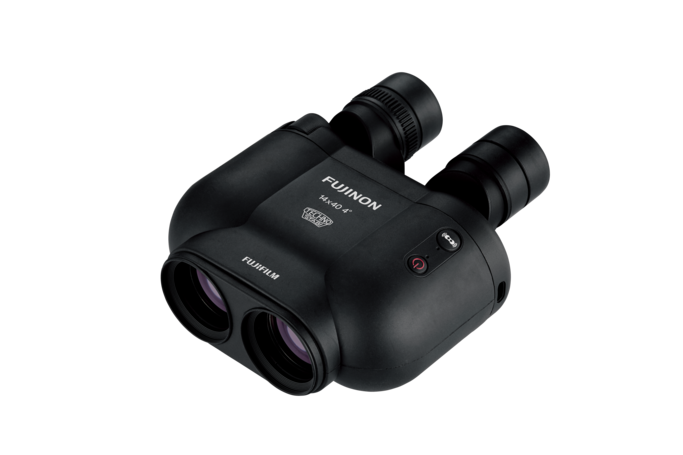
FUJIFILM Announces the Launch of the FUJINON Techno Stabi TS-X 1440

Featuring 14x magnification and the world’s most powerful image stabilization system, the new FUJINON Techno Stabi TS-X 1440 is the flagship product of the Techno Stabi binocular series

The TS-X 1440 is the new top model in the FUJINON Techno Stabi binocular series and offers outstanding optical performance with 14x magnification and the most powerful image stabilization (±6°) for this segment worldwide. The bright, clear and stabilized image provided by these binoculars makes them perfectly suited for outdoor wildlife and astronomical observation.

The binoculars are very versatile. Not only are they used for wildlife and stargazing observations, but they are also utilized by spectators at sports events and audiences at live concerts. FUJIFILM exploits its outstanding optical technologies and design concepts to meet the increasing demands in these fields of application. This results in top products of the highest quality, such as the new FUJINON Techno Stabi TS-X 1440.

The TS-X 1440 is a high-performance binocular with 14x magnification and an extremely powerful image stabilization. The superb image stabilization is achieved thanks to the application of proven and tested FUJIFILM camera lens technologies. The oscillations registered by a gyro sensor are compensated for by a precisely controlled prism in the optical beam path so that a high image stabilization of ±6° is reached.

In addition, the large lens elements, with an effective diameter of 40 mm, contribute to the extraordinary speed of the binoculars, while FUJIFILM’s unique EBC multiple coating reduces annoying lens reflections and ghosting. This coating also reduces chromatic aberration while increasing the transmission rate, resulting in an exceptionally clear and bright image.

Finally, the modern and ergonomic design of the FUJINON TS-X 1440 has been combined with a water-repellent construction to ensure that even when used on a boat or a vehicle, the binoculars are always safe to handle and work quickly, precisely and reliably every time.

Huawei Files Second Lawsuit Against U.S. Government Over Ban

Chinese technology giant Huawei filed a lawsuit against the Federal Communications Commission last week, seeking to hit back at U.S. government regulators who have made it difficult for the company to conduct business with American companies.

In November, the FCC voted to forbid American telecommunications companies from using federal subsidies to buy equipment from Huawei and ZTE due to the corporations posing security risks, The New York Times reported.

The lawsuit comes after Huawei was already placed on the Commerce Department’s Entity List, which makes it nearly impossible for U.S. companies to sell products to Huawei and vice versa. While the department has begun to grant licenses to some companies to sell tech to Huawei, many more companies will not be able to do so as long as Huawei and its subsidiaries are on the list.

Huawei already filed a lawsuit against the Commerce Department in June following the decision to effectively “ban” Huawei, which was formerly a large business partner of several companies in the security and video surveillance industries.

While Verizon and AT&T have not used the companies’ chips and other equipment for years, rural telecommunications providers have relied on it and are struggling to transition their systems to other technology.

“The F.C.C. claims that Huawei is a security threat, but F.C.C. Chairman Ajit Pai has not provided any evidence,” Huawei’s chief legal officer, Song Liuping, said during a news conference last week, according to the Times.

“Carriers across rural America — in small towns in Montana, Kentucky, and farmers in Wyoming — they choose to work with Huawei because they respect the quality and integrity of our equipment,” Song added.

Despite the obstacles to selling to and buying from companies in the U.S., Huawei’s business has remained fairly steady, according to the Times.