Home Articles posted by a&s Adria (Page 29)

Ajax Superior Hub Hybrid 2: Ajax Systems Introduces a New Generation of Hybrid Hub for Large-Scale Systems

Ajax Systems has introduced the Superior Hub Hybrid 2, the second generation of its hybrid central hub designed for medium to large facilities with high security requirements. The new solution delivers a significant capacity increase compared to the previous generation, supporting up to 250 devices, 100 users, and as many as 25 security groups, making it suitable for complex and scalable installations.

The hub is part of the Superior product line and is available exclusively through accredited Ajax partners. The new model retains the hybrid concept, enabling the combination of wired Fibra and wireless Jeweller devices within a single system. It also supports advanced wireless technologies such as TurboWings for photo verification transmission, as well as the VoRF protocol for reliable two-way voice communication with monitoring centers.

Fibra technology allows up to eight wired lines with lengths of up to 2,000 meters, ensuring stable transmission of alarms, events, and visual data without interference. At the same time, wireless communication provides a range of up to 3,500 meters in open space, with strong encryption and resistance to interference and sabotage.

The device features built-in communicators for Ethernet and mobile networks (two SIM cards supporting 2G/3G/LTE), along with an integrated power supply and support for a backup battery that enables up to 60 hours of operation. The hub supports up to 64 automation scenarios, including door locking, lighting and ventilation control, and power shutdown in emergency situations.

Like the previous generation, the Superior Hub Hybrid 2 is certified in accordance with the EN 50130 (Grade 3) standard, confirming its suitability for professional and high-security environments.

NEURA Robotics and Bosch Join Forces to Advance “Made in Germany” Humanoid Robotics

NEURA Robotics has announced a strategic technology and development partnership with Bosch, aimed at accelerating the industrial deployment of humanoid robotics and the concept of Physical AI, with a strong focus on development and manufacturing in Germany.

As part of the collaboration, Bosch and NEURA Robotics will jointly work on expanding the data foundation required for training humanoid robots. Real-world data on work processes, movement, and environmental conditions will be collected in Bosch’s manufacturing facilities using advanced sensor technologies. Such data from real industrial environments is extremely rare and represents a critical factor for the reliable, efficient, and practical deployment of humanoid robots in industrial settings.

The partnership also includes the joint development of core and functional AI software, as well as intuitive user interfaces, further strengthening vertical integration and NEURA Robotics’ overall capabilities in the field of Physical AI. The production data collected will be directly integrated into the Neuraverse, the company’s robotics ecosystem that connects robots, the physical world, and artificial intelligence to continuously improve performance through real industrial experience.

Through software updates and AI models, continuous improvement of the entire robot fleet is enabled, while Bosch’s long-standing expertise in industrial manufacturing further contributes to the creation of a closed innovation loop within the robotics ecosystem. This approach opens the door to the practical use of humanoid robots in existing industrial processes, where they can support people in daily operations by increasing productivity, flexibility, and workplace safety.

Bosch has confirmed the importance of the partnership, noting that the collaboration with NEURA Robotics enables more effective use of the potential of humanoid robotics and supports the industrial scaling of this technology at a time when the global robotics market is experiencing strong growth and significant long-term potential.

Avigilon Invites Architects and Engineers to Motorola Solutions Webinar on Smart Sensors

Motorola Solutions is hosting a professional webinar dedicated to the use of smart sensors in modern physical security systems, while Avigilon is inviting architects and engineers to register before the registration deadline closes. The webinar, titled “Designing with the Halo Smart Sensor,” will take place on January 20 at 1:00 p.m. Central Time (CT) and will last 45 minutes.

The online session will focus on the role of sensor technology in projects planned for 2026, with particular emphasis on integrating Halo Smart Sensor solutions into broader security systems. Participants will learn how advanced features such as air quality monitoring, nicotine and THC detection, and aggression monitoring can be effectively applied across different types of facilities. The webinar will also present practical use cases in key verticals, along with design recommendations for systems that combine smart sensors with video security and access control.

A dedicated segment will address the integration of Halo sensors with other platforms, including VMS and BMS systems, as well as the role of the Halo Cloud platform in aggregating data and identifying long-term trends.

According to the organizers, the session will provide valuable insights into how these solutions help organizations meet and maintain health, safety, and air quality compliance standards. Avigilon encourages interested professionals to take advantage of this opportunity to enhance their security offerings and strengthen their competitive edge, noting that registration will close soon.

Reserve your spot before it’s too late: https://bit.ly/4sDyz0x

Intersec 2026 to Set the Stage for a Transformative Year

Intersec 2026 will cover 67,000 square metres and will welcome over 1,400 exhibitors from more than 60 countries. The scale indicates the level of demand; it also conveys a clear message: throughout our sectors, the demand for collaboration, knowledge sharing, and preparedness has reached unprecedented levels.

By: Dishan Isaac, Show Director, Intersec; E-mail: editorial@asmideast.com

As the 27th edition of Intersec approaches this January, attention is increasingly drawn to the significant shifts occurring across the global security, safety, and fire protection sectors. The rapid pace of geopolitical, technological, and environmental changes has intensified, emphasising the industry’s need for clarity, shared purpose, and a renewed commitment to resilience.

Intersec has always been shaped by the people who participate in it. The strategic thinkers, operational experts, innovators, responders, regulators, and industry leaders whose collective expertise defines the trajectory of our fields. This year, however, holds particular significance. The operational environment has undergone substantial changes, and the challenges and opportunities facing us are now more complex, interconnected, and consequential than ever before.

Unifying an Entire Ecosystem

At the core of Intersec is the ability to unify an entire ecosystem. The industries we serve, including commercial security, fire and rescue, emergency response, cybersecurity, health and safety, homeland security, and policing, once operated within clearer boundaries. Today, those boundaries have blurred. No organisation can think in silos, and neither can an event like ours. This reality has shaped the 2026 programme from the ground up, ensuring every feature reflects the interconnected world in which we operate.

The International Security Leaders’ Summit exemplifies one of the most significant platforms within Intersec. It has evolved into a forum where senior leaders address the realities of modern risk, drawing on practical experience rather than theoretical constructs. Discussions on crisis leadership are particularly relevant because they directly address the human aspect of the industry.

This year, we will hear from professionals like David Warham from Dubai Airports, who will bring this into sharp focus. His reflections on preparation, trust, and multi-agency collaboration offer lessons that extend far beyond aviation. The same applies to the voices joining us from national infrastructure, government ministries, global corporations, and academic institutions. These leaders are facing the same pressures many of our visitors encounter: talent shortages, digital convergence, aligning with national strategies, managing cultural complexity, and navigating the realities of AI and quantum technologies.

Strong Growth of the UAE’s Cybersecurity Market

In recent years, cybersecurity has evolved from a specialised discipline to the thread connecting every operational environment. At Intersec, this evolution is captured in the InCyber Briefing, which brings together global and regional specialists to tackle the next wave of digital risk. With the UAE’s cybersecurity market set to grow significantly by 2030, the conversations around supply-chain resilience, AI-powered threats, regulatory complexity, and board-level reporting are not abstract; they are urgent.

Fire and rescue professionals will also find a dedicated space to examine the challenges shaping their sector. Urban density, climate change, new materials, and rising expectations for building safety have all shifted the demands placed on fire services and life-safety specialists. The Fire & Rescue Conference explores AI-enabled fire prediction, evolving fire dynamics, human behaviour under stress, and global case studies that offer invaluable insights into preparedness.

Another defining feature this year is the emphasis on developing the control room of the future. The new Control Room Innovation Theatre demonstrates how AI, cognitive design, and human-centred environments can enhance operator performance and decision-making under pressure.

Of course, Intersec is also a marketplace, one of the largest and most diverse in the world for security, safety, and fire protection solutions. With over 1,400 exhibitors and a strong presence of international pavilions, the show floor is where global innovation becomes accessible. Whether it’s next-generation surveillance, advanced access control, cyber-physical convergence tools, fire-engineering technologies, PPE advancements, or emergency response equipment, the exhibition floor brings together practical solutions with future-focused thinking.

17 Categories of Intersec Awards

Celebrating the people behind these innovations is equally important. The Intersec Awards return this year with 17 categories, our most comprehensive line-up yet, recognising excellence across fire protection, safety, homeland security, commercial security, cybersecurity, consultancy, leadership, and Emirati talent. We have seen an encouraging rise in submissions, a sign that companies and individuals are eager to showcase their contributions to global best practice.

The aim for visitors at Intersec 2026 extends beyond technology and conference sessions. It is to foster clarity amidst prevailing uncertainty. Attendees are encouraged to establish connections with partners they can depend on in the long term. Ultimately, the goal is to leave with reinforced confidence, grounded in understanding and preparedness, and with a shared sense of purpose.

Our industries carry an extraordinary responsibility. We protect what matters most: people, communities, critical infrastructure, national capability, and the trust that underpins our societies. Intersec exists to support that mission.

It is my pleasure to welcome you to Dubai World Trade Centre from 12–14 January 2026, and I look forward to shaping the next chapter of global security, safety, and fire protection together.

The Largest Footprint Yet

We operate in a world where complexity is no longer rare; it has become the norm. The rapid pace of technological change, global uncertainty, climate volatility, and converging physical–digital threats are pushing organisations to rethink their approaches to preparation, response, and innovation. In this context, Intersec 2026 has expanded not only in size but also in responsibility. This edition will cover 67,000 square metres, marking our largest footprint yet, and will welcome over 1,400 exhibitors from more than 60 countries. The scale indicates the level of demand; it also conveys a clear message: throughout our sectors, the demand for collaboration, knowledge sharing, and preparedness has reached unprecedented levels.

ISE 2026 ‘Hidden Order’: Matt Clark (UVA) Named Creative Keynote Speaker for ISE 2026

Integrated Systems Europe (ISE) is proud to unveil Matt Clark, the renowned British artist and visionary founder of United Visual Artists (UVA), as the Creative Keynote speaker for ISE 2026. Celebrated for his pioneering work which combines art, technology, and architecture, Clark seamlessly fuses light, code, sound, and choreography to create stunning artworks at leading cultural institutions and major public venues worldwide. Bringing his signature ingenuity and bold thinking to the stage, Clark’s keynote will challenge audiences to push boundaries and rethink the relationship between art, technology, and the built environment at ISE 2026.

Taking place on Tuesday 3 February, 15:30- 16:15, in Room CC4.1, Clark will present his keynote ‘Hidden Order: Building a Performance-led Mapping at Casa Batlló, from Concept to Implementation’. This inspiring session will offer a rare, behind-the-scenes look at ‘Hidden Order’, the stunning façade mapping commissioned and produced by Casa Batlló in collaboration with UVA, scheduled for 31 January and 1 February, just before ISE 2026 begins.

The commissioned artwork, ‘Hidden Order’, marks the 5th edition of Casa Batlló’s annual mapping, presented free to the people of Barcelona and established as one of the city’s most significant cultural events. It utilises the building as both subject and instrument, with the purpose of taking Gaudí’s radical legacy even further through inspiration and reinterpretation, drawing inspiration from Gaudí’s relationship with geometry and nature. Through light, motion, and sound, the façade is deconstructed and recomposed, with choreography and human movement serving as integral compositional elements. The work navigates the boundaries between figuration and abstraction, and between the human and the architecture, whilst responding to real-world constraints that shape both its visual language and technical design.

Clark’s keynote will serve as a case study of the Casa Batlló commission, from first impressions and concept through research, prototyping, content systems, technical design, show control, and onsite delivery. He will outline how UVA translates architectural logic into a controllable visual system, collaborating with a diverse team of technical artisans and specialists to carry the work from studio tests to realisation, and demonstrating how constraints ultimately shape the composition.

‘Hidden Order’ extends into Casa Batlló’s newly opened second-floor gallery, evolving into ‘Beyond the Façade’, a five-month site-specific exhibition that opens on 31 January and offers visitors an immersive experience of Clark’s work. This unique space within the iconic building provides an opportunity to explore the artistic process behind the mapping in depth, combining light, motion, and technology to reflect on the cycles of life and the interplay between human presence and architecture, allowing visitors to see themselves reflected in the work.

“We are delighted to welcome Matt Clark as our Creative Keynote for ISE 2026. Matt’s visionary approach and his ability to blend art, technology, and human experience truly embody the spirit of ‘Push Beyond’, our theme for ISE 2026,” comments Mike Blackman, Managing Director of Integrated Systems Events. “This extraordinary project, created by Casa Batlló in collaboration with Matt Clark, challenges us to see the world differently and inspires our community to explore new creative frontiers. I am confident that Matt’s keynote and the unveiling of ‘Hidden Order’ at Casa Batlló will ignite fresh ambition and spark meaningful conversations across the global AV and systems integration industry.”

Registration for ISE 2026 is open, so take your place among the visionaries, trailblazers, and creative minds from every corner of the globe. Reserve your spot at the event where tomorrow’s innovations are unveiled, and let’s Push Beyond what’s possible – together.

Register here to Push Beyond.

Hytera: Elevating Luxury Hospitality with Hytera DMR Solutions

In partnership with Cobra Center, Hytera implemented a state-of-the-art Digital Mobile Radio (DMR) system, enhancing operational performance and the guest experience at the exclusive One&Only resorts in Greece.

By: Bella Liu, Communications Specialist, Hytera Communications Europe; Email: bella.liu@hytera-europe.com

One&Only Resorts

One&Only Resorts, a globally recognized leader in ultra-luxury hospitality, operates some of the most prestigious properties worldwide and maintains uncompromising standards across all aspects of its operations, particularly in security and guest services. Seamless, reliable, and discreet communication across large and aesthetically sensitive environments is an essential part of the brand promise. In partnership with Cobra Center, Hytera implemented a state-of-the-art Digital Mobile Radio (DMR) system, enhancing operational performance and further strengthening the exceptional guest experience at the One&Only resorts in Athens and on Kea Island.

Challenges

The project focused on two key Greek locations: One&Only Aesthesis in Vouliagmeni near Athens, and the One&Only resort on Kea Island. Implementing a reliable communication system while ensuring full coverage across a luxury resort presented unique challenges, particularly for a brand with exacting standards like One&Only. Key aspects considered by Cobra Center engineers when designing the solution included:

  • Seamless Coverage: Ensuring stable and clear signal reception across large properties, including multiple buildings, outdoor areas, and complex architectural layouts, without compromising communication quality.
  • Discreet Integration: Installing communication infrastructure without disrupting the resort’s elegant aesthetic. This required innovative antenna concealment and unobtrusive equipment placement in line with One&Only’s design philosophy.
  • Operational Efficiency and Security: Meeting the needs of various departments, from Security and Emergency Response to Food & Beverage, Housekeeping, and Event Management, while adhering to strict security protocols and providing encrypted, interference-free communication.
  • Eco-friendly Alignment: Ensuring the technical solution aligned with the group’s commitment to environmental sustainability.

Solution

In collaboration with Cobra Center, Hytera designed and deployed a robust, reliable, and discreet DMR communication network tailored to One&Only’s specific requirements, offering a range of advanced features:

  • Multi-site DMR Tier II Network: A resilient core system featuring four Hytera HR1065 UHF repeaters, interconnected for extended coverage and redundancy. Supported by an Uninterruptible Power Supply (UPS), the system ensures continuous operation even during power interruptions.
  • Encrypted Communication: The network uses encryption to provide secure and private transmissions, essential for management and security purposes.
  • Bluetooth for Security Personnel: Select radios with Bluetooth capabilities were issued to security staff, enabling discreet and hands-free operation.
  • Tailored Programming: Radios were configured to enable smooth communication among key operational departments, including Security, Emergency Response, Food & Beverage, Housekeeping, and Event Management.

Results

The implementation of the Hytera DMR system has significantly improved operational efficiency, security, and service quality at the One&Only resorts, providing superior audio quality and full coverage across all areas—including previously challenging locations. Additionally, Cobra Center engineers optimized group settings in the system backend, enabling clear and concise information on radio interfaces while preserving the resorts’ luxurious ambiance and visual integrity.

Testimonial

“Establishing reliable communication across our resorts initially appeared to be a major challenge. However, the project was executed with great success. The equipment provided laid the foundation for uninterrupted and user-friendly communication. We are fully satisfied and plan to continue our partnership with both companies,” said Nikos Ornstein, Purchasing Manager, together with Loannis Dimitropoulos, Security & Loss Prevention Manager of One&Only Resorts.

ICT: Different Ways to Upgrade to Smart Access Control

Many buildings and sites are running on access control and intrusion detection technology that is ten, maybe even fifteen years old. The hardware is still functional, doors open, alarms are set, but these legacy systems often act as roadblocks when a client wants to modernise their building management or bring new applications onboard.

The need for change is usually driven by compliance, security, or sustainability targets. However, like every infrastructure project, it had to be financed and the cost: the Capital Expenditure (CAPEX) will define the feasibility and timeline of the new access control installation. Fortunately, upgrading doesn’t always have to be an “all-or-nothing” scenario.

How does access control improve operational efficiency?

Beyond enhancing security, modern access control is an enabler for operational efficiency and energy savings.

By unifying various systems into one central platform, customers can see a direct impact on their bottom line. For instance, an open access control system can automatically switch off air conditioning if a window is left open or turn off lights and arm an area, when no one is present.

In high-traffic environments, integrating the access control platform with turnstiles and lift systems, manages the flow of people badging in and directs them to the fastest lift for their destination. Saving a few minutes for thousands of people everyday amounts to significant productivity gains.

Is a full system replacement always necessary?

For new builds or extensions, a brand-new system is standard. But for retrofits on a tight budget, a full “rip and replace” isn’t the only option.

A smarter approach is a phased migration. A thorough assessment of the existing infrastructure will determine whether legacy equipment is compatible with modern controllers. This allows to upgrade the “brains” of the system while keeping the existing cabling and peripheral hardware.

Phased migration as the one offered by ICT decreases project costs and lowers the risk of disruption, a huge benefit if the organisation operates 24/7. The customer gets immediate access to new functionalities and third-party integrations supported by platforms like Protege GX, while the initial capital investment remains manageable.

How to ensure continuity during migration?

If a legacy system is running alongside a new one, how are the users managed? Is there a risk of database mismatch?

The critical point is ensuring the legacy and new access control servers are constantly synchronising data to avoid discrepancies in the user database which could lock people out or leave areas unsecured. ICT offers DataSync software specifically for this purpose, ensuring a seamless transition.

What financial factors should be considered?

The decision about which technology to select impacts not just the initial CAPEX, but the ongoing Operational Expenditures (OPEX).

Customers should understand the licensing models. Are there any recurring fees, is the cost capped over a certain number of licenses? They should know aboout the structure of the maintenance cost and upgrade cost.

Choosing an open technology that integrates with legacy equipment and third-party solutions offers financial protection. It means the system can scale and adapt to new requirements without needing another expensive overhaul in a few years.

Access control is a central pillar between security and operations. By helping organisations navigate the balance between necessary upgrades and available capital, it helps create a successful and affordable solution.

Kamir: Fit Faster. Save Time: Introducing Apollo’s New Discovery Base Sounder

Apollo Fire Detectors announced the latest addition to its portfolio of life-saving devices – the Discovery Base Sounder. It is engineered to transform the installation process and give you the unparalleled combination of ease, speed, and reliability. No more stripped wires or loose connections – installation is now easier than ever before.

Simply twist and click. It’s that simple. With previous models being – in the words of one installer – “well known for being awkward to install… [and] time consuming”, we knew that something needed fixing. Now, with its modular design, installation is up to four times faster, giving you peace of mind and letting you to work more efficiently.

Adjustable volume levels and tone settings ensure it adapts seamlessly to changing regulations – no matter the environment. Whether in a school, office block, or residential building, the Discovery Base Sounder allows you to adapt to every situation.

Product Manager Jason Green says “The Discovery Base Sounder was made to meet the needs of installers, no matter the complexity of the project. Ultimately, it is designed to make their life easier.”

Apollo goes further to ensure peace of mind. As the only UK fire detector manufacturer with an in-house fire lab and a dedicated team of validation experts, each product is rigorously tested. And tested again. From dust and insect intrusion tests to evaluations in extreme temperatures and humidity, every detail is considered. It’s this precision that makes Apollo a sound you can rely on and a name you can trust.

In moments that matter, hear Apollo. The Discovery Base Sounder doesn’t just deliver safety — it does so with care, reliability and decades of expertise – and faster than ever before. Keeping you safe from fire. Always.

Interested in learning more about the Discovery Base Sounder? Visit www.discoverybase.apollo-fire.co.uk.

About Apollo Fire Detectors

Apollo Fire Detectors is a leading manufacturer of fire detection solutions, dedicated to creating products that protect people and property from the devastating effects of fire. With a commitment to innovation, quality, and reliability, Apollo Fire Detectors Ltd has established itself as a trusted partner in the fire safety industry, serving a global clientele.

AziTrend: How WMS + VMS Integration Is Redefining Modern Logistics

In today’s economy, where speed and accuracy separate profit from loss, warehouses have become critical nodes of the supply chain. Yet the operational complexity—tens of thousands of SKUs, thousands of storage locations, and constant order flows—puts enormous pressure on logistics teams. This is where a new technological standard emerges: the integration of Warehouse Management Systems (WMS) with Video Management Systems (VMS) through AZiGuard platform.

Why WMS + VMS Integration Matters

Traditional incident investigation in a warehouse can take hours or even days. A lost parcel, a picking error, or a delivery dispute consumes time, money, and reputation. By synchronizing WMS transaction data with the exact video moments in which those events occurred, AZiGuard turns complex processes into 2–3 minute verifications.

Key advantages include near-instant incident search, where an operator filters an event in the WMS and the VMS immediately displays the precise moment and camera angle for verification, turning what once took hours into a matter of minutes. Operational costs are reduced through fewer manual investigations, fewer disputes and fewer internal interventions, resulting in measurable savings, particularly in high-volume warehouses. At the same time, greater transparency and credibility are achieved as every transaction becomes verifiable with video proof, giving retailers, couriers, pharmacies and marketplace operators a clear, unbiased source of truth. Finally, higher customer and partner satisfaction follows from faster claim resolution, clearer responsibility and increased trust across the entire supply chain.

Case Study: When Volume Explodes, Precision Becomes Critical

A large online retailer uses WMS and VMS integration to instantly reconstruct the journey of a lost parcel—from packing and collection to courier handoff and delivery—cutting incident investigation times by more than 50% and eliminating unfounded claims. In another example, a pharmaceutical warehouse using pick-by-voice and a high-speed conveyor has integrated both databases with AZiGuard’s video streams, enabling operators to locate every conveyor feeding point instantly, regardless of speed.

Through the AZiGuard ActiveStock module, warehouses gain advanced control over accuracy, including rapid loss investigation, delivery dispute resolution, clear responsibility assignment and quality verification of picking and packing. For facilities handling more than 50,000 SKUs, this level of automation shifts from a “nice-to-have” feature to a mission-critical capability.

The Future: AI, Prediction, and Full Automation

As order volumes rise and margins compress, the fusion of operational data with video analytics becomes the backbone of modern logistics. The next step is already emerging: AI that predicts errors, optimizes workflows, and detects anomalies before they become operational costs.

Integrating WMS and VMS is no longer a technological upgrade—it’s a competitive necessity. For high-volume operations, solutions like AZiGuard do far more than improve visibility; they build warehouses that are safer, more transparent, and significantly more profitable.

Igniting Safety: Bosch’s New Zagreb Experience Hub Redefines Fire Protection in the Adria Region

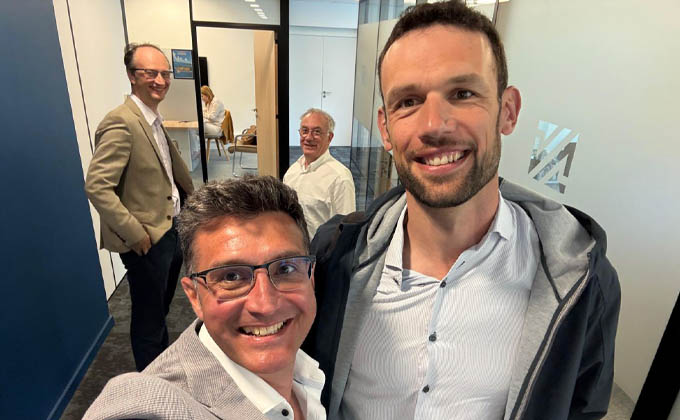
The opening of the Experience Hub in Zagreb is also a clear recognition of the local Bosch team and its long-standing contribution to the market. Built on nearly two decades of commitment, expertise, and close customer engagement, the Croatian team has played a key role in positioning Bosch Building Technologies as a trusted partner across the Adria region.

Equally important is the role of Bosch partners. Installers, designers, distributors, and integrators are at the heart of Bosch’s business model, transforming technology into reliable, compliant, and effective fire safety solutions. By investing in local training, flexible education formats, and direct partner support, Bosch reinforces the region’s strategic importance and confirms that sustainable growth in fire safety is only possible through strong local teams and strong partnerships.

Since entering the Croatian market in 2008, Bosch has steadily built its presence through projects, technological innovation, and close collaboration with partners across the Adria region and Southeast Europe. Over the years, the evolution from Bosch Security Systems to today’s Bosch Building Technologies division has reflected a broader transformation of the market itself—towards integrated, intelligent, and future-ready safety solutions. Within this journey, fire protection has emerged as a strategic growth pillar, driven by increasing regulatory demands, complex building environments, and the need for higher professional standards.

A significant milestone in this development is the opening of the Bosch Experience Hub for fire detection systems in Zagreb. Launched in 2025, the center represents more than an investment in infrastructure; it is a regional platform for education, innovation, and collaboration. As Danijel Jerković, Business Development Manager for Fire Safety Systems in the SEA region, explains, the Hub is designed to strengthen Bosch’s position by ensuring partners have direct access to the latest technologies, hands-on training, and practical expertise. At the same time, it creates a space where end users can better understand how advanced fire detection solutions protect people, assets, and business continuity.

Covering the entire Adria cluster—15 countries and nearly 80 million people—the Zagreb Experience Hub reflects the diversity of the region. Training programs and presentations are tailored to local regulations, market maturity, and technical requirements, ensuring relevance and real-world applicability. Installers, designers, integrators, and distributors benefit from certified, practice-oriented training that translates directly into higher-quality system design, installation, and commissioning.

From a technical perspective, the center is focused on Bosch’s AVENAR fire detection system. As consultant Nino Belicki highlights, the modular training environment allows participants to configure, program, and troubleshoot systems in realistic scenarios. This hands-on approach, combined with design training using Bosch’s Safety Systems Designer software, ensures that both installers and planners can deliver solutions precisely aligned with project needs. Certified training, valid for two years and complemented by further qualification paths, underlines Bosch’s long-term commitment to competence development.

Ultimately, the Zagreb Experience Hub strengthens the regional fire safety ecosystem—raising standards, accelerating technological adoption, and reinforcing trust across the value chain.