Home Archive by category Najave II (Page 13)

Najave II

Checkpoint launches industry first, design focused NEO in-lane EAS system

Checkpoint Systems – a global leader in retail technology solutions – has today unveiled a radical new sensor addition to their NEO portfolio. The NS40 provides grocery retailers with a discreet but powerful in-lane loss prevention solution. Designed to be installed at the checkout, the NEO-based NS40 antenna features an ultra-slim design, with patented 360 circular array technology along with the benefits of Bluetooth connectivity for easy deployment, with no floor cutting.

Developed to be unobtrusive and effortlessly fit within grocery stores, the NS40 can be tailored for any checkout configuration and thanks to its innovative design, can be mounted against metal without any adverse impact on detection rates.

Secure Bluetooth connectivity provides ease of installation as no floor cutting is required between checkout desks. It also gives retailers the ability to easily reposition and remodel the checkout space, when required, without expensive re-cabling or disruption to services.

The NS40 delivers excellent, high-performance detection, through the use of 360° circular array technology. Located at the end of the checkout, after products are scanned and security labels deactivated, it effectively recognises non-deactivated tags and those being concealed.

With customisable LED light and sound files, the sensor enables alerts to be dealt with efficiently by the checkout operator. This ‘early’ loss prevention alarm helps tackle incidents of non-deactivation promptly, reducing embarrassment for customers and for shoplifting attempts, aids the retailer in the successful recovery of goods before they reach the exit doors.

Available in a brushed steel finish as standard, the NS40 can be painted, powder-coated or vinyl wrapped to match a store’s visual identity. Custom Voice messages and a variety of sounds and coloured LEDs can be created for different alarm events.

Additionally, the connectivity of NEO delivers historic trend data via the SaaS Cloud service, providing retailers with a rich source of activity data to improve shrinkage results and help monitor store performance, while also providing proactive maintenance support, with more than 50% of technical issues resolved remotely.

Simon Edgar, Senior Director of Product Management – Checkpoint Systems, commented: “ The NS40 offers retailers a revolutionary new design for their in-lane EAS systems. Designed specifically for the grocery market, our new NS40 antenna has already been trialled successfully in Spain. Voice of customer feedback was cruicial during this project to ensure the end solution exactly matched the use case requirements for in-lane grocery retailers. The design, detection and ease of installation are without doubt market leading.”

Cerberus Cloud Apps from Siemens take fire safety to the next level

Providing remote fire safety services has never been easier with Cerberus Cloud Apps. Secured Cloud Connectivity Enables Remote Access and Maintenance of Fire Protection Systems. The Cerberus Cloud Apps are part of Siemens’ holistic approach to fire protection where every element of fire protection matters – from detection and evacuation, to danger management and cloud services.

Less than 10% of buildings today have the cloud connectivity needed to make remote access possible. This despite inroads that digitalization and the Internet of Things (IoT) have made in the fire industry in recent years. Then comes COVID-19, which might have an unexpected acceleration of remote access use to manage fire safety and other building technologies. Perhaps the pandemic’s requirement for everyone to keep their distance will speed the acceptance of remote monitoring, maintenance and control of fire safety systems.

Capturing the remote connectivity market
The market for remote connectivity for fire safety systems is vast, since about 90% of buildings are not connected to the cloud. Additionally, most sites do not have an on-premise danger management station. This means that service partners and customers can’t obtain an overview of happenings at their sites without running to a fire alarm control panel. Fire safety solution partners are left asking themselves:
– How do I gain a quick overview of my customers’ fire protection systems?
– How can I reduce high traveling costs and increase customer service quality?
– How can I provide periodic maintenance more efficiently and deliver evidence of executed tests to customers?

Cerberus Cloud Apps from Siemens solve these problems by connecting fire safety solutions to the cloud, which helps digitalize the fire industry and create remote accessibility. Cerberus Cloud Apps use a gateway to connect each site to the cloud so that panel events can be sent to the cloud. Solution partners and customers are then able to directly monitor and operate the fire control panels without having to stand in front of them.

Cerberus Cloud Apps portfolio
To help solutions partners and their customers get the most from cloud platforms and services, Siemens developed the Cerberus Cloud Apps portfolio that includes Cerberus Portal, Cerberus Test and Cerberus Tunnel. They are part of Siemens holistic approach to fire protection in which every element of fire protection matters – from detection and evacuation to danger management and cloud services.

Cerberus Portal
The Cerberus Portal application delivers an overview of all connected sites as well as easy access to them. It also eliminates unnecessary service visits and prepares service engineers for those that still need to take place. The system is simple to install and commission without the need for extended training. Furthermore, communications are encrypted and privacy is maintained in order to ensure the safety of the customer’s data.
Cerberus Portal makes services more efficient for both solution partners and customers by providing secured 24/7 connectivity, multi-site dashboards, real-time monitoring and simple operation.

Cerberus Test
The Cerberus Test application enables service partners to deliver efficient testing during periodic maintenance. Cerberus Test is a native smart-phone application that makes the process faster and more efficient than regular detector testing since only one person is needed. Hands-free text-to-speech functionality increases the speed and efficiency of the maintenance activities. The detector test activities are recorded in the cloud.

Cerberus Tunnel
The Cerberus Tunnel application solves the problem of sending service engineers to a site without knowing the precise problem or if it could have been fixed remotely. Fire service engineers can use Cerberus Tunnel to remotely access the fire safety sites and fix issues without needing to be on site.

Additional benefits of Cerberus Cloud Apps
Cerberus Cloud Apps introduce a number of additional benefits for three important groups: system integrators or service companies, owners or investors, and consultants, planners or designers.

Systems integrators or service companies are looking for new opportunities to increase their competitiveness. For example, remote configuration and commissioning of the systems will reduce travel costs and improve utilization of fire safety engineers, who are becoming an increasingly rare commodity. In addition, these companies will benefit from the step-by-step installation and setup of the cloud solution. By using Cerberus Cloud Apps to digitalize the service business, systems integrators and service companies can take the next step in further improving their resource utilization.

Owners and investors find that Cerberus Cloud Apps put peace of mind at their fingertips. For example, live overviews let them know what is happening with their fire protection systems at any time and anywhere. The system is set up to initiate quick response to fire events. The owners and investors can determine the category of events that trigger notifications and who will receive them. If a fire event occurs, a live status update of the fire control panel in question is sent via SMS or email to the appropriate people. Detailed information about the event makes troubleshooting more time efficient.

The consultants, planners and designers are looking for innovative solutions with future-ready fire protection systems that ensure adherence to standards and regulations.

Suprema : Providing easy and user-friendly touchless Access control solutions

Suprema is a global leader in biometrics, time & attendance and access control technologies. BioStar 2 is the Suprema web-based security platform with an intuitive interface. Besides basic functions, as doors readers and access rights management, Suprema BioStar 2 software proceeds many advanced security tools. It supports both SDKs and web APIs. Multiple integrations with 3rd party systems and Mobile Access Control tools make BioStar 2 the best Access Control Management Software on the market.

In March 2021, Suprema BioStar 2 was selected the best Access Control Software Management and Mobile Access solutions, according to A&S Magazine. Source: asmag.com

BioStar 2 provides six levels of licenses with one-time purchasing model based on number of doors and advanced functions, as zone management, elevator control, Cloud, Active Directory, Anti-passback, etc. Facing COVID-19 health challenges, BioStar 2 simplified wearing mask control and temperature monitoring.

Face recognition authentication is becoming more accessible

Source: supremainc.com

In the past, contactless technologies were considered as luxury. Today, thanks to the constant drop in components costs and new algorithms advancement, face recognition is becoming accessible to everyone. The pandemic has accelerated the trend to the facial recognition authentication.

Suprema TCM10 Thermal Camera detects individuals with high skin temperature before entering the site. Moreover, FaceStation F2  is equipped with mask detection features capabilities. Alerts are sent to responsible HR manager if high temperature or no mask wearing is detected.

Mobile Access Control has never been so easy

Source: supremainc.com

The use of smartphones as credentials is now skyrocketing. Suprema Airfob Pass Application, available on AppStore and GooglePlay, turns any smartphone into a highly secure contactless access credentialing device. Suprema’s innovative Airfob Patch makes any 13.56 Mhz RF card reader compatible with Mobile Access Cards, converting mobile Bluetooth to RF card signal.
Suprema is now offering a special kit. New users receive 50 free mobile credits when starting to work at AirFob portal. Two types of mobile credentials are available: regular type (for offices, based on number of users) and dynamic type (for membership, like fitness clubs or shared open spaces based on devices and usage time).


Suprema Airfob Patch Source: supremainc.com

Mobile authentication helps companies to save costs, by eliminating expenses for issuing physical access cards. The choice to shift to mobile access is now evident for many companies.

The demand for RFID-readers remains strong

Source: supremainc.com

Contactless readers aren’t about only the face recognition or mobile credentials, it is also a traditional RFID-access control cards.
“More than a half of devices that we are selling in Europe are RFID readers”, says Baudouin Genouville. Suprema provides XPass 2 intelligent readers or XPass D2 “dummy” readers , which can been connected to Suprema’s CS40 controller or other brand’s door controllers (OSDP, Wiegand).

Suprema’s new X Station 2 will come out by June 2021

Source: supremainc.com

The last contactless authentication method widely-used now in access control is QR-code-authentication. It allows to enter the parking or to be easily invited at the office without being enrolled biometrically or having an RFID card.
Suprema X Station 2 terminal , which can authenticate access with secure QR code, mobile access card or an RFID card, will be released by June 2021.

Suprema Europe continue developing partners network in Adria countries

Suprema is proud of existing partners, working hard on increasing Suprema’s presence in the region through high-level projects, especially in Croatia:
Last year, Croatian Ministry of Justice and one of the largest Croatian insurance company Grawe were equipped with Suprema readers by Fidens Alarm. In next few weeks the company plans to donate Suprema Face Station F2 thermal cameras for the primary school and the transfusion medical center in Zagreb.
Thanks to Špica Sustavi, the largest coffee, tea and snacks brand Franck, Liburnia Hotels in Opatija or the Faculty of Medicine in Split use now Suprema high-end solutions. King ICT installed Suprema’s readers in NetCity, Zagreb shared office Center where are located many branches of worldwide known international companies and local firms.
Partners are the key of Suprema’s success during the last 20 years. Based in South Korea, Suprema has now a new branch in Paris Suprema Europe, getting closer to European customers. It provides faster delivery and better technical support, that improves services for existing partners and attracts new customers.

If you have further questions and inquiries, do not hesitate to contact us: https://www.supremainc.com/en/wheretobuy/list.asp


Consumer IoT security: From “nice to have” to “new normal”

The current rise of the Internet of Things (IoT) ecosystem is something that cannot be denied. For example, smart building elements, vehicles connected to a smart transport infrastructure, or gadgets that can be controlled remotely through mobile applications and cloud are only a few examples of the current state. Moreover, the rate at which IoT is expanding is currently accelerating. Based on recent reports, it is expected that 5.8 billion IoT endpoints will be in use by the end of 2020, only in automotive and enterprise environments.

Whenever the term IoT is mentioned, the thoughts are initially running towards smart consumer gadgets. In fact, this paradigm, even though slightly outdated, is still correct for a large extend. Based on reports, the market of consumer IoT products is projected to reach 153.8 Billion $ by 2026 . However, together with the increase in connected products volume and functionality, the cybersecurity risks associated with these products are strongly increasing as well. Due to the volume of this market, as well as its connectivity to other high-risk environments, this becomes a serious issue.

Are there published guidelines for securing IoT devices?
The responsibility for introducing sufficient security controls inside IoT products lies mostly with their developers, as they are the ones who have technically the ability to design such security functionalities. But often one of the biggest challenges is knowing precisely what kind of security controls to include. Is simple authentication and encryption of data sufficient, or should IoT products include more sophisticated features such as secure boot, protection against physical tampering or side channel attacks? Since this is an essential question, the need for sufficient and good quality international standards and best practices is critical for consumer IoT domain. Luckily, we don’t lack such publications. The IoT Security Foundation framework, IEC 62443-4-2, GSMA IoT requirements or ETSI EN 303 645 are examples of well known publications which can be used as reference for implementing security by design in such products. It is sometimes hard to pick the favorite out of this list (and with even many more other publications that address the domain as well). However, in the last two years, the cybersecurity world has started to focus its attention more and more towards ETSI EN 303 645, with the hope that this could become the ultimate reference standard that we were all looking for.

ETSI EN 303 645, officially released by ETSI in June 2020, provides a common view on what a consumer IoT security baseline should look like. Straight to the point, while leaving out of scope requirements which would make the testing effort difficult and too long. The standard is split into 13 chapters, including requirements focused on various domains of control, such as secure authentication, software updates, software integrity, secure installation, etc.

The standard itself aims to provide a baseline of security requirements, therefore, as expected, the testing depth is medium. General security evaluation knowledge related to hardware, software and protocols security are sufficient in order to go through the requirements. The difficulty comes however from interpreting some requirements which are made “flexible” on purpose. For example, the requirement “The product shall have an update mechanism for the secure installation of updates” requires first of all consensus on what is meant by “secure installation”, especially in sense of what is good enough and what is not good enough. There are multiple other instances of such requirements where common interpretation is needed in order to reach a testing verdict. Finally, the smooth applicability of the standard will require a certain set of evidences to be provided by the developer to facilitate the evaluation. This is still expected to be much less extensive than the evidence set for a, for example, Common Criteria evaluation.

Is it possible to currently certify the security of IoT products?
In one word, yes! The existence of relevant security certification schemes was an essential aspect in the increase of security by design adoption among developers. Being able to get this official recognition in return, and use it for creating a market advantage, can stimulate manufacturers of consumer IoT products to allocate more time and budget to cybersecurity. There are in fact several options that developers can choose from, and currently the most relevant are based on the ETSI EN 303 645 standards. National certification schemes for IoT have been established in Finland and Singapore . At the same time, private certification schemes exist for certifying based on the ETSI norm . We all know that security is not a cheap business. In order to certify a product, developers will need to invest not only in contracting a testing facility, but also in order to create the necessary product documentation, as well as address possible detected security gaps. However, at the end of the day, these kind of labels and certificates distinguish a product among the thousands of other similar devices on the IoT market. And finally, a certification assignment is not only a checkbox kind of work. The testing and documentation evaluation will often help the developer in making the product more mature, improve its user and deployment guidance, or address security gaps which were not spotted during the development.

Are there, or will there be mandatory laws for IoT products security?
A regulatory background focused specifically on (consumer) IoT products has been missing so far, but it’s becoming a more and more hot topic of discussion. This is mostly because consumers will almost always be more attracted by the functionalities (or price) of a product, rather than researching its security capabilities. Therefore, such security validation needs to happen in the background, in order for consumers to be able to choose only from minimum protected devices.
The EU, as well as UK, USA, Brazil and other regions are considering local laws and regulations aimed to mandate a minimum level of cybersecurity in the products which are placed on the market. In the beginning, it is aimed that this minimum level should be something that developers can achieve without unreasonable costs or effort. Laws like the RED (Radio Equipment Directive in EU), UK IoT security law or the California IoT security law ask for a baseline security, including secure passwords, vulnerability disclosure procedure or secure software updates. While minimal, such a beginning set of mandatory requirements is expected to make a major difference in improving the security posture of IoT products available on the market. As the years go on, it is expected that this set of minimum requirements will be expanded, and the security of consumer IoT products will gradually get higher. The only thing we can hope is that, in several years from now we will see security as the “new normal”, instead of a “nice to have” feature.

OPTEX ADDS VIDEO TO EUROPE’S MOST POPULAR EXTERNAL INTRUSION DETECTOR

VXI-CMOD takes outdoor detection to another level.

OPTEX, the leading sensor manufacturer, has announced the launch of the VXI-CMOD – a new Wi-Fi camera module that can be easily integrated with its best-selling VX Infinity (VXI) sensor, adding visual verification to outdoor intrusion detection.

The VXI provides highly reliable outdoor detection with a range of up to 12m and a 90° field of view. It is used for both residential and commercial applications detecting intrusions in courtyards, gardens, driveways and secured car parks. The VXI-CMOD Wi-Fi connected camera module can be retro-fitted onto any existing wired VXI models (VXI-ST, AM, DAM), fitting snugly on top, creating a single unit visual verification system.

When the sensor detects an intruder, the integrated camera module is activated: it records the event and sends a notification to the owners’ paired mobile phone(s) (iOS or Android). The notification is made through an app called ‘OPTEX Vision’ and can be received by multiple users simultaneously. By opening the app, the recipients can access the VXI-CMOD’s live view* and the stored recording (two-second pre-alarm and 28-second post-alarm) of the event for verification.

The VXI-CMOD is enabled with Real Time Streaming Protocol (RTSP), which allows the live camera view to be streamed and recorded on a third party security system, such as NVR and VMS platforms. This provides an additional option to visually verify the event and centrally record it for identification of the intruder and reporting to the security authority.

The VXI-CMOD features a 180° panoramic view at 1080P HD, with built-in infrared LEDs for enhanced vision at night. VXI-CMOD is also equipped with a microphone. Via the app, the owners can access the camera’s live view and audio at any time.

The new camera module adds visual verification to the market-leading sensing technology of the VXI series. The ‘traditional’ VXI is one the most popular OPTEX detectors in Europe and many thousands are already installed. Now installers have the opportunity to add a new module – the VXI-CMOD – to go a step further, and deliver an all-in-one video and intruder security system for business and homeowners alike. The VXI-CMOD is available through Optex’s distributors.

*Up to three concurrent viewings. Viewing performance is subject to Wi-Fi and internet connection speed.

For more information please contact: optex@optex.com.pl; www.optex-europe.com

WITH ISEO, YOU CAN OPEN YOUR DOOR WITH YOUR FINGER

Argo is the free app by ISEO, which allows to easily manage access with a smartphone, with no need of additional software or internet connection.

Argo App by ISEO, is the ideal opening solution for private homes and small hotels, all doors equipped with Smart series devices (electromechanical locks for armoured doors, electronic cylinders and handles) can be opened and managed.
Besides the electromechanical lock for armoured doors x1R Smart, Argo app can indeed manage and control access of the doors equipped with other opening devices of the Smart range by ISEO: Libra Smart electronic cylinder, Aries Smart electronic trim set, Stylos Smart credential readers, Smart Locker electronic lock for lockers.

Thanks to the Argo App, access can be given to whoever you want, where you want, even temporarily, allowing selected people to enter reserved rooms on days and times which have been preselected. Furthermore, Argo registers the last 1000 entries and also any unauthorised access attempts. If you have a B&B with Argo 2.5 and Remote Key Delivery and Invitation functions, you will be able to offer to your guests a fast and efficient service, in particular when managing access in Bed and Breakfast structures and small hotels. With the new functions of Argo App, indeed, you can manage guests’ entry to your structure remotely using your smartphone. This way, even if you are not physically present, you can allow guests access to their rooms on the days and at the times established based on check-in and check-out, without having to physically hand over any keys.

X1R SMART – ELECTROMECHANICAL LOCK FOR ARMOURED DOORS
For residential contexts, the x1R electromechanical lock for armoured doors is the ideal product, as it makes the door not only more secure against unauthorised entries, but access is also smarter and more practical. It has the same standards in terms of dimensions as the most commonly used mechanical locks and the alkaline battery version makes installation even easier. In fact, the door does not require any external wiring connections. Depending on user requirements, different opening applications can be selected.
The x1R Smart version allows the user to interact with Bluetooth Smart Ready devices (iPhone, Android smartphone, etc.). Interaction between the x1R Smart and the opening devices, such as smartphones, takes place via the Argo application with which the administrator can manage access authorisations of the various users intuitively and without the need for any additional software or internet connection. Authorisations of up to 300 users can be added, deleted or modified. Furthermore, the list of users can be transferred from one door to another. The log of the last 1000 events relating to each door can be consulted and the report can be sent via email. The Bluetooth Smart technology also allows use of any smartphone as the remote control for opening the door at a distance of up to 10 metres.

FINGERPRINT READER
Among the latest products, ISEO presents the fingerprint reader combined to x1R Smart, the electromechanical lock for armoured doors.
The fingerprint is a very secure and convenient authentication credential: it can’t be borrowed, stolen or forgotten, and it is almost impossible to forge it.
Furthermore, the reader detects authentic fingerprints and does not allow access with fake fingerprints.
You don’t have to bring with you an inconvenient bunch of keys anymore!
Thanks to Argo App by ISEO, the electromechanical lock for armoured doors x1R Smart can be opened also by an iOS or Android smartphone, Apple Watch, card, tag and PIN codes.
It is also possible to give access only to certain people to specific areas, even choosing the period of time. You can retrieve the last 1000 events of each door, including date and time of the accesses and the unauthorized entrance attempts.
With Argo app you can store up to 300 users for each door.


360 Vision Technology and Identiv partnership enables comprehensive security solutions

360 Vision Technology, the UK manufacturer of rugged HD, radar and thermal imaging PTZ cameras, has announced a technical partnership to provide complete end-to-end security solutions and full systems integration with Identiv’s CPNI-certified access control platform, intelligent video management system (VMS), and IT storage.
A global leader in digitally securing the physical world, Identiv’s platform encompasses RFID and NFC, cybersecurity, and a full spectrum of physical access, video, and audio security. Identiv’s physical access control and video intelligence solutions are feature-rich, and their hardware and software systems verify frictionless access that can be managed from anywhere.
Under the new partnership, Identiv will integrate its physical security solutions with 360 Vison’s range of rugged domes, HD, and radar PTZ cameras. Essentially, this will be to provide customers with powerful end-to-end security, management, and health and safety monitoring solutions, for the CPNI oil and gas, retail, finance, education and healthcare sectors.

“Identiv’s strategy for physical security in the EMEA region is to provide a true end-to-end total solution,” explains Richard Marshall, Identiv EMEA Sales Director. “We are impressed by 360 Vision’s comprehensive camera range, build quality, and their support cover for EMEA. 360 Vision Technology’s world-class surveillance camera imaging combined with our full IT infrastructure and award-winning CPNI-approved physical access control platform provides our customers and partners with a completely integrated security solution.”

“When it comes to competitively priced, high-end security, Identiv boasts a wide range of robust, feature-rich, frictionless access solutions that deliver cutting-edge door readers, intelligent telephone entry, and video paired with data to deliver excellence in security surveillance protection,” says Sara Fisher, Sales Director at 360 Vision Technology. “Identiv’s fully-scalable access control, IT storage, and VMS solutions make a perfect partnership with 360 Vision’s range of high-performance industrial PTZ cameras.”

For more information on Identiv integration and full range of rugged HD, radar and thermal PTZ imaging cameras, customers can contact 360 Vision Technology on +44 (0)1928 570000, email: info@360visiontechnology.com, or visit their website at https://www.360visiontechnology.com

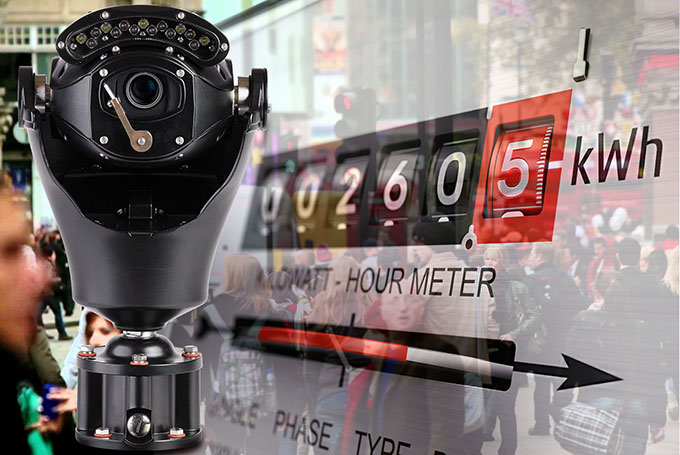
360 Vision Technology announces significant energy cost savings for Elexon Charge Code Users

Capitalising on the unrivalled low power consumption of their CCTV surveillance cameras, 360 Vision Technology is delighted to announce that its Invictus range of PTZ cameras have been assigned their own Elexon Charge Codes, with the benefit of substantially lower energy bills for organisations operating Public Space Surveillance (PSS) systems.

Public sector bodies, such as local authorities and urban traffic control, are charged for their Unmetered Supply (UMS) outdoor powered devices via a Balancing and Settlement Code (BSC). Elexon manages the BSC, and makes sure that electricity suppliers are paid, and customers are billed, according to the specific Charge Codes relating to a products’ power consumption. For CCTV systems, the generic Elexon Charge Code predominantly accredited to surveillance cameras is tagged at 100 Watts power draw. This means that electricity consumption is typically billed at 100W per camera deployed.

However, using 360 Vision’s low power consumption Invictus PTZ cameras, and their new Charge Codes, organisations operating CCTV systems can achieve power consumption savings of an incredible 70%. Impressively, these cost savings are achieved whilst also utilising integrated LED white light or infrared illuminators. This is a significantly lower power draw versus peer PTZ cameras with generic Charge Codes.

“It’s imperative that security equipment vendor specifications include Elexon charging codes, and for local authority clients it’s a fundamental requirement,” says Derek Maltby, Managing Director of security consultants, Global MSC Security. “We are delighted to see that with this initiative, 360 Vision Technology are proactively driving-down the operational costs for Public Space Surveillance owners.”
“The new Elexon Charge Codes for the highly popular Invictus PTZ surveillance camera range is set to save CCTV system owners substantial energy costs,” says Sara Fisher, 360 Vision Technology’s Sales Director. “On a 100-camera system, surveillance system owners could save more than £18,500.00 in energy costs and in turn, reduce their carbon footprint by 37 tonnes over a 5-year period, compared to the closest equivalent camera models on the market. That’s a compelling return on investment and a significant reduction in the cost of ownership. Furthermore, the Invictus camera’s low power draw of less than 13W (in automatic low-power mode), is unrivalled when it comes to green energy credentials.”

For more information on Invictus cameras and Elexon Charge Codes, or full range of rugged PTZ surveillance, thermal and radar imaging cameras, customers can contact 360 Vision Technology on +44 (0)1928 570000, email: info@360visiontechnology.com, or visit their website at https://www.360visiontechnology.com

Cloud Based License Plate Recognition Gains Traction With Niche Applications

As network connectivity and bandwidth availability continue to improve, the use of cloud is becoming more and more popular. Cloud-based solutions have made inroads into the day to day life of most people, right from the personal level in the form of emails to video surveillance footage.
Izvor: a&s International
E-mail: redakcija@asadria.com

Storing surveillance camera footage on the cloud allows you to run several analytic applications on them without having to worry about space and additional infrastructure. A solution that is increasingly gaining market interest in this regard is cloud-based ANPR solutions.

In this article, we explain the benefits and limitations of cloud-based ANPR solutions, along with their applica- tions, especially in intelligent transport systems.

What are the benefits of Cloud-Based ANPR Solutions?

The main difference between on-site and cloud-based ANPR solutions is where image processing takes place, according to Adrian Cseko, Head of Sales at Asura Technologies. In the case of cloud processing, the user sends data to the ANPR provider’s cloud, and results are returned to the specified database or system.

“Thus, the advantage of cloud-based solutions is that the client does not have to purchase a server and set it up on-site to run ANPR software,” Cseko said. “Moreover, most cloud-based solutions can be accessed in a subscription-type model, sometimes the pricing adjusted with processing volume. So, if avoiding CAPEX is the aim of a project, or there is simply no space to accommodate a server, a cloud-based ANPR solution may prove more beneficial. Also, as fewer elements are needed to be installed on-site, an ANPR-based operation may roll-out out earlier if a cloud-based solution is used.”

The Key Two-Fold Advantage
Evidently, there are several advantages to using cloud-based ANPR solutions. According to Gabor Jozsa, CMO at Adaptive Recognition, these can be classified under technology and cost. Jozsa listed some of the significant benefits under both these categories from the perspective of the solution that their company offers.

Cost Advantages
• Zero capital investment required.
• 50-60 percent Total Cost of Ownership reduction compared to on-premise systems.
• 3-4 times shorter implementation- and integration time.
• Start to recognize your own images in just 1 second after registration. Build your application around ANPR Cloud within one day. Start generating revenue in just days.
• Transparent and flexible pricing perfectly matches to every application.
• Adaptive Recognition’s ANPR Cloud offers credit-based, pay-as-you-go pricing packages.
• Minimal to zero OpEx: core engine updates, preventing maintenance, API updates are done by Adaptive Recognition. 99.9 percent SLA level secured worldwide, in all regions.
• Thanks to pay-per-use pricing, the actual cost of service is equivalent to practical use. There is no burden due to flat rates when the required service is low. You can recognize 1 million events at once and pay only for that. Then you may recognize 10,000 in the following months. You will always pay based on the service used.

Technological Advantages
• Integrators can finally focus on application functionality instead of setting up and operating an on-premises infrastructure.
• Easy to use REST APIs results are in JSON format.
• Anyone can become an ANPR expert. Simply upload your still images to Adaptive Recognition’s ANPR Cloud. The rest is done by the service, which tweaks the OCR engine’s internal parameters for the best results.
• ANPR Cloud is elastic, offers an unlimited scale. It is robust and stable.
• ANPR Cloud offers practically unlimited processing resources compared to on-premise, PC / server-based systems. This gives you a real competitive edge, mainly when you feed input images from all around the world. Specific OCR engines that yield the best result for one region can be run parallel in the ANPR Cloud, while this would require expensive and complex on-premises architecture.

How to Get These Benefits?
But cloud-based ANPR may not be suitable for every installation. According to Walter Verbruggen, Sales Director at Avutech Computer Vision, a cloud solution is ideal for a single, existing camera somewhere in the field, streaming video to the cloud ANPR service. It does need some thinking about: what do you want to do with the ANPR data?

“In case a smart security management system would send packets of snapshot images to the cloud, network bandwidth (and costs) can dramati- cally being saved,” Verbuggen said. “Cloud benefits in general: no local server to maintain or support, monthly subscription-based.”

Is a Cloud-Based ANPR Solution Suited to Your Business?

Cloud-based processing is ideal where the return-time of results is not a crucial point, e.g., when gathering traffic information or registering vehicles in a barrierless access control project. This means that if you want immediate results based on the ANPR reading, like opening a gate or raising a boom barrier, an edge-based solution may work best. But there are several verticals where such applications are not required, and this is where cloud-based ANPR is more useful. Here’s an overview of the major verticals that would benefit from cloud ANPR. Please note that this is not a comprehensive list, as the continuous development in technology enables more and more verticals to use cloud- based ANPR.

1. Intelligent Transportation Systems (ITS)
An intelligent transportation system (ITS) allows authorities to automate the process of managing traffic in a city to make it smarter and more efficient. ANPR has a vital role to play in ITS, especially in controlling over speeding and role rules compliance. Since these applications don’t require immediate action taken based on the plate reading, a cloud-based infrastructure that minimizes the investment on the camera side may be ideal.

2. Tolls for Motorways, Turnpikes, and Bridges
If your business involves toll collection on motorways, bridges, etc., without the use of a barrier, then a cloud-based ANPR may be suitable. This is because even as the vehicles pass through toll gates, payments can be triggered from an ANPR reading that is processed on the cloud. Such a system would help avoid unnecessary lines or crowding at toll gates and speed up the system. This may also come in handy in places where congestion charges are applicable.

3. Parking With Pay-by-Plate Services
If you provide gated parking space services, customers can make payments to use your parking space using wallets that are attached to their number plates. An ANPR solution that detects the plate can trigger the payment from wallets that may be connected to license plates. This may also be suited for other businesses like a car wash and vehicle servicing.

4. Mobile Patrols and Law Enforcement
Law enforcement officers may need to search for stolen vehicles or criminals fleeing in cars based on a number plate. In such situations, the system needs to search within video footage from multiple cameras. A cloud- based solution enables this as it is not limited to independent cameras. This application would come in useful at public facilities, shopping mall parking lots, campuses, etc.

5. Personalized OOH Advertising
A cloud-based ANPR solution can aid businesses in providing tailored services to customers. Based on the reading of a license plate, the system can recognize the customer, which in turn automates the customization process. An excellent example of this application is in targeted OOH advertising with location- based demographics based on ANPR and vehicle segmentation. This can also be used to automate loyalty programs wherein the system, after identi- fying the customer, offers specialized services as per the plan.

6. Drive-Off Prevention
A drive-off prevention system based on a cloud- based ANPR solution helps in running a license plate against a database of previous drive-offs. When the solution is located in the cloud, access to databases from third-parties like police or business associations becomes easier and real-time.

Final Word
As governments worldwide increasingly explore the concept of smart cities, the use of cloud becomes more and more inevitable to integrate different solutions. Using cloud-based ANPR would give authorities more control over services like law enforcement. Of course, there are some applications where a cloud-based system is not feasible, and, in many countries, there are challenges like lack of stable network connectivity. But if such problems are dealt with, a cloud-based ANPR solution offers numerous benefits.

Why Cloud-Based ANPR Will Greatly Benefit Intelligent Transportation Systems (ITS)

With the rising popularity of smart and safe cities, intelligent transportation systems (ITS) have seen a spike in demand in recent years. According to MarketsandMarkets, the global ITS market for roadways is expected to grow from US$ 17.9 billion in 2020 to $36.5 billion by 2025, at a CAGR of 15.3 percent. The research firm expects several factors to drive this growth, including increasing concerns toward public safety, growing traffic congestion problems, rising favorable government initiatives for effective traffic management, increasing adoption of eco-friendly automobile technologies, and the development of smart cities across the world.

Aiding Public Services
Cloud solutions are integral to the development of intelligent systems, mainly because it provides centralized control which is essential for integrating multiple applications. Adrian Cseko, Head of Sales at Asura Technologies, pointed out that cloud-based ANPR may prove to be a viable choice for urban or even highway traffic enforcement projects.

“ANPR is arguably the best choice to obtain reference data of speeding vehicles or ones violating traffic rules,” Cseko explained. “In some cases, an intact traffic surveillance camera footage can be used to detect traffic violations automatically (the wrong turn, passing the red light, crossing a closed line) and obtaining the vehicle’s number plate as well as part of the process. ANPR is also a great reference tool for congestion charging and may serve statistical purposes as well as an automatized form of vehicle counting for statistical purposes.”

Lower Costs, Better Performance
Gabor Jozsa, CMO at Adaptive Recognition, further explained that cloud- based solutions are faster and easier to set up, potentially reducing costs and increasing efficiency. “ITS system transition to the cloud, including applications like smart city applications, toll enforcement, stopping congestion relief using hard shoulder running, etc. can be done in 3-4 times shorter and with 50-60 percent cost reduction in TCO,” Jozsa said. “Other benefits include maximized scalability and optimized OpEx. Traditional, on-premise Intelligent Transportation Systems must be scaled to the peak workload, while ANPR Cloud flexibly adapts to the required workload.”

Highlighting his own company’s ANPR engine, Jozsa added that there is also the advantage of low false-positive rates when using a cloud solution for ITS. Also, AI-based data filtering and flexible business intelligence functions empower smart predic- tions and data-based decisions. Finally, wireless communication (4G, 5G: in the coming years) combined with cloud-based ANPR requires signifi- cantly less installation cost.

Benefits to large transportation companies
License plate recognition is not limited to public or government use for purposes like law enforcement. Transport companies that own their fleet would also benefit from automated license plate recognition to improve their operations.

However, not all transport companies may find a cloud-based ANPR worth the investment. Walter Verbruggen, Sales Director at Avutech, added that with regard to ITS, a cloud-based ANPR solution is particularly for larger transport organizations and distribution centers where there are many perimeter efficiency improvements to make for ANPR in general. Such organizations would need safe and secure parking areas for trucks along the highways, offering multiple services to truck drivers as well, all of which could be made easier and more straightforward with a cloud solution.

Conclusion
To sum up, cloud ANPR solutions are useful to ITS as they enhance the possibilities of the technologies that are in use. But technological improvement is not the only advantage. From a customer perspective, the reduced costs and easier installation are also attractive to implement an ITS system better. Finally, the use of cloud ANPR for ITS purposes would benefit large private transport organizations would have to deal with lots of vehicles in their fleet.

Challenges and Limitations of Cloud-Based ANPR Solutions

Despite their advantages, cloud-based ANPR solutions are not without limitations or challenges in their implementation. These are mostly technical but can, at times, be the result of budgeting concerns as well.

The most obvious limitation is that analytics on the cloud may not be suitable for solutions that require immediate actions taken based on the insights. For instance, a solution that opens a gate or boom barrier to a parking lot after identifying the user through ANPR needs to open gates within seconds. Failure to do this will cause in irate users or customers. You cannot afford to have network-related delays here, and hence, solution on the edge works better.

Internet Connectivity
Cloud-based solutions – as the name suggests – require an Internet connection to work, so they may not be feasible for projects where having an Internet connection is out of the question.

“Event detection is also an issue in case of cloud-based ANPR, which can be avoided if the bandwidth allows for a continuous video stream of the monitored areas (as in this case our solution uses video analytics-based triggering), but this is not yet realistic in terms of accessible infrastructure and also when considering economic reasons,” explained Adrian Cseko, Head of Sales at Asura Technologies. “Another way to tackle the problem is either an image pre-selection mechanism set in place, triggers (like inductive loops) or cameras that include some sort of triggering mechanism, the latter solution, however, may prove more costly due to the price difference compared to standard IP cameras that provide sufficient image quality for ANPR.”

Camera Quality
The basic rule of the thumb when selecting a camera for ANPR is that if a license plate is recognizable to a human eye, an ANPR solution will recognize it too. Having said that, since cameras on highways often have to deal with rugged conditions, there are several instances where they failed to give continuous clear visuals.

“Camera image quality is essential during all weather and lighting conditions,” said Walter Verbruggen, Sales Director at Avutech. “A dedicated ANPR camera system will always outperform another type of camera, as it is optimized for ANPR image quality, offers more speed and does not require any image or video compression, compromising the image quality.” Camera placement is also essential to capture license plates. Too far or too near would result in images that are not useful. Similarly, installing cameras too high or too low would also be problematic.

Finally, when the visuals are blurred because of rain, fog, dust, or other such elements, the ANPR solution would have difficulty recognizing the plates. It should be noted that these kinds of problems pose a challenge to any ANPR solution regardless of whether they are located on the cloud or the edge.

Lack of Customizability
Gabor Jozsa, CMO at Adaptive Recognition issues like network connectivity, is not limited to ANPR but could define any cloud-based system. However, a more significant limitation is the difficulty of providing services that may need certain unique recognition features.

“Limitation in customized features is an issue,” Jozsa said. “Sometimes, the customer’s application requires specific OCR engines and recognition functions.”

Limitations vs. Advantages
To conclude, both cloud-based and edge-based ANPR solutions have their advantages and disadvan- tages. Both are suited for different verticals and applications, which makes comparison difficult as well. Any decision to purchase from customers should be based on the application.

Bringing Trust to the Workplace

HID Global became its own case study in safely opening its sites

Author: By Jaroslav Barton, Director Product Marketing, Global Regions, HID Global
Contact: chris.gibbs@vol4comms.com
HID Global: https://www.hidglobal.com/access-control

As businesses and governments enter a new era of workplace safety, two prerequisites are preparedness and the ability to pivot quickly. Widely adopted access control, authentication, Internet of Things and other trusted identity offerings provide the foundation for safely and confidently reopening workplaces.

Facing the challenges
HID Global faced the same challenges in returning its employees to work. The first step the company took was to develop a strategy and comprehensive playbook, as well as processes for communicating to employees in a time of rapid change. These elements help guide the safety and security of employees while ensuring operations continue to run smoothly. The Return to Workplace playbook provided clear recommendations and reassurance for site leaders, employees and support for customers in an ever-changing environment.

Health and safety are front of mind for employees. It is essential to anticipate very real emotions and valid concerns. Equally important is looking ahead and showing what the ‘new normal’ looks like for employees by defining and providing reassurance about the new behaviours needed in an otherwise familiar place. The playbook provided this reassuring clarity.

Every office or facility has to adapt to its individual needs, but for HID Global they concentrated on four core areas: protection, cleaning, messaging and distancing.

For protection and distancing, HID Global turned to its own product and solution portfolio. Site-specific distancing guidance was provided related to face-to-face meetings and the time and spacing constraints, as well as greeting practices, dining habits and managing mail and package deliveries. The guidelines also covered activities related to meeting rooms, personal offices and workstations Site leaders also concentrating on how they could reconfigure assembly stations and other density- management challenges. Ongoing focus areas include ensuring compliance in cube arrangements, traffic flow pattern design and management, and the use of plexiglass and other barriers for ensuring separation.

Putting the guidelines in place
With these separation guidelines in place, HID then applied its own technologies to automate the process of compliance. There are two key components:
– Dynamic Workplace Safety – Cloud-based visitor management, remote employee and visitor badge issuance, and fully touchless access solutions reduce person-to-person contact. Rule-based physical distancing management provides immediate insights and alerts to keep employees compliant with safety and sanitation requirements.
– Automated Rapid Response and Compliance – Automated visitor compliance, contact tracing, physical distancing, and hygiene behaviour removes the burden of tracking new health and safety procedures.

HID piloted its solutions with 200 essential workers soon after public health distancing guidelines went into effect. The solutions were deployed across different physical environments from manufacturing floors to cubicles, eating areas and entrance lobbies. Each employee was given a Bluetooth Low Energy (BLE) fog on a lanyard, which uses peer-to-peer capabilities to sound an alert if people are closer than 2m for a specified time period. Simultaneously, this data was sent to the cloud for analysis and location information to identify where the incident took place within the building.

As an alternative to fobs, the same capabilities can be delivered using a badge/ badge holder that is easily added to existing ID cards. In either case, there is a full digital trail of an employee’s whereabouts and historical interactions while at work. Fobs can be issued to all onsite visitors and contractors as well. Employers define distancing policies and alert parameters for mitigating an infection outbreak per public health guidelines, and zones can be created with geo-fences around high-traffic areas (breakrooms, hallways, lobbies) to minimize large congregations of people.

Playing a key role
The solution also plays a key role when someone tests positive. With a click of a button, detailed reporting enables contact tracing using historical data on movement and interactions. This triggers safety protocols based on reporting that includes a chronological list of all the times two people were in the same zone or had a distance incident. The facility can assess the risk of each employee exposure and minimize disruption as it rapidly responds to cases and activates isolation procedures as needed.

The HID Global pilot revealed much about employee reactions to the global health crisis. They generally wanted to be part of something that could have a tremendous impact on the worldwide workforce. Their participation in the pilot also revealed how best to implement guidelines while also creating the optimal experience for employees. Additionally, the pilot underscored how an IoT ecosystem can quickly scale and adapt to the dynamic requirements of hospitals, manufacturing facilities and enterprise organizations. Real-time time monitoring and analytics capabilities can help ensure compliance with a number of other safety requirements, such as hand hygiene policies and other regulations introduced as part of the ‘new normal’. At the same time, organizations can leverage their investment in these IoT solutions beyond today’s global health crisis, since they lay the foundation to easily add even more IoT applications, all of which can be centrally managed on a single platform.