Home Archive by category Najave II (Page 14)

Najave II

What makes smart homes smart and intelligent buildings intelligent?

The robust quality of the frogblue hardware (the frogs) is really only half the story. Frogblue also provide the management software that gets the most out of these high quality hardware products.

The same people who developed the original comprehensive intelligent video management software solution for the MOBOTIX camera are also behind the development of the frogblue intelligent building solution software.

That concept of building high quality and robust hardware on which to run their own intuitive and decentralized intelligent software continues with frogblue.

frogblue develop the smartest smart home and most intelligent building management software that allows an almost infinite pallet of programable possibilities, which provides the installer and user the most flexible and scalable interactive system available.

Each and every frog is capable of receiving, analyzing and forwarding messages and commands to every other frog in any other part of the system. The configuration of the frogblue system could not be easier. By allocating the same name to an input and an output of the frogs we create a virtual cable between these devices. Each input and output in each frog can accept and carry out multiple commands controlled by the internal logic module – this results in the incorporation of every individual aspect of the devices into a complete interactive proactive and thinking system with the software as the brain and the Bluetooth LE Mesh Network acting as the nervous system to distribute those commands and messages.

This means that the mood lighting control works in complete harmony with the shading and access control while the ventilation system works hand in hand with the temperature, humidity and air pressure sensors. The frogblue lighting ( external and internal) and access control can also communicate via the frogs with the security cameras and combine all elements of the overall installation. Gyroscopic sensors can tell any part of the system that a door or window is open (fully or partially) this could trigger an alarm notification that the heating in that room should be turned off ( why heat a room when the window is open) and at the same time it could notify the security system, alert & activate the nearest cameras and cause security lights to blink on and off at night.

All of this is available in the most scalable format on the market. The software is effective for a one frog intelligent light dimming solution as well as for a solution incorporating hundreds of frogs.

Frogblue offers professional installers and designers a professional software tool box combined with robust, reliable and intelligent hardware that enables them to customize their solutions and put their personal signature on the design or project.

The configuration of the frogblue system is done via the frogblue ProjectApp and the frogblue HomeApp is used to control and manage the system. For anyone who does not want to or cannot use a software App the frogblue system can also be controlled via the existing physical switches.

Answer is still A. Software, solve very complex projects and be future proof!

Partneri i suradnja: info@frogblue.si, www.frogblue.si

Gas Suppression Control for Critical and High-Risk Sites: What to Consider

Advanced’s Regional Sales Manager for Southern Europe, Vladimir Zrnic, discusses some of the key considerations to take into account when specifying an effective gas suppression system.

Data centres, control rooms, power generation facilities and archives may serve very different purposes, but they all pose the same critical challenge for those charged with their fire protection. Guarding against catastrophic loss – whether of data, irreplaceable cultural assets or essential services – creates unique impetus to design solutions that offer the highest levels of control, reliability and protection. Ensuring you’ve covered all eventualities on these sites takes meticulous planning from the earliest stages and demands the use of specialist, proven technology.
Gas suppression systems are a valuable asset in protecting critical sites, where the use of water could be almost as damaging to building contents as the fire it would be used to quell. Some suppression systems release gases to reduce the oxygen content, and others use chemical reactions to extinguish fire.

Compliance
EN 12094 details the compliance requirements for gas suppression systems and their associated components, and EN15004 details the requirements and recommendations for the design of these systems. In order to meet EN12094-1, you need both the EN12094-1 approved extinguishing control panel, and also EN54 approved peripheral products. The panel, the detectors, the manual call points, as well as the sounders, all require EN54 approval for full compliance and peace of mind that your system will perform as expected in a fire situation.
EN54 part 13 specifies the minimum functions required to be performed by the control and indicating equipment (CIE) and its associated components, and it specifies the requirements for networked systems. This can prove particularly useful in indicating trouble or a fault during normal conditions if the voltage/current at the end of a circuit is not sufficient to operate the device connected to it. Essentially the fire system continuously tests its integrity – continually checking the condition of its components, and wiring, ensuring that they will work as required in an emergency.
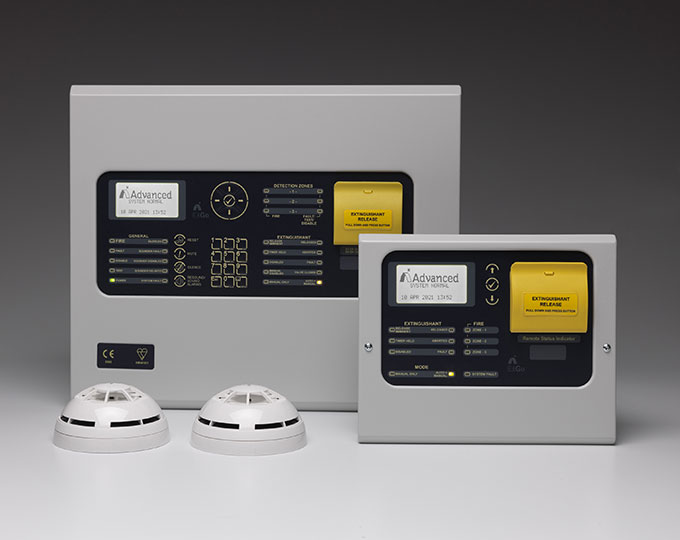
Advanced’s ExGo gas extinguishing panel was among the first solutions to achieve EN12094-1, alongside approvals to EN54 parts 2, 4 and 13. ExGo also led the way in being one of the first to combine these with EN12094-3 in a single solution, providing end users with the additional functionality of annual activation on the facia of the panel – incorporating an electrical triggering device in compliance with the requirements. (EN12094-3 relates to the integrated manual release on the front of the panel).

Case Study – National Library of Romania 

47 networked ExGo gas suppression panels with LCD displays, LED indicators and manual release buttons have been installed to protect the priceless, irreplaceable collections housed at the National Library of Romania.

The gas suppression system integrates with the Library’s fire system and monitors and controls the valves that release up to 20 tonnes of NOVEC 1230 fire protection fluid.
The system is EN 12094-1 and EN54 parts 2, 4 and 13 approved and offers the flexibility and expandability to meet current and future requirements.

Functionality
Gas suppression systems offer two different modes of use – automatic or manual control. In automatic mode, the system can operate without human intervention to deal with a fire before anyone is even aware of an issue. This mode of operation is particularly beneficial for isolated or unmanned sites.
However, some solutions also offer a degree of manual control. Manual mode enables full control of the system, proving useful in scenarios where an end user wants to reduce the risk of costly false alarms. When repair or maintenance work of a protected area is being undertaken, or if detection with high sensitivity – such as aspirating smoke detectors – are in effect, manual mode functionality can be useful in reducing the likelihood of a gas suppression system being triggered and releasing costly suppressant into the protected environment unnecessarily.
A solution with manual mode functionality can also be highly advantageous to users who want to specify how a system will work or react when certain events occur. This is particularly apparent with integrated solutions, capable of transmitting command signals from one system to another.
For example, in a data centre environment, all doors and windows will need to be sealed, in order for any release of gas to be effective at preventing the spread of a fire. If the server room doors are left open, the building’s access control will register a fault. This can be reported to the BMS, which in turn communicates with the gas suppression system to enter manual mode until the doors are once again closed and the room sealed.
To cover these eventualities, ExGo from Advanced, was developed with enhanced functionality in mind. The main panel is complemented by a range of repeaters so that system status can be seen inside and outside a protected area. In addition, ‘hold’ and ‘abort’ buttons allow the gas release to be paused or cancelled on visual confirmation of the area.
This flexibility in control options and devices, including automatic/manual switching, is an important additional safeguard for minimising the possibility of accidental/unwanted suppressant release and ensuring the effectiveness of the protection measures.

Case Study – the Hong Kong-Zhuhai-Macau Bridge

A network of 31 ExGo gas extinguishant panels was selected to protect critical server rooms in more than ten different buildings on the artificial island gateway to the $18.8 billion bridge, including police and fire stations as well as customs and various administrative buildings.
With its proven track record in complex installations, cutting edge capabilities and high reliability, each ExGo gas extinguishant control panel is connected to at least one remote status indicator unit located at the entrance to the protected area, providing enhanced monitoring and control for the end user.

Integration
A superior gas suppression system will allow interfacing with various third-party systems, such as the fire system, offering tangible benefits such as enhanced protection, cost efficiencies, greater ease of use and faster response times during an emergency. Gas suppression control modules can be added to the fire system and can then control extinguishing operations as part of the wider cause and effect programming.
However, integrating gas suppression systems can be both delicate and challenging. Coordination and a good understanding of the integration approach are essential to attaining a system that operates smoothly.
ExGo has been designed to integrate easily into Advanced’s MxPro or Axis EN fire systems, as well as a site’s BMS, via a simple fire protection interface, or any third-party fire alarm system via an I/O loop device. Once integrated, the end user can take advantage of improved capabilities.
By consolidating data from HVAC, energy, security, CCTV and life safety applications onto one system, the end user gains facility-wide insight from a single workstation – benefitting from improved reporting, information management and decision-making.
Operational efficiencies can also be gained through the integration of the gas suppression system with the fire system and BMS, thanks to the reduced requirement for additional staffing and resource, simplifying training, and reducing false alarms.
These factors reduce risk, offering more strategic mobile or desktop control, exceptional alarm management and integrated security solutions. Overall, this provides a more comprehensive view of the status of a site, helping to speed up response time and mitigate risks to people, property and business.

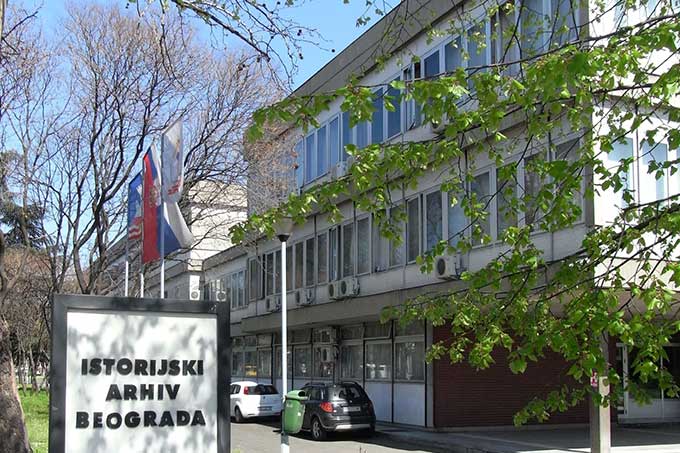
Case Study – Historical Archives of Belgrade, Serbia 

A custom-engineered ExGo gas extinguishant system, alongside Advanced’s Axis EN and TouchControl touchscreen remote control terminal, has been installed to meet the specific needs of the Historical Archives of Belgrade.
The end user required complete system visibility over one of the Archives’ 2,400 sq metre storage facilities, which houses some of Belgrade’s most important cultural and social assets spanning the 16th to 20th centuries.
The installation involved the extensive interfacing of TouchControl with the ExGo panel, enabling the end user to see the status of the suppression system remotely via 3D interactive maps. The ExGo panel has been programmed with substantial logic in order to achieve cause and effect that activates relays and sounder circuits. These circuits are then used as mass-notification devices and integrate with a bespoke engineered system using TouchControl.

Software
Carefully designed software has the ability to drastically enhance the performance of your gas suppression system, making it easy to perform remote monitoring tasks, fault find and plan and configure even the largest and most complex of systems. A high-quality solution will also provide users with unrestricted access to regular updates to ensure the system consistently meets changing standards.
The ExGo extraction tool, designed to work with Advanced’s gas extinguishant panel, makes the management of configuration, control data and event logs simple and efficient for integrators, maintenance technicians and end users. The complete suite of applications for Advanced’s solutions are continually updated with new features and performance enhancements, with legislation changes implemented across the software quickly, keeping customers’ systems up to date.
In summary, there is no ‘standard’ fire solution for critical and high-risk sites. Their distinctive characteristics and complexities demand that fire protection solutions be designed into them from the earliest stage. Specifiers and users need to understand the pros and cons of the solutions available and, importantly, how the gas suppression systems themselves can help deal with the unique challenges presented by critical and high-risk sites.


Helping installers stay competitive using remote monitoring

The world has been rapidly changing for traditional security installation companies and there’s a danger of them being left behind if they don’t adapt. There’s pressure to offer much more diverse solutions; the fact that products and technology are always developing; and a desire to monitor and work remotely – all things they need to consider in their strategic planning. In order to stay competitive, it’s important for companies to keep up with trends and adjust to these market and customer needs. In this business environment, working with a manufacturer that follows trends and develops products and technology accordingly can add a lot of value.

Embracing remote service
One of the emerging trends in the world of installers is the concept of VSaaS (Video Surveillance as a Service). The use of video security, and as a tool for business analytics, is being managed remotely, via a Cloud network, to allow end users to realize the value of the service, without having to focus on it. This also, of course, means that they do not have to maintain it either, but allow installer to use technology to remotely keep an eye on their system.

VSaaS is growing very fast, and the Security Industry Association naming ‘move to service models’ as one of its ten ‘megatrends’ for the industry in 2021.

Like all businesses, installer companies are looking to the future to adapt to these trends, and some are even already embracing a new kind of business model. The ability to effectively provide service/maintenance contracts after a solution has been installed opens up a new revenue stream that can provide regular income.

The other side of this service coin is the fact that the use of remote monitoring and configuration allows installers to correct a wide range of issues without having to make the journey to the customer’s premises – saving costs on both time and travel. This has also added a safety element to the relationships, allowing people to keep their distance – a key element in recent operational thinking.

“To greet the trend of moving to the Cloud, security system integrators and installers are embracing it as a good chance to strengthen their business models”, says Peter Guan, Sales and Marketing Director of Hikvision Europe. “They are using the Cloud to provide services for their clients – such as system checks and remote maintenance – and consistently scale their business with efficiency.”

Flexibility through remote tech
Of course, where there are developing trends, there are innovative manufacturers working to cater for them. Hik-ProConnect, for example, is a convergent, cloud-based security solution that helps security providers to manage services for customers. Installers can monitor the system health status of customers’ sites remotely, and even resolve problems, using a simple and reliable platform.

This enables them to customize security solutions for customers with fully-converged Hikvision devices, covering video, intrusion, access, and intercom. From bug fixing to updating and configuration, a range of activities can be carried out simply from the comfort of the office. Customers can get a proactive, efficient service while an installer saves time, money and potential stress out on the road.

The solution provides different levels of interaction. Customers can reap the benefits of giving their installer the ability to keep an eye on their systems, so they can provide real-time support. They can also rest assured that they are getting the best quality of service, since installer management teams can have an oversight of how the projects are doing. Every operation carried out can be recorded and a log can be exported as a tool for reporting to customers and improving professionalism.

The system is designed with privacy in mind – installers will only be able to ‘see’ an end-user’s system if the end-user themselves agree to that. With GDPR regulations in force throughout Europe, its important installer companies understand this and weave it into their processes.

Hik-ProConnect also has various levels of service to cater for different types of management, cloud storage and account numbers connected. These can, in turn, be used by installer companies to inspire their own levels of support.

The Hik-ProConnect solution can also link into the existing Hik-Connect app, giving end-users a way to monitor their systems too.

All of these elements can help installers to proactively support end users, making fixes and upgrades simpler and more cost-effectively. Hik-ProConnect provides efficiencies and cost savings across the board and is scalable to adjust to future needs. And perhaps, most importantly, it supports customers as their needs change promoting that most valuable asset – customer loyalty.

When new technologies are considered and their potential realized, they can really help an installer company to keep up with trends and compete. In partnership with innovative manufacturers they can stay ahead of changing markets, rather than being dragged along behind them, or even being left behind.

FROGBLUE – INTELLIGENT BUILDING TECHNOLOGY

Made in Germany installed globally.

This 6,000 sqm property in Provence in the South of France which is part farmhouse renovation and part new build, has recently been equipped with the latest in innovative Intelligent Building Technology from frogblue.

The frogblue Bluetooth LE mesh based system not only controls the individual functionalities of the lighting system, the ventilation, the shutters, blinds and awnings, the alarm systems and access control it also combines all of these into one interactive intelligent system. At certain times of the day and under predefined conditions the system will react according to configured commands.

Video surveillance is carried out by MOBOTIX ™ cameras which are integrated with the frogblue system via the frogblue USB link and so offer all the combined benefits of frogblue functionality and MOBOTIX intelligent surveillance, alarm notifications and commands.

For this particular cable free Smart Home System the following specific functions were requested by the customer:

Central- Off when leaving the house, Central-On as a Panic Mode Command ( where all lights will be turned on with or without flashing mode) and predefined lighting scenarios for the terrace, Pool and outside areas.

In alarm mode, a notification is sent when a door or window is open or tilted.

At night, corridor lights are activated at a preset brightness level when any of the outside doors are opened.
A double click on a light button can activate the panic function in defined parts of the building.
A triple click, on selected light buttons will activate/deactivate all the lights in the building e.g. if the owner comes home when it is dark.

What were the main factors that made frogblue the obvious choice for this property owner?
As soon as the local electrician installed the frogblue modules in the rooms all lights could be turned on/off and dimmed – without any configuration.
The cableless installation meant minimum disruption in the buildings and
the configuration of the messaging and notification, the setup of room and signal names, room scenarios, frogblueHome App and frogDisplay as well as the setup of the central functions took less than two days, which meant enormous time savings for the installer and financial savings for the house owner compared to other systems.
The frogblue system does not require a central control unit, internet or cloud connection for set up and no IT installation. Each frog has a built in logic module which enables every frog to receive, analyze and forward messages from every other frog in the system, a decentralized, robust and intelligent solution with no potential central point of failure and no problems with distance. The communication between frogs is highly encrypted using both frogblue 128bit and Bluetooth ™ network encryption.

More information available at www.frogblue.com

A new SMARTair wireless escutcheon boosts security even at your high-traffic doors

London, February 2021 — Heavily used interior and exterior doors need an access solution that’s both robust and intelligent. The new SMARTair i-max Escutcheon from ASSA ABLOY ensures only authorised users pass through these doors, via a range of credentials including virtual keys stored on a smartphone. Fast, wire-free installation makes it easy to implement or extend a SMARTair access control system in any building.

This new wireless escutcheon with inbuilt RFID reader and Bluetooth compatibility handles the punishment of high-traffic, frequent-use doors. It meets standard EN 1906 Category of use: Grade 4 for robustness — the highest level, recommended for doors “which are subject to frequent violent use”*.

This hard-wearing, resistant build quality makes the SMARTair escutcheon ideal for busy doors at education establishments like universities and schools; healthcare sites including hospitals and nursing homes; offices and coworking spaces; apartment complexes and multifamily residences; and public institutions like government buildings, sports centres and libraries. Its robust design, redefined aesthetics and wire-free installation are perfect for these high-traffic environments — facilities with busy students and teachers, or doctors, nurses, visitors and subcontractors always on the move. The SMARTair i-max escutcheon is also available with an antibacterial coating, for healthcare and other sterile settings.

The new escutcheon is battery powered and works with all standard proximity credential technologies, including MIFARE®, DESFire and iCLASS®. An optional integrated PINpad provides the opportunity to add another layer of security with multi-factor authentication. You can specify individual doors to open with PIN verification or credential verification — or to require both.

An escutcheon for style and sturdiness
The new i-max sacrifices none of its style in pursuit of functionality. The new escutcheon comes in a variety of contemporary finishes and handle options — with up to 16 different combinations. A multi-coloured LED gives visual warning signals at a glance. This new SMARTair escutcheon fits glass, wooden or aluminium doors — including fire and emergency exit doors — and is available for Scandinavian, Euro, Finnish and Australasian door profiles.

The new escutcheon is compatible with all SMARTair system management options: Standalone, for basic access control functionality; Update on Card; Openow and Pro Wireless Online, for real-time management of every door and system user.

Mobile solutions
The i-max escutcheon also offers another way to open doors: the SMARTair Mobile App to open doors remotely and the SMARTair OpenowTM mobile app.

With Openow, users no longer carry separate card or fob credentials. Instead, their smartphone stores secure virtual keys which can be issued, amended or cancelled at any time. So, users no longer need to waste time collecting or validating an access card to open doors locked with a new SMARTair i-max escutcheon. With Openow, if you have your phone, you are already carrying your keys.

To learn more, you can now download a free product brochure for the new SMARTair® Escutcheon at https://campaigns.assaabloyopeningsolutions.eu/hubfs/AA_SMARTair_Escutcheon_SalesBrochure_07_2020_FINAL_WEB.pdf

Who are frogblue and what do frogblue actually do?

Frogblue is a 100% made in Germany Intelligent Building Technology solution from Dr Ralf Hinkel and the team that developed and successfully brought the MOBOTIX intelligent camera system to the global market.

The frogblue philosophy is based on a high level of quality backed with exceptional flexibility and performance at a very competitive price. The scalability of the frogblue system means that a solution can start with only one frog (e.g. D2-2 intelligent dimming solution) and go all the way up to many hundreds of frogs ( see Case study in this issue of A&S Adria).

Because of its ease of installation and the savings on cabling the frogblue concept is perfect for renovations as well as for new buildings. Frogblue solution flexibility enables us to provide solutions to many different verticals and at all levels.

Lighting Designers and Architects
We offer the Lighting Designer and architect a platform on which to build their own ideas and incorporate their individual vision without the headaches of pre planning the wiring systems.
Construction Companies and Property Developers
We offer construction companies an effective smart solution which can be introduced into the building schedule at any time because it does not require preplanned cabling. We also offer property developers the means to improve and upgrade existing properties with a lower investment and minimum of disruption but with a sizable and significant increase in property value.

CommercialBusiness Premises
Lighting plays a significant role in the actual sales & revenue process of many businesses through positive customer experience. Frogblue provides restaurants, pubs, hotels, car dealerships and all kinds of shopping areas with a solution that is extremely flexible and intuitive and that can be very easily retrofitted.

Enhanced Work Space Environment
Frogblue offers office spaces, call centers etc the opportunity to create atmospheric work spaces that are people and environmentally friendly. By utilizing the frogblue capability of being able to allow different factors to interact with each other we can build comfortable environments for employees based on the optimum combination of lighting levels, temperature, shading etc. Realizing the full potential of the work place enhances productivity and employee job satisfaction.

Industrial Premises
We offer industrial premises a solution that will increase and simplify control of production facilities and raise the level of safety for workers while at the same time raising performance levels and reducing downtime.

Frogblue ultimately provides a tool kit that takes Intelligent Building Technology to a much more interactive level facilitating the incorporation of multiple factors like lighting, shading, ventilation, door entry and alarm systems into the same project.

Frogblue are working together with their partner TEND to bring the frogblue solution to the A&S Adria region and to provide top level sales, technical and project planning support to selected partners. If you are interested in becoming one of these select frogblue partners please contact Mr Ales Polajnko: frogblue@tend.si for more information.

Interview: Hebe Zhao, Director of East European Business Dept., Uniview

We used our knowledge of IT to create advanced video surveillance solutions

Ms Zhao, thank you for addressing to our readers. For a start, could you present yourself, your educational and professional background, duties you are performing at Uniview, etc.?
I am Hebe Zhao with a master’s degree in MBA from Zhejiang University and a bachelor’s degree in background engineering from Southeast University. I used to work in telecommunication and network equipment manufacturer as a senior channel manager for nearly ten years. I have been working for Uniview for six years and have been the Director of East European Business Dept. in the past 3 years.

Uniview is one of the largest players in video surveillance in the world, ranking sixth in 2020 Security 50 research. Can you give us a brief history of Uniview, what were the most important milestones on your way to success? How many people do you now employ now, in how many countries do you sell your products and have offices, what is your growth rate, revenue, etc.?
Uniview is a pioneer and leader in IP video surveillance. We are the third largest player in video surveillance in the Chinese market. Our goal is to become a global leader in the video surveillance industry, which is committed to building a safer world by providing professional, reliable products and services.
Uniview has a complete IT industry background. Before Uniview was founded in November 2011, the whole team used to be the Storage & Multi-media product line of H3C, which has now grown into the largest network equipment manufacturer in China. We have an absolute advantage in storage products, especially in IP SAN.
We have accumulated more than 15 years of experience in R&D of storage products. When we talk about solutions related to IP protocols and network architectures, the Uniview product consistently delivers the best performance. Uniview was awarded China’s second National Science and Technology Progress Award for “Key Technologies and Equipment of Media Stream in Large Scale Metropolitan Surveillance.” It is the highest honor in the entire security industry awarded by China State Council. We are also the first security manufacturer to receive this award.

Uniview has complete IP video surveillance product lines. Can you present your product portfolio in brief?
Currently Uniview has a complete IP video surveillance product line: IP cameras housing in bullets, domes, fisheyes and PTZs; NVRs, Hybrid NVRs and XVRs; VMS and IP storages; Monitors, LCDs and LEDs; Access control Terminals; Smart Interactive Displays, etc. tries to deliver not only products to our customers, but also the entire solution from the front end to the back end.

What is the difference between three types of product series: Easy, Prime, and Pro, and what are their benefits?
Since 2018, we have classified our CCTV products into 3 categories: Easy, Prime and Pro. The main reason for this classification is to better adapt to the market segmentation of CCTV. At present, the surveillance market can be roughly divided into 3 categories: vertical industry markets, SMB markets, and retail markets. Different market categories have different price requirements and product function requirements. Using only one product category to meet different market needs is obviously not the right choice. The Easy series is currently positioned itself at the entry level category to meet the basic CCTV requirements, the extremely high cost-effective is the benefit they can to bring to customers. Regarding the Prime series, we added smart functions, richer interfaces and better image effects, to bring additional value to our customers. Move on to the Pro series, we empower them higher computing capability, more high-end functions (e.g. Optical Defog, SFP) and more diversified product forms (e.g. Panaromic, LPR, Positioning System) to meet the diverse needs of high-end projects such as safe cities, hospitals, subways, airports and so on. By dividing these product levels, we will bring more choices to our customers and bring them the most appropriate product value.

Which low-end camera type do you sell most of – and which high-end camera is most popular?
Depending on the region, there are different best-selling products in different regions. When it comes to the Balkans, the Easy series cameras with a focal length of 2.8mm and a resolution of 4 mega would be the best-selling cameras, as well as a 1-SATA, 4-channel plastic chassis network video recorder. On the high-end side, our license plate recognition cameras and AlphaView series cameras are the best sellers. In addition, our high-end integrated management server Unicorn has been adopted by an increasing number of projects and is being recognized by more and more customers due to its high reliability and rich features.

Last week you launched new generation of Prime-I products. What are theirs features and how do they overcome conventional intrusion prevention products’ limitations via Smart Intrusion Prevention?
Well, the biggest feature of Prime-I series definitely is definitely the smart intrusion prevention, which we call SIP for short. Compare with conventional intrusion detection, SIP technology adopts deep learning algorithm instead of just image contrast change detection. SIP can achieve less than 1% false positives when people and vehicles are detected. It filters out most distractions, such as swaying leaves, lights, pets, wind and other non-target objects and alarms are triggered only by interested targets, such as people, vehicles and non-motorized vehicles. Related videos are sorted by category for easier search, and each category box represents a color to provide a clearer trigger type, which will greatly improve search efficiency.

Were you affected by the coronavirus pandemic and what did you do in terms of innovation to keep the business running?
As Uniview is the third largest CCTV manufacture in China, we were greatly affected by Covid-19 in 2020. During the last lunar New Year period, from January 23 2020 to the end of March, the whole of China was under lockdown and almost all the Chinese residents took part in the campaign against the coronavirus. People stayed at home and work from home, but for us, many engineers were at the forefront of this battle. We have not only brought CCTV products to the public but also the Heat-Tracker series fever screening products. Uniview launched the fresh new Heat-Tracker series products in just 2 months during the lockdown period. The Heat-Tracker series products helped Uniview and its partners to keep their business on track, and in some countries and regions, this has even helped the partners generate better revenue than they did in 2019.

PixelSense is one of your core technologies.How does it increase the quality of the picture?
The main goal of video surveillance is to see clearly anytime, anywhere. Cameras have to be well prepared for providing high-resolutions and colorful images under different illumination conditions. Day& Night are two essential scenes due to different illumination environments. Unfortunately, conventional cameras usually adopt hardware sensor to determine whether it’s day or night scenes, such as photocells, which are less reliable in most cases, and there are plenty of complaints about conventional methods in the market. For example, if a conventional camera is just set beside a shining lamp-box, the camera will determine itself to open daytime mode, but the actual environment may be midnight. To solve this problem, Uniview applied unique PixelSense technology to replace the hardware sensor with a more accurate intelligent algorithm, which significantly improves the accuracy of the day and night conversion. Therefore, it significantly improves the image quality to adapt to different illumination conditions.

With the improvement of video quality, it affects the demand for more storage. Uniview has innovated and updated U-code and UBS technologies. What are they and how do they reduce storage capacity?
U-code is a patent codec technology invented by Uniview, the main goal of U-code is to reduce the bandwidth and storage costs based on the standard H.264/H265. Unlike conventional video compression technologies which try to reduce storage costs by sacrificing resolution and frame rate indiscriminately, U-Code 2.0 chooses to use “IRP” (Intelligent Region Perception) to detect movement within each frame. With U-code technology, it can save up to 95% in bandwidth and storage costs, which brings greater value to our customers. UBS is the abbreviation of Universal Block Storage, which is an advanced storage structure invented by Uniview , more suitable for CCTV applications. Unlike the traditional file recording systems like FAT or NTFS, which waste a lot of space due to file fragmentation, UBS saves some storage costs by splitting video data directly and mapping it to hard disks within the original block of data, thereby avoiding file fragmentation and making full use of hard disks.

The most important trends in video surveillance are artificial intelligence and loT. What must Uniview provide in these areas?
In fact, we started investing in AI technology very early on. Our AI-related products have been widely used in the past few years, and China State Television has reported some successful cases on Uniview. In overseas markets, we started deploying AI products last year. You may notice that we’ve already released a number of cameras with AI, and we’ll be offering backend products in the near future. This has been one of our strategic directions regarding loT. We are involved in the construction of many smart cities in China. The loT is the foundation of smart cities and cameras are an important part of loT. In addition, we also released some smart home products, such as access control terminals, PM2.5 sensors, landmark devices and so on. We will also release more products related to loT in the near future.

Uniview insists on high quality. How do you ensure reliability at design and test?
Uniview strives for high quality in design, materials, R&D and testing. For example, Uniview’s IR anti-reflective glass can increase IR transmittance by 8% compared to regular glasses. Uniview also uses automotive-grade LEDs to improve infrared compensation by 15%. Our three-phase stepping motor driving PTZ dome cameras moves smoothly at 300 degrees/s without shaking, resulting in stable video, more reliable and more cost effective. Water and vandal proof seal design helps prevent water and dust, providing easy installation of screw out of seal. Uniview’s all color and laser IR compensation technology are able to provide vari-focal compensation methods, and also support IR ranges up to 500m. This can definitely be applied to our 44x zoom PTZ dome cameras to view longer and wider images. In addition, our NVR comes with a lot of great hardware designs. This is This is a carefully designed case from NVR that is designed to prevent injury accidents with rounded corners. Maglev fans can reduce friction and control noise while the equipment is running, thus extending its service life. Flame-resistant materials compliant with UL-94-V0 to prevent more serious injury or damage caused by fire. High quality capacitance, one of the highest quality components, ensure product stability and safety. The housing of our bullet camera is made of cast aluminum is therefore 6mm thick and 200% thicker than a normal shell. You can feel weight and substance by playing. Uniview has a unique test center to test IP cloud exchange ability. As mentioned earlier, Uniview was awarded the 2nd National Science and Technology Progress Award for “Key Technologies and Equipment for Media Stream in Large Scale Metropolitan Surveillance.” Our test center in Hangzhou can actually be seen as a validation program for this technology. With this test center, we can effectively improve data processing and reduce costs by 30%.Uniview also established a reliability lab to test products during the validation phase. We will sample and test the products during the mass production phase. We have ESS tests, drop tests, vibration tests and salt spray tests.

What vertical markets do you focus on? Can you present or enlist the most important case studies, especially on European soil?
There are over 1100 high-end cases covering more than 140 countries and areas including America, Japan, Russia, UAE, Australia, etc. At the same time, Uniview products are also widely used in different scenarios like safe cities, enterprises, banks, education, health care, shopping malls, hotels, etc. With rich experience in video surveillance, Uniview is confident to go further in the international market and provide professional services to customers around the world.
In European countries, we offer our products and services extensively to our customers. For example, the safe city in Bergamo, Italy; The safe city in Poznan, Poland; InterContinental Hotel in Bucharest, Romania; Pam Panorama, Parma Store in Italy; Zalando Campus in Berlin, German; etc.

The industry has been concerned about cyber security for years. How do you prevent data leakage and loss?
Cybersecurity has always been our focus, and we invested in it very early on. We believe there are four levels of risk across the entire CCTV system. They are the perception layer, the transport layer, the management layer and the application layer. The main problem of the perception layer is that the perception device may be hijacked. The transport layer is subject to network attacks, such as DDOS attacks. The management layer can be illegally hacked and then stolen. A hacker on a PC or application device may attack the application layer. We have security considerations on each layer, I’m not going to dive into all the details, but I can give you a few examples. The main reason why the camera is hacked is that the user does not have the consciousness to modify the default password, but default password is known by everyone. We adopted the double password mechanism, so users logging in remotely from the Internet need a strong password. In addition, we have turned off the Telnet port by default, this block the possibility of controlling the device over this port. In addition, all network traffic between devices is encrypted with SSL. In short, with Uniview products, you don’t have to worry about network security.

What are your thoughts on the safe markets in Southeast Europe (Slovenia, Croatia, Bosnia and Herzegovina, Serbia, Montenegro, northern Macedonia and Kosovo)? What are your plans for this area? Are you looking for regional partners? Do you plan to expand your market share?
Countries in Southeast Europe have enjoyed rapid economic growth and have maintained close cooperation with Chinese manufacturers. Although the geography here is a little complicated, and the transportation across the country is not very convenient, but we are still willing to actively communicate with our partners. We can feel that the end users and partners here are very open, they are willing to enjoy new technology and try new options. We have good partners in many countries and our market share has grown rapidly in the past few years. Our business in Southeast Europe last year has achieved a growth rate of more than 50%. Of course we can predict that the coming year 2021 will be an explosive year. We will invest more human and material resources, to bring our new products to develop this market. We hope our partners and end users here can find their true value and here and succeed with Uniview.

In terms of product portfolio expansion, new business strategies, technologies, new offices and markets, what can we expect from Uniview in the coming years?
Uniview is an innovative company. Every year, we spend more than 10% of our revenue on developing new technologies and products. At the end of 2020, Uniview held nearly 2,000 Chinese patents, and the number is growing. We are capable of scientific research. In addition to the sterilizer box and smart infrared wrist thermometer, the next addition to the Uniview range is a very good video conferencing device. We will open a new office in Southeast Europe by the end of this year to better support our partners and provide better service to our customers locally.

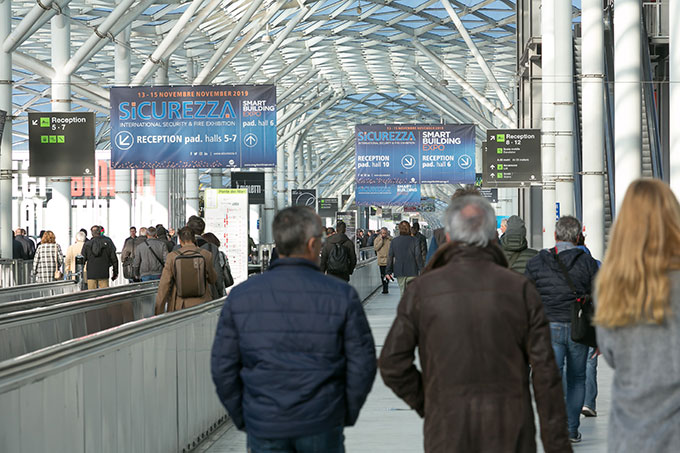
SICUREZZA AND SMART BUILDING EXPO, NOVEMBER 2021, ALONGSIDE MADE EXPO AT FIERA MILANO

For optimum synergy and to meet market needs, three events will launch on the same day, November 22nd

Milan, 10 February 2021 – Optimising investments, visiting hours and resources, maximising opportunities for discussion and getting up-to-date, but above all offering the world of designers and installers a comprehensive deal. SICUREZZA, the biennial international security and fire sector exhibition, SMART BUILDING EXPO, the home and building automation and tech integration event, and MADE expo, Italy’s leading exhibition for the design sector, have come together choosing to be showcased for the market alongside each other, scheduling their exhibition opening dates on the same day.

SICUREZZA and SMART BUILDING EXPO are being brought forward one day and will be held at Fiera Milano from 22 to 24 November 2021, while MADE expo confirms the dates for its four-day event, taking place from 22 to 25 November.

These coinciding exposés form an unmissable opportunity for the sector, combining the wide range of materials, carpentry and casings on offer at MADE expo, with the building automation, smart home and security&fire solutions and installations featured at SICUREZZA and SMART BUILDING EXPO.

Throughout their visit, participants will be able to check out a comprehensive exhibition that combines active and passive solutions, so they can gain a full understanding of new developments and their potential, and even gain access to exclusive, dedicated training sessions.

The events will take place at Fiera Milano from 22 to 24 November 2021 for SICUREZZA and SMART BUILDING EXPO, and from 22 to 25 November for MADE expo.

Intelligent Navigation and Wireless Charging for Mini Robots on the Moon

Bosch, Astrobotic, WiBotic and University of Washington to develop ultra-fast proximity charging for critical space applications
– $5.8 million in funding from NASA Tipping Point program enables research and development of solutions for wireless charging for lunar payloads
– Shoebox-sized CubeRover from Astrobotic will operate autonomously and charge wirelessly
– Project brings together Astrobotic, Bosch, WiBotic, the University of Washington and the NASA Glenn Research Center (GRC).
– Bosch researchers in areas of Wireless Connectivity and Intelligent IoT will support project, which aims for a mid-2023 demonstration.

Pittsburgh – Even on the Moon, robots need power. Normally, onboard solar panels provide the power, but smaller robots or ones that operate during the lunar night will need a complementary power source. To make this possible two emerging technologies – wireless charging and intelligent autonomous navigation – will be combined. Small robots will be equipped and trained to navigate harsh, unpredictable conditions to get to a wireless docking station in an environment where GPS is not an option.

The National Aeronautics and Space Administration (NASA) recently announced funding for Ultra Fast Proximity Charging for Critical Space Applications, a project where a group of organizations will research and develop technology to intelligently navigate and wirelessly charge small robots for operation on the Moon. Astrobotic, which specializes in space robotics, serves as the Principal Investigator on the project and is joined by Bosch, the University of Washington, WiBotic, and the NASA Glenn Research Center. Bosch and Astrobotic, together with the other partners, developed the key technology and scoped the proposal from the beginning – a nearly two-year process.

The goal of the project, which was awarded $5.8 million through NASA’s Tipping Point program, is to develop a system for magnetic resonance-based wireless charging for use in lunar settings. This includes the precise autonomous navigation of robots to the wireless charging station. The aim is to develop the full system for demonstration by the middle of 2023.

AI and connectivity expertise drives robots
Bosch will contribute its expertise in AI-driven intelligent data analytics and wireless connectivity solutions to the project.

Bosch researchers in Pittsburgh and Sunnyvale, Calif. will focus on intelligent processing capability that will enable autonomous navigation of robots on the Moon’s surface. The project showcases Bosch’s expertise in AIoT – when Artificial Intelligence meets the Internet of Things. Bosch is focused on connecting things to get data, processing the data and using AI to obtain information. The information learned can improve products and add value.

“Navigating a robot on the Moon is not the same as navigating a robotic vacuum through your home or navigating a self-driving car on the road,” said Dr. Samarjit Das, leader of the Intelligent Internet of Things Group at Bosch Research in Pittsburgh. “First of all, radio-based terrestrial localization solutions are not available on the Moon. In addition, unpredictable lunar terrain and dust make it even harder to perform precise navigation using visual cues alone. Thus, we will need intelligent fusion and perception on the robot’s multi-sensory data to solve this unique challenge on the harsh environment of the Moon.”

Bosch will study and develop multi-sensor fusion technologies that could include video, inertial measurement units (IMU), radio frequency (RF) movements and vibration sensors on the small robots to create complementary modalities that enable highly-precise navigation. The first specific navigation is guiding the robot to a docking station for wireless charging.

Featuring a modular, scalable shoebox-sized rover
The robot featured in the project will be Astrobotic’s CubeRover, an ultralight, rechargeable planetary rover developed in collaboration with the NASA Kennedy Space Center. The rover is roughly the size of a shoebox and weighs fewer than five pounds. It can carry its own payload or team up with other CubeRovers to scout for larger rovers and landers.
Bosch and Astrobotic previously collaborated on SoundSee, a module that uses artificial intelligence to analyze audio data, now in orbit aboard the International Space Station (ISS).

Wireless – a new power source for lunar robots
The CubeRovers will need power. Wireless charging expertise will come from WiBotic, a Seattle company that specializes in advanced wireless charging and power optimization solutions for the rapidly expanding ecosystem of aerial, mobile and marine robots.

WiBotic will also be supported by the University of Washington, where the topic of wireless charging has been studied for a number of years under the leadership of Dr. Joshua Smith, who leads the Sensor Systems Laboratory. Dr. Smith has been a long-time collaborator with Bosch Research in Silicon Valley in the area of wireless charging.

The combined team will develop a lightweight, ultra-fast proximity charging solution, comprised of a base station and power receiver to enable critical space applications.

System testing to simulate space
Results of the collaboration will be tested at NASA’s Glenn Research Center (GRC) in Cleveland. There, the CubeRover with intelligent navigation and wireless charging technology will be deployed in GRC’s Space Power Facility, the world’s largest thermal vacuum chamber. Tests will showcase how the system can enable lunar night survival for small-scale robotics.

More information

Domokos Dóra
phone: +36 1 879-8928


Fire safety all set to modernize as smart buildings become popular

According to multiple research agencies, the fire safety market could see steady growth in the coming years, as authorities worldwide seek to tighten rules and improve safety. But unlike many other industries, fire safety has always had demand due to its life-saving nature. What’s now changing is that the buildings that they need to protect are also evolving. The  smart buildings market will grow at a CAGR of 12.6 percent from 2019 to 2026, according to Fortune Business Insights. Efforts to reduce carbon footprint and make more energy-efficient buildings could be the main driver behind this growth. As smart buildings grow, so do the need to protect them from fire-related incidents. For this, the fire safety industry should embrace smart technology. In this article, we explore the new technologies entering fire safety and how building operators can future-proof themselves.

These new technologies are making fire safety systems smarter

For a prolonged time, developments in the fire safety sector have not been as fast as those seen in video surveillance or other security sectors. Several reasons contribute to this, from customers being satisfied with what they have to low interest in investing in this segment. However, significant changes are now seen in fire safety, with digitalization making inroads into the segment.

The faster adoption of IP

Over the last decade, fire protection has been transformed by the rise of addressable, IP-based devices embedded in networked fire alarm system infrastructure, according to Andreas Kahl, Head of Software Engineering and Fire Alarm Systems at Bosch Building Technologies. “The scalability and modular architecture of digital fire alarm systems have unlocked a new level of fire safety, for instance, by pinpointing the exact location of a triggered smoke detector in an alarm, or by interfacing with public address systems for phased building evacuations,” Kahl explained. “For system integrators, installation and maintenance of alarm systems have reached new levels of efficiency – including automated service alerts and far fewer false alarms – with unprecedented cost savings.”

Moving to IoT

With that said, all elements are in place for the second, even more fundamental transformation in fire protection. Kahl added that soon, a growing amount of networked fire alarm systems would be connected to the Internet of Things (IoT). This is part of a larger trend across industries, including smart homes and smart buildings automated by a mixture of sensor data and artificial intelligence (AI). The number of IoT-connected devices worldwide is expected to exceed 14 billion by 2022, more than half of the world’s 28.5 billion connected devices.

Addressable notification

One of the most significant advances in life safety systems is addressable notification. According to Rodger Reiswig, Fellow and VP of Industry Relations at Johnson Controls, although the industry has had addressable initiating devices for several decades now, the move to change notification appliances to follow suit had not occurred until a few years ago. “Since appliances, including, horns, strobes and speakers are now addressable the ability for them to be selectively activated by software and not by how they are physically wired offers greater flexibility to the building owner/ manager,” Reiswig said. “Also, with selective control is the ability for these appliances to perform an automated test. Essentially, if a device can functionally test itself, mimic a functional test, and report if the device passed or failed and perform this at the same interval as the table in NFPA 72, then it is deemed equivalent to sending a person around to test each device. This ability offers an owner/ manager the ability to test their system much faster than ever and with much less disruption to the occupants.”

New communication systems

Communication is critical to fire safety. A significant change that the industry is seeing at the moment is that the use of telephone lines for central station monitoring is going away as the traditional POTS (Plain Old Telephone Service) is being phased out. Cellular and IP communicators are the technology being used most at present. “Another system that is not specifically a fire alarm system but often falls under the responsibility of the fire alarm contractors are ERRCS, Emergency Responder Radio Coverage Systems,” said Ray Dotts, Project Manager at Telgian Engineering and Consulting. “These systems requirements are being enforced more and more each day. First responders depend on radio communications, and if the communications in a building do not work, lives are at stake.”

Cloud-based solutions

Cloud-based solutions are making inroads into every segment now, and the fire industry is no exception. According to Thomas Dols, Global Software Product Manager at Siemens Smart Infrastructure, when protecting a building against fire incidents, the ultimate level of protection is to make the communication, between the fire protection system and the interfaces that collect data, quick, reliable, and smart. “It starts with ensuring that all data is continuously available remotely so that system performance can be monitored and managed using any computer, laptop, or mobile device – anytime and anywhere,” Dols said.

The rising role of IoT in fire detection and safety

There is no doubt that IoT is slowly revolutionizing most of the traditional industries. According to Thomas Dols, Global Software Product Manager at Siemens Smart Infrastructure, the way we work, protect against fire, and conduct fire safety services have changed over the past years.

Digitalization has been driving this change, transforming traditional fire safety services into a modern and more productive business,” Dols said. “With this new offering, we are in the heart of IoT, with the clear goal to safely connect as many of our fire safety hardware products as possible. For customers, this will mean better use of fire engineering experts, better maintenance services, and even new business model opportunities.”

The advantage IoT brings

IoT (Internet of Things) has offered the ability of life safety systems to connect to the world. An owner/manager can now connect to their life safety systems from anywhere in the world with a phone, tablet, or any connected device. “Although systems can be connected to the world, safety concerns do come into play,” said Rodger Reiswig, Fellow and VP of Industrial Relations at Johnson Controls. “Can the system be compromised by hostile activity from hackers? There now needs to be safeguards implemented to prevent such takeovers or malicious activity to life safety systems. This has become such an issue of concern that both UL and NFPA are taking action to implement listing Standards for products as well as installation practices for cybersecurity.”

For owners/managers, there is now the ability to integrate their life safety systems without having to be on site. This saves valuable time and resources. A customer can also have their installer and maintainer, with the owner’s permission, integrate the system, and help diagnose any issues before ever arriving on the scene.

The possibilities of IoT

Most major companies are exploring what more they can do to leverage the power of IoT. Bosch, for instance, has set a strategic target for all of our electronic product categories is to be IoT-enabled by 2020. This vision is supported by the “3S” in Bosch’s connectivity business: sensors, software, and services. In developing and implementing services and solutions for the connected world, Bosch customers benefit from its expertise in software and sensor technology as well as in its broad business portfolio. “When it comes to bringing the IoT into the fire safety segment, Bosch envisions a future in which connected devices –and their data – open up new kinds of services that offer significant benefits to end customers and system integrators,” said Andreas Kahl, Head of Software Engineering and Fire Alarm Systems at Bosch Building Technologies. “This digital transformation journey is already well underway, as IoT-based applications are already enhancing the fire safety service offering on several levels. As a prerequisite, networked system architecture such as fire panels and sensors need to connect to the internet via nodes, hubs, and gateways in a secure manner. With this connection in place, the system can communicate with a cloud application server via IP protocol to send real-time data such as device health, battery status, and event history.” While IoT-based Remote Services already provides major efficiency gains for system integrators, we’re only just scratching the surface of what is possible, Kahl added.

The foundation for next-generation IoT-connected services is already created today, as the integration between sensors, software, and services increases. It will not only be crucial for devices to work together within the same network. In the process of building end-to-end fire safety systems that are ready to connect with the IoT, seamless interfaces with third-party apps and platforms via APIs (Application Programming Interfaces) will be a competitive advantage for the system technology providers. It will be even more important that systems can communicate with apps or building management software. On the same note, the ability to provide integrated, IoT-connected services on a secure backbone – safe from hackers and malicious attacks – will be indispensable, because system data is the most valuable resource moving forward. This data holds the key to what comes next.

Slow adoption

IoT is still in the early stages in the fire safety industry, despite their benefits. Cristina Aragon Vandenbent, Fire Protection Consultant at Telgian Engineering and Consulting, said that most of their customers have not yet taken advantage of any IoT-related developments for fire alarm systems but are researching, testing and evaluating them. “IP networking of control panels and mass notification systems are among some of our newly awarded contracts,” Vandenbent said. “The advantage of networking the Fire Alarm Control Panels is enhanced supervision, flexibility in code-compliant wiring schemes, and ground isolation.” Some of the enhanced features can include notification to personal phones, computers, and other notification type devices. These features can act as a supplemental reporting network. These features are just some of the things that make this new technology exciting.

How important is video surveillance camera-based verification for fire safety?

When video verification is implemented, a central monitoring station can “see” the fire. When they notify the first responders, they will relay relevant information such as the fact that it is a real fire, how big the fire is at the time, and the exact location of the fire, so the responders know where to enter and can prepare to fight the fire.

From a life-safety standpoint, video verification can be implemented to monitor a fire event,” said Cristina Aragon Vandenbent, Fire Protection Consultant at Telgian Engineering and Consulting. “The personnel at the monitoring station can “see” the fire and be able to relay information to the first responders so they can respond accordingly.”

How does video verification help?

The most obvious benefit of using surveillance cameras to verify fire is reducing false alarms. However, the use of this solution offers more to the customer. For instance, traditional fire detection systems work only when smoke or heat reaches the sensors, which are often on the ceiling. Cameras, on the other hand, can detect a fire almost as soon as it breaks out and provide first responders with at least a few seconds of additional time to deal with it. “Video-based fire detection delivers a huge time benefit compared to standard fire detection solutions because the fire can be detected directly at the source, allowing alarms to be triggered much earlier,” Theresa Grunewald, Global Business Development AVIOTEC at Bosch Building Technologies. “In addition, video-based fire detection can be installed in locations in which conventional systems cannot be used effectively, like in dusty and humid environments or in building with high ceilings or in open areas. Video images provide an easy way of verifying the alarm. It also allows combining fire detection with video surveillance in one system.” Rodger Reiswig, Fellow and VP of Industrial Relations at Johnson Controls, pointed out that video verification has traditionally been used more in the security world but has started to be utilized in fire safety systems.

What about regulatory approval for this?

Fire safety regulations differ from country to country, and when using any new technology, there is some confusion on its legal validity for compliance purposes. Reiswig explained that as such, NFPA 72 has first started to address this with supervising station verification as an allowance. If the Authority Having Jurisdiction (AHJ) approves, there is now an option for a fire-alarm system monitoring company to contact the property first. If the property representative states there is a need, then the supervising station can call the first responders for them to take action. Of course, fire safety is mostly a traditional industry in which solutions like cameras are still in nascent stages. To Reiswig, this is a good start, but the journey has just begun, “There is much more that needs to take place, but this is the basic idea of verified alarms,” Reiswig said. “Video verification is the next step towards this for life safety. It is important to remember that fire alarm systems have become more of a life safety system as they are monitoring gas detection, elevator integration, mass notification, etc.”

What are the major fire safety solution requirements in smart buildings?

The term “smart buildings” means different things to different people. Rodger Reiswig, Fellow and VP of Industrial Relations at Johnson Controls, explained that for some, it’s all about the Green Initiative. Is the building able to sustain itself or reduce its carbon footprint? Can they reuse some of their water or generate electricity from onsite solar cells or wind turbines?

Another definition of “smart buildings” is based on sensors,” Reiswig continued. “Is the building smart enough to know that, if I’m the first person there in the morning and I swipe my card, it should switch the HVAC system into occupied mode? Can it start to turn the lights on? Can it adjust the window shades to allow the sun to come in? Can it call the elevator down for me because it knows that I’m in the lobby, and I’m going to the tenth floor? It’s all about how the systems integrate with one another, not simply providing information to each other, but also interacting with one another, causing things to happen from one system to another.

Where does the smartness factor into fire safety?

IP-based fire alarm systems are emerging as the way forward. Networked on digital infrastructure, addressable systems of panels and detectors provide fire detection at an early stage, plus exact localization of the fire source. They integrate with other vital systems such as sprinklers, video surveillance, and access control. They can be combined with voice evacuation to direct people out of dangerous areas as quickly and precisely as possible. “Most of all, IP-based fire alarm systems are easily scalable and adjustable to changing customer demands, for instance, in mixed-use buildings,” said Andreas Kahl, Head of Software Engineering and Fire Alarm Systems at Bosch Building Technologies. “For maximum reliability, IP-based systems support fully redundant networking via an IP and/or CAN connection between the panels, thus keeping the system operational in the event of an error. As a common operational backbone, IP-based fire alarm systems integrate within building management systems architecture such as the Bosch-developed Building Integration System (BIS) or a third-party solution to provide operators with a single view and real-time intelligence.” For centralized building management, the fire system in a smart building needs to interface with other systems such as video surveillance, access control, and voice address for evacuation, Kahl added. The combination of fire alarm and voice evacuation systems has emerged as the status quo over the past few years across a wide range of sites, from hotels to shopping centers and airports. Legislation, such as 2013’s full enactment of the Construction Products Regulation, has been a significant driver of this trend, placing high demands on both systems with the EN54 product standard. Studies have demonstrated that voice alarm with clear instructions significantly improves fire evacuation time compared to mere noise alarms and presents a significant time gain of up to 30 percent for emergency response teams.

How popular is smart building fire safety now?

Reiswig said that his company has already been doing integration with things like HVAC and lighting for a few years now. Now they see tighter integration where, for example, they can use the position of the sun to get the best impact of sunlight to start to heat the building in the winter. “One of the biggest challenges that we see in the smart building environment is protocols or topologies for how one system talks to another,” Reiswig added. “The fire alarm system uses a certain protocol or language. The HVAC system uses another protocol or language. Creating an environment where systems can talk to one another and not just send, but also receive information – that is the difficult part. Everybody can send information out. It’s easy for me to tell you what is happening in a system. But for you to tell me what is happening in your system and then expect me to do something with that information, that’s when it gets a little bit harder.”

How should building operators prepare for the future?

Before investing in new fire safety systems, building operators are well-advised to consider the futureproofing of their systems. Again, IT-based architectures emerge as the only way forward. “Current legislature such as the 2015 edition of the International Fire Code already mandates addressable systems in which connected devices can signal their device type, location, and alert status; which is a built-in feature for IP-based networks,” Kahl said. “And on the subject of future-proofing, IT-based fire security systems can also seamlessly integrate the next generation of video-based fire detection devices that rely on machine learning algorithms to detect fire and smoke in less than 30 seconds. ”At the same time, operators may want to integrate and customize their solutions into their Building Management Systems, which can be facilitated via software development kits (SDKs) such as the Bosch Fire System Interface (FSI) or open IT standards like OPC. Next to this level of future-proof integration, IP-based solutions scale up easily to accommodate for expansions within the same building or multi-building installations to allow customers to grow their fire safety applications alongside their business.

The bottom line

Smart Building is all about connectivity, to let the building “talk,” according to Thomas Dols, Global Software Product Manager at Siemens Smart Infrastructure. We live in a digital age full of continuous information where performance is constantly improved with the help of data and interactions with smart interfaces enable us to make intelligent decisions. Our Cloud offering allows this interaction to take place and performance to improve. This drive for constant optimization lies at the heart of smart buildings whose very purpose is to enhance the user experience. The requirements when selecting a fire safety equipment is, therefore, to have a connected software product offering within the portfolio.