Home Archive by category Najave II (Page 15)

Najave II

SICUREZZA: APPOINTMENT CONFIRMED FOR NOVEMBER 2021 POSTPONED BY ONE WEEK

Milan, 17 December 2020 – Fiera Milano, after reorganising its exhibition calendar for next year, has scheduled a new date for SICUREZZA, the reference event in Europe for security and fire-fighting, which will be postponed by just one week; it will in fact take place from 23 to 25 November 2021, again at the same time as Smart Building Expo.

The exhibition formula remains unchanged, aimed at encouraging meetings between manufacturers and buyers to monitor the evolution of a very interesting and constantly changing market. Fiera Milano’s objective is to consolidate the event as the only international appointment for its sector in Italy and to be not only a showcase for innovation, but also an essential training opportunity for all those involved.

See you from 23 to 25 November 2021 at Fiera Milano.

How secure is a security camera?

‘How secure is a security camera’ might look like a simple question, but it isn’t. The definition of ‘secure’ is subjective – are we talking about physical security, digital security, or a combination, for example? That’s why I changed this question into a clearer one:

“How easy is it for someone to hack a security camera?”

Mikko Hypponen, the famous Finish cyber evangelist, is well-known because of his statement: “If a device is smart, it’s vulnerable!”. He shows with this statement that all devices that consist of hard-and software, and are connected to the internet, are insecure (and therefore ‘hackable’). Then, taking this statement as read, an IP security camera is also vulnerable and ‘hackable’. The primary question becomes: how easy is this?

Security cameras (in other words: cameras) are abundant on the market in a number of forms and are being designed, developed, and built by several producers from different countries. The current cameras in the world are so technologically advanced that they fall in the category ‘edge computing IoT devices’. This means they come with lots of complex processes and computer power on board.

These technological developments provide incredible innovative security capabilities, but also serious digital risks. The current cameras consist of advanced hard-and software components that are produced both in-house and by third parties. Because of this complexity, a camera becomes an interesting and inviting attack surface for the ‘bad guys’. It’s a fact that history shows enough examples of hacked cameras (e.g. Mirai botnet), making cameras a favorite target for cyber attackers. But, are cameras also an ‘easy’ target? That depends……

Like the different kinds of camera mentioned above, there are also different kinds of digital security measures for cameras that can be applied by the camera producers. This is exactly the core answer to the question. The resilience of the camera is in essence dependant on the willingness of the camera producer to put effort and budget into the security of the camera itself. Is camera security an investment priority for the producer?

It’s a fact that all IP-cameras are vulnerable. However, it’s also true that the more difficult it is to hack a camera, the more likely it is that a cyberattacker will jump to another camera that’s easier to hack. Cyberattackers are very smart and sophisticated, but also very pragmatic. They prefer easy targets (if they achieve a similar result). A camera producer that invests in cybersecurity to produce a more cyber-resilient camera, will become a less favorable target for those cyberattackers. They prefer to focus on cameras that generate the same results with less effort (in other words easier to hack). In the end, it’s those cybersecurity investments like a Secure-by-Design production process and a Security Response Center that make the difference between a hacked camera and a cyber-resilient camera. But, also investments in a Source Code Transparency Center and the appointment of regional Directors Cybersecurity – although not directly increasing the overall security – show the committment of a company towards cybersecurity

The question ‘How easy is it for someone to hack a security camera’ can be answered by looking at the camera producer and how it approaches cyber-resilient investments. Then the question is easy to answer….

CathexisVision: Surveillance Solutions for COVID-19

In the wake of COVID-19, administrative personnel, security staff, and management in all markets have been stretched to their limit. Running businesses while maintaining safe social distances between workers and clients, taking temperatures, and ensuring masks are worn is in itself, a full-time job. The question is, how can we make it easier for managers on site to handle this challenging environment?

CathexisVision video management software has risen to the challenges posed by COVID-19, offering comprehensive, complete, and cost-effective software solutions. We offer support for a wide variety of market sectors, such as city surveillance, banking, healthcare, manufacturing, education, government, mining, retail, government, and many more.

Temperature Monitoring
In response to COVID-19, CathexisVision is working closely with thermal camera manufacturers to generate temperature alert capability, and this can help to monitor the health of visitors and staff entering and exiting buildings. Through adding temperature screening to our software, we have designed a tool that can provide a visual representation of temperature and trigger alerts at pre-determined thresholds. In this regard, we are delighted to have integrated with the Mobotix M series thermal camera. Functionally, this integration involves utilising a Mobotix M series camera with dual sensors, one thermographic and one visual. The Mobotix SDK has the ability to send the raw thermal data of the thermographic image, which Cathexis can then match to faces detected in the visual stream. Real-time visual and audio alerts will notify users, and the system can also be configured to take other actions such as sending email notifications, switching cameras on video walls, and many more. Like our other latest features, temperature monitoring is fully customisable.

Social Distancing
Maintaining a safe social distance is a key precaution in preventing the spread of the novel Coronavirus. Even so, in large businesses and operations, managing the physical space between people, especially when they number in the hundreds and thousands is a daunting task. This is where our software steps in and does the thinking for you. With our people proximity analytics, CathexisVision automatically picks up when individuals are closer to each other than they should be. The user can also custom set a number of capabilities, such as: the minimum distance that should be set between people and a period of persistence, recorded in seconds. The latter allows bodies to be closer than the minimum distance for a short period of time, for example two people walking briefly past someone in a grocery store.

Mask Detection
Our sophisticated mask detection technology is able to quickly detect whether someone is wearing a mask and provide real-time, informative overlays and alerts for operators, allowing users to choose processing areas around a face, scenes to cover, and set sensitivity. Depending on individual requirements, mask detection can be set to immediately detect a face without a mask, or the software can be set to “smart” detection, which follows the history of a face to make sure it is not unmasked over time. Users can custom set face sizes so that the software won’t detect anything too small and produce an inaccurate result. Ultimately, our mask detection algorithm allows employers and business owners to efficiently make sure that large numbers of people are complying with an important safety and health regulation.

Security Summit Virtual Event – Breaking New Ground for the Virtual Trade Events

Security Summit Virtual Event 2020 which took place on November 3-5 has once again proved why the Security Summit brand of events has established itself on the European and global industry trade event map. Initially conceived as a new online event which was supposed to take place instead of this year’s Adria Security Summit Powered by Intersec, a successful string of live trade shows, the Security Summit went above and beyond its task of bringing the key security and IoT industry players together in the age of pandemic and actually broke new grounds.
The numbers speak for themselves and serve as proof that the Summit has now closed its doors as the largest virtual trade show dedicated to security and IoT in the whole of Europe. With its 2090 participants, 76 sponsors, 50+ speakers who presented 22 lectures and case studies, and more than 800 held meetings, the event has surely become a force to be reckoned with in the security trade show industry and a one-stop-shop for both B2B and B2C networking, promotion of innovation and education in the security and IoT industries.
Security Summit 2020 took place across three days, with a full-day program featuring live sessions, keynote speeches, case studies, success stories, panel discussions, and side events presented by the eminent industry speakers. In addition to this, a key ingredient in achieving this level of success was the Summit’s positioning itself as both a tool and a platform for launching a global effort to reconnect security industry stakeholders, rebuild its ecosystems and accelerate its much-needed recovery in the pandemic-ridden world.
The participants were able to host both prescheduled and on-demand 1on1 virtual meetings with their business partners, customers, service providers, key market players, and global industry associations. This allowed the organizers to offer the same level of functionality the companies and the partners of the event have come to expect from live events while staying safe and healthy and without having to bother with the logistical arrangements that usually accompany participation in live events of this type. This made the Virtual Summit a more cost-effective option for attendance for numerous participants, thus allowing the event to reach previously untapped markets and audiences. At the same time, the Summit kept an equal focus on its regional and international character, with participants coming from all parts of the world thanks to its increased accessibility and lower barriers for participation.
As a bonus, participating in Security Summit 2020 is bound to offer long-term benefits for all of those that took part in it. The reason for this is the fact that one of the key value propositions of the Summit was to provide its partners with actionable insights into profiles of their business partners, customer demand, data on the segments of their presentation which attracted the highest levels of interaction, etc. Based on this, the companies left the Summit with valuable market-worthy data that will allow them to customize their offer, reorganize brand awareness campaigns and focus their activities on what was proven to be of the greatest interest to both end-users and business partners.
In addition to this, the Summit has emerged as a learning platform and a place at which the security and IoT experts come to exchange skills and experience with their colleagues, learn more about best practices and game-changing innovations, all of which lend themselves to being built into future business strategies and approaches.
With the show being a resounding success both in terms of its goals and the safety of its format, the organizer of the event has decided to extend the use of the Summit platform for the organization of video meetings and messaging until December 2020. This is surely welcome news for those that did not manage to set up all the meetings they wanted during the event. Besides, the plans are already underway to organize the next virtual event of this type in May 2021, with the organizers planning to make their successful platform and the database of companies available to all interested parties outside of the regular event schedule.
It is for all these reasons that we are looking forward to meeting you at the next Virtual Security Summit 2021 and making it conquer new grounds and overtake the stellar results we achieved together with its predecessor.
More information is available on www.adriasecuritysummit.com. If you have any inquiries, please contact summit@asadria.com or call +387 (0)33 788 985.

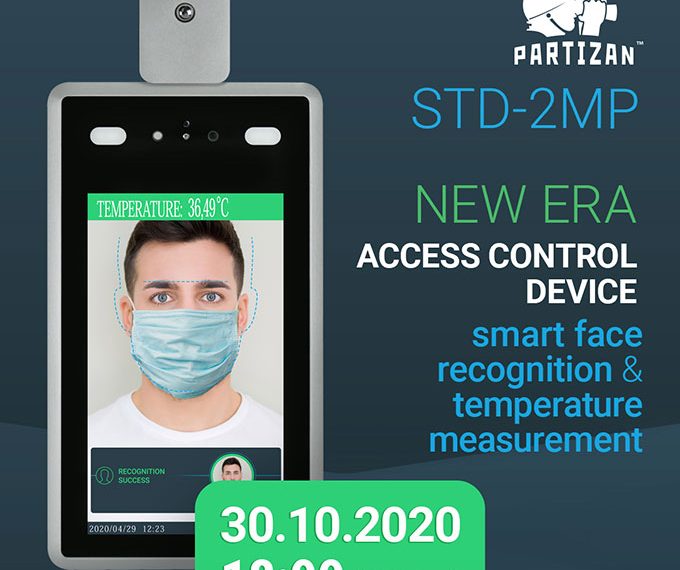
Partizan webinar “New era access control device. Smart face recognition & temperature measurement.”

Tomorrow at 18-00 Prague time (17-00 London) will be new webinar. Very important topic – Temperature screening and Face Recognition systems by Partizan. You will understand all hints and tricks about them, main advantages and differences with competitors and finally, how to SELL them and who is main customers for that!
Welcome to join us tomorrow. Link will be the same every week
https://us02web.zoom.us/j/86289296124

Facebook post: https://www.facebook.com/PartizanEurope/posts/1368839766657694

LinkedIn post: https://www.linkedin.com/feed/update/urn:li:activity:6727558867661705216

Or this one on Dmitry’s page: https://www.linkedin.com/posts/ddanylchenko_covid19-activity-6727597488506761216-PGxm

At this Dutch university, Aperio delivers integrated, wireless access control more cost efficiently than wired locks

London, October 2020 – At the InHolland University of Applied Sciences, a rolling project to upgrade access control at all locations has been ongoing for several years. Typical of any large educational setting, the tension between remaining open and accessible on the one hand — and securing people, equipment and data on the other — is a critical factor.

More than 500 Aperio wireless door locking devices have now been deployed at 7 separate InHolland campus sites. These battery-powered locks provide tested and trusted protection for the university’s most important areas and rooms, including offices and exam storage spaces. Aperio devices fit all kinds of interior openings, including wooden and glass doors, as well as fire doors. Aperio cylinders, escutcheons, handles and security locks have in-built RFID readers for installer and user convenience.

All InHolland’s new Aperio devices are fully and seamlessly integrated with the university’s Nedap AEOS access control system. A single credential allows users to unlock all authorized openings managed by the AEOS system — whether wired or Aperio-protected doors.

Because Aperio locking devices are wireless, they were installed and initiated quickly — without disruption to InHolland buildings or their students’ working day. And choosing Aperio saved more than just time. A recent ASSA ABLOY benchmarking study finds installer labour costs are over 80% lower for wireless versus wired locks*. The ongoing cost of running battery-operated wireless locks is also much lower than for equivalent wired electronic locks, which require an “always on” connection to mains electricity to maintain secure status. In addition, choosing Aperio gives InHolland the ability to roll out enhancements over time, as needs, budgets and priorities evolved. Aperio devices can be added and integrated gradually, with no need to replace existing systems. InHolland’s investment remains totally future-proofed.

Fitting Aperio wireless escutcheons and locks to critical doors ensures university staff, students, visitors and confidential information are safe without impacting site accessibility. Authorised users open relevant secure doors conveniently with a programmable RFID credential. Aperio’s inherent flexibility makes it easy to adjust any space’s level of protection at any time. So, locking status is regularly reconfigured as needs and usage evolves around the multi-site campus and university facilities.

Based on their experience to date with Aperio, InHolland are already planning for the future. A new university in Amsterdam will become a smart building and will require access control able to integrate with smart building systems. Aperio is built on an open platform, designed for interoperability, so this is a natural fit. InHolland will enter pilot stage for their new smart building soon.

“I am very satisfied with the implementation and operation of the Aperio solution and I have every confidence in ASSA ABLOY as a manufacturer,” concludes Frans Bruggeman, Facility Services Consultant at InHolland.

To download a free Aperio Wireless Access Control Solution Guide, visit:
https://campaigns.assaabloyopeningsolutions.eu/hubfs/AA_Aperio_CostSavings_Solutionguide_07_2020_ENG_EMEA.pdf

Intersec moves to 2022 at Dubai World Trade Centre

Organiser Messe Frankfurt Middle East offers digital programme for global security, safety, and fire protection industry in 2021

Dubai, UAE: Intersec, the world’s leading security, safety, and fire protection trade fair, has been rescheduled to take place in January 2022, organiser Messe Frankfurt Middle East confirmed today (24 September 2020).

The 23rd edition of the three-day event was originally set to run from 24-26 January 2021 at the Dubai World Trade Centre, however the move to 2022 comes after extensive consultation with key industry stakeholders.

“We’ve spoken to many of our exhibitors, industry trade associations, supporters, and partners over the last couple of weeks and have heard first-hand the many challenges they’re facing putting pressure on their ability to participate at Intersec in January 2021,” said Alexandria Robinson, Intersec’s Show Director.

“Moving Intersec to its customary January dates in 2022 at the Dubai World Trade Centre will allow time for recovery.”

Ms. Robinson said Intersec will be very active throughout 2021 via its ongoing webinar series, while the team is now working toward creating a virtual event early next year to engage industry leaders, regulators, government agencies and opinion formers.

“We might be restricted physically, but we know there is a definitive need for critical conversations and discussions to address the challenges the industry has faced,” she said.

“By hosting these talks via a digital forum it enables us to keep connected to the industry and nurture our existing relationships, whilst sharing solutions and common goals.  We’ll share further details and plans about the digital event in the coming weeks.”

 Intersec’s popular free-to-attend webinar series, of which there’ve been 11 so far in the last four months, has kept thousands of attendees abreast of the latest industry trends and opportunities.

“We know we have a vital role to play in connecting and supporting the industry, and the Intersec webinars stimulate meaningful conversations, collaborations and success stories,” added Ms. Robinson.  “We will continue to run these and support our stakeholders in every way possible until we meet again personally, and safely, at Intersec 2022.”

“One thing is absolutely certain: our community is resilient and will bounce back.  It has been involved in many frontline situations throughout the course of this year and it will continue to play a critical role in the months ahead. Throughout 2021 and come January 2022, we’ll have much to share and learn from each other.”

Intersec in 2020 featured 1,100 exhibitors from 56 countries, while attracting 33,872 visitors from 135 countries.  The global industry event is supported by Dubai Civil Defence, Dubai Police, the Security Industry Regulatory Agency (SIRA), Dubai Police Academy, and Dubai Municipality.

More information is available at: www.intersecexpo.com.

How ComNet tackles Cybersecurity

By Iain Deuchars, General Manager, ComNet International.

Our perception of cybersecurity focuses on attacks through firewalls to corporate entities across the internet. Still, we do not think of an attack directly via network equipment.
IP security and surveillance systems put physical network connections in both secure and unsecured locations. Unsecured locations provide ample opportunities for the would-be attacker, however secure locations must be viewed similarly. The attack could originate from an individual fully entitled to be within the secure area.
The threat to the network comes from a physical connection to the active network devices, or by removing an edge device and attaching unauthorized equipment in its place. Electrical Ethernet ports are based on industry standards, so connecting to these is simple. As every laptop today has such a connection, the probable weapon of attack is readily available.
Ethernet switches are offered as managed or unmanaged, where managed platforms have many features and allow the user to configure and remotely monitor the device. For security, managed units offer facilities to prevent unauthorized entry to the network. Unmanaged forms do not. Thus managed Ethernet switches should be used throughout the network.
It tends to be the case that the simplest features offer the best security, and with Ethernet managed switches, that persists. The ability to disable a switch port that’s not being used might seem an obvious security feature. Still, it is one that a lot of network operators fail to employ and may not even know exists on their devices. The rules, as you can imagine, are straightforward. If the port is not being used, disable it so no unwarranted party can plug directly into your network. If the port needs to be used for legitimate traffic in the future, then simply open it via the management system. And while we’re talking about the most straightforward features being the best, the default username and password of the device should be changed to a username and password commensurate with the security policy. No point in employing all this security if it could be changed by our attacker gaining access by merely reading the manual!
For active connections, ComNet’s Port Guardian feature can be used to shut a port, based on a loss of link being a potential attack. The feature can be further expanded to shut down ports if power is lost to the active device – just in case our attacker is smart.
We must secure access to the physical devices, so add a sensor on the door of equipment enclosures. An open door provides an easy target for any attacker and allows the elements to damage your enclosed equipment. And remember, it doesn’t just need to be active equipment. If the enclosure simply houses cable management, that provides an opportunity to break into the network. Secure enclosures are an absolute must in unsecured locations!
To conclude, managed Ethernet switches should always be used for maximum security and will provide remote configuration and monitoring. The managed device must be configured based on the security levels and operational requirements of the user. Those who ignore the basics of network security and opt instead for cheaper, unmanaged devices, are exposing their networks to the risk of hackers.”

About ComNet:
ComNet products come with a lifetime warranty, making ComNet the supplier of choice for transmission requirements. All products are designed, built, and tested in the USA to hardened industry requirements and have proven reliability operating in challenging environments of -40 and +70 degrees. These include petrochemical refineries, oil and gas pipelines, and heavy and light rail transportation. ComNet is an ACRE company. For more information, visit www.comnet.net.

Enabling Smarter Factories with the Industrial Internet of Things

The manufacturing sector is more productive and efficient than ever thanks to the industrial internet of things (IIoT). And it couldn’t come at a better time — global manufacturing output growth has been decelerating since 2018, according to quarterly reports published by the United Nations

By a&s International

Industrial Development Organization (UNIDO). The UNIDO attributes deceleration to increased risks and uncertainties including tariffs and trade tensions that have affected the world’s industrialized economies.
Despite a slowdown in manufacturing growth, the rise of smart factories and adoption of IIoT and cloud technologies have grown. By using the vast amount of data generated
from the Internet of Things, IIoT and cloud, manufacturers are able to predict equipment breakdowns, prevent unplanned downtime and reduce costs. However, due to this, understanding what to deploy, how to implement it and what the benefits of IIoT and cloud technologies are is critical.

Industrial Internet of Things Improves
Smart Factory Productivity
The industrial internet of things is driving the growth of smart factories and helping manufacturing be more productive and efficient.

Today’s smart factories are growing thanks to the growth of the Internet of Things (IoT), which has brought about the industrial internet of things (IIoT). As global manufacturing output slows, productivity and efficiency have become increasingly important. By using IIoT technologies, manufacturers and smart factory operators are able to collect and analyze data that enable them to optimize operations.
More Data, More Benefits Keeping up with technological innovation comes down to the aggregation, integration, processing and analyzing of data on IIoT platforms, said to Richard Howells, VP of Solution Marketing at SAP. “This is why factories are investing in IIoT in order to realize business benefits across the entire company. Many factors, applications and technological developments drive these business benefits and therefore demand for IIoT,” he said.
Nowadays factories are adopting digitization strategies that use IIoT technologies to capture additional sensor-based data (e.g., vibration, environmental, etc.) to augment their existing manufacturing data sources and provide additional insights. “This additional insight identifies opportunities to improve the operational efficiency of the asset or process as well as the health of the asset… We also see IIoT technologies being used to obtain data from older manufacturing equipment, that may be 20 to 30 years old,” said Enrique Herrera, Industry Principal for Manufacturing at OSIsoft.
However, manufacturers don’t always know exactly what type of data to collect when they want to start collecting it.
Patrick Smits, Marketeer at Ixon explained, “Objectives are not always clear from the start but evolve during the process. Using
an established IIoT provider with roots in manufacturing obviously helps lowering entry in Industry 4.0.”
IIoT in Practice The entire lifecycle of production can benefit from the many features and functions of IIoT solutions. This ranges from product design to monitoring of inventory levels in the supply chain.
Howells explained that predictive maintenance data gathered from IIoT can help minimize production downtime, which can cost a manufacturer tens of thousands of US dollars a minute, depending on the industry.
Utilizing predictive maintenance not only reduces downtime, it increases productivity by alerting operators to maintenance needs
before problems occur. Remote access that allows factory operators to connect to machines for remote support and remote assistance is another way IIoT can help optimize production processes. Smits pointed out that the ability to troubleshoot and monitor machines, as well as deploy new programmable logic controller (PLC) software over VPN, becomes much easier and saves a lot of unnecessary expenses when able to do it remotely.
More advanced use cases of remote access involves monitoring machine production or factory production, or using metrics and KPI’s to improve overall equipment effectiveness (OEE), Smits added. To do this, factories must start by logging machine data and then combine and analyze this data in order to optimize the production process.
Using IIoT solutions can also help manufacturers identify the root causes of quality issues in their production, which can also cut into productivity and lower customer satisfaction. Howells pointed to edge-to-cloud closed-loop machine learning and advanced manufacturing execution systems (MES) to reduce quality issues.
“An enterprise can leverage IoT usage and performance data to continuously improve its products. Right now, this requires engineers to analyze the data, but as more products get connected and companies leverage more AI techniques, generative design software could automatically create improved designs based on IoT data,” Howells explained.
Future of IIoT in Manufacturing While adoption of IIoT projects is growing, IHS Markit reported that currently half of all deployments fail; failure of a project is defined as not meeting the customer’s expected payback. High failure rates are often
attributed to inflated expectations and a failure to gather support and cooperation from critical personnel within the company. Half the companies deploying IIoT projects expect to see payback within one year and are not getting the payback they expected, as many of these projects can take much longer to generate returns, according to IHS Markit.
Still the annual IIoT node shipments are expected to hit 224 million units in 2023, a 100 million unit increase from 2018, as reported by IHS Markit. However, to ensure more successful deployments of IIoT projects, providers must work together with manufacturers and smart factory operators to manage expectations and develop projects that can be executed successfully.

Choosing the Right Cloud for the Industrial Internet of Things
More manufacturers are looking to use cloud computing, but choosing between a public or private solution depends on need.
More manufacturers are deploying solutions that build upon the industrial internet of things (IIoT), making operators also look to cloud computing technologies.

Benefits of Cloud Computing for IIoT
There are many benefits of using cloud computing for IIoT. One being that a cloud service provider handles all IT-related issues such as security, scalability, user management, storage, hardware and connectivity aspects, leaving factories to focus on what they do best: manufacturing, according to Patrick Smits, Marketeer at Ixon. Manufacturers are also leveraging cloud computing to take advantage of resourceintensive, advanced analytics and machine learning technologies. “Using cloud technologies, manufacturers can gain additional insights, which are identified in the cloud using advanced analytics and then fed back to the operational environment. This expertise may also come from industrial equipment manufacturers that offer third-party digital services to manufacturers,” said Enrique Herrera, Industry Principal for Manufacturing at OSIsoft.
Already many manufacturers have started to adopt machine learning models and are applying them to smart manufacturing data, according to Richard Howells, VP of Solution Marketing at SAP. Doing so allows manufacturers to minimize repeatable tasks capable of being performed by software, improve the accuracy and predictability of maintenance schedules, and drive first-time-right results across the organization. Furthermore, since cloud environments offer almost unlimited compute and processing power, it can also provide a similar interface for work from the different points of view of different employees, engineers and senior management.
Cloud-based networks of connected assets are also enabling manufacturers to shift their business models to be more prescriptive
than reactive. By creating a central repository for collecting and tracking critical information, cloud computing further allows
manufacturers to develop smarter products to capture more information about how they are operating and performing around the globe, Howells added. Additionally, there are economical and environmental benefits to using cloud computing for IIoT. Using an IIoT cloud platform with shared infrastructure can save costs and lower overall power consumption.

Private or Public Cloud?
There are several main considerations when choosing between public or private cloud for IIoT. These include economies of scale, speed to provision and integration to manufacturing enterprise solutions. It is also important to understand what the user’s end goal is for utilizing cloud.
A private cloud could be ideal for customers who want their own dedicated platform with isolated data, storage and network environments. Since a private cloud would require the manufacturer to take care of essentials such as security, scalability, flexibility, data integrity, back-ups themselves, it is a good solution for those looking to attend to their own data security, privacy and protection needs.
On the other hand, a public cloud solution means the above-mentioned essentials (e.g., security, flexibility, etc.), are all taken
care of by the cloud provider. This may be preferable to some manufacturers.
Overall, worldwide spending on public cloud services is expected to more than double between 2019 and 2023, according to a report from the International Data Corporation (IDC). Discrete manufacturing — manufacturing of distinct items — accounts for a big portion of this growth.
Howells pointed to another opportunity, one that brings the benefits of private and public clouds together: a multicloud. “Multi-cloud is a strategy in which companies can store and manage their software in the cloud environments that best fit with their chosen environment and software, such as AWS, OpenStack, Microsoft Azure, Google Cloud Platform or others, helping companies realize both cost savings and efficiencies,” he explained.
Regardless, no matter which cloud model a smart factory chooses, the top priority should be understanding the individual business needs and matching that with the top benefits of each type of cloud environment.

User Education will Promote Growth
For now, one of the main challenges is convincing manufacturers that cloud solutions are more secure than most private cloud or on-premise solutions, where local IT departments are responsible for the security and management of data. Cloud providers actually have a much better track record in securing data and connectivity options than most local IT departments, according to Smits. Ultimately, more in-depth training and education of cloud benefits could help ease the concerns of manufacturers and further propel adoption.

IIoT Infrastructure and Hardware Requirements in Smart Factories
Ensuring the success of a cloud-based IIoT system in a smart factory requires the right network infrastructure and proper security
measures. It is estimated that there are currently over 1 billion connected IIoT devices being used in factories around the world. And although the IIoT market is growing exponentially, there are several barriers to even greater success. Deploying the right network infrastructure for cloud-based connected industrial internet of things (IIoT) solutions and securing that network are key to the market’s future growth.

From Fieldbus to Ethernet to Wireless
Today’s factories overwhelmingly use the industrial ethernet and fieldbus protocols for connectivity to manufacturing equipment.
Traditionally, the industrial sector used fieldbus — a group of industrial computer network protocols specifically designed for communication between industrial controllers and sensors — to connect to the industrial network; however, industrial ethernet
is set to overtake fieldbus as the primary network medium in 2020, according to IHS Markit.
Fieldbus technologies offer various advantages such as determinism and more physically robust connectors and components, but are not optimized to be linked up to a wider network setup or the internet, IHS Markit said. Their report added that the transition from fieldbus to industrial ethernet is key to future-proofing and benefiting from IIoT solutions. Industrial ethernet is not
only faster than fieldbus, but also supports the IP addressability required for IIoT.
The growing adoption of industrial ethernet is also expected to further enable the transmission of larger volumes of data due to the greater bandwidth compared to fieldbus. IHS Markit believes this will ultimately bring in more technologies like the cloud, which will “supercharge” the IIoT business.
Wireless technologies could also help advance connectivity in factories, although uptake has been slow. Enrique Herrera, Industry Principal for Manufacturing at OSIsoft explained, “There is significant investment by the telecommunications companies to push 5G and private LTE technologies into factories, but adoption is still in its early days.” These telecommunication technologies, though, may be more readily accepted with remote or geographically dispersed assets.

Securing Cloud and Network Infrastructure
Faster connectivity is allowing manufacturers to utilize cloud-based solutions, but security still remains a concern. Ideally, IoT connectivity hardware should not be directly accessible via the internet. Software on these devices is often not updated regularly, which makes exposing them directly to the internet not a good idea. This is especially true nowadays with vulnerability scanners like Shodan.io available to everyone and anyone.
Making sure every factory router is completely secure is more important than ever. To do this, Ixon’s strategy is to block all incoming traffic on the router. “On boot Ixon’s IXrouter sets up a secure VPN connection to our cloud platform to make sure all communication to and from the platform is well secured. All other access options are disabled by default, so there are no ports from the company network or internet that can be abused by hackers to gain access,” said Patrick Smits, Marketeer at Ixon.
From a cloud perspective, cloud providers are able to secure both the cloud infrastructure and on-premise hardware with highly skilled employees that monitor and remedy security issues full time, protecting the complete infrastructure against all possible attacks. These types of end-to-end solutions can be very well secured, according to Smits, because the complete IIoT ecosystem, including hardware, connectivity and cloud infrastructure, is controlled by the cloud provider.

Smart Factories are Adopting More As-a-Service Models
The utilization of the industrial internet of things has made it possible for smart factory operators to take advantage of various new as-a-service models to increase productivity.

More companies have started offering new “as-a-service” business models for the manufacturing sector. Increased adoption of the industrial internet of things (IIoT) and cloud technologies are giving manufacturers the ability to combat challenges like unplanned downtime and deferring upfront costs. Loses from unplanned downtime can cost manufacturers millions of dollars. Utilizing new applications enabled through IIoT can help overcome challenges such as this. IHS Markit estimates IIoT solutions can reduce unplanned downtime by around a 30 percent.
Many companies have started or plan to offer new service models, such as maintenance as a service or product as a service. These business models are empowered by IIoT platforms by sending alerts if a product requires maintenance or attention, among others.

Maintenance as a Service
Collecting large amounts of maintenance data has been made possible by the Internet of Things (IoT) and IIoT. The collection and analysis of this data have led to a new business model, maintenance as a service (MaaS). This service model gives smart factory operators and manufacturers the ability to remotely monitor machinery, create a smarter workforce and provide insight into the lifecycle of equipment.
Utilizing MaaS can help smart factories deal with the problems brought on by unplanned downtime. Furthermore, the information can be used to determine when maintenance should be scheduled before a breakdown occurs. By doing this, smart factory operators can shift from a preventative maintenance approach to a predictive maintenance approach.

Product as a Service
One factor hindering the growth of smart factories and IIoT solutions is the cost of equipment. The product-as-a-service (PaaS) business model allows smart factory operators to pay for processes and operations instead of purchasing the equipment outright. This takes the stress off manufacturers when it comes to maintenance expenses, product failures and ensures they will not be stuck with obsolete equipment when it comes time for upgrades.
The current market for PaaS is still pretty new, but the continued expansion of IIoT solutions and smart factories should propel development. For now, some PaaS providers are delivering value-added services to machines already owned by manufacturers to help ease the transition. In this case, PaaS providers could add performance monitors such as sensors and controllers to existing equipment. The data collected could then be used to improve efficiency and even the product itself.

Automation as a Service
The global automation-as-a-service (AaaS) market is expected to reach US$6.2 billion by 2022, according to a report by MarketsandMarkets. Growth is attributed to the increasing demand for automation and the increasing adoption of cloud technology. In the manufacturing sector, AaaS allows manufacturers to shift from slow manual processes to faster automated ones. It is being increasingly adopted for various workflows, such as vendor management, purchase order management, request for quotation and inventory management, according to MarketsandMarkets. Using AaaS increases productivity and reduces operational cost by eliminating routine manual and clerical tasks, and minimizing the manufacturing lead time.

Future of As-a-Service Models in Manufacturing
More as-a-service models are sure to emerge as the need for efficiency, productivity and cost savings continues. Already models for IoT as a service and IIoT as a service exist and will likely continue to grow.
All of these as-a-service models, though, require the collection, sharing and processing of data. Concerns about data security and data ownership could pose challenges to adoption. However, the proper education, training and cooperation between all related parties on how to handle and secure data will ensure it is used to the advantage of manufacturing and not against it.

BUILDING BIGGER, BETTER PERIMETER INTRUSION DETECTION SYSTEMS

Perimeter intrusion detection systems (PIDS) are often the first line of defense for large critical sites. If the perimeter security is weak, critical infrastructure could be left vulnerable to physical attack, resulting in irreparable damage. Today, site operators are integrating video analytics, thermal cameras, fence sensors and even intelligent security lighting into their perimeter solutions. By reinforcing the outermost areas of facilities with these added advanced technologies, site managers are more prepared than ever to stop intruders in their tracks.

THE STATE OF THE PERIMETER INTRUSION DETECTION SYSTEMS MARKET
The market for perimeter intrusion detection systems, otherwise called PIDS, is growing steadily due to the continued need for better security.
Perimeter intrusion detection systems (PIDS ) are an important part of an overall security solution, especially for critical locations. Growth in the market is known to be consistent and steady and is expected to continue on this trend in the coming years. Globally, the market for PIDS is expected to reach nearly US$21.6 billion by 2023, according to a report by Marketsandmarkets. This is attributed to the increasing number of video surveillance installations for security systems, the rising demand for remote access through the cloud and wireless technology, as well as government regulations to improve perimeter security and curb infiltration and terrorist activities. Regionally, the largest market for PIDS is North America, with the U.S. and Canada leading the region. However, Asia Pacific is expected to see significant growth in the coming years. Growth in APAC is due to government regulations, infrastructure development and an increase in incidents resulting in the need for perimeter security. The Middle East and Africa (MEA) region is also expected to see a high compound annual growth rate (CAGR) in the next few years.

PERIMETER SECURITY IN DIFFERENT VERTICALS
Nowadays the importance of fortifying cybersecurity measures to protect critical infrastructure from cyberattacks is a never-ending pursuit, and for a good reason. Yet, while the need for stronger cybersecurity is critical, these facilities must also be fortified with physical barriers to prevent physical attacks as well. Stewart Dewar, Product Manager at Senstar pointed to several verticals currently dr iving growth in the perimeter security market. For example, electrical utilities must maintain a safe and reliable electrical grid at all time. “This criticality has only increased; as we are now seeing growing concern over safeguarding the continuity of operations. Utilities need to protect themselves against incidents that could cause an outage, whether it be vandalism, material theft, or, in the extreme case, a terrorism incident,” he said. There are similar concerns in the logistics vertical with regard to large fulfillment centers. While direct loss from theft is naturally a concern, Dewar noted that customer satisfaction and brand reputation are also at play — products lost to theft are products not delivered to soon-to-be disgruntled this case provides an outer ring of protection that defends warehouse access points. In terms of video-surveillanceenabled perimeter solutions, Dewar highlighted commercial and light industrial verticals as those that could benefit the most. “Many sites in this category were not initially built with perimeter security in mind, making it a challenge to add traditional perimeter security sensors. Video surveillance systems equipped with advanced outdoor-optimized video analytics can substantially increase site security,” he explained. While traditionally perimeter security systems are most commonly associated with critical infrastructure (e.g., utilities, oil and gas, etc.), government facilities, national borders, military and defense, correctional facilities and other large industrial plants, a growing number of verticals outside this list are adopting these solutions. Large entertainment venues, for example, are deploying more perimeter security measures as the number of attacks on these settings continues to grow.

HOW VIDEO ANALYTICS AND THERMAL CAMERAS IMPROVE PERIMETER SECURITY
Perimeter intrusion detection systems are integrating more and more with video surveillance systems, allowing for visual verification and data analysis.
The video surveillance segment — including security cameras, video analytics and other video components — accounts for the largest market share of the perimeter intrusion detection systems (PIDS) market. This is driven by demand from security operators for visual verification and desire to capture images. When choosing a camera for perimeter security, Stewart Dewar, Product Manager at Senstar, recommends selecting cameras from manufacturers that fully support ONVIF standards. This will guarantee compatibility with video management software, simplify integration and avoid vendor lock-in. Additionally, he recommends choosing a manufacturer that has a proven track record with regard to firmware updates and security patches, to ensure the camera is always cybersecure.

VIDEO ANALYTICS PROVIDES MORE INSIGHT
Adding video surveillance cameras alone to a perimeter security system will not deliver the enhanced security desired by security operators. The addition of video analytics, though, can make for a much more effective solution, particularly for locations where there is no suitable fence for a fence sensor or an open area for microwave or buried-cable solutions, explained Dewar. Yet, a successful video analytics deployment is not as simple as just adding software to an existing video surveillance system. Video analytics requires a higher standard in lighting and camera count than would typically be required if the video was used just for assessment. Dewar added that the best video analytics are usually server-based, where they benefit from increased processing power. However, this creates additional upfront costs for the servers, plus the associated operational costs of maintenance, power and cooling. Dewar also pointed out that, “It is considered harder to get a good probability of detection (PD) versus nuisance alarm rate (NAR) balance from video analytics than from a traditional perimeter intrusion detection sensor, but with higher-end analytics and expert tuning you can still get effective results.” There are still exceptions: scene variations like foliage growth, seasonal weather and site changes can impact performance and require re-tuning.

THERMAL CAMERAS BRING THE HEAT
The use of thermal cameras in perimeter security has mostly been associated with critical sites (e.g., utilities, airports, chemical plants, etc.) where a breach could have significant repercussions. In these applications higher costs were more easily justified since there was a need for more sophisticated systems. Today, the price of thermal cameras has come down while performance continues to improve. As a result, less critical sites are also adopting thermal systems for perimeter protection. These sites are using them as an “outdoor burglar alarm” to protect against more common challenges like theft prevention to stop business loss at commercial sites such as datacenters, cannabis growers, industrial parks, vehicle lots, schools, retail locations and construction yards, explained John Romanowich, President and CEO, SightLogix. Now, any site that needs to prevent intruders from entering the perimeter and causing business disruption can use thermal cameras. Romanowich noted steady growth inthe use of thermal video for perimeterapplications in the last several years, and expects that trend to accelerate in 2020. While terrorism and other global challenges have generally driven investment in perimeter security, he believes the recent upswing comes from two key developments. “First, the combination of advanced software being powered by newer, faster, cheaper processors allows us to bring more capable thermal systems to market with ever-increasing detection performance. Secondly, the adoption of thermal video for automotive and other non-security applications has expanded the market for thermal sensors, creating economies of scale and subsequent cost reductions. This means today’s thermal perimeter cameras detect better, in more situations, at less cost than the systems we had only a few years ago,” Romanowich said.The biggest benefit of using thermal cameras together with video analytics is the very high level of detection reliability the system provides. Thermal is ideal for outdoors since it can work in total darkness and is not impacted by weather or reflections. It can also help perimeter security operators save on cost by reducing the number of cameras needed. “Thermal cameras can detect intruders over very large areas, John Romanowich, President and CEO, SightLogix measuring hundreds of meters wide and distant, creating a compelling financial advantage when you consider the reduction of poles and power otherwise needed with systems that cannot provide such depth of coverage,” Romanowich added. However, thermal cameras have poor capabilities with regards to intruder identification, making the use of visible-light cameras and perimeter lighting necessary for a complete assessment and investigation, according to Dewar. Other challenges include implementation of best practices, design and infrastructure. For example, it is important to make sure camera fields of view overlap along the perimeter as to not leave blind spots. Thermal cameras also require typical networking arrangements for their use, such as properly hardened networks, a range of available IP addresses, firewalls and best practices of cybersecurity.

FENCE SENSORS, INTELLIGENT SECURITY LIGHTING AMONG TOP PERIMETER SECURITY TRENDS
The need for more a more multi-layered perimeter security approach is leading organizations to invest more in fence sensors, intelligent security lighting and more.
Perimeter intrusion detection systems (PIDS) have gotten more advanced, adopting newer technological trends and integrating with other security systems. As technology for things like fence sensors and intelligent security lighting improve, they can become important additional tools in an overall perimeter security solution.

FENCE SENSORS
Fence sensors of all types (e.g., fiberoptic, non-fiber, etc.) have become more available, cost effective and can incorporate increasingly sophisticated detection algorithms that continue to improve probability of detection and nuisance alarm rate performance. These sensors are able to report an intrusion when it is happening, as well as report the location of where it is happening to an accuracy of 3 or 4 meters, according to Stewart Dewar, Product Manager at Senstar. “These sensors do not need additional hardware installed on the perimeter for zone demarcation, making them much easier to install and maintain and a more effective solution than older-generation non-locating systems,” he said.

INTELLIGENT SECURITY LIGHTING DETERS INTRUDERS
Perimeter security is often in the dark, literally. Unlike standard perimeter lighting options, intelligent security lighting can balance the problem of light pollution with the realities of monitoring a perimeter. It is dimmable and allows for the illumination of only the fence line. Since lighting functions to deter, detect and detain would-be intruders, deploying uniform, LED-based intelligent lighting along the perimeter not only acts as a deterrent, but also improves camera assessment capabilities — better lighting allows for better video quality, which results in better analysis. “Adding intelligence to the perimeter enables a wide range of active deterrents, including luminaire strobing at the detection location, dynamically adjustable intensity levels and integration with video analytics and on-site security devices,” Dewar explained.

INTEGRATION WITH MANAGEMENT SYSTEMS
Dewar noted an increasing desire for software integration between the perimeter security systems and the alarm-reporting “head-end”, whether that be classified as a video management system (VMS), safety management system (SMS) or physical security information system (PSIM). “Customers want a system that provides complete situational awareness of security considerations, and they want the integration to be deep — providing not only basic alarm information but supplemental information such as exact alarm location and equipment operational status,” he said. Integrating PIDS with VMS and things like video analytics, gives security operators immediate access to more data for a faster, more effective response. This integration can allow operators to track people, objects and vehicles in and around the perimeter; help reduce nuisance alarm rates; and improve post-incident analysis.

PERIMETERS WILL GET SMARTER
As of now, there doesn’t seem to be a whole lot of talk about artificial intelligence (AI) or machine learning (ML) in perimeter security, but that could change. Video analytics is being deployed more often as part of a more secure perimeter protection solution. There are also already some companies that are using both AI and ML to offer intelligent perimeter intrusion detection systems, which will provide even more actionable insightss to fight off intruders.