Ajax Systems has expanded the capabilities of its video portfolio by adding ONVIF Profile G conformance to its wired cameras and network video recorders (NVRs). This enables third-party VMS platforms and NVRs that also support ONVIF Profile G to access recordings stored on Ajax devices through standardized ONVIF interfaces. Users can remotely play back recordings, retrieve stored video and audio, manage recording sessions, and search archived footage by time using standard ONVIF functionality.
Ajax notes that its video devices are already conformant with ONVIF Profile S, while the addition of Profile G further enhances interoperability with third-party security solutions. The new functionality is available after updating wired cameras to firmware version 2.901 and NVRs to version 2.751 or later, while the DoorBell and IndoorCam models are not ONVIF Profile G conformant because they do not support SD card recording.
The Chairman of the ONVIF Board of Directors, Leo Levit, said that the 2026 FIFA World Cup, hosted across three countries and multiple venues, demonstrated the critical role that open standards play in enabling security systems from different manufacturers and agencies to work together. According to Levit, security teams coordinated their operations across borders in real time throughout the tournament, something that would have been nearly impossible without common interoperability standards.
Levit also warned that the security industry is increasingly facing market fragmentation, as different regions introduce their own regulatory requirements, standards, and technology frameworks, particularly in the field of cloud-based security solutions. To address these challenges, ONVIF recently introduced Profile V, a new standard designed to enable seamless interoperability between IP cameras and cloud platforms from different manufacturers without requiring separate integrations for each market.
“Open standards for cloud connectivity are how you build systems that work across different geographies and vendors. That’s what member companies from around the world are collaborating to build through ONVIF,” said Leo Levit, Chairman of the ONVIF Board of Directors.
Bosnia and Herzegovina-based Igman d.d. Konjic, one of the largest manufacturers of military and sporting ammunition in Southeast Europe, has fallen victim to an online fraud scheme in which approximately €780,000 was stolen from the company’s bank account. According to the information available so far, the attackers did not compromise Igman’s internal systems but instead gained access to the email account of one of its suppliers. This allowed them to monitor business correspondence and, at the crucial moment, send modified payment instructions containing fraudulent SWIFT and IBAN details. As the message appeared to be part of the companies’ regular business communication, the payment was transferred to an account controlled by the attackers, after which the funds were routed through multiple foreign bank accounts to make tracing more difficult.
Cybersecurity experts warn that attacks of this type, known as Business Email Compromise (BEC), are among the most costly forms of cybercrime and are becoming increasingly sophisticated with the help of artificial intelligence, which enables highly convincing phishing messages and greater attack automation. Following the incident, renewed calls have been made to strengthen Bosnia and Herzegovina’s national cybersecurity capabilities, including the adoption of a national cybersecurity strategy and the establishment of a functional Computer Emergency Response Team (CERT).
The case has also raised concerns about security procedures for financial transactions, as payments of such significant amounts should be protected by additional verification measures, including multi-level authorization and independent confirmation of any changes to banking details before funds are transferred.
Since its establishment in Zagreb in 1998, ECCOS-INŽENJERING has evolved into a high-tech company specializing in the development and implementation of advanced solutions in electrical engineering, information technology, and security. The company has extensive experience in technical security, audiovisual communications, parking systems, software development, data centers, automation, energy efficiency, and electrical engineering, with solutions deployed across industries including manufacturing, construction, financial services, energy, transportation, healthcare, education, tourism, and other sectors.
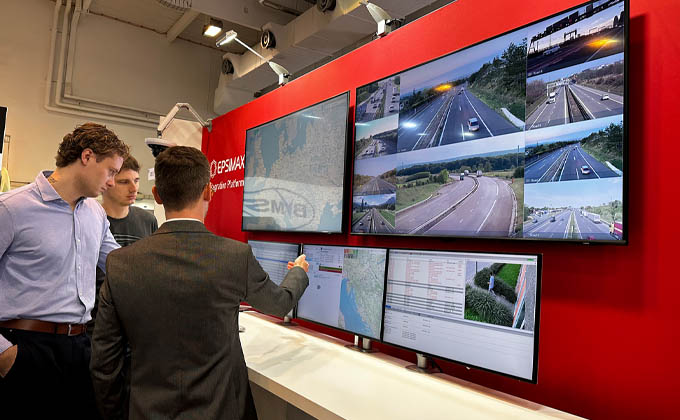
At this year’s Adria Security Summit in Zagreb, ECCOS will showcase the latest capabilities of its Epsimax platform for integrated security and fire protection management. Epsimax is an open, modular integration platform that enables easy expansion, upgrades, and seamless integration with other security systems according to individual customer requirements. It centralizes the monitoring and management of all integrated systems within a single application, whether at a single site or across multiple locations, while supporting geolocation and graphical system visualization.
By combining complete system integration with continuous data analysis, Epsimax enhances facility security while enabling operators to monitor and manage systems more efficiently. As an open information exchange platform, it can also integrate with internal business systems, simplifying administrative processes and adapting to the needs of modern companies and institutions.
Today, ECCOS operates from offices in Zagreb, Split, Dubrovnik, Rijeka, Osijek, Cologne, Frankfurt, and Brussels, while its partner network extends its presence to Bosnia and Herzegovina, Montenegro, Slovenia, and Serbia. Numerous successfully completed projects and long-standing references confirm the quality of the company’s solutions and its competitiveness in both domestic and international markets.
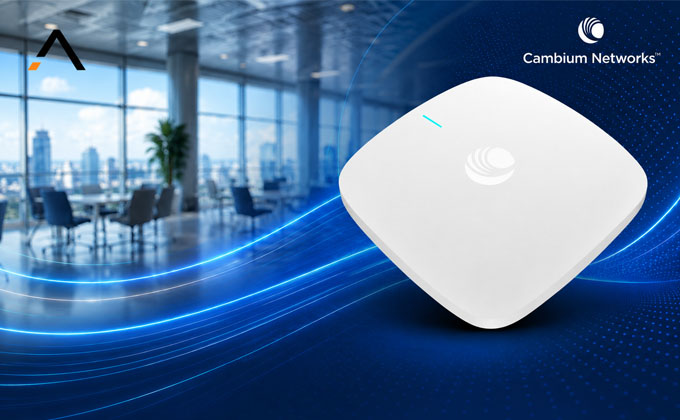
Cambium Networks has introduced the X7-56X, a new Wi-Fi 7 access point designed for indoor environments with a high density of simultaneously connected users and devices. The new model features a tri-radio architecture with directional antennas and a software-configurable third radio that can operate in either the 5 GHz or 6 GHz band, optimizing both coverage and spectrum utilization. With support for the IEEE 802.11be (Wi-Fi 7) standard, the X7-56X delivers data rates of up to 11.53 Gbps and supports up to 1,280 concurrent clients per access point.
The device is intended for deployment in conference centers, universities, hotels, shopping malls, stadiums, and other venues where large numbers of users access the wireless network simultaneously. Its integrated directional antennas focus coverage on high-density areas, while support for BLE, IEEE 802.15.4, Zigbee, Matter, and Thread enables seamless integration of IoT devices and sensors. The X7-56X also includes advanced security features such as WPA3, 802.1X authentication, and RADIUS, while the entire network infrastructure can be centrally managed through the cnMaestro platform, available in both cloud and on-premises deployments.
As a long-standing Master Distributor for Cambium Networks, Aikom Technology supports system integrators, managed service providers, and internet service providers in designing and deploying advanced wireless networks, including solutions such as the new X7-56X access point.
With more than 30 years of experience, Tenzor is one of the leading system integrators in the Adriatic region. The company designs, implements and maintains integrated security, automation and digital solutions that help organizations improve safety, operational efficiency and business performance across industries including transportation, logistics, retail, hospitality, public administration and critical infrastructure.
At Adria Security Summit 2026, visitors will have the opportunity to explore Tenzor’s latest technologies and meet the experts behind the company’s proprietary brands at Booths 55. A special focus will be placed on Tenzor’s own brands and solutions for intelligent warning systems, parking technologies, logistics management, self-service applications and integrated security:
Aura is Tenzor’s proprietary Yard Logistics platform that digitalizes and automates the complete vehicle flow within logistics and production facilities. By integrating vehicle registration, access control, ANPR, RFID, weighbridges, scheduling, loading and unloading management, visitor management and real-time monitoring into one centralized platform, AURA provides complete visibility of logistics operations while improving security and increasing efficiency.
Visitors will also discover SCI Kiosk, Tenzor’s self-service terminal designed for a wide range of applications in hospitality, tourism and industrial environments. The solution simplifies customer interactions, automates operational processes and provides an intuitive self-service experience tailored to different industries.
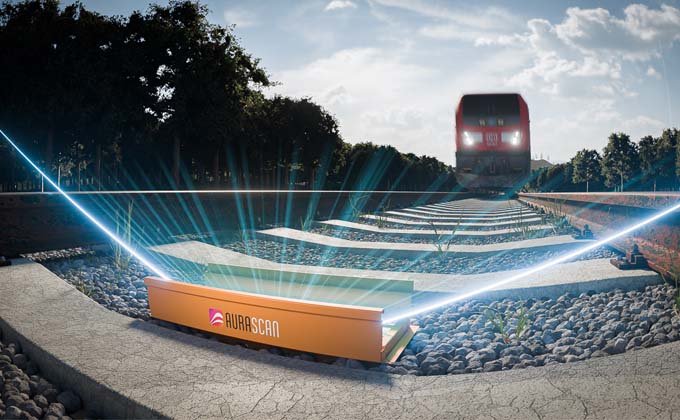
Aurascan is an advanced visual inspection system that provides continuous, high-resolution scanning of vehicle undercarriages and exterior surfaces while vehicles are in motion. The solution enables real-time inspection without affecting traffic flow, helping operators improve safety, security and operational reliability.
Urban Informatics delivers complete parking solutions for secured parking facilities, outdoor parking areas and parking garages. Combining innovative hardware, proprietary software and continuous development, Urban Informatics enables efficient parking management while providing complete project delivery—from system design and implementation to training, maintenance and 24/7 technical support. Thanks to our in-house development and production, we can tailor solutions to specific customer requirements, such as Urban Informatics’ dual-height terminal, which provides convenient and efficient access for both passenger cars and trucks through a single parking entry system.
Under the COPS Systems brand, Tenzor develops intelligent warning systems and dynamic traffic signs for road and industry traffic through real-time communication. COPS Systems solutions help operators increase safety, improve traffic flow and respond effectively to changing traffic conditions.
Alongside its proprietary technologies, Tenzor will showcase its comprehensive portfolio of integrated technical security solutions. By combining technologies from leading global manufacturers with its own software platforms, and innovative products, Tenzor delivers complete, scalable and future-ready solutions tailored to each customer’s specific needs.
Visit Tenzor at Booths 55 to discover how proprietary innovation and integrated technologies are helping organizations create safer, smarter and more efficient environments.
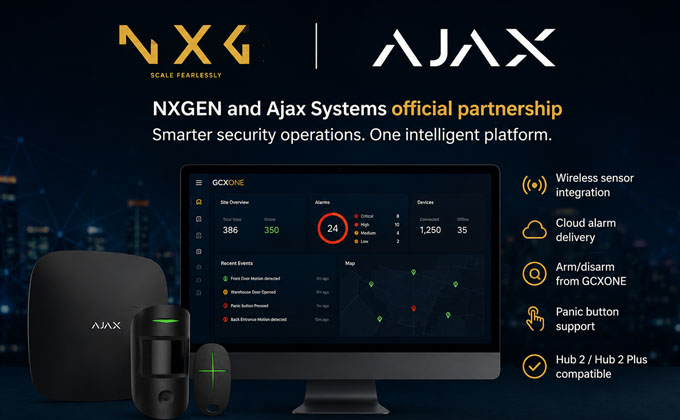
NXGEN Technology AG and Ajax Systems have announced an official partnership that integrates Ajax security devices with the GCXONE platform, enabling monitoring centers to manage alarms, connected devices, and security operations from a single interface. The integration supports wireless sensors, cloud alarm delivery, remote arming and disarming, panic button functionality, and compatibility with Hub 2 and Hub 2 Plus control panels.
Developed by Swiss technology company NXGEN Technology AG, GCXONE is an AI-powered proactive monitoring platform that combines automation and real-time analytics to help security teams respond faster and manage incidents more efficiently. The partnership with Ajax Systems further expands the platform’s capabilities by integrating one of the world’s leading manufacturers of professional wireless security systems.
Since its founding in 2019, NXGEN has been developing intelligent monitoring and security operations solutions across Europe and North America, with the new integration representing another step toward bringing multiple security technologies together within a single unified platform.
Hörmann is one of Europe’s leading manufacturers of doors, gates, and industrial and residential access solutions, with a long-standing tradition of developing products that combine security, reliability, and innovation. As part of a strong international group operating in more than 30 countries, Hörmann Croatia brings customers premium German engineering tailored to local market needs and regional standards.
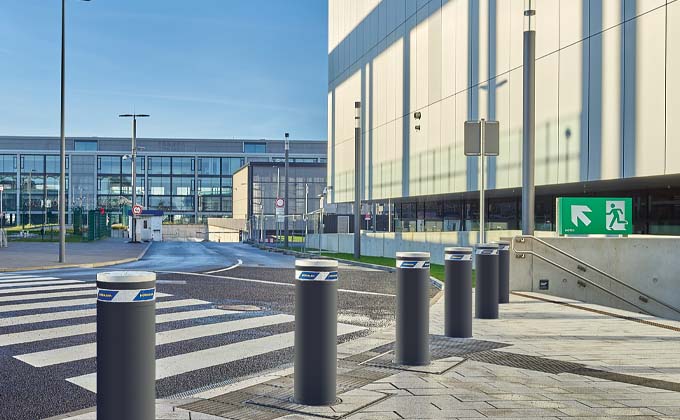
At this year’s Adria Security Summit, Hörmann Croatia will showcase two key segments of its vehicle access control and traffic management portfolio: Pilomat security bollards and Hörmann automatic parking barriers. Together, these solutions address the full spectrum of access control requirements, from protecting high-security sites to ensuring efficient day-to-day parking management.
Pilomat – Italian Precision at the Heart of the Hörmann Group
Pilomat is a specialized manufacturer of vehicle access control systems, including security bollards and road blockers designed to protect highly sensitive sites from unauthorized vehicle entry. Since becoming part of the Hörmann Group, Pilomat has retained its renowned technological expertise while gaining access to the global distribution network and resources of one of the industry’s largest providers of doors and access control systems.
The portfolio includes certified bollards from the Hörmann High Security Line, solutions that have been tested in real crash tests and certified according to international security standards. Available in a variety of configurations depending on usage frequency and application, the range extends from solutions for low-frequency daily operation to fully automated high-security bollards designed to protect critical infrastructure, embassies, government facilities, and other high-risk sites. These solutions provide reliable protection even against high-speed truck impact attempts and can be integrated with modern identification and access management systems.
Hörmann Automatic Parking Barriers
The second focus of Hörmann Croatia’s presentation will be its automatic parking barriers, developed through the Hörmann Group’s extensive manufacturing expertise and long-standing experience in parking management technology. These solutions are produced in specialized manufacturing facilities supported by advanced production capabilities and a modern R&D center, enabling Hörmann to continuously enhance its portfolio of parking barriers and access control solutions.
The product range includes automatic barriers for passage widths of up to 10 meters, with flat, round, folding, or octagonal barrier arms available to suit specific installation requirements. A wide range of control and identification options is also available, including remote controls, QR and barcode readers, RFID transponders, as well as remote operation via an internet server or smartphone. The solutions are suitable for residential complexes, hotels, and high-traffic commercial parking facilities, with the flexibility to develop customized access control systems tailored to individual customer requirements.
Why Visit Our Booth
By combining Pilomat high-security bollards with Hörmann parking technology, Hörmann Croatia will present a comprehensive vehicle access control portfolio at Adria Security Summit, covering everything from the protection of high-security facilities to reliable everyday parking management. We invite security professionals, consultants, system integrators, and representatives of both the public and private sectors to visit our booth, experience our solutions firsthand, and discuss the best options for their specific projects with our expert team.
Hörmann Croatia – Security and Reliability, German Quality, Regional Support.
More information and technical support are available at Hörmann Croatia
Hikvision will host an online training session on July 31, 2026, at 1:00 PM, dedicated to the Designer tool within the Hik-Partner Pro platform. The session is intended for project designers and Hikvision partners looking to improve the planning and design of security systems. As one of the platform’s latest features, Designer enables faster and more efficient project creation, while the live onboarding session will help participants master the tool and develop the skills needed to design professional security projects using Hik-Partner Pro.
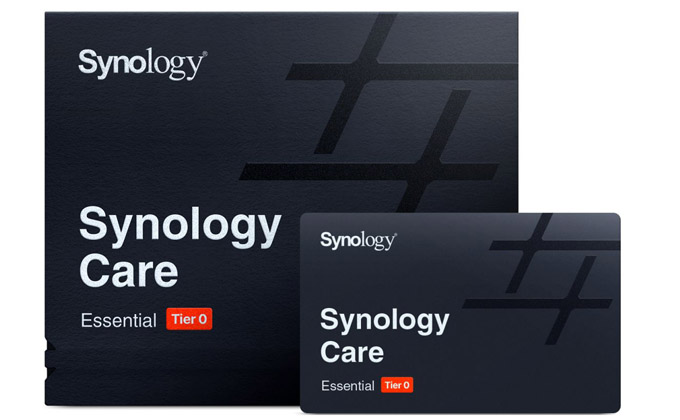
Synology Care Essential is now available at no additional cost with selected Synology rackmount storage systems, providing business users with enhanced technical support from day one. Synology says the service is included with models from its FS, UC, SA, HD, XS, XS+, and DP series, designed for demanding business and enterprise environments.
Care Essential provides users with priority technical support, targeting an initial response within eight business hours, subject to service availability and support demand. According to the company, the offering helps IT teams resolve potential issues more quickly while ensuring business continuity without additional costs.
More information about the service is available here.