Home News Archive by category World (Page 13)

World

ASSA ABLOY: Code Handle Delivers Hassle Free Digital PIN Door Security

Many businesses and buildings need trustworthy, keyless door security without the expense and invasiveness of an advanced access control system. For these premises, PIN-based digital door access adds this security efficiently, freeing managers, employees, and visitors from the cost and hassle of handling physical keys.

In all kinds of workplaces, private rooms need separating – securely and reliably – from spaces where the public have free access. Their doors need a simple, standalone locking solution, whether for a stock or medicine store, staff breakroom, private office, or any similar room.

A Code Handle PIN lock is an elegant device designed for precisely these use-cases. A Code Handle keeps a space secure, while admitting authorized employees via a digital PIN code on its discreet handle-keypad. Designed to add valuable door security to any private room facing interior public areas, it is already proven across multiple applications and environments to keep unauthorized people out.

Fitting is simple, only requiring a change of handle. The existing mechanical locking cylinder stays in place and may still be operated with the existing key. Staff need no specialist knowledge or outside help to manage their doors with Code Handle. This flexibility has seen it deployed successfully in a wide range of small and medium-sized settings, including all of the following.

Small Healthcare Facilities

In a busy medical facility – surgeries, dental practices, pharmacies, or physiotherapy suites – it is easy to accidentally leave a door unlocked*. With expensive equipment or controlled drugs on the other side, any opening invites opportunists. With a Code Handle digital PIN lock, practice managers need never worry again.

Doctors and patients expect privacy during consultations. With Code Handle, they get it. To secure controlled drugs and hazardous waste bins, a Code Handle is quicker and safer than tracking a physical key – with no need to change the lock when one goes missing. Many treatment and examination rooms have expensive or dangerous equipment such as X-ray machines, dental tools, and physiotherapy equipment. With Code Handle, all this gets the extra level of security it deserves, without the expense of a software-based access system.

Shops and Retail Environments

Every store has doors from the retail floor where the public should not go. Managing keys for these openings creates unnecessary workload and distracts staff. At the same time, a bulky mechanical PIN lock can ruin carefully thought-out aesthetics. Retail managers can instead secure these doors with a slimline, contemporary handle. Code Handle adds reliable, aesthetic, digital security to almost any interior door. It is easy for shop staff to operate, no training required. When an employee moves on, it is straightforward to cancel their PIN in seconds without removing the handle. In a shop, outlet, petrol station, or car dealership, Code Handle is a convenient, low-cost solution for stock rooms, staff toilets, or offices facing any space where the public is free to roam.

Small Offices, Including Home-Based Workspaces

The contents of an office may be sensitive, valuable, private… or all three: not everyone at a workplace should have free access. Staff should be able to grab a coffee without worrying about the laptop or handbag left inside. Designed for office doors of any kind, Code Handle keeps such stuff safe and private. When the door shuts, Code Handle locks it automatically – staff do not even need to put down whatever they are carrying.

The growth in work-from-home (WFH) and hybrid working strategies has also led to an increase in private workspaces within the home and other communal settings such as co-working premises. These require their own security and privacy, whether to make video calls or have a sensitive conversation. Commercial security is always desirable. In many industries, it is required by law: the physical security of documents, data, and conversations may be the responsibility of those who keep them.

As experience across sectors and locations has demonstrated, the most elegant, seamless way to put an effective barrier between a residence and a private workstation is with a Code Handle digital door lock.

Primary Schools and Other Education Settings

Staff and school administrators can relax when they know private rooms and equipment stores are properly secured. Currently, many teachers carry cumbersome key bunches to ensure pupils do not enter rooms which could put themselves or school equipment at risk. With Code Handle, this is possible without having to constantly lock and unlock by key.

Fitting a Code Handle brings a sense of security and privacy to the staff room: teachers can leave marked work or mobile phones where no pupils can enter. A Code Handle makes it easy to separate pupil toilets from PIN-protected staff toilets. With Code Handle fitted to just a few important doors around the building, school principals ensure sports equipment, musical instruments, cleaning stores, and kitchens are protected against unauthorized access or theft.

Health and safety are also part of the package. Code Handle is fire-door compliant (EN 1634) and with a certified lifetime of at least 100,000 operations. Product design makes disinfecting easier. Unlike mechanical push-button PIN locks, a Code Handle has a smooth surface without corners or ridges. Germs have fewer places to hide. A disinfected damp cloth is all a caretaker needs to keep a handle hygienic – and school doors and storerooms secure.

Easy Installation, Even Easier Management

Code Handle devices are easy for any small organization to retrofit to their existing doors: the cylinder or lock remains in place and its handle simply swapped for the new device. For power, two standard batteries (CR2) slot inside the handle, typically lasting 30,000 lock/unlock cycles before replacement. Installation needs no wires, specialist tools, or drilling. Two screws attach it to almost any interior door up to 80mm thick.

Door management becomes easy and keyless. Every Code Handle comes with a Master Code and 9 different user PINs, making it simple to abandon the inconvenience of carrying and keeping track of keys. PINs are easy to set and to change whenever an office manager decides. It is this easy to transform the security of private rooms which face public spaces.

To learn more visit: www.assaabloy.com/group/emeia/solutions/topics/access-control
 

Hikvision Launches AOV SolarVu 4G Solar Camera Series for Remote Locations

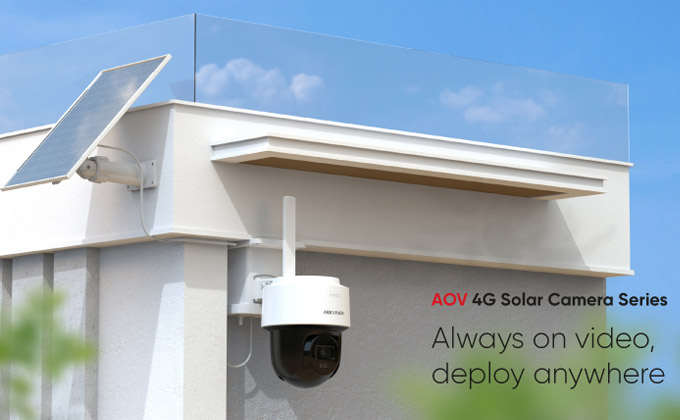
Hikvision has introduced its new AOV SolarVu series of 4G solar-powered cameras, designed to deliver reliable video surveillance in locations without access to mains power or wired network infrastructure. The new solution combines solar power, 4G wireless connectivity, and Always On Video (AOV) technology, enabling continuous security monitoring even in the most challenging off-grid environments.

Unlike conventional solar cameras that remain in sleep mode and only start recording after motion is detected, AOV technology keeps the camera in an active ultra-low-power recording mode. The camera continuously captures footage at a low frame rate and automatically switches to full-frame recording when an event is detected, ensuring that no critical moments are missed while eliminating surveillance blind spots.

Power is supplied by a 9,000mAh battery combined with a solar panel, providing several days of operation even without sunlight. Built-in 4G connectivity allows for fast and flexible deployment without network cabling. The cameras also feature AI-powered person and vehicle detection, helping to reduce false alarms and improve overall monitoring accuracy.

The new series is designed for farms, orchards, plantations, construction sites, vacation homes, and other remote locations where conventional surveillance infrastructure is unavailable but continuous 24/7 monitoring is required.

“AOV technology represents a major leap forward for solar-powered cameras. It allows users to capture every moment continuously, combining reliability, efficiency, and ease of use in one integrated solution,” said Rubio Hong, Product Director at Hikvision.


Mette Mai Maarup Joins Milestone Systems’ Executive Leadership Team

Milestone Systems has appointed Mette Mai Maarup as Executive Vice President of Strategy, Communications & Branding and a member of the company’s Executive Leadership Team (ELT). Previously serving as Vice President of Strategy & Corporate Development, she will also continue in her role as Managing Director, Commercial, at brighter AI, where she leads the commercial strategy for Milestone’s Data & AI services.

“Milestone is entering an exciting new chapter where a strong strategic direction, a clear voice, and a distinctive brand are essential for success. I am delighted to welcome Mette to the Executive Leadership Team,” said Acting CEO Jeppe Frandsen.

Mette Mai Maarup joined Milestone Systems in 2020 and has since held several senior leadership positions in strategy and business development. “Video technology is evolving rapidly, creating new opportunities to deliver value for customers and partners. I look forward to working even more closely with colleagues and partners as we shape Milestone’s next phase of growth and innovation,” said Mette Mai Maarup.

Honeywell Expands Fire and Life Safety Portfolio with Connected Innovations

Honeywell has announced a major expansion of its fire and life safety portfolio, introducing the next generation of smoke control capabilities within its NOTIFIER INSPIRE platform, along with a range of cloud-connected innovations designed to improve the management of fire safety systems. The new solutions are intended to simplify system design and commissioning, enhance regulatory compliance, and enable faster emergency response. Particular emphasis has been placed on integrated smoke control, which reduces the need for additional hardware and complex programming, simplifies system upgrades, and automates testing and reporting.

The platform now also includes an automatic purge function that responds to carbon monoxide (CO) detection by ventilating affected areas to improve occupant safety.

“With these innovations, we’re helping customers simplify complex designs, improve visibility across their systems and move beyond manual processes so they can better protect occupants, respond with greater confidence and operate more efficiently,” said Michael Troiano, President of Global Fire at Honeywell Building Automation.

Honeywell has also expanded its Connected Life Safety Services (CLSS) platform with new capabilities that enhance visibility and coordination throughout the fire system lifecycle. These include Zone Sync for automatically aligning floor plans and alarm zones, CLSS Rescue Assist to support occupants requiring additional assistance during evacuations, and Phoenix G2 Cellular Alerting, which provides redundant cellular communication to ensure critical emergency notifications continue even during network disruptions.

According to the company, these enhancements represent another step toward building a connected life safety ecosystem that combines advanced automation, reliable communications, and more effective incident response.

Enhancing mining safety and operations with smart surveillance

Mining companies manage considerable risk on a daily basis. Whether it’s worker safety, site security, or managing production, companies are looking for solutions that help mitigate risk and drive efficiencies. Here we explore how advanced surveillance systems are doing just that. 

Smart surveillance systems, however, are helping mining companies across the world meet these challenges in a safe and reliable way. A combination of network video cameras, often with onboard AI-powered analytic capabilities, work in conjunction with network audio, radar, and even thermometric (heat monitoring) sensors. Together they drive all manner of efficiencies, new functions, trigger real-time alerts, and initiate automated workflows, especially when built using open standards which facilitate integration with wider industrial control systems.

A camera’s ability to analyze footage in real-time makes it able to identify events instantaneously. This in turn improves the scalability of monitoring systems as staff can now safely and effectively oversee a large number of feeds, as well as expanding the system’s potential applications. In addition to securing access to critical assets, smart surveillance systems can enhance site health and safety practices, drive significant operational efficiencies, and serve as a force multiplier for existing operations. In this blog post we will explore some of the key use cases mining companies across the world are deploying and the benefits they are seeing.

Keeping workers safe is always the number one priority. Given the hazardous nature of the working environment, mining sites have strict safety procedures. Surveillance technologies can help monitor adherence to these protocols, as well as helping with their enforcement, detecting hazards, and alerting workers to dangers.

  • Dangerous area alerts: Video analytics can detect when a worker accidentally strays into a restricted or dangerous zone, such as near active heavy machinery. It automatically sounds an alert and notifies supervisors to intervene. These alerts are particularly useful in low-visibility areas or underground mines, or when large, mobile machinery with poor driver visibility is in use.
  • PPE compliance: Smart cameras can detect whether workers are wearing the appropriate personal protective equipment (PPE). For example, they can detect if helmets, reflective vests, or safety goggles are missing. As well as alerting supervisors to any discrepancies and broadcasting pre-recorded messages reminding staff to wear appropriate equipment, systems can even prevent access, locking doors to particularly high-risk areas such as chemical stores.
  • On-site traffic management: From heavy equipment and giant haul trucks through to light vehicles and service fleets, mining sites experience heavy vehicle traffic.  To help avoid collisions and accidents, sites can employ traffic monitoring systems to ensure drivers follow speed limits and stick to designated routes. These systems typically employ a combination of network cameras and radar to facilitate accurate identification and tracking of vehicles and pedestrians. Supporting audio and lighting can then be triggered to warn drivers and people of any potential dangers. The data generated by these traffic systems means they can also analyze traffic patterns, informing light signal timings, preventing congestion, and optimizing traffic flow. This all adds up to a much safer experience for both pedestrians and drivers.

Securing mining sites is no simple feat. Often spanning hundreds of square miles, enforcing a strict perimeter presents a huge, yet imperative, challenge. Unauthorized access not only risks theft, illegal mining, and disruption, but also poses significant danger to intruders. Smart surveillance technologies bolster perimeter security, providing deterrence and alert and response capabilities along with robust access controls. This can all be managed via a centralized user interface provided by the video management system (VMS). Operators can monitor live feeds, access recorded footage, control network speakers and intercom systems, and receive real-time alerts all in one place. Feeds from various sites can even be centralized, allowing security firms or operations management to monitor multiple locations at once.

  • Vehicle access control: License plate recognition (LPR) technology enables automatic vehicle authorization and access controls, ensuring only pre-approved vehicles can access sensitive areas while helping eliminate entry point bottlenecks.
  • Audio warnings: By integrating IP-based audio solutions with your surveillance system, you can automate intrusion deterrence warnings such as, “You are entering a restricted area,” when unauthorized individuals cross any predetermined boundaries.  These solutions also allow security staff to directly address individuals when alerts are triggered.
  • Illegal mining prevention: Inactive tunnels are often targeted for illegal mining. Advanced video analytics can detect and alert security staff to intruders in real-time. Automated flood lighting and audio solutions act as powerful deterrents while high quality cameras capture valuable forensic evidence.
  • Stopping material skimming: Sometimes organized crime groups will attempt to “skim”, that is to steal, materials from haulers during transport. A combination of weighbridges and LPR can keep precise logs of which vehicles are used and whether the load weights at departure and delivery are consistent. Surveillance systems with intelligent analytics can also track truck movements, ensuring they adhere to designated routes. Any deviations or delays can trigger immediate alerts, ensuring materials are not diverted or stolen.

Mining sites are massive, resource-intensive operations. Any disruption and unexpected downtime can have a significant impact on production levels.  Smart surveillance technologies play a vital role in preventive and pre-emptive action, helping keep the site running smoothly.

  • Monitoring for signs of wear: While they are extremely resilient, mining tools and machinery take an extraordinary amount of punishment. As such, spotting signs of wear, breakages, or failure are of paramount importance in order to maximize and maintain production uptime.  Cameras can spot early signs of wear and tear on machinery, such as conveyor belts or loaders, or leaks from piping or material storage. These capabilities allow for more predictive maintenance scheduling and can prevent issues from escalating.
  • Preventing overheating: Machine temperature is often an indicator of machine or system health. Thermometric cameras capture temperature data, alerting machine operators and workers to unsafe or unusual heat levels. Not only does this protect workers from potential harm, but heat levels can also be tracked over time and used to inform maintenance decisions.

By integrating surveillance systems with operations networks and using them to augment existing processes and procedures, mining companies can protect their assets, improve worker safety, and drive significant efficiencies.

Video surveillance technology will continue to play an increasingly important role in mining operations. As mining becomes more digitally enabled, the automation capabilities, transparency, and safety and security benefits of these systems will only grow in value — and this is just the beginning. These technologies generate vast amounts of rich, detailed data that can be merged and analyzed across multiple sites. This information fuels a range of advanced applications, from review and modeling to the identification of hidden trends and new dimensions of insight for site management. The potential for future innovation is near limitless.

Already surveillance technology is creating safer, more efficient working environments, saving lives and money.

Bosch Accelerates Smart Building Strategy One Year After Landmark Acquisition

Nearly a year after completing the largest acquisition in its history, Bosch continues to strengthen its position in the smart buildings and building management market. The $8 billion acquisition of Johnson Controls’ Residential & Light Commercial HVAC business has significantly expanded the company’s capabilities and accelerated the development of new solutions for the digitalization of buildings. More information about the acquisition and Bosch’s strategy is available on the Bosch Media Service.

According to research firm Memoori, Bosch’s Home Comfort division has almost doubled in size, now employing more than 25,000 associates, generating approximately $8.6 billion in annual sales, and expanding its manufacturing footprint from 17 to 33 production facilities. The company has outlined the expanded business on the Bosch Home Comfort Group website.

Among the most significant developments is the launch of SkyQ, a building control system designed specifically for small and mid-sized commercial buildings—a market segment that has traditionally been underserved due to the high cost of automation. According to available data, these buildings account for approximately 95 percent of all commercial properties in the United States, while fewer than 20 percent currently use any form of building automation.

Bosch has also expanded its portfolio through a partnership with Hitachi, introducing an AI-powered suite of building management solutions. The platform integrates HVAC equipment with remote monitoring, predictive maintenance, and energy management capabilities, helping building operators improve operational efficiency while reducing maintenance and energy costs. Additional details on the collaboration are available from Hitachi’s official announcement.

Memoori believes these developments are likely to have a significant impact on the future of the smart building market, particularly in the small and medium-sized commercial building segment, where the adoption of automation and AI-driven technologies is expected to accelerate in the coming years.

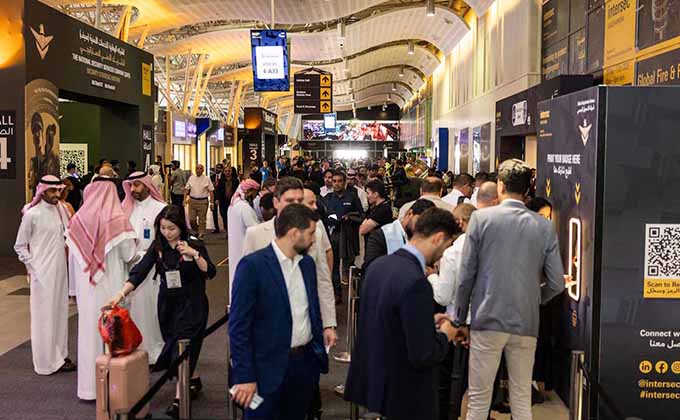
Intersec Saudi Arabia brings together experts to shape the security and fire safety agenda

Future Security Summit and Fire Protection & Technology Summit Advisory Committees bring together experts from ICAO, Saudi Aramco, Dubai Airports, Red Sea Global, King Fahd International Airport and other leading organisations. The committees to help shape conference agendas addressing AI, resilience, cyber-physical security convergence, predictive risk management and next-generation fire protection strategies

Intersec Saudi Arabia, the Kingdom’s leading platform for security, safety, and fire protection, has announced the formation of the Advisory Committees for its flagship Future Security Summit and Fire Protection & Technology Summit, bringing together some of the region’s most respected experts to help shape discussions around the rapidly evolving security and fire protection landscape. Taking place during Intersec Saudi Arabia 2026 from 16–18 November at Riyadh Front Exhibition & Conference Center (RFECC), the two CPD-certified conferences will bring together international experts, policymakers and industry leaders to examine the technologies, strategies and partnerships needed to safeguard Saudi Arabia’s next phase of growth under Vision 2030.

The Future Security Summit Advisory Committee includes representatives from the Royal Commission for AlUla, Ministry of Municipalities and Housing, International Civil Aviation Organization (ICAO), Dubai Airports, IFPO MENASA, King Salman International Airport and other leading organisations. Meanwhile, the Fire Protection & Technology Summit Advisory Committee brings together specialists from Saudi Aramco, Red Sea Global, Qiddiya City, King Fahd International Airport and AECOM.

Riham Sedik, Exhibition Director, Intersec Saudi Arabia, said: “The advisory committees bring together professionals with decades of operational, strategic and technical experience across security, emergency management, fire protection and resilience.

“Their in-depth knowledge will help ensure that the Future Security Summit and Fire Protection & Technology Summit address the real-world challenges facing organisations today, while providing practical insights into the technologies, frameworks and leadership strategies shaping these sectors in the Kingdom and beyond.”

Addressing the next generation of security challenges
According to Yusuf Hasan, Senior Aviation Security Advisor at the International Civil Aviation Organization and member of the Future Security Summit Advisory Committee, the convergence of rapid development and evolving risks is creating a new security paradigm across the region. “The key challenge today is managing rapid growth while maintaining secure, resilient and trusted environments,” said Hasan. “As Saudi Arabia’s tourism, aviation, logistics and digital sectors expand, so too does the complexity of the threat landscape.”

He added that artificial intelligence is accelerating the shift from reactive security to predictive, intelligence-led models through enhanced threat detection, analytics and automation. The Future Security Summit will explore many of these themes through discussions focused on cyber-physical security convergence, AI-enabled security operations, crisis and emergency management, critical infrastructure protection, workforce development and resilience planning.

Advancing fire protection for a new generation of infrastructure
Dr Reginald D. Freeman, Member of the Board of Directors, National Fire Protection Association (NFPA) and member of the Fire Protection & Technology Summit Advisory Committee, said the fire protection sector is undergoing a fundamental transformation.
“One of the most significant trends is the shift from traditional code compliance toward risk-informed, performance-based fire engineering. The complexity of today’s mega-projects requires more sophisticated approaches to fire and life safety.

“The future of fire protection in Saudi Arabia will not simply be about responding to emergencies; it will be about anticipating risk, strengthening resilience, and enabling sustainable growth,” said Freeman.

Together, the advisory committees will play a key role in ensuring that both conference programmes remain closely aligned with the priorities of Saudi Arabia’s security, safety and fire protection sectors, while supporting knowledge exchange among government authorities, developers, infrastructure operators and technology providers. Intersec Saudi Arabia 2026 is expected to welcome more than 25,000 visitors and over 500 exhibitors from around the world, reinforcing its position as the Kingdom’s premier platform for innovation in security, safety, and fire protection.

The full list of Advisory Committee members can be found here for Future Security Summit Advisory Committee and here for Fire Protection & Technology Summit Advisory Committee.

For more information, please visit Intersec Saudi Arabia’s website: https://intersec-saudiarabia.ksa.messefrankfurt.com/ksa/en.html

Ajax Systems wins EACD Communications Excellence Award

Ajax Systems has received the prestigious EACD Communications Excellence Award, presented by the European Association of Communication Directors to recognize companies demonstrating outstanding standards in corporate communications and making a significant contribution to organizational and societal development. The award honors Ajax Systems for its professional communication strategy and innovative approach to presenting security technologies.

The company noted that, in a traditionally conservative security industry, it has shifted the focus of its communications from technical specifications to user experience, visual identity, and creative marketing campaigns. One of the most notable examples of this approach is the annual Ajax Special Event, which has evolved into a global benchmark for new product launches. The latest edition, held under the theme “Dare to be First,” featured nearly 100 local premieres across 36 countries and reached an audience of more than 2.7 million people.

In addition to its business achievements, Ajax Systems continues to invest in socially responsible initiatives, including the Ajax Next engineering education program and the Air Alert application, developed at the beginning of the war in Ukraine. To date, the app has been downloaded more than 46 million times and received the European Excellence Award 2024.

Hanwha Vision appoints Matthias Stiftinger as Pre-Sales Manager for the DACH region

Hanwha Vision Europe has appointed Matthias Stiftinger as Pre-Sales Manager for the DACH region, covering Germany, Austria, and Switzerland. He assumed the new role at the beginning of June after spending nearly 12 years with Bosch Security Systems, Keenfinity, and IQsight.

In his new position, Stiftinger will be responsible for providing pre-sales support to partners and customers while contributing to the further expansion of Hanwha Vision’s business across the DACH market. His extensive experience in the security technology sector is expected to strengthen collaboration with partners and support the delivery of innovative security solutions.

Hanwha Vision expects the appointment to further reinforce the company’s growth strategy and strengthen its presence in one of Europe’s most important security markets.

Memoori: Honeywell Targets Smart Building Expansion Following Restructuring

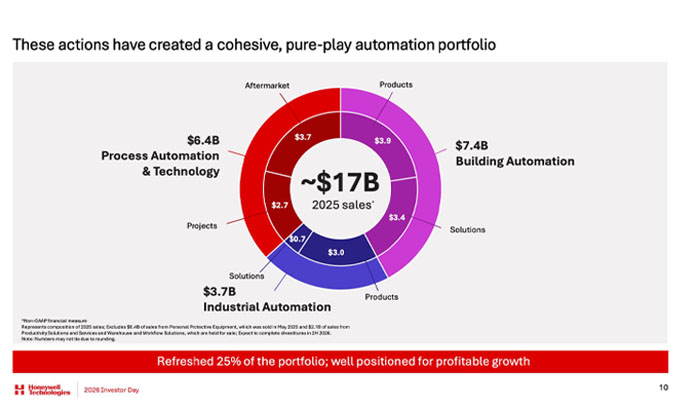
According to an analysis by research firm Memoori, Honeywell is expected to complete the spin-off of its Aerospace business by the end of June and continue operations as a company fully focused on automation. Its Building Automation division will become the company’s largest business unit, accounting for 42% of total revenue and generating an estimated $7.4 billion in revenue in 2025. Memoori says Honeywell’s future strategy will focus on smaller acquisitions valued between $2 billion and $4 billion, a move that could mark the beginning of a new wave of consolidation in the smart building technology market.

The company expects to achieve annual organic revenue growth of 4% to 6%, continuous margin expansion, and more than 10% annual earnings growth over the next three years. More than 75% of Honeywell’s portfolio already consists of sustainability-oriented solutions, while the company aims to achieve carbon neutrality by 2035. Memoori concludes that the new strategy could increase interest in acquiring companies developing building automation technologies, energy management solutions, security systems, and AI-powered technologies.