Integrated Systems Europe (ISE) has announced the launch of the ISE Foundation, an industry-led initiative aimed at strengthening the AV and systems integration sector in the long term. In addition to the annual exhibition, the Foundation will provide year-round programs that connect professionals, support startups, and develop community projects in Barcelona and Catalonia. The initiative was established in cooperation with AVIXA and CEDIA, with the support of the Barcelona City Council and the Government of Catalonia, further extending ISE’s impact beyond the four-day exhibition. It was unveiled on the opening day of ISE 2026 under the theme “Powering On, Together” as a strategic step toward continuous industry development.
One of the Foundation’s main priorities will be workforce development, as the shortage of skilled professionals remains a challenge for manufacturers, integrators, and service providers. The “Training the Trainers” program will educate instructors based on curricula developed by AVIXA and CEDIA, with plans to involve up to 150 educational institutions. In addition, AV Career Days will be organized, along with vocational education pathways designed to lead directly to employment within the industry. The second pillar of the initiative focuses on innovation and support for startup companies, building on the Innovation Park at ISE 2026, where 130 young companies participated. The Foundation will provide mentorship, investor connections, and access to industry networks to help ideas reach commercial application more quickly.
The third focus is social responsibility through projects in healthcare, education, and culture in cooperation with local institutions and organizations. “The ISE Foundation formalizes our commitment to the AV sector while strengthening ties with our host city. Together with the industry and local institutions, we aim to create a lasting legacy that supports innovation, talent development, and community engagement year-round,” said Mike Blackman, Managing Director of Integrated Systems Events.
Ruijie Reyee has completed a network infrastructure upgrade at the Shenyang Imperial Palace in China, one of only two preserved imperial palace complexes in the country and a UNESCO World Heritage site. The nearly 400-year-old complex covers about 60,000 square meters and includes more than 100 historic buildings with over 500 rooms and around 100,000 artifacts.
The existing network could not support the growing number of visitors, especially in the busiest halls where thousands of people simultaneously used digital guides and mobile applications. Some areas, including underground exhibition halls and outer courtyards, had no signal at all, while a single shared network for guests and staff posed security risks and slowed museum operations. The outdated infrastructure also could not support planned artifact protection systems, environmental sensors, and interactive visitor services.
Ruijie Reyee implemented a new solution with 99.5 percent Wi-Fi coverage, using a combination of high-density and directional access points adapted to the thick walls of the historic buildings. A single access point can serve more than 200 users simultaneously, while the system automatically balances traffic loads to prevent congestion.
The network is segmented into separate environments for visitors, administration, security devices, and emergency systems, protecting museum data and operations from public Wi-Fi traffic. The backbone is a 10-gigabit infrastructure ready for future IoT devices, and a simplified topology reduced cabling by about 30 percent, minimizing intervention on the historic structure.
The system is managed through a cloud platform with AI diagnostics, enabling remote maintenance and faster troubleshooting. Following the upgrade, visitors now enjoy reliable access to digital guides and online content, while museum operations—from ticketing to video surveillance and environmental monitoring—run securely on a separate network.
The new infrastructure also allows future expansion of security systems and interactive services without additional construction work, upgrading the historic site technologically while preserving its cultural value.
The company Senstar Technologies Corporation announced it has completed the acquisition of Blickfeld GmbH after receiving regulatory approvals and fulfilling all closing conditions. The agreement, first announced in December 2025, was funded with €10.4 million in cash plus an additional €1 million in performance-based earnouts. Blickfeld is a long-standing Senstar partner and a producer of 3D LiDAR sensors with integrated software for security, volume monitoring, industrial and traffic applications.
With this acquisition, Senstar strengthens its multi-layer physical security offering by adding high-precision 3D LiDAR sensors designed to protect perimeters and critical infrastructure points. The combined technologies are expected to improve detection accuracy, reduce false alarms and enhance situational awareness, while also expanding use cases to traffic monitoring and movement analytics.
“We are thrilled to welcome Dr. Mathias Müller and the Blickfeld team to Senstar. By combining our proven perimeter intrusion detection systems and intelligent video management software with advanced 3D LiDAR technology, we are uniquely positioned to deliver next-generation security solutions that address our customers’ most critical challenges,” said Fabien Haubert, CEO of Senstar.
Blickfeld will continue to operate autonomously with Senstar’s support, while the company and its North American subsidiary will remain part of the group under their current names. Senstar stated the acquisition reflects its strategy of technological development and global expansion, particularly in critical infrastructure protection and emerging markets that require LiDAR-based situational awareness.
Canon continues to expand its portfolio of professional PTZ (Pan-Tilt-Zoom) cameras designed for automated capture and remote operation in environments where traditional production would require larger crews. The solutions are used in videoconferencing, education, corporate presentations and houses of worship, as well as in event production, sports broadcasting and monitoring of large facilities.
The core of the range is the indoor CR-N series (CR-N100, CR-N300 and CR-N500), offering 4K recording, IP video transmission and integration into existing AV and IT systems. The cameras support standard streaming protocols and can be connected to livestreaming platforms and production systems, while optical zoom and advanced autofocus enable automatic tracking of speakers or lecturers without the constant presence of a camera operator.
For more demanding scenarios, the CR-X series—particularly the CR-X300—is designed for outdoor use. Its weather-resistant housing allows installation in stadiums, urban environments and infrastructure sites, where the camera can serve both production and security video monitoring purposes.
In addition to cameras, Canon also offers dedicated PTZ controllers enabling centralized management of multiple cameras simultaneously. Using a joystick and programmable buttons, operators can control movement, zoom, preset positions and exposure, allowing productions to be managed from a control room or even a remote location. This combination of cameras and controllers supports remote production workflows while significantly reducing the need for on-site technical staff.


The full range of Canon PTZ cameras and controllers was also exhibited at the company’s booth during ISE 2026 in Barcelona, where live demonstrations highlighted network-based control, automated capture and integration with AV infrastructure. Visitors were able to see how a single controller can operate several cameras and how events or lectures can be produced with minimal logistics, underscoring the growing role of PTZ technology in professional production and modern security systems.
EL.MO. has introduced a new intrusion control panel capable of managing up to 80 inputs while integrating both wired devices and devices connected via an RS-485 bus. The solution also supports remote control, allowing users to monitor and operate the security system from a distance.
The new panel is designed as a single control unit for advanced intrusion detection, intended to protect retail areas, warehouses, and offices within one unified system. The manufacturer states that the device offers customizable operating logic and broad possibilities for future integration with other security solutions.
In addition, installation is simplified, while security personnel gain a higher level of control over the system and its functions. The company says the goal of the solution is to provide more efficient protection of facilities along with the flexibility required for future upgrades and expansions.
The company Senstar has announced an educational webinar dedicated to the security of solar parks, a segment experiencing rapid growth in Estonia and across Europe. As renewable energy capacity continues to expand, protecting large photovoltaic sites is becoming a key concern for operators and investors.
According to the company, the main challenge is not only intruder detection but also finding the right balance between project budgets and system accuracy. Drawing on experience from projects worldwide, Senstar has developed an approach that helps integrators meet tender requirements while ensuring reliable protection for large PV installations.
The webinar, scheduled for February 25 and led by Maciej Kolbuszowski, will explain how site characteristics influence technology selection, how to align costs with expected system performance, and how to optimize response times while significantly reducing nuisance alarms. A special focus will be placed on choosing between sensor-based solutions and video analytics, in order to determine the optimal perimeter protection strategy.
Senstar notes that securing renewable energy infrastructure is increasingly important both for production continuity and for safeguarding investments, and the session will provide practical guidance that can be immediately applied in energy facility protection projects.
Axis Communications has introduced Edge Vault, a hardware-based cybersecurity platform integrated directly into its devices. The solution safeguards device integrity and enables secure operations based on cryptographic keys that establish a chain of trust. In this way, users can verify the identity and authenticity of the device and be certain they are using a genuine Axis product. The platform enables secure boot, allowing the device to operate only with a signed operating system and authorized updates.
At the same time, Edge Vault protects sensitive information such as cryptographic keys and prevents manipulation of software or recordings. Signed video is also supported, making it possible to verify whether video footage has been altered after recording. The solution includes supply-chain protection, secure key storage, and detection of unauthorized access attempts. By using a unique device identifier, cameras can be securely onboarded to the network and deployed faster in zero-trust environments.
Protection is based on security modules, TPM technology, and an isolated environment within the chip that secures communication, authentication, and encrypted video streaming. Axis also states that part of its portfolio complies with the FIPS 140 standard, which defines requirements for cryptographic operations and further strengthens system resilience against cyber threats.
IQSIGHT has introduced a new brand identity positioned around “intelligence-first” video security, describing the move as the evolution of Bosch Video Systems and a signal of expanded AI-enabled capabilities across its portfolio
In the announcement, the company says it is aiming to move beyond traditional video surveillance by turning video data into “practical, actionable intelligence” that helps customers see clearly, understand context in real time, and make faster, data-driven decisions. IQSIGHT adds that while the brand has progressed, its foundation remains anchored in more than 60 years of engineering experience and long-term reliability in demanding environments.
“As security environments become more dynamic and complex, customers need intelligence they can trust,” said Sabrina Stainburn, adding that the company’s focus is on delivering accurate alerts and insights that provide foresight into events and patterns, while building on a legacy portfolio to address changing threats.
IQSIGHT intends to deliver that intelligence “at the edge” and within existing video management system environments, using cloud capabilities only where they add value to avoid unnecessary complexity or overhead while maintaining reliable performance.
In the press release, IQSIGHT also confirmed it will showcase its latest AI-led offerings at ISC West in Las Vegas from March 25–27, including advanced analytics for object classification, counting, and attribute detection (such as vehicle models and clothing colours), as well as GenAI-driven scene understanding intended to interpret complex environments without training on specific behaviours.
The release adds that IQSIGHT’s “intelligence-first platform” will power its latest camera generation, and that it is working with leading VMS partners, including Genetec and Milestone Systems, to deliver scalable outcomes for customers across sectors such as education, government, critical infrastructure, transportation, and smart city environments.
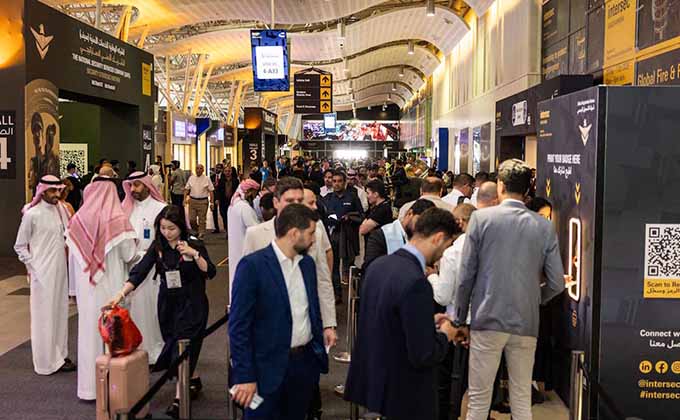
Intersec 2026, the world-leading exhibition for security, safety and fire protection, has recorded its largest, most internationally diverse and strategically significant edition to date. The three-day event, which celebrated its 27th edition, was held under the patronage of His Highness Sheikh Mansoor Bin Mohammed bin Rashid Al Maktoum, Chairman of the Dubai Ports and Borders Security Council, and welcomed 44,764 trade visitors from 151 countries, with a 60/40 domestic versus international split, reinforcing Intersec’s position as the global meeting point for government authorities, regulators, industry leaders and solution providers shaping the future of security, safety and resilience.
Spanning over 65,000 square metres of gross exhibition space, Intersec 2026 featured 1,180 exhibitors from 56 countries, supported by 10 international country pavilions and a comprehensive programme of 14 conferences and specialist features, reflecting the growing complexity and convergence of physical, digital and human safety and security.
International Participation Underscores Intersec’s Global Scale
Global participation remained a key feature of the 2026 edition, with 82% of total exhibitors coming from international markets, underscoring the event’s role as a global marketplace. Exhibitor participation was led by the world’s foremost safety, security and technology markets, including the United States and China; high-growth economies such as India and South Korea; and Europe’s most established industrial and innovative hubs, including France, Germany, Italy, Türkiye, and the United Kingdom.
The United Arab Emirates remained the event’s largest and most influential domestic exhibiting market, reflecting the country’s growing prominence across the global security, safety and fire protection landscape.
This momentum is being driven by bold national initiatives that continue to strengthen regulatory frameworks, accelerate the adoption of advanced technologies, and embed resilience, innovation, and convergence across the entire ecosystem.
Technology and Solutions Aligned With Global and National Priorities
This leadership was clearly reflected on the exhibition floor, where solutions aligned with national and international priorities were brought to life across five core sectors, including Homeland Security & Policing, Cybersecurity, Commercial & Perimeter Security, Fire & Rescue, and Health & Safety. Together, exhibitors showcased next-generation technologies, integrated systems, and operational solutions that address critical challenges, including infrastructure protection, emergency response, cyber resilience, workforce safety, and crisis preparedness.
Intersec Global Underscores Platform’s Evolution
Intersec 2026 marked a significant milestone, unveiling the new Intersec Global identity during a press conference attended by strategic partners and industry leaders. As part of the Global platform, the evolution of Intersec’s sectors reflects a deliberate macro-to-micro narrative, moving from safeguarding nations to protecting individual lives within a unified international framework. At the macro level, National Security & Resilience supports ministries, police and border authorities shaping sovereign risk strategy, while Cybersecurity underpins digital governance and critical infrastructure protection.
This extends into Surveillance & Physical Security for built environments and smart cities, and Fire, Rescue & Emergency Response for civil defence and climate-driven readiness. This culminates at the micro level with Safety & Wellbeing, aligned with ESG priorities and workforce protection, safeguarding people in their daily environments and demonstrating how Intersec Global connects national resilience with human-centred safety across its worldwide ecosystem.
Dishan Isaac, Show Director of Intersec at Messe Frankfurt Middle East: “This edition represents a pivotal moment for the platform, highlighting its expanded scale and the increased engagement from the global safety and security community. The launch of the Intersec Global identity reflects the on-the-ground reality, emphasising an international ecosystem rooted in Dubai, with increasing involvement from both established markets and high-growth regions.
“With a significant increase in international exhibitors and visitors, the quality of dialogue has been excellent. From strategic policy discussions to frontline operational challenges, the focus has been firmly on real-world resilience, readiness and collaboration. The breadth of engagement from government authorities, critical infrastructure operators, emergency services and the private sector reinforces Intersec Global’s role as an international platform where meaningful partnerships are formed, knowledge is shared, and industry progress is accelerated.”
Intersec Awards Celebrate Leadership and Industry Excellence
Industry achievement took centre stage at the Intersec Awards 2026, held during a prestigious gala dinner in Dubai. Now in their fifth edition, the Awards recognised excellence across 17 categories, celebrating leadership, innovation, talent, and impact in security, safety, and fire protection. Headline winners included Khalid Mubarak of Dubai Municipality, who received the H.H. Sheikh Mansoor bin Mohammed bin Rashid Al Maktoum Emirati Rising Star Award, and Albadr Jannah of Saudi Aramco, named Industry Leader of the Year for his sustained contributions to advancing security and resilience at regional and global levels.
The Women Trailblazers in Security, Fire Safety and HSE award was presented to Jazyah Aldossary, also of Saudi Aramco, recognising her leadership in driving professional excellence, inclusion and safety culture.
“Now in their fifth edition, the Intersec Awards highlight the individuals and organisations setting the pace for leadership, innovation and impact across security, safety and fire protection. This year’s winners reflect the depth of talent shaping the industry, from rising Emirati professionals and women leaders to global figures whose work continues to strengthen resilience and best practice worldwide,” concluded Isaac.
Government Partnership Key to Future Success
Intersec benefits from the strategic support of key UAE authorities, including the General Command of Dubai Civil Defense (DCD) and the Security Industry Regulatory Agency (SIRA), underlining its alignment with national resilience and safety priorities. The event will return to Dubai from 12-14 January 2027 at the Dubai World Trade Centre, continuing to build on its role as the world’s leading platform for advancing safety, security, and resilience across nations, networks, infrastructure, and people.
TOA Electronics Europe has introduced Eduardo Coutinho, Sales Executive responsible for a broad territory across Southern and Southeastern Europe, including Bosnia and Herzegovina, Croatia, Serbia, Slovenia, Albania, North Macedonia, Montenegro, Bulgaria, Romania, as well as Portugal.
As part of its internal “TOA Spotlight” series, the company highlighted his role in developing the partner network and working with integrators on regional projects. Coutinho emphasized that the most important aspect of his work is cooperation with partners and customers, as well as following projects from the initial idea to a fully implemented solution in close coordination with the company’s engineering team.
According to TOA, managing such a wide regional responsibility requires a combination of international experience and an understanding of local needs, particularly in projects involving public address and audio communication systems across different sectors. The company states that through long-term partnerships and the adaptation of solutions to local requirements, it aims to deliver reliable and standardized audio installations that meet both global and regional standards.