Years of legal pressure on Meta over the impact of its social media platforms on children have resulted in a settlement that could cost the company up to $18 billion. According to the BBC, the agreement was reached with all US states and territories that had launched legal proceedings against the company, alleging that its platforms were designed to encourage prolonged use among young people. The lawsuits also linked social media use to depression, anxiety, body image issues and other negative effects on young people’s mental health, claims that Meta has denied.
The settlement, however, goes beyond financial obligations, as Meta will be required to introduce default daily usage limits for teenagers and restrict access to its platforms during nighttime hours. Some of the proceedings also focused on the handling of minors’ data, with 29 states alleging that the company had unlawfully collected and used children’s personal information. Legal pressure on the industry extends far beyond this case, with thousands of individuals and more than a thousand US school districts filing lawsuits against major social media companies over their platforms’ alleged impact on young users.
Other platforms, including TikTok, YouTube and Snapchat, are facing similar legal action, while US lawmakers are also considering stricter rules to protect minors online.
The Meta settlement could therefore set an important precedent for how technology platforms approach their youngest users, but one question remains: will the financial consequences and new obligations finally lead to meaningful changes in the way social media platforms are designed for children and teenagers?
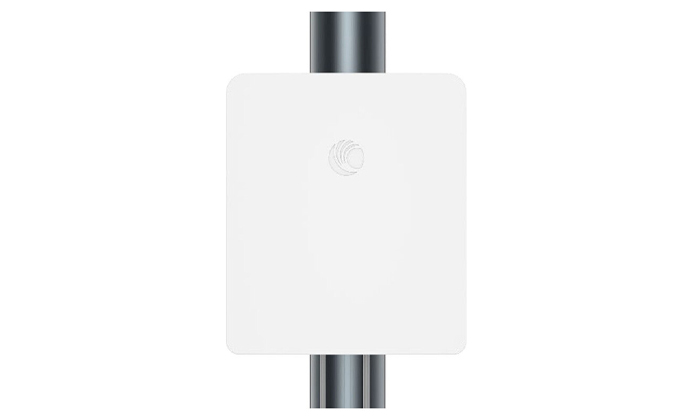
The new ePMP 4518 from Cambium Networks is a compact 5 GHz Subscriber Module (SM) designed to provide stable, high-speed wireless connectivity in demanding outdoor environments. The device features an integrated 18 dBi antenna and supports throughput of up to 1 Gbps thanks to 802.11ax, OFDMA, and 2×2 MU-MIMO technologies. It is designed for low-latency PMP and PTP links, while multi-level QoS enables more efficient management of network traffic. Centralized management is provided through the cnMaestro platform, simplifying network infrastructure monitoring and administration.
Its rugged IP67-rated enclosure is designed for demanding outdoor conditions, while PoE power further simplifies installation. The combination of compact dimensions, an integrated antenna, and gigabit performance makes the ePMP 4518 suitable for locations where reliable connectivity and straightforward deployment are essential. The solution is particularly suited to WISPs and other operators requiring stable broadband connectivity in outdoor environments. The ePMP 4518 is available through the AikomGo B2B platform.
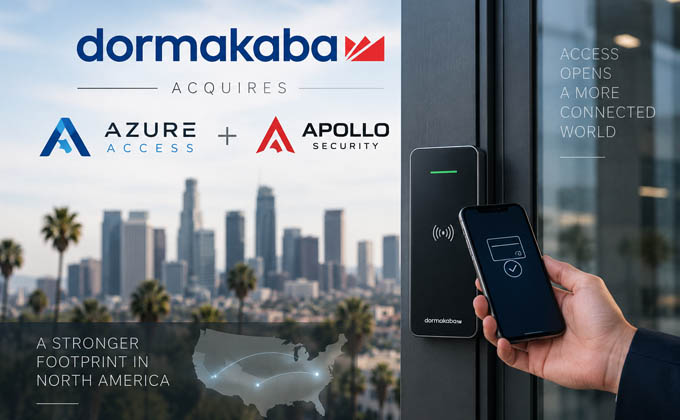
A new acquisition in the US access control market brings Azure Access Technology and Apollo Security under dormakaba, as the group continues its expansion in North America. According to an analysis by Memoori, this is dormakaba’s 12th acquisition in the past 18 months and the first to significantly change its approach to selling access control solutions in the US. The move forms part of a broader strategy to increase the company’s North American revenue to CHF 1 billion by fiscal year 2027/28.
Founded in 2019 in Newport Beach, California, Azure Access develops electronic access control hardware for the US commercial market. Its open-architecture controller platform enables original equipment manufacturers (OEMs) and software providers to flexibly integrate and customize their solutions. Apollo Security, which operates under ADME Inc. and is also based in Newport Beach, was founded in 2008 and manufactures access control and integrated security systems. Together, the two companies employ around 30 people and serve access control companies worldwide.
Although relatively small in scale, Memoori believes the acquisitions carry greater strategic significance by giving dormakaba more direct access to the US access control ecosystem and creating additional opportunities for growth. The deal therefore fits into the company’s accelerated M&A strategy in North America, where it still needs to close a revenue gap of approximately CHF 278 million to reach its CHF 1 billion target.
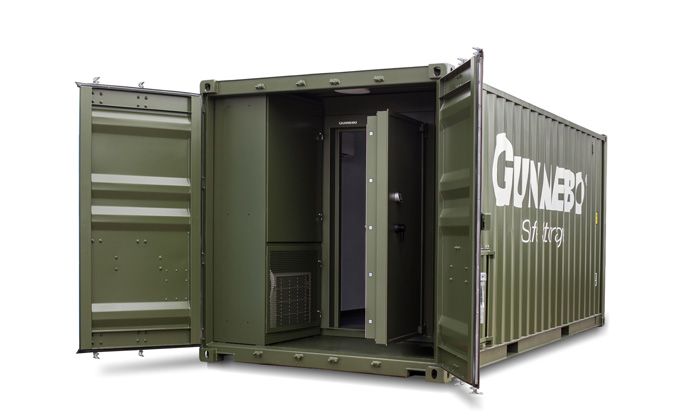
Gunnebo Safe Storage is returning to Security Essen to showcase how secure storage, connected locking technologies and cyber resilience are converging to shape the future of physical security. On stand 3A65 in Hall 3 within the Euro Defence Expo, visitors can explore TransitGuard, Gunnebo Safe Storage’s mobile vault solution, developed to provide secure protection for cash, valuables and other high-value assets while in transit or in mission.
As organisations continue to review how assets are secured throughout the supply chain, the movement of valuables between locations remains a critical area of focus. Gunnebo Safe Storage will also showcase its Gunnebo Encry high security electronic locks, highlighting how electronic locking technologies are supporting greater control, auditability and flexibility across a wide range of security applications.
“One of the most significant shifts we’re seeing is the link between physical security and cybersecurity,” said Viktoria Lövberg, Director Strategic Key Distributors and Defence, Gunnebo Safe Storage Europe. “Customers are no longer evaluating these areas separately but looking for solutions to protect assets and support the resilience of the wider connected systems. Security Essen provides an excellent opportunity to discuss these challenges and share knowledge with customers, partners and industry professionals.”
A key focus at Security Essen will be the European Cyber Resilience Act (CRA) and its implications for connected security products. Olof Sandberg of Tecnosicurezza will explain how dedicated locking systems have been developed to support the CRA framework through secure system architecture, controlled access management and lifecycle security considerations.
Stephan Seifert of Gunnebo Safe Storage will focus on technical developments in safe storage design. His session, “Minimising Risk: Combining Core Drill Protection and Integrated Alarm in One – Safes and Strong Rooms with Planar Protection,” will outline the implementation of planar protection systems designed to integrate resistance to core drilling attacks with embedded alarm functionality.
“We want visitors to leave Security Essen and our stand with a clearer understanding of how physical security, connectivity and compliance requirements are becoming increasingly interconnected,” added Viktoria. “Our objective is to share expertise and help organisations assess the security, operational and compliance considerations that will shape future security strategies and investment decisions.”
The global generative AI cybersecurity market is projected to grow from $10.8 billion in 2026 to $56.8 billion by 2033, representing a compound annual growth rate (CAGR) of 26.8%, according to Grand View Research. Market growth is being driven primarily by the expanding adoption of large language models (LLMs), AI copilots, and autonomous AI agents, increasing the need to protect AI models, data, and prompts while strengthening security risk management. Threats such as prompt injection, model poisoning, data leakage, and other attacks targeting AI systems are raising particular concerns, while evolving regulatory requirements are further encouraging investment in specialized security platforms.
Solutions accounted for 71.5% of the market in 2025, while data security and privacy represented the largest security-type segment with a 23.3% share. Cloud deployment also dominated with a 66.5% market share, reflecting the rapid adoption of cloud-based GenAI platforms, LLMs, and AI-as-a-Service offerings. The BFSI sector, encompassing banking, financial services, and insurance, held the largest share among end users as generative AI is increasingly deployed for customer service, fraud detection, risk assessment, and financial analysis.
North America led the market with a 40.9% revenue share in 2025, while Asia Pacific is expected to record the fastest growth through 2033. Europe is also experiencing strong growth, supported by wider generative AI adoption, stringent data protection regulations, and an increasing focus on secure and responsible AI deployment.
Key companies identified by Grand View Research in this market include Acronis, Check Point Software Technologies, Cisco Systems, CrowdStrike, Fortinet, Google, IBM, Microsoft, NVIDIA, Palo Alto Networks, Proofpoint, SentinelOne, Sophos and Trend Micro.
Experience the power of a complete Axis system. From high-precision imaging to smart analytics – we provide the insight you need for a safer, smarter world.
As the industry leader in network video and intelligent security solutions, Axis Communications drives innovation with technology that improves safety and optimizes business operations. At our booth, we showcase how a truly integrated security ecosystem transforms regional operations – moving beyond isolated devices to unified solutions.
Bridging innovation and regional security needs
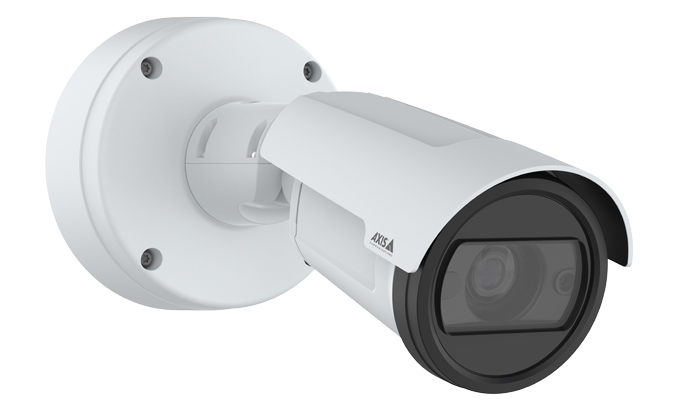
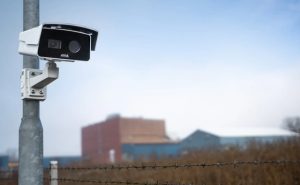
Whether you protect critical infrastructure, smart cities, or commercial perimeters, you need a trusted system. See how solutions like the high-performance AXIS P1486-LE and thermal innovations like the AXIS Q2802-E work seamlessly together. A robust architecture requires video, audio, analytics, and access control to speak the same language.
Smart analytics and edge intelligence
Axis solutions turn raw data into actionable intelligence through AI-driven edge analytics:
Proactive protection: Detect incidents early, even in total darkness or harsh weather.
Fewer false alarms: Use advanced object classification to filter environmental noise.
Actionable insights: Empower your team with crystal-clear forensic detail.
An open, future-proof ecosystem
Built on an open platform philosophy, our systems integrate effortlessly with existing infrastructure and third-party tools, giving regional installers the freedom to design tailored solutions without proprietary lock-in.
Experience the complete Axis ecosystem at our booth. Let’s shape a safer, smarter Adriatic region together!
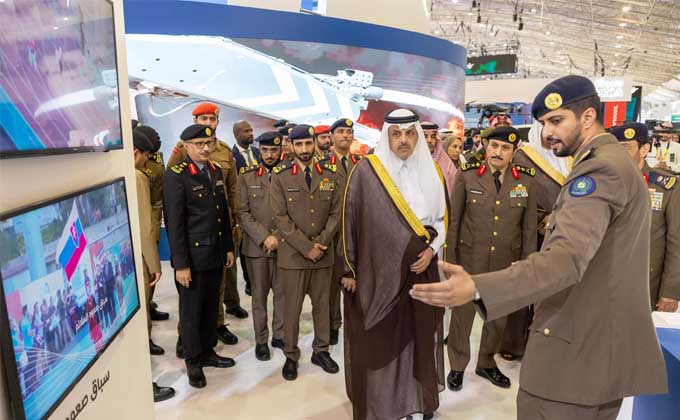
Intersec Saudi Arabia is taking place from 16–18 November 2026 at Riyadh Front Exhibition & Conference Center, with over 25,000 visitors and more than 500 exhibitors expected
The Kingdom’s leading platform for security, safety, and fire protection, returns from 16–18 November 2026 at Riyadh Front Exhibition & Conference Center (RFECC), increasing exhibition space by 40% to meet demand as Saudi Arabia accelerates investment across key industry sectors.
Organised by Messe Frankfurt Saudi Arabia, the 2026 edition is expected to welcome over 25,000 visitors and more than 500 exhibitors, including Bristol, NAFFCO, Axis, Genetic, Saudi Sicli, and Al Alamya, bringing together global suppliers, policymakers, and buyers across commercial and perimeter security, homeland security and policing, fire and rescue, safety and health, and cybersecurity.
This expansion reflects the rapid growth of Saudi Arabia’s fire and security markets, driven by large-scale infrastructure projects including NEOM, Red Sea Global, Qiddiya, and Diriyah Gate, alongside an increasing appetite for a platform that connects advanced technologies and innovation, with talent sourcing, investment opportunities, and international partnerships.
A strategic entry point for global security, safety and fire protection enterprises
The Kingdom’s security market alone is projected to reach USD 3.4 billion by 2030, growing at a CAGR of 9.1%, according to Grand View Horizon research, supported by a surge in demand for integrated physical security, cybersecurity, surveillance, access control, and command-and-control solutions. Furthermore, insights from the market research firm Mobility Foresights indicate that the fire and safety equipment market is projected to grow to USD 7.1 billion by 2032, registering a CAGR of 10.2%.
As Saudi Arabia continues its economic transformation, the tradeshow is positioned as a key gateway for international companies seeking to enter or expand in one of the world’s most dynamic and fast-evolving markets, particularly as public safety upgrades across critical infrastructure services and smart cities have expanded opportunities for private security and technology providers.
Riham Sedik, Exhibition Director, Intersec Saudi Arabia, said: “Intersec Saudi Arabia 2026 marks a defining step in the event’s evolution. The move to Riyadh Front Exhibition & Conference Center allows us to scale the platform in line with market forecasts, elevating the experience and creating stronger avenues for industry stakeholders to engage, collaborate, and do business.
“As the need for advanced security, fire protection, and safety solutions continues to grow, Intersec Saudi Arabia is well placed to support this momentum, bringing international providers together with key public and private sector decision-makers across the Kingdom. As the largest edition in the show’s history, it will play an important role in advancing Saudi Arabia’s transformation agenda and supporting the delivery of the country’s ambitious infrastructure and development pipeline.”
Expert-led conferences to address the future of integrated security and fire protection
Intersec Saudi Arabia 2026 will host two CPD-certified conferences – the Future Security Summit and the Fire Protection & Technology Summit – convening over 110 global experts, policymakers and industry leaders to drive dialogue on protection, resilience and operational continuity.
The programme will explore evolving security and safety challenges across critical infrastructure, including emerging threats, cyber-physical convergence, AI-enabled command and control, crisis response, fire resilience in energy and logistics, and advancements in detection, suppression and integrated protection systems.
“Saudi Arabia is entering a new phase of infrastructure and urban development, and that requires world-class security, fire protection, and resilience systems. Intersec Saudi Arabia is where those solutions meet opportunity,” concluded Sedik.
Euralarm has published a new guidance document, Criteria for European Sovereign Cloud, to help manufacturers, service providers, system integrators and end users understand the implications of cloud sovereignty for fire safety and physical security applications. The publication provides a practical framework for assessing when and how European sovereign cloud requirements should be applied, reflecting the growing importance of digital resilience, cybersecurity and regulatory compliance.
As cloud technologies become increasingly central to modern fire safety and security systems, they enable advanced services such as remote diagnostics, alarm transmission, predictive maintenance and sophisticated data analysis. At the same time, organisations operating critical infrastructure and public services are placing greater emphasis on ensuring that sensitive data remains protected from unauthorised foreign access while complying with European legislation.
Euralarm’s new guidance explains that cloud sovereignty extends beyond the physical location of data. It identifies five complementary dimensions that organisations should consider when selecting cloud services: technological sovereignty, operational sovereignty, jurisdictional sovereignty, data residency and legal compliance. Together, these factors determine the extent to which cloud services can operate independently within a European legal and operational framework.
Rather than promoting a single technical solution, the guidance advocates a risk-based approach. It encourages organisations to assess the sensitivity of their applications, the criticality of the services provided and the potential consequences of foreign legal or operational influence before determining the appropriate level of sovereignty required. This enables customers to balance security, resilience, compliance and cost while avoiding unnecessarily complex cloud architectures.
The document also examines issues such as data residency, governance, operational independence, legal jurisdiction and protection against extraterritorial legislation, providing practical considerations for organisations procuring cloud services in increasingly demanding regulatory environments.
The guidance concludes that cloud sovereignty should not be viewed as an absolute objective but as a business and risk management decision. While the strongest sovereignty measures can provide greater protection against legal and operational risks, they also introduce additional costs and complexity. Organisations should therefore select the level of sovereignty that is appropriate for their operational needs and compliance obligations.
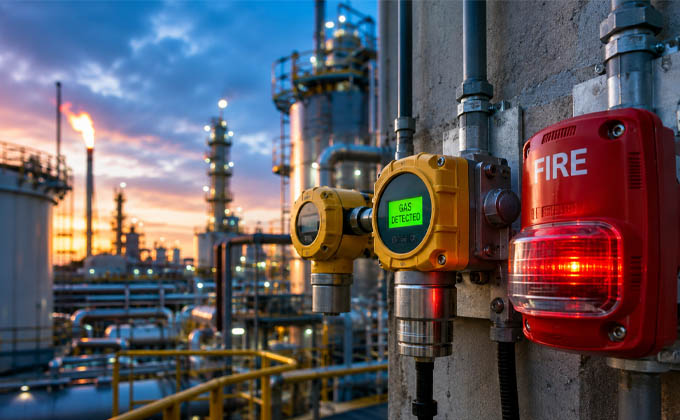
The global fixed fire and gas detection systems market is expected to grow from $7.84 billion in 2026 to $10.86 billion by 2031, representing a compound annual growth rate (CAGR) of 6.7%, according to new research by MarketsandMarkets. Demand is being driven primarily by increased investment in industrial safety, stricter regulatory requirements, and the modernization of facilities across the oil and gas, chemical and petrochemical, power generation, manufacturing, mining, and marine industries. The expansion of LNG infrastructure, hydrogen production and storage facilities, carbon capture and storage (CCS) projects, and growing investment in critical infrastructure protection are providing additional momentum to the market.
According to the research, fire detection systems are expected to retain the largest market share, supported by the increasing deployment of flame, smoke, and heat detectors, as well as video fire detection technologies in demanding industrial environments.
The highest growth rate is expected in the acoustic detection segment, including ultrasonic gas leak detection, which is particularly suitable for offshore platforms, LNG terminals, refineries, petrochemical plants, and hydrogen production facilities. Among the key companies identified by MarketsandMarkets in this market are Honeywell, Siemens, MSA Safety, Dräger, Emerson, ABB, Schneider Electric, Johnson Controls, Carrier Global, and Bosch Building Technologies. Geographically, demand is strong across the major industrial markets of North America, Europe, and Asia Pacific, while other MarketsandMarkets research on gas detection points to particularly strong growth in Asia Pacific, driven by industrialization and investment in energy, LNG, and hydrogen infrastructure.
Meta is facing one of the most significant legal proceedings against social media companies in the United States this week, after 29 states accused the company of deliberately designing Facebook and Instagram in ways that encourage addictive behavior among children and teenagers, while misleading the public about the safety of its platforms. In the federal trial in Oakland, California, Colorado, Kentucky, and New Jersey are presenting the key evidence, with opening statements scheduled for August 18.
Prosecutors argue that features such as infinite scrolling, algorithmic recommendations, and other engagement mechanisms were designed to keep young users on the platforms for as long as possible, while Meta is also accused of collecting children’s data without appropriate parental consent. Based on these allegations, the four states are seeking penalties that could reach as much as $1.4 trillion, an amount nearly equal to Meta’s market value. The company, however, strongly denies the allegations and says it will demonstrate in court its longstanding commitment to the safety of young users.
The outcome of the case could have far-reaching consequences for the technology industry and the future accountability of social media platforms for how they design their products and protect minors, prompting some legal experts to compare the proceedings to the landmark cases against the tobacco industry in the 1990s.