HID, a global leader in trusted identity solutions, today presented its latest innovations in access control and mobile credentialing at the 7th edition of Intersec Saudi Arabia, Riyadh. The company is highlighting how its technologies align with the Kingdom’s Vision 2030 and digital transformation goals.
Saudi Arabia’s security market is expanding rapidly, projected to grow from $2.0 billion in 2024 to $3.4 billion by 2030, driven by large-scale infrastructure projects and nationwide digitalization. This growth underscores the demand for secure, interoperable, and future-ready security ecosystems.
“At a time when Saudi Arabia is undergoing a profound transformation, the need for advanced access control has never been greater,” said Gustavo Gassmann, VP of Emerging Markets for Physical Access Control at HID. “Our solutions support the Kingdom’s Vision 2030 by enhancing security, streamlining operations, and enabling a seamless user experience.”
At booth 1-B24, HID is showcasing live demonstrations of its newest technologies, including the HID® Amico™ Biometric Facial Recognition Readers, which provide fast, secure, and contactless access with 3.5” or 7” displays. The 7” model also includes a built-in SIP intercom for added convenience.
The company is also presenting Mercury Intelligent Controllers, designed for evolving system environments with secure boot, TLS 1.3, and PoE+ support. HID® Aero® X100 and X1100 Controllers deliver reliable monitoring and secure operation for up to two access points.
Visitors will also experience HID Signo™ Readers, offering sleek design and support for a wide range of credential technologies, and HID Mobile Access®, which enables smartphones and smartwatches to serve as secure digital credentials integrated with Apple Wallet and Google Wallet.
“By combining advanced hardware with mobile and digital credentialing, HID empowers enterprises and government entities to achieve greater security, efficiency, and convenience,” said Sam Cherif, Senior Director and Head of MEA at HID.
The company emphasizes that its strategy goes beyond products, focusing on building comprehensive, future-ready ecosystems tailored to the region’s needs. HID’s presence at Intersec Saudi Arabia 2025 today comes as demand for advanced identity solutions continues to rise across the Kingdom and the wider Middle East.
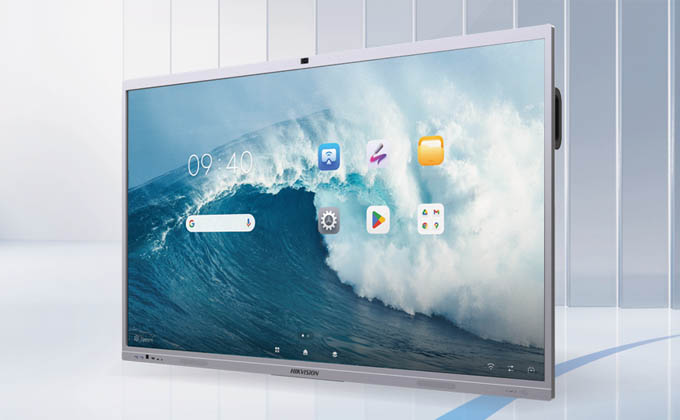
Hangzhou Hikvision Digital Technology Co., Ltd. announced that its WonderHub interactive display has achieved TCO Certified, generation 10. This makes WonderHub the first large-format product in the global display industry to receive this prestigious certification from TCO Development, the leading international sustainability certification organization.
Comprehensive Lifecycle Assessment
This achievement demonstrates that WonderHub meets world-class standards for quality, environmental protection, and user health. The TCO Certified certification represents one of the most rigorous sustainability assessments in the technology industry, requiring comprehensive evaluation of a product’s complete lifecycle environmental impact.
The certification process covers every stage from raw material sourcing and manufacturing to energy efficiency during operation and end-of-life recycling. Beyond environmental metrics, the assessment includes strict auditing of corporate social responsibility practices, ensuring companies demonstrate genuine commitment to sustainable business operations.
Hikvision’s WonderHub exceeds EU environmental standards throughout its development and production. The company has implemented stringent controls on hazardous substances including heavy metals, flame retardants, and plasticizers, ensuring the product meets the highest international safety and environmental requirements from materials sourcing through manufacturing processes.
Sustainable Innovation and Long-Term Commitment
Beyond environmental compliance, the Hikvision WonderHub integrates sustainable design principles through the company’s end-to-end R&D capabilities and hardware-software integration. The product features low blue light and flicker-free dimming technology, complemented by ergonomic design, to enhance user health and comfort. An intelligent power management system automatically optimizes energy consumption during operation, while the modular structure enables quick disassembly and recycling of key components, effectively extending product lifespan and supporting circular economy principles.
This newly achieved certification reflects Hikvision’s long-term dedication to sustainable development. Moving forward, the company will continue integrating sustainability principles across all business processes including R&D, manufacturing, and operations, advancing product performance in environmental friendliness, energy efficiency, user health, and social responsibility to contribute to building a greener global future.
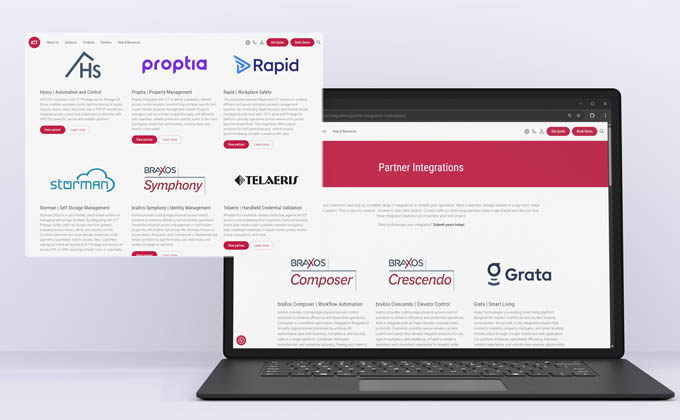
Integrated Control Technology (ICT®), a leading provider of intelligent access control, intrusion detection, and building automation, is excited to announce the launch of the new ICT Integrations Marketplace. This online resource showcases a growing ecosystem of partner integrations designed to simplify operations, enhance building intelligence, and deliver tailored solutions to meet the diverse needs of ICT’s Security Integration partners.
The ICT Integrations Marketplace provides a clear view of available plug-and-play integrations with ICT solutions. Covering everything from intercoms and building management systems to locker solutions and workplace safety applications, it enables organizations to unify technology into one intelligent platform with ease.
“Our technical integration partners have built an incredible range of solutions to support smarter security systems and streamlined operations,” said Josh Baker, Integrations Product Manager at ICT. “The Integrations Marketplace centralizes these options, making them easier to access and clearly showcases the possibilities. From seamless storage solutions and advanced visitor management to elevator and video management integrations, the Marketplace brings it all together in one place.”
Key Benefits of the ICT Integrations Marketplace
Plug-and-Play Simplicity: Access a wide range of pre-built integrations with popular third-party systems to save time and reduce complexity.
Interoperable Technology: ICT’s open platform supports seamless communication across systems, enabling centralized control of doors, elevators, visitor management, and more.
Custom Integration Tools: Design unique, tailored solutions using ICT’s flexible integration toolkit—empowering organizations to build exactly what they need.
Future-Ready Flexibility: Scale and adapt your security and building management ecosystem as needs evolve.
The new ICT Partner Integrations Marketplace gives Security Integration partners the flexibility to design smarter, safer, and more connected environments—ensuring their continued success.
To explore the ICT Partner Integrations Marketplace, visit: https://info.ict.co/partner-integrations-marketplace.
Gas Monkey Garage, the famous automotive custom shop and entertainment brand created by Richard Rawlings of Fast N’ Loud TV, has launched a new restaurant and bar in South Dakota equipped with advanced IDIS video technology. Installed by KB Technologies, the solution delivers security, safety, and operational efficiency for one of the region’s most vibrant community venues.
The site is steeped in biking history and doubles as a museum, while also hosting high-energy events throughout the year, including the legendary Sturgis Motorcycle Rally. This year’s rally celebrated its 85th anniversary with 537,459 vehicles counted—the highest participation in years—drawing crowds for motorcycles, leather, music, and food.
To meet such demands, the IDIS video system operates 24/7, ensuring smooth business operations and customer safety even during peak times. The fully NDAA-compliant solution provides Richard Rawlings and his senior team full visibility from their Dallas headquarters or remotely on their phones and tablets.
The system integrates high-performance cameras, NVRs, VMS, and the IDIS Mobile Plus app. IDIS 5MP AI IR Dome Cameras deliver outstanding images in challenging conditions, supported by LightMaster NIR technology for full night vision, and enhanced by Intelligent Codec compression to reduce bandwidth and storage needs.
AI-powered functions such as object detection, classification, and behavior analysis provide accurate, automated alerts, while IDIS 5MP Fisheye Cameras enable complete coverage of wide areas at lower equipment and maintenance costs. The free IDIS Center VMS simplifies management with intuitive tools and customizable user permissions.
Additional benefits include Smart Failover to prevent data loss, multi-layered cyber protection, long product lifecycles, and industry-leading low TCO. The system’s scalability ensures Gas Monkey won’t face outdated infrastructure as it continues to grow.
“This project will evolve as Gas Monkey expands,” noted Keith Daulton, Regional Sales Director, South Central US. “Our scalable technology makes upgrades seamless and future-proof.” Richard Rawlings summed it up: “The IDIS system at Gas Monkey Sturgis is badass! Crystal-clear video, remote access, and top-notch security—it’s a total game-changer. When thousands of people roll through during the Rally, you need eyes on everything, and IDIS delivers. It keeps us secure, smooth, and makes sure the party never stops.”
Retail and chain businesses are expanding rapidly, spanning multiple locations with diverse network environments. As the business grows, network construction becomes increasingly complex, with various types of equipment deployed across different sites.
However, managing these networks efficiently presents significant challenges. When network issues arise, such as customers being unable to connect to Wi-Fi networks, failed online orders, or disrupted surveillance systems, operations can be severely impacted. Without a reliable network, POS systems may go offline, cloud-based inventory management could be interrupted, and digital payment transactions may fail, leading to frustrated customers and lost revenue. For IT managers, troubleshooting these issues is often a daunting task. Without centralized network visibility and remote management capabilities, they must physically visit each site to diagnose and resolve issues, which is both time-consuming and costly. Coordinating with non-technical staff on-site can further delay resolution, affecting business continuity.
To address these challenges, businesses need a robust, easy-to-manage, and scalable network solution that ensures stable connectivity, simplifies maintenance, and enhances overall operational efficiency.
All-in-One Wireless Router
When opening a new store, there’s no need to deploy separate switches, routers, or APs. With the Reyee Retail Network Solution – Power On, Business On – a single wireless router, RG-EG105GW(T) (Wi-Fi 5) or RG-EG105GW-X (Wi-Fi 6), takes care of everything. Power on the device and connect with the terminals, and your business will begin.
RG-EG105GW(T) & RG-EG105GW-X: The Wireless All-in-One Business Router
The RG-EG105GW(T) and RG-EG105GW-X are high-performance wireless all-in-one business routers designed for fast, stable, and secure networking. The RG-EG105GW(T) features Wi-Fi 5 (1267 Mbps), load balancing on 4 WAN ports, Multi-VLAN capability, and full VPN support, while the RG-EG105GW-X supports Wi-Fi 6 AX3000, featuring five high-gain antennas and enhanced connectivity. These two routers ensure seamless business operations with exceptional speed and reliability.
Press Button, Reyee Mesh Networking Done
Need to expand your Wi-Fi coverage effortlessly? With just a single click, the RG-EG105GW(T) & RG-EG105GW-X seamlessly mesh with Reyee APs, instantly extending Wi-Fi coverage without the need for extra cabling. Say goodbye to wiring costs and hello to effortless expansion — perfect for retail businesses looking for a hassle-free way to stay connected!
Customized Portal Page: What You See is What You Get
Want a custom portal page? Usually, this means hiring external help, costing more time and money. But with RG-EG105GW(T) & RG-EG105GW-X, it’s easy! Customize your brand logo, background, buttons, colors, and layout — no coding needed. Add ads, QR codes, and promos to boost engagement. For chains, one-click HQ copy keeps branding consistent across all locations.
Flexible Authentication, Smart Wi-Fi Monetization
The RG-EG105GW(T) & RG-EG105GW-X support multiple authentication methods, including One-Click Login, Voucher, Account, SMS, and Registration, giving business owners the freedom to choose what works best. In retail, Voucher Authentication is the top choice — turning Wi-Fi into a revenue-driving tool! Customers can only access the internet after making a purchase and entering a voucher code from their receipt. Plus, with Ruijie Cloud, vouchers can be generated in bulk in a few seconds, making management effortless
Securely Monitor Your NVR, IPC & Internal Server – Anytime, Anywhere
No matter if your router’s WAN port has a dynamic or even private IP, you can securely monitor your NVR, IPC, or internal server from anywhere with ease. Thanks to NAT Traversal on Ruijie Reyee App or Ruijie Cloud, remote access is seamless and hassle-free.
Want to set it up? Watch this video to learn how to configure NAT Traversal on Ruijie Reyee App remotely.
Decent Design & Flexible Installation
Designed to seamlessly blend into retail and branch environments, the RG-EG105GW(T) features a sleek and compact form factor—measuring just 120 mm x 120 mm x 28 mm (0.79 in. x 4.72 in. x 1.1 in.), about the size of a compact CD case. With multiple installation options, it can stand upright, lay flat on a table, or be mounted on a wall, ensuring flexibility without compromising aesthetics. Whether in boutiques, cafes, or offices, it integrates effortlessly into any space while delivering powerful networking performance.
Looking Forward: The Next-Gen 5G Retail Solution
In the coming months, we are excited to introduce our upgraded 5G Retail Solution, featuring a brand-new 5G Business Router. Designed for commercial environments, this solution delivers higher speeds, greater stability, and an array of advanced features to meet the evolving demands of modern businesses.
With dual SIM support and WAN failover, it ensures uninterrupted connectivity, providing a seamless network experience. Most importantly, there’s no need for wired broadband installation — simply insert SIM cards, and you’re ready to go. Stay tuned for the future of retail networking!
Hikvision has integrated its AcuSeek AI-powered video analytics into HikCentral Professional and Hik-Connect 6, transforming how organizations and individuals search and retrieve video footage. The new technology supports natural language queries, voice commands (available in Hik-Connect 6), image-based searches, and seamless integration across diverse security ecosystems.
Built on Hikvision’s Guanlan AI models, AcuSeek leverages machine learning trained on millions of real-world scenarios to deliver higher accuracy and fewer false results. With deployment across both platforms, intelligent search is now available for enterprises as well as individuals and small teams. HikCentral Professional targets medium to large deployments with broad device integration, while Hik-Connect 6 offers accessible functionality through both portal and mobile app interfaces.
Fred Wu, Product Director at Hikvision, commented: “AcuSeek represents the convergence of advanced AI with practical usability, enabling results in seconds, not hours.” The Hik-Connect 6 platform introduces the “Voice or Text, Seek Fast” feature, offering multi-modal search in more than 30 languages. Users can search by typing everyday language queries such as “red vehicles exiting East Gate in the last five days,” or by speaking commands directly. Image-based searches allow objects to be pinpointed with timeline precision, ranked by similarity, and enhanced with contextual details.
HikCentral Professional adds semantic search, feature-based description, and picture search, integrating person and vehicle data for unified global searches.
The platform also supports applications in access control, vehicle management, and incident workflows across complex deployments.Real-world use cases range from retail (lost item searches) to community security (threat detection), and from vehicle identification to construction safety monitoring. Together, Hik-Connect 6 and HikCentral Professional provide a versatile, AI-powered video search experience designed to improve efficiency across industries.
Euralarm will organize a webinar on Fire safety in EV parking garages on October 14, 2025.
The rise of electric vehicles (EVs) has brought both environmental benefits and new safety challenges. The nature of EV construction is to protect the battery cells from weather, surface water spray, and damage in normal use, and this presents a challenge in delivering extinguishant to the cells. Therefore, it is extremely challenging, if not impossible, to stop in-cell thermal runaway inside the traction battery or slowing cell to cell propagation.
Euralarm’s latest guidance unpacks the fire risk disparity between EVs and ICE vehicles, the unique dangers of thermal battery events, and the critical steps needed to mitigate them effectively.
The scope of this webinar, presented by Euralarm’s Vice Chair of the Extinguishing Section, Gerd Hülsen, is to provide factual information on the fire risk of electrical vehicles in parking facilities in comparison with other types of vehicles and to guide through solutions that can be applied. We will discuss fire behaviors and safety measures associated with both electric and combustion vehicles.
This webinar is especially interesting for:
Fire safety professionals
Parking facility operators and managers
Facility managers for commercial, residential, and public buildings
Policymakers and regulators at municipal, national, and EU level
Euralarm represents the electronic fire and security industry, providing leadership and expertise for industry, market, policy makers and standards bodies. Our Members make society safer and secure through systems and services for fire detection and extinguishing, intrusion detection, access control, video monitoring, alarm transmission and alarm receiving centres. Founded in 1970, Euralarm represents over 5000 companies within the fire safety and security industry valued at 67 billion Euros. Euralarm Members are national associations and individual companies from across Europe.
A cyberattack today on Collins Aerospace software, owned by RTX, has paralyzed check-in and boarding systems at several major European airports, including London’s Heathrow as well as Berlin and Brussels. The incident has caused widespread disruption with flight cancellations and delays, while electronic check-in and baggage drop have been replaced by manual procedures. Dublin and Cork airports in Ireland also reported minor impact, while aviation data shows dozens of flights have already been cancelled.
Brussels Airport has warned that half of all scheduled departures on Sunday will be cancelled to prevent long queues and further chaos, confirming that the disruption will continue. The European Commission said there is no evidence of a “widespread or severe attack,” though the origin of the incident remains under investigation. Experts note that such events often resemble ransomware attacks or deliberate digital sabotage.
“This incident has demonstrated just how fragile and interconnected the digital ecosystem underpinning air travel really is,” said Rafe Pilling, Director of Threat Intelligence at cybersecurity company Sophos. Passengers at affected airports have been advised to check flight status with their airlines before traveling, while many voiced frustration over the lack of information on site. German and British cyber defense agencies confirmed they are in close contact with airport authorities.
ASSA ABLOY’s latest solution for integrating cabinets and lockers with a digital access management system has earned top honors. The Aperio® KL100 Wireless Cabinet Lock has been presented with the Kings Excellence Award for Exemplary Product Design of the Year.
Despite a low-profile footprint, the Aperio KL100 adds powerful digital security to lockers, cabinets, cupboards, drawers and other small spaces. Because Aperio technology is designed from the ground up for native integration, with almost any system, it makes small openings an integral part of a digital access system. With the Aperio KL100, storage for valuables, documents or personal items benefits from the same convenient digital management as offices, labs or accommodation. Designed for minimal disruption to furniture, its tiny footprint and battery-powered operation ensure quick, cable-free installation without causing damage or making a visual impact.
The Aperio KL100 integrates seamlessly with any new or existing access control system – from over 130 different manufacturers and counting – to help reduce workplace theft and to give confidential documents the digital protection they require, especially important in an era of growing compliance demands on data access management.
The growing importance of product design for digital access hardware
As a security manufacturer, ASSA ABLOY has a long and distinguished heritage of award-winning product design. ASSA ABLOY hardware has won multiple Red Dot and PLUS X Awards in Europe, for example. The Aperio H100, a door device with digital access technology inside its battery-powered handle, was named winner at EUIPO’s DesignEuropa Awards and the German Design Council’s Iconic Award: Innovative Interior.
“We are delighted to add the prestigious Kings Excellence Award to the many product design recognitions that ASSA ABLOY has received,” says Vishal Maheshwari, Director and Head of Digital and Access Solutions MEIIA Region at ASSA ABLOY Opening Solutions. “From the earliest stages of product development, our processes look at design holistically, considering not just security functionality and aesthetics but also usability, reliability, sustainability performance, ease of installation and maintenance, and much more. To be recognized for this by our industry peers is very rewarding.”
The Exemplary Product Design Award was presented at a ceremony during August’s Safe-Tech Conference in Mumbai, India. At Safe-Tech’s annual conference, hundreds of security and fire safety professionals including government authorities, consultants, architects and senior safety officials gather to explore best practices, innovations, real-world case studies and practical applications in physical security, fire protection, disaster preparedness and process safety.
China has taken a bold step in the global tech race by banning domestic companies from purchasing chips made by U.S. semiconductor giant Nvidia. The decision, issued by the Cyberspace Administration of China (CAC), directly targets the highly sought-after RTX Pro 6000D model — a unit Nvidia had specifically designed for the Chinese market to bypass earlier U.S. export restrictions. The move immediately halts deliveries of tens of thousands of chips that had already been contracted.
For Chinese tech giants like ByteDance and Alibaba, the ban forces a sharp shift in strategy. Instead of relying on American semiconductors, companies are turning to domestic alternatives, most notably Huawei’s Ascend 910c, which is already in mass production. Beijing’s message is clear: build a self-sufficient technological ecosystem and reduce dependence on U.S. equipment.
The consequences for Nvidia could be significant. Shares fell nearly three percent following the announcement, and analysts warn the company could lose a substantial portion of China’s multibillion-dollar market in the long run. While Nvidia remains the global leader in AI chips, this blow opens the door for domestic Chinese manufacturers to strengthen their foothold.
The move aligns with Beijing’s broader national strategy, where artificial intelligence is viewed as central to development across industries ranging from manufacturing and meteorology to agriculture and energy. China has already proven its ability to rapidly redirect supply chains — as seen when it turned soybean imports away from the U.S. toward South America in response to earlier tariffs.
Although it remains uncertain whether China can achieve full dominance in chip production in the near future, its determination is unmistakable. For the global semiconductor market, the ban marks a new stage in geopolitical competition that could reshape the entire industry.