Home News Archive by category World (Page 5)

World

Euralarm publishes guidance on criteria for European Sovereign Cloud

Euralarm has published a new guidance document, Criteria for European Sovereign Cloud, to help manufacturers, service providers, system integrators and end users understand the implications of cloud sovereignty for fire safety and physical security applications. The publication provides a practical framework for assessing when and how European sovereign cloud requirements should be applied, reflecting the growing importance of digital resilience, cybersecurity and regulatory compliance.

As cloud technologies become increasingly central to modern fire safety and security systems, they enable advanced services such as remote diagnostics, alarm transmission, predictive maintenance and sophisticated data analysis. At the same time, organisations operating critical infrastructure and public services are placing greater emphasis on ensuring that sensitive data remains protected from unauthorised foreign access while complying with European legislation.

Euralarm’s new guidance explains that cloud sovereignty extends beyond the physical location of data. It identifies five complementary dimensions that organisations should consider when selecting cloud services: technological sovereignty, operational sovereignty, jurisdictional sovereignty, data residency and legal compliance. Together, these factors determine the extent to which cloud services can operate independently within a European legal and operational framework.

Rather than promoting a single technical solution, the guidance advocates a risk-based approach. It encourages organisations to assess the sensitivity of their applications, the criticality of the services provided and the potential consequences of foreign legal or operational influence before determining the appropriate level of sovereignty required. This enables customers to balance security, resilience, compliance and cost while avoiding unnecessarily complex cloud architectures.

The document also examines issues such as data residency, governance, operational independence, legal jurisdiction and protection against extraterritorial legislation, providing practical considerations for organisations procuring cloud services in increasingly demanding regulatory environments.

The guidance concludes that cloud sovereignty should not be viewed as an absolute objective but as a business and risk management decision. While the strongest sovereignty measures can provide greater protection against legal and operational risks, they also introduce additional costs and complexity. Organisations should therefore select the level of sovereignty that is appropriate for their operational needs and compliance obligations.

The Euralarm guidance on criteria for European Sovereign Cloud can be downloaded here.
Fixed Fire and Gas Detection Market to Exceed $10 Billion

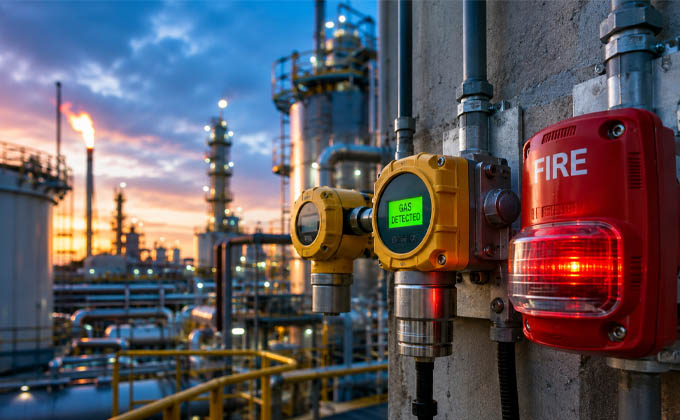
The global fixed fire and gas detection systems market is expected to grow from $7.84 billion in 2026 to $10.86 billion by 2031, representing a compound annual growth rate (CAGR) of 6.7%, according to new research by MarketsandMarkets. Demand is being driven primarily by increased investment in industrial safety, stricter regulatory requirements, and the modernization of facilities across the oil and gas, chemical and petrochemical, power generation, manufacturing, mining, and marine industries. The expansion of LNG infrastructure, hydrogen production and storage facilities, carbon capture and storage (CCS) projects, and growing investment in critical infrastructure protection are providing additional momentum to the market.

According to the research, fire detection systems are expected to retain the largest market share, supported by the increasing deployment of flame, smoke, and heat detectors, as well as video fire detection technologies in demanding industrial environments.

The highest growth rate is expected in the acoustic detection segment, including ultrasonic gas leak detection, which is particularly suitable for offshore platforms, LNG terminals, refineries, petrochemical plants, and hydrogen production facilities. Among the key companies identified by MarketsandMarkets in this market are Honeywell, Siemens, MSA Safety, Dräger, Emerson, ABB, Schneider Electric, Johnson Controls, Carrier Global, and Bosch Building Technologies. Geographically, demand is strong across the major industrial markets of North America, Europe, and Asia Pacific, while other MarketsandMarkets research on gas detection points to particularly strong growth in Asia Pacific, driven by industrialization and investment in energy, LNG, and hydrogen infrastructure.

Meta Faces Trial Over Social Media’s Harmful Impact on Children

Meta is facing one of the most significant legal proceedings against social media companies in the United States this week, after 29 states accused the company of deliberately designing Facebook and Instagram in ways that encourage addictive behavior among children and teenagers, while misleading the public about the safety of its platforms. In the federal trial in Oakland, California, Colorado, Kentucky, and New Jersey are presenting the key evidence, with opening statements scheduled for August 18.

Prosecutors argue that features such as infinite scrolling, algorithmic recommendations, and other engagement mechanisms were designed to keep young users on the platforms for as long as possible, while Meta is also accused of collecting children’s data without appropriate parental consent. Based on these allegations, the four states are seeking penalties that could reach as much as $1.4 trillion, an amount nearly equal to Meta’s market value. The company, however, strongly denies the allegations and says it will demonstrate in court its longstanding commitment to the safety of young users.

The outcome of the case could have far-reaching consequences for the technology industry and the future accountability of social media platforms for how they design their products and protect minors, prompting some legal experts to compare the proceedings to the landmark cases against the tobacco industry in the 1990s.

Suprema Combines Intelligent Biometrics and Flexible Access Control

Suprema is a global provider of access control and biometric security solutions, combining AI-based biometrics, access control hardware, mobile credentials, and security management platforms within its portfolio. Founded in 2000, the company has established a presence in more than 140 countries worldwide.

Suprema’s portfolio supports multiple authentication methods, including facial and fingerprint recognition, mobile credentials, QR codes, RFID cards, and PINs, giving organizations flexibility in how they secure facilities and manage physical access.

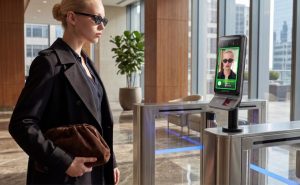
One of the key focuses of the company’s current portfolio is identity-first access control powered by artificial intelligence. BioStation 3 Max, launched in 2026, is Suprema’s flagship AI-powered biometric terminal. Designed for busy lobbies and mission-critical access points, the device combines facial and fingerprint biometric authentication with RFID, mobile and QR credentials, as well as PINs, in a terminal with a 7-inch touchscreen. Depending on the model, it supports features such as PoE+, VoIP intercom, and secure boot, together with a secure element certified to Common Criteria EAL6+. The terminal is designed for enterprise environments that require multi-factor authentication and support for a broad range of credentials directly at the access point.

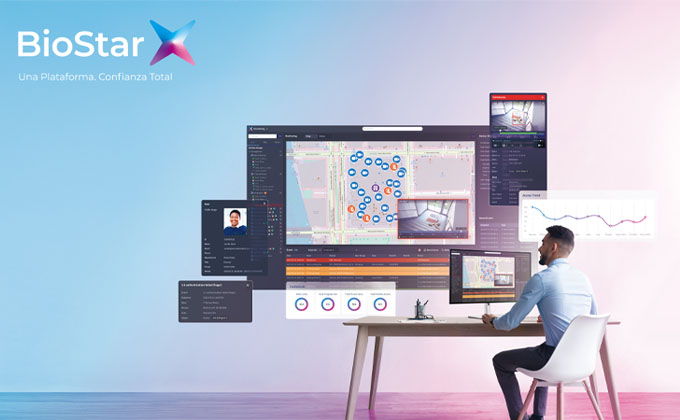
Suprema also offers security management platforms tailored to different deployment models. BioStar X is the company’s unified security platform, combining biometric access control with integrated monitoring and an enterprise-ready architecture designed for scalability, high availability, and compliance.

For cloud-first environments, Suprema offers BioStar Air, a cloud-native access control platform. It is designed to reduce the need for local infrastructure and enables organizations to manage biometric, mobile, and RFID access across multiple locations. The platform supports both direct-to-cloud deployment and hybrid edge architecture, providing deployment options ranging from straightforward installations to more complex systems and retrofit environments.

By combining biometric authentication, flexible credential technologies, and cloud- and enterprise-based access control platforms, Suprema provides customers with a comprehensive approach to physical security. Its portfolio is designed for deployment across a wide range of environments while addressing the evolving requirements of modern access control systems.

Johnson Controls Sells ADT Spain to Sector Alarm for $98 Million

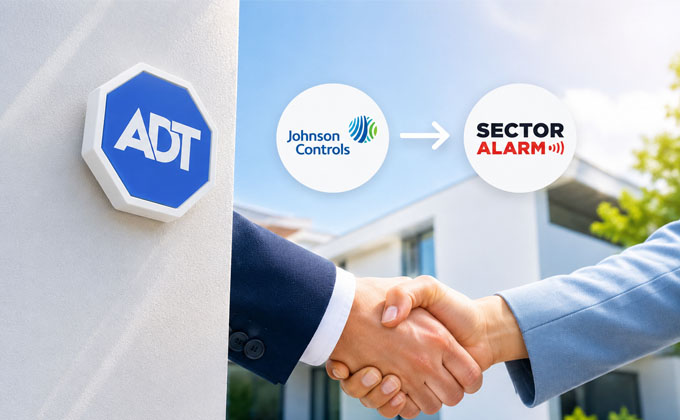
Johnson Controls has completed the sale of its ADT Spain business to Norwegian company Sector Alarm for net proceeds of $98 million, according to Memoori. The transaction was completed on April 1, 2026, and Johnson Controls confirmed it in its third-quarter report filed at the end of July. With the acquisition of ADT Spain, Sector Alarm has further strengthened its position in one of Europe’s most competitive alarm markets, where it now ranks third behind Verisure and Movistar Prosegur Alarmas. Founded in Norway in 1995, Sector Alarm operates across Europe and provides alarm solutions to more than 730,000 residential and business customers.

The Spanish sale continues Johnson Controls’ withdrawal from its international alarm monitoring operations, which began in 2023 and has already included businesses in Australia and New Zealand, Mexico, as well as its UK residential portfolio. According to Memoori’s analysis, this series of transactions points to a broader restructuring of the company’s security portfolio and a greater focus on other strategic areas of its business. Memoori also refers to earlier reports that Johnson Controls is considering the potential divestment of its access control and intrusion detection businesses, although no such transaction has yet been confirmed.

For Sector Alarm, whose expansion strategy is backed by investment firm KKR, the acquisition of ADT Spain represents another step in strengthening its presence in the European alarm and monitoring services market.

Hochiki Europe at Adria Security Summit 2026

Hochiki has kept people and property safe from fire for over 100 years. We started in Japan in 1918, and that same precision engineering background still shapes every product we design and manufacture today. Each device carries that precision through into manufacture, then is tested and certified to European fire safety standards before it reaches the market.

If you are new to Hochiki, the best place to start is our Training Academy. It is a free online platform covering system design, installation best practice and product training, and it already has over 2,000 users worldwide, including installers, specifiers and engineers. Visitors to our stand who have not worked with our products before can use the Academy to get up to speed quickly and understand how our systems fit into their projects.

We have worked across the European market for more than 30 years, building strong relationships with distributors, installers and specifiers in every country we operate in. Europe is not one market. Standards, approvals and building needs differ from country to country, and we work closely with local partners to make sure every project gets the right solution for the Adriatic and Balkan region.

Our experience in Southeast Europe includes several notable projects across a range of building types. In Bulgaria, our systems safeguard Smart Tower, a large mixed use development in Sofia where 1,152 people live and work across two connected blocks. Our fire detection products are also installed at the BULTEX99 Logistics Centre, helping keep staff and stock safe for a business serving over 24,000 customers across the country, and at the historic Sofia National Library, home to important national collections since 1881.

In Serbia, our products are installed at the BiG Shopping Mall in the Srem District, a busy destination for shoppers and visitors. In Turkey, Hochiki fire detection equipment is in place at Ankara Numune Training and Research Hospital, one of the country’s oldest and most respected hospitals. Together, these projects show our products and systems working reliably across many types of buildings, from hospitals and libraries to shopping centres and logistics sites.

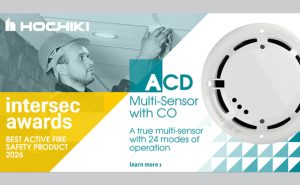
At the centre of our commercial range is the ACD Multi-Sensor, our award winning detector. The ACD won an Intersec Award, and it is certified to EN 54 Parts 5, 7, 26, 29, 30 and 31, with all 24 detection modes certified. This gives specifiers the flexibility to match detection settings to the building, helping reduce false alarms while still detecting real fires quickly. It also includes carbon monoxide detection, with a 10 year CO cell life and a 3 year product warranty.

Visit our stand at 140 at Adria Security Summit to learn more about the award winning ACD Multi-Sensor, hear about our project experience across the region and find out how the Training Academy can support your team.

SCANLOCK – Intelligent Security Technologies for a Safer Tomorrow

SCANLOCK is a technology company with more than 20 years of experience in the distribution, integration, and development of advanced security solutions. Operating across Central Europe, we help customers design and implement comprehensive security systems that protect critical infrastructure, industrial facilities, logistics centers, commercial buildings, transportation hubs, and public spaces. Our philosophy goes beyond simply supplying products–we deliver complete, tailor-made solutions, from initial consultation and system design to implementation, technical support, and long-term service.

At SCANLOCK, we combine best-in-class technologies from leading global manufacturers with our own expertise in artificial intelligence and video analytics. This allows us to provide customers with reliable, scalable, and future-proof security solutions that improve safety, operational efficiency, and situational awareness.

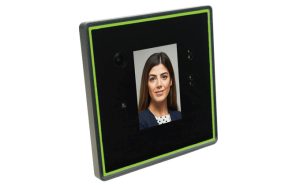
One of our flagship technologies is SAFR, an industry-leading facial recognition platform designed for highly accurate and lightning-fast biometric identification. Powered by an AI engine with an accuracy of up to 99.87%, SAFR enables secure access control, visitor management, and real-time identity verification across a wide range of environments. The platform supports both controlled enrollment (“visa faces”) and recognition of individuals in real-world scenarios (“wild faces”), making it suitable for offices, manufacturing plants, critical infrastructure, retail, and large public venues. With centralized management, synchronization of multiple readers, support for databases of up to 50,000 identities per reader, and integration with mobile credentials, access cards, and QR codes, SAFR delivers an exceptionally flexible and reliable biometric security solution.

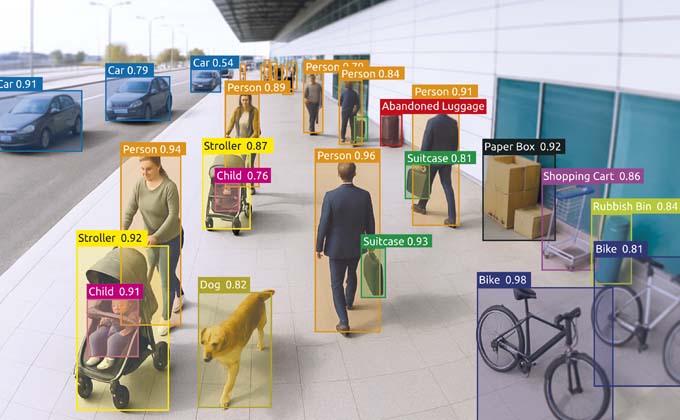
Complementing our biometric portfolio is SCANNERA, SCANLOCK’s proprietary AI-powered video analytics platform. Developed through years of research in computer vision and machine learning, SCANNERA transforms standard CCTV systems into intelligent decision-making tools. The platform is hardware-independent and can be integrated with virtually any existing camera infrastructure, protecting previous investments while significantly extending system capabilities.

SCANNERA performs real-time analysis using advanced neural networks to detect security threats, monitor operational processes, and automate visual inspections. Its applications include intrusion detection, object and behavior recognition, traffic analysis, industrial quality control, people counting, and forensic video search. By continuously analyzing live video streams, SCANNERA enables organizations to identify risks before incidents occur, optimize operational efficiency, and reduce the need for manual monitoring. The solution is fully customizable and can be adapted to the specific requirements of each project, whether in manufacturing, logistics, transportation, smart cities, or critical infrastructure.

Together, SAFR and SCANNERA represent SCANLOCK’s vision of modern security–where artificial intelligence, advanced analytics, and seamless system integration work together to create safer, smarter, and more efficient environments. Whether protecting people, assets, or business operations, SCANLOCK delivers innovative technologies that help organizations stay one step ahead of evolving security challenges.

Axis Introduces Three New LPR Camera Kits for Different Traffic Scenarios

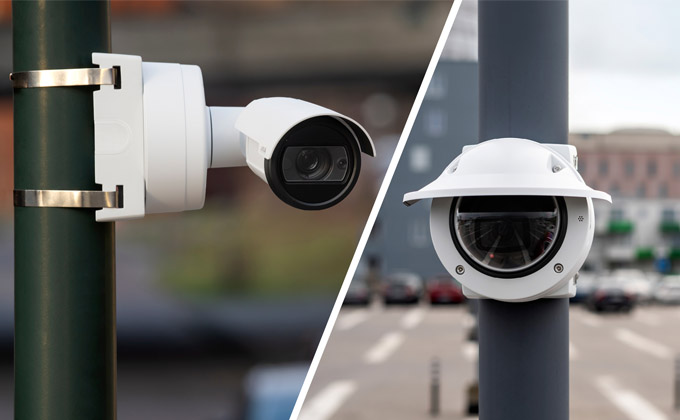
Axis Communications has introduced three purpose-tuned camera kits for automatic license plate recognition (LPR), all with AXIS License Plate Verifier preinstalled. The cameras capture license plates and, under optimal conditions, can also identify vehicle type, color, make, and model, without requiring external servers.

The AXIS P3285-LVE Kit is designed for slow-speed traffic and features a 2 MP dome camera, with allow and block lists managed directly on the device. The AXIS P1485-LE Kit uses a robust 2 MP bullet camera for reliable license plate capture in free-flow traffic, while the AXIS P1486-LE Kit combines a 3 MP camera with global shutter technology to capture fast-moving vehicles with low distortion across two traffic lanes.

All three kits are ready to use out of the box and designed to provide accurate and reliable license plate recognition even in challenging lighting conditions. Built on open APIs, they can be easily scaled and integrated with Axis and third-party VMS platforms. The cameras also feature electronic image stabilization, while the vandal-resistant slow-speed model can be safely installed at lower, easily accessible mounting heights.

More information is available from Axis Communications.

Texecom launches Guardian with AURA for self-monitoring users

Texecom, a leading UK manufacturer of professional security systems, today announced the launch of Texecom Guardian with AURA UK, a security technology company providing businesses and individuals with instant access to private security response services anytime, anywhere using a connected device.

The launch creates a new commercial opportunity for Texecom installers. By making a professional response service available to customers with compatible systems, installers can add greater long-term value to every installation, strengthen ongoing customer relationships, and benefit from an additional recurring revenue stream, without having to build or manage their own response operation.

For self-monitoring security users, an alarm activation has traditionally meant receiving an alert and being limited about how to react to the situation. Traditional solutions have typically offered no guaranteed route to physical intervention, leaving users reliant on keyholders, friends, family members, or police attendance, which is increasingly uncertain given pressure on time and resources – or simply to hope that it is a false alarm and ignore the notification.

Texecom Guardian changes this by giving users direct access to guaranteed physical security responses. When an alarm is triggered, self-monitoring users can now request attendance from a vetted, SIA-licensed security officer through AURA’s nationwide network of ACS-accredited partners.

Behind the integration is AURA’s intelligent response platform, which automatically matches each request with the nearest available vetted, SIA-licensed responder, using real-time location data to coordinate attendance and provide users with live visibility from dispatch through to arrival.

Indeed, once the responder has been dispatched, users can track the responder’s journey in real time and communicate directly with AURA’s 24/7 UK control room, providing visibility and reassurance throughout the incident. AURA, which already operates across more than 178,000 protected sites, is able to deliver average response times of under 29 minutes across the country.

Texecom Guardian is available now through a simple monthly subscription, providing access to physical security response when it is needed most, without the uncertainty of arranging or paying for a callout during an active incident.

Alex Booth, Managing Director of AURA UK, said “self-monitoring has transformed how people manage security, but until now there has been a clear gap between receiving an alert and getting help on the ground. This partnership closes that gap by giving users access to a trusted, guaranteed physical response whenever they need it — directly from the security app they already use.”

David Mountfield, CEO of Texecom, added that “Texecom was built to give users greater control over their security, and this integration takes that further by adding access to a professional physical response when it matters most. AURA’s technology and responder network provide a natural extension of the self-monitoring experience.”

More Than 200 Products Pass SIA OSDP Verified Testing

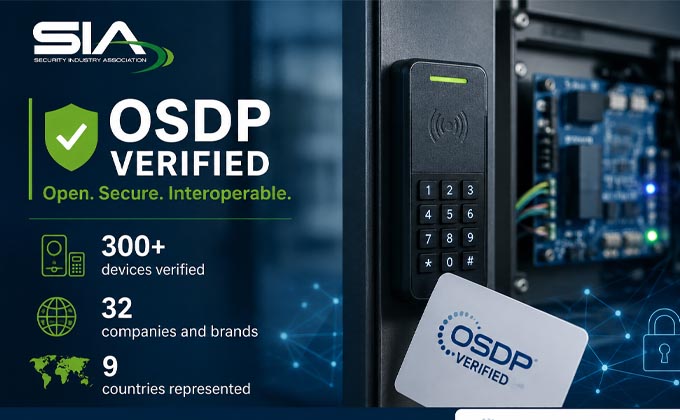
The OSDP Verified program, administered by the Security Industry Association (SIA), has so far validated 222 products from 32 companies and brands for compliance with the OSDP standard for access control communications. Open Supervised Device Protocol (OSDP) enables bidirectional communication between readers and controllers and was developed as a more secure and capable alternative to the legacy Wiegand interface. Its implementation improves interoperability between devices from different manufacturers, enhances device management, and supports capabilities such as Secure Channel encryption, smart card communications, and biometric readers.

SIA took ownership of the OSDP protocol in 2012, while the product verification program was launched in April 2020. “Since its launch in April 2020, the SIA OSDP Verified program has tested and validated 222 products from 32 companies and brands – substantial progress in six years, highlighting the market need and the program’s success,” said Cameron Walker-Miller, director of standards and technology at SIA. He added that the program now includes participants from nine countries across North America, Europe, Asia, and the Middle East, with growing interest from international manufacturers. As of July 2026, the verified product list also includes 46 access control units and nine peripheral devices.

More information about the standard and verification program is available from SIA OSDP.