Home News Archive by category World (Page 7)

World

Milestone Systems launches XProtect Video Summarization and announces webinar on generative AI video analysis

Milestone Systems has introduced a new extension for its XProtect platform called XProtect Video Summarization, a tool that uses generative artificial intelligence to convert video footage into clear text summaries of events. The goal of the solution is to help operators understand situations more quickly without lengthy video playback. The text summaries enable faster alert verification, more efficient filtering of false alarms, and quicker incident documentation. The technology has been trained on compliant real-world video from different parts of the world, with the first application focus on traffic and plans to expand to other scenarios.

To present the solution, Milestone will host a webinar on March 11, where participants will have the opportunity to see a live demonstration of XProtect Video Summarization, learn more about the market need for video summarization, and explore the NVIDIA vision technology that underpins the solution.

The event will also include public safety use cases, implementation guidance, and a Q&A session. The webinar will be led by Ben Cahill, Keith Harris, and Roland Harwood from Milestone Systems, with the participation of Alex Pazos from NVIDIA. Organizers stated that registered attendees who cannot join live will still receive a recording of the event along with written answers to all submitted questions.

Registration for the webinar is available at the following link: https://lnkd.in/eFnt_aXh

Axis Communications Insights: Software support is crucial for future-proofing your physical security system

When buying new devices, hardware warranty is often prioritized over software support. However, both are crucial for optimal device performance. This article highlights the importance of software support in physical security systems and showcases the industry-leading Axis software support.

Hardware and software are in a symbiotic relationship: the hardware provides the physical foundation, while the software enables a device to perform a range of functions. Without hardware, software lacks a platform, while without software, hardware is unusable.

Axis hardware warranty covers manufacturing defects for 5 years, but the actual service life of a device is often double that. That’s because Axis provides software support through AXIS OS for about 8 to 12 years.

The role of software support is to address product usability issues, often resolved through bug fixes. Given today’s cyberthreat landscape where there is a need to maintain security and stay ahead of legislation, software support also addresses newly discovered vulnerabilities through security patches. At Axis, software support also involves new feature releases with device software upgrades, further improving the capabilities of a product after purchase.

Axis software development represents 80% of its R&D organization. Even though software development and maintenance are challenging and costly, Axis is committed to providing long support periods at no additional cost to customers. This reflects how important we believe software support is to ensure the long-term usability and security of our products. Let’s look at the benefits of Axis software support below.

Benefits of Axis software support

Choice of software support that best fits your needs

Users of AXIS OS-based products – from cameras, intercoms, loudspeakers to access control products – can choose either an AXIS OS release on a long-term support (LTS) track, or an active track.

The LTS track is focused on bug fixes and security patches to address security vulnerabilities and ensure compatibility with third-party systems. The active track offers continuous feature growth in addition to bug fixes and security patches to maximize device functionality and security. For Axis products running on Microsoft Windows®, the Long-Term Servicing Channel (LTSC) is used to provide long-term support with security updates and a focus on stability. It is ideal for devices such as video management software servers, and systems that require consistency.

It’s important to note that Axis, system integrators, and end customers have a shared responsibility for keeping the software up to date to maximize cybersecurity. Axis provides software updates that include security patches, and as a next step, system integrators and end customers must install them.

Access continuous feature growth

Updating an AXIS OS-based device with an AXIS OS version on the active track allows users to truly future-proof the device over time. You get continuous feature growth, whether it be additional cybersecurity functionality, such as MACsecFIPS 140-2 Level 1 or other updates such as new analytics.

Security considerations integral to software development

Axis has in place the Axis Security Development Model (ASDM) to ensure that software addresses security considerations throughout a product lifecycle, before and after a product is introduced to the market and when it reaches its end of life. This includes vulnerability management. As a Common Vulnerabilities and Exposures Numbering Authority (CNA), Axis vulnerability management policy informs customers about the conditions under which vulnerabilities will be patched. In addition, Axis provides a security notification service that enables customers to take timely action and keep their systems up to date.

Compliance

Legislation increasingly requires customers to be informed about the security of their products, including their physical security systems. In Axis Trust Center we share information about how Axis implements security compliance, transparency, data protection, and privacy. For example, products running AXIS OS 11 or higher are certified to the ETSI EN 303 645 cybersecurity standard. Standards like ETSI EN 303 645 and EN 18031 aim to strengthen security measures for IoT devices and ensure software updates throughout the product lifecycle. In the EU, initiatives like the Cyber Resilience Act and the Radio Equipment Directive (RED) emphasize the need for regular software updates. The UK’s Product Security and Telecommunications Infrastructure (PSTI) Act also mandates transparent disclosure of software support and security updates.


“Innovation and leadership go hand in hand. Axis Communications’ commitment to transparency is unmatched, for example by being first out in our industry to disclose end-of-software support dates and SBOMs. This underscores our dedication to provide best in class software support in the physical security industry” – Andre Bastert, Global Product Manager for AXIS OS

Software bill of materials

Axis provides a software bill of materials (SBOM) for its products. SBOM can be found on the support web pages of many products.

SBOM is crucial for transparency and IT security. It provides detailed insights into software components to enable the following benefits:

  • Transparency and traceability
    • Gives detailed insights into all components in the software, including both proprietary and open-source components. This helps customers identify dependencies, search for potential vulnerabilities or outdated versions, and assess Axis cybersecurity posture.
    • Regular maintenance of SBOMs also helps Axis identify and fix security vulnerabilities and outdated components at an early stage. This proactive approach significantly reduces the likelihood of data leaks, system failures, and damage to reputation.
  • Efficient response to security incidents
    • In the event of a security incident, SBOM enables quick and precise analysis of whether and to what extent a system is affected. This allows customers to take immediate countermeasures and avoid major damage. Axis notification service for security vulnerabilities and other security-related issues enables customers to react to potential threats immediately and update systems accordingly.
  • Compliance and risk mitigation
    • A SBOM helps customers comply with legal and regulatory requirements. At the same time, it minimizes risks that can arise from undocumented software components.

Clearly stated end of software support date

Axis publishes the end date for software support on the web pages of its devices. Axis device management software applications also provide information on end-of-support dates for connected devices. This provides transparency so that customers know what to expect prior to purchasing a product. It also enables customers to prepare for product retirement and replacement in a timely manner.

Software support is the new standard for long-term usability and security

Software support is essential to network products. While the hardware warranty is crucial in the initial phase, software support is not only invaluable, but indispensable throughout a product’s life for optimizing usability and continued security.

In the IT industry, extended support is common to prolong the service life of products. This approach enables companies to protect their investments and react flexibly to changing security requirements. And due to cybersecurity regulations, software updates are increasingly a legal requirement. Axis software support is among the longest in the physical security industry, providing significant value for customers. The existence, length and extent of the software support should, therefore, be important considerations as they not only help maximize the potential of devices, but crucially support the secure, long-term operation of the network products.

Siemens introduces virtualized protection for digital substations

Siemens Smart Infrastructure has introduced Siprotec V, a software-based version of its protection and control system for power grids designed for digital substations. The solution replaces dozens of individual protection relays traditionally installed in substation cabinets by running their functions as virtual applications on an industrial server located within the facility. In this way, the functions of up to 60 devices can be consolidated into a single platform, simplifying installation and reducing the need for numerous cables and panels.

According to Siemens, capital investment costs can be reduced by up to 25%, while the space required for equipment in the facility can be lowered by up to 45%. Thanks to reduced copper cabling, CO₂ emissions per substation can drop by up to 50%, along with approximately 20% lower lifecycle costs. Virtualization also enables digital testing of configurations before commissioning, faster deployment, and easier upgrades without hardware replacement.

The platform supports advanced analytics and real-time grid monitoring applications, allowing operators to detect faults more quickly and prevent power outages. Siemens states that Siprotec V represents a step toward software-defined power systems and the modernization of critical infrastructure while maintaining high standards of cybersecurity and reliability.

Dallmeier provides video surveillance at the Munich Security Conference 2026

Dallmeier electronic delivered security solutions for the Munich Security Conference 2026, one of the world’s most important political and security events, held from February 13 to 15 in Munich, Germany. This year’s edition gathered nearly 70 heads of state and more than 100 foreign and defence ministers from around the globe. For the three-day event, the video surveillance system was installed in record time in cooperation with Dallmeier Systems Munich, meeting the high operational requirements of the conference.

Large areas were covered using the high-resolution Panomera system, while Domera cameras with remote PTRZ adjustment enabled faster and more efficient installation. Central management and monitoring were carried out via the Hemisphere SeMSy platform. Intuitive software and a stable system architecture allowed operators to maintain clear situational awareness and react quickly even under demanding conditions.

The company thanked all partners involved in the project and emphasized the importance of reliable security technologies at high-risk events. Dallmeier also wished all participants a successful and safe conference.


Mobile access unlocks a new way to work and a whole range of possibilities

In business and personal life today, digitalization increasingly means moving to mobile. Mobile-first is becoming the norm across regions and industries. In Western Europe alone, there are 459 million active smartphones and only a fraction of these are currently used for digital access. This is changing fast: one projection suggests mobile credentials’ CAGR of more than 22% over the next 7 years.

By: Thomas Schulz, Director & Head of Marketing ASSA ABLOY Opening Solutions EMEIA

E-mail: thomas.schulz@assaabloy.com

This rapid growth seems only natural: in terms of access management, it is more secure and more convenient, for both building users and managers, when the smartphone also becomes a key. From an organizational perspective, digitalization helps to maximize the productivity of existing assets. By adopting a mobile ethos, in access and beyond, businesses increase convenience for their users and the security of their buildings. It is easy to understand why mobile is, according to one analyst, “the dominant trend in access control”.

Making life easier and enabling mobility for users and facility managers

Using mobile keys for access helps building users to act faster, work smarter and collaborate better within teams. Similar convenience benefits have already made banks, travel agents, food delivery services and more into mobile-first sectors. With mobile access, staff and visitors no longer need to carry or keep track of keys, fobs, badges or cards. The convenience of replacing plastic key-cards with secure mobile keys is obvious.

From an access management perspective, mobile access enables the secure movement of people into and through premises – and simultaneously streamlines daily work for security managers. Mobile credentials are also more secure. Phones are almost never loaned to anyone else, and are harder for a user to lose. Mobile credentials are easier for security managers to amend or de-authorize than a mechanical key. Changes to anyone’s access permissions can be made over the air, without any need for dedicated readers or asking a user to check-in their credential.

Furthermore, when a security administrator cancels a mobile key, it vanishes immediately. No more time-wasting handover meetings are scheduled when a tenancy, employment contract or authorized visit ends. Remote access management via smartphone and a secure cloud saves facilities staff time and hassle. They work smarter and more flexibly, benefitting both their well-being and their organization’s productivity.

“At ASSA ABLOY, we were very quick to spot the benefits of mobile access for all kinds of stakeholders,” explains David Moser, SVP & Head of Digital Access Solutions at ASSA ABLOY Opening Solutions EMEIA. “So many of our access innovations provide the option to make access not only digital, but also mobile.”

Broad range of mobile access solutions from ASSA ABLOY

ASSA ABLOY offers customers a choice of mobile access solutions, both within complete digital access systems and via devices which plug seamlessly into an existing security management solution. Multi-residential housing is just one sector, among many, where the advantages of mobile access have seen its rapid growth. Fast-growing build-to-rent housing provider Becorp is just one that has benefited from its convenience. For a planned new development in Barcelona, they sought a digital alternative to mechanical keys. Becorp realised that a keyless solution would save property management time, which is often spent handling hundreds of physical keys. The burden on staff is especially great when properties are newly occupied or vacated, a regular occurrence in large build-to-rent complexes.

Residents instead use secure mobile keys in their own SMARTair Openow® app. “Physical key management for any large development puts severe pressure on operational costs,” explains Becorp’s Xavier Casals. “Choosing SMARTair wireless locks and mobile management via Openow helps us to minimize them.”

“We have several more mobile access solutions, providing customers with a choice to meet their exact needs,” adds David Moser. “CLIQ® Connect is a mobile extension to ASSA ABLOY’s CLIQ programmable key access solution. A keyholder no longer needs to update access rights physically in person. Their system administrator simply opens the CLIQ Web Manager – from anywhere – and updates it. The key-holder makes an encrypted connection between their programmable BLE key and the app on the mobile to instantly update permissions from the cloud.”

“Yet another mobile solution, CLIQ Go, is designed for small and medium-sized businesses. It offers easy access management from a mobile. CLIQ Go makes it simple even for non-specialists to manage their own access, digitally and from the palm of their hand.”

Adding mobile access to an existing EAC solution or new application

Mobile access is also built-in to ASSA ABLOY digital access devices designed for seamless integration with existing systems and hardware. Battery powered Aperio® locks are compatible with both Bluetooth and NFC mobile wireless protocols. Aperio mobile access offers Seos®-based, class-leading cryptography and authentication, plus unrivalled privacy protection.

Utilizing HID Seos® technology, Aperio also supports employee badge in Apple Wallet, enabling quick, convenient entry to doors, cabinets, lockers, server racks and more equipped with Aperio wireless devices. ABLOY CUMULUS is another keyless access solution, also part of the suite of connected Digital Access Solutions from ASSA ABLOY. With ABLOY CUMULUS, tailored access rights are issued directly on a user’s smartphone. Their personalized, encrypted mobile credential unlocks any authorized opening. In addition, the revolutionary CUMULUS Controller brings mobile unlocking via Bluetooth to any electric or electronic lock – from any brand.

“We engineered CUMULUS to help businesses increase their mobile capability to really get their access ready for what’s ahead,” explains David Moser. “It is completely customizable, with APIs and SDKs for smartphone app development. Mobile becomes part of their business”

“Like all our mobile access solutions, we hope it helps our customers to realize new possibilities in whatever they do.”

To learn more about living mobility with Mobile Access Solutions from ASSA ABLOY, visit https://www.assaabloy.com/group/emeia/campaigns/mobile-access


IDIS introduces new VAI systems with advanced AI video analytics

IDIS has announced a new generation of VAI video analytics systems, available in 24-, 48-, and 96-channel versions. The VA-2400, VA-4800, and VA-9600 models are designed for projects requiring advanced analytics and real-time processing of large volumes of video streams. The systems support up to 48, 96, and 192 AI resources respectively and are powered by the Vaidio platform developed in cooperation with VAIBS. The solution offers a wide range of object and event recognition functions, improving incident detection and video analysis. Compatibility with IDLA technology further expands analytical capabilities within the IDIS ecosystem.

The devices are available in a 2U rack-mount chassis or a desktop tower version, simplifying deployment across different installation types. The systems are NDAA compliant, making them suitable for projects with higher regulatory requirements. According to the company, the new series delivers a more flexible and scalable AI solution for security operations and monitoring of large facilities.

Detailed technical specifications of the individual models, including AI processing capacities and installation options, are available at: https://lnkd.in/enyuUK5X

An overview of the VAI (Video AI) platform, analytics functions, detection types, and integrations can be found at: https://lnkd.in/eTnX22Jn

Ruijie recommends Reyee solutions for public Wi-Fi in small business environments

Ruijie Reyee presents a solution for easy deployment of public Wi-Fi networks designed for small business locations such as shops, kiosks, and hospitality venues. The company says the goal is to provide a stable and affordable internet connection without complex installation or lengthy configuration.

The core of the solution is the RG-RAP6262(G) outdoor access point with Wi-Fi 6 support, intended to cover larger outdoor areas and spaces around the premises. The device features omnidirectional antennas, IP68 protection, and an operating temperature range from –30 to 65 °C, making it suitable for harsh weather conditions. For indoor networking, the RG-EW1300G gigabit mesh router enables full building coverage and cloud-based network management. The system uses Reyee Mesh technology, allowing multiple devices to be connected into a single network without additional cabling.

The solution is particularly suited for small retail stores and restaurants that want to provide guests with reliable internet access and additional digital services. Ruijie notes that the devices offer easy installation, stable performance, and long service life, simplifying the launch and expansion of public Wi-Fi services.

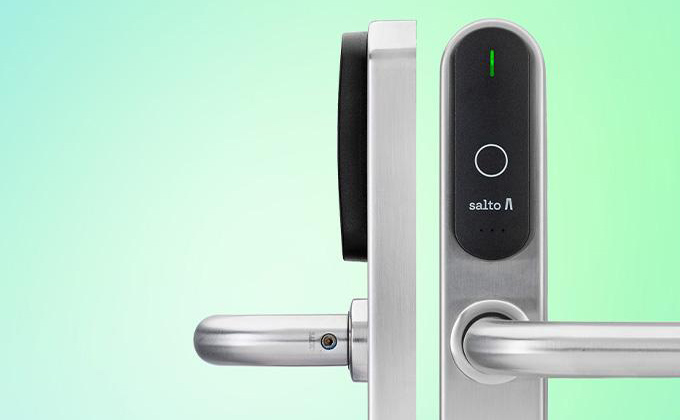
Salto: DBolt Touch Outdoor is a new smart lock for exterior residential doors

Salto has expanded its smart lock portfolio with the launch of the DBolt Touch Outdoor, designed to provide secure keyless access for exterior residential doors. The IP55-rated electronic lock is built for doors exposed to outdoor conditions, both in new construction and retrofit projects. The solution extends smart access—previously limited to interior apartment doors—to building entrance doors as well.

The model uses Salto SVN, BLUEnet, and JustIN Mobile technologies and supports both cloud-based and stand-alone operation. It is fully compatible with the Salto Space, Salto KS, and Salto Homelok platforms, unifying access management, security, and the resident experience within a single system.

The lock communicates wirelessly with the building’s smart ecosystem and allows remote issuance, revocation, and management of digital keys.

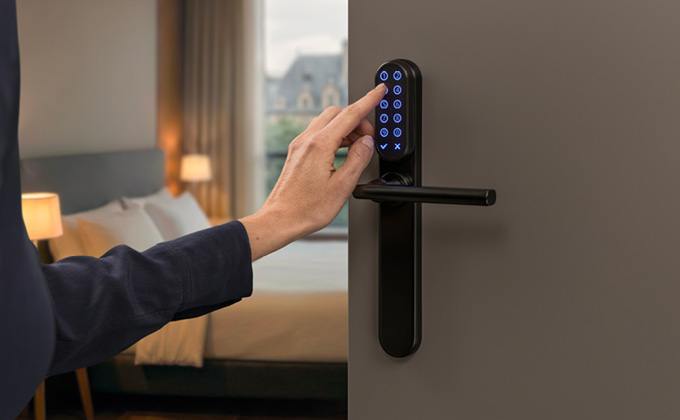
The battery-powered device features a touchscreen keypad and supports multiple credentials, including RFID cards, key fobs, NFC, and mobile credentials. Installation is simplified as it fits standard deadbolt preparations without drilling and can be mounted in just a few minutes. According to Salto, the DBolt Touch Outdoor enables residents to use a smartphone or card instead of a traditional key, enhancing both security and convenience in modern residential living.


Synology and Wasabi simplify data protection with integrated cloud backup

Synology and Wasabi Technologies have announced a strategic partnership aimed at simplifying enterprise data protection and providing more flexible and cost-effective options for data storage and recovery. Thanks to native integration with Synology’s ActiveProtect line of backup appliances, users can now directly extend their backup strategies to Wasabi Hot Cloud Storage, improving data security without added complexity, new management consoles, or unpredictable costs.

The solution allows IT teams to protect mission-critical workloads from a single platform and use Wasabi as an S3-compatible destination for off-site copies, long-term retention, and immutable backup. Wasabi is available directly within ActiveProtect Manager, enabling organizations to quickly deploy off-site backups while maintaining full visibility across on-premises and cloud environments.

The partnership comes at a time of increasing ransomware threats, regulatory requirements, and data growth, prompting businesses to seek more resilient and easier-to-operate backup solutions.

The integration supports modern protection models such as the 3-2-1-1-0 approach, ensuring data availability and recoverability in the event of an incident. The system provides unified backup management for on-premises, SaaS, and cloud resources, helping prevent tampering and catastrophic data loss. According to the companies, the combination of centralized administration, immutable storage, and predictable costs enables organizations to manage data more securely and at scale.


VIVOTEK upgrades VORTEX platform with generative AI and personal safety detection

VIVOTEK has announced major enhancements to its VORTEX cloud platform, introducing the generative AI-powered “Think Alert” feature and new personal safety detection capabilities. The upgrades are aimed at public- and private-sector organizations seeking faster risk response, greater operational resilience, and more efficient security management. At the same time, the cloud ecosystem has been expanded through integration with multiple access control service providers, unifying video surveillance and access control within a single operational interface.

The platform is designed as a centralized, scenario-based security command center focused on the user. The new Think Alert function uses generative artificial intelligence and a visual language model, allowing users to define alarm rules using plain text without complex configuration.

The system automatically recognizes predefined situations and immediately triggers alerts, significantly reducing response time and enabling earlier intervention. Examples include detecting smoking in restricted areas, the presence of animals in designated spaces, or vehicles entering a loading zone. In this way, searching, analyzing, and identifying footage becomes as simple as typing a message, shifting security from reactive review to proactive intelligence.

The platform also introduces personal safety protection features such as detection of protective equipment, including helmets and reflective vests, as well as fall or loss-of-consciousness detection. The solution enables continuous monitoring and incident logging, reduces workplace risks, and accelerates emergency response in factories, retail environments, public transportation, and social care facilities.

Through integration with ACaaS partners Brivo, Kisi, and PDK, administrators can correlate access control events with video footage and simplify investigations and remote management. The company states that VORTEX, as a unified cloud platform, combines AI applications, flexible deployment, and a partner ecosystem, representing a step toward scalable, proactive, and sustainable security management.