Home Archive by category Security Services (Page 2)

Security Services

Germany Launches Major NIS2 and DORA Offensive: The Strictest Era of Cyber Compliance Begins for Companies

At the end of November 2025, Germany initiated the most far-reaching cybersecurity reform of the past decade, following the Bundesrat’s adoption of the NIS2 implementation law. As a result, regulatory obligations effectively entered into force immediately, without any transitional periods — a development legal experts are calling a “compliance shock” for the business sector. At the same time, European supervisory authorities activated a key mechanism of the DORA regulation and published the first list of critical IT third-party providers, who now fall under direct EU oversight.

The Federal Network Agency (BNetzA) has already presented a draft of a new security catalogue, introducing stricter requirements for safeguarding the telecommunications supply chain. The law firm Dentons reminds that all obligations apply the moment the law takes effect, including mandatory registration with the BSI and the implementation of comprehensive cyber risk-management measures. The scope of regulated entities is expanding dramatically — from around 4,500 to almost 30,000 companies — now including logistics, food supply, and digital service providers.

DORA further tightens supervision over cloud providers, analytics companies, and software vendors serving the financial sector, introducing mandatory on-site inspections and new channels for reporting IT incidents. The common priority of both regulations is strengthened third-party risk management, meaning that suppliers can no longer rely on simple declarations of conformity but must provide evidence of their security reliability.

Regulators stress that the era of postponements is over, and companies that were counting on extended deadlines now face severe penalties and increased personal liability for management. All indicators suggest that the period leading into early 2026 will be a race to close compliance gaps across all sectors.

Amazon blames Iran for combining cyber espionage with physical attacks

Amazon has released details on two cases in which Iranian threat actors combined digital espionage with physical attacks, a practice the company refers to as “cyber-enabled kinetic targeting.” The first case involves the group Imperial Kitten (also known as Tortoiseshell), linked to Iran’s IRGC, which over a two-year period progressed from cyber reconnaissance to a physical strike. According to Amazon, the group compromised a ship’s AIS system in December 2021 and, by August 2022, had gained access to additional maritime platforms and onboard CCTV cameras to collect real-time visual intelligence. In January 2024, they searched AIS location data for a specific vessel, which just days later, on February 1, became the target of a Houthi missile attack. Amazon says the link between the cyber reconnaissance and the subsequent strike is “unmistakable,” even though the attack itself was unsuccessful.

The second case concerns MuddyWater, a group tied to Iran’s MOIS, which in May 2025 prepared a server for cyber operations and, by June 17, used the same infrastructure to access a compromised CCTV server streaming live footage from Jerusalem. Researchers believe the footage was used to support the planning of a June 23 missile attack, after which Israeli authorities warned citizens to immediately disconnect internet-exposed cameras. Amazon stresses that existing terms such as “cyber-kinetic operations” or “hybrid warfare” lack precision, and proposes a new definition for campaigns where cyber activities directly support physical strikes. The company warns that this type of operation will become increasingly common as nation-states recognize the strategic advantage of combining digital reconnaissance with kinetic attacks.

Amazon urges companies to adjust their security strategies and expand threat models, noting that even entities that previously considered themselves uninteresting to attackers may now be targeted for tactical intelligence collection.

Dubai Launches “Scan Smart” Campaign to Combat QR Code Fraud

The Dubai Electronic Security Center (DESC) launched the “Scan Smart” campaign, which took place from 24 to 30 October as part of Cybersecurity Awareness Month, with the goal of raising public awareness about QR code–related risks. As QR codes become increasingly common in restaurants, hotels, shops, events, and other public spaces, the risk of tampering or malicious replacement continues to grow. In the first half of 2025 alone, more than 4.2 million global attempts to forge QR codes were recorded, underscoring the urgent need for public education. Through the initiative, DESC aimed to empower citizens and businesses to recognize legitimate codes, avoid compromised ones, and report suspicious activity.

DESC Chief Executive H.E. Yousuf AlShaibani stated that the campaign reflects the center’s commitment to building a safer digital environment for Dubai’s residents and visitors. As part of the campaign, DESC introduced interactive kiosks and an educational microsite, along with RZAM — a free browser extension that detects risky websites triggered after scanning QR codes.

Dozens of F&B venues across the city participated as “Scan Smart Partners,” displaying branded materials and offering visitors free coffee and exclusive discounts. These partners helped create everyday “micro hubs” of digital awareness, where the public could learn about safe QR scanning in a relaxed environment. DESC encouraged users to always verify QR codes before scanning and to report any suspicious attempts, strengthening community cyber resilience and supporting the wider vision of a safer digital ecosystem in the UAE.

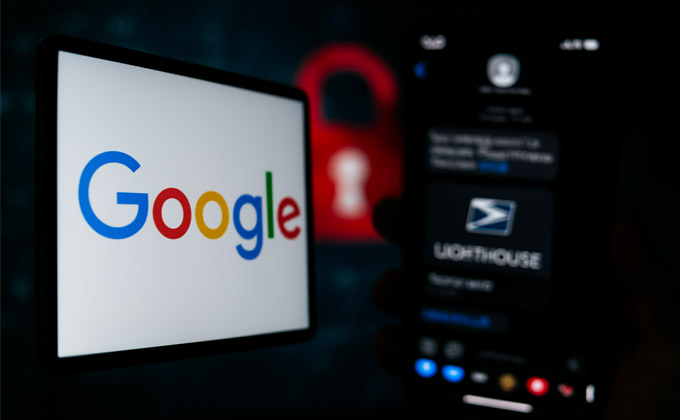
Google sues operators of the “Lighthouse” phishing platform that targeted millions of users

According to the cybersecuritynews.com portal, Google has filed a lawsuit against a criminal operation known as “Lighthouse,” a sophisticated phishing-as-a-service platform that has reportedly affected more than one million people across over 120 countries. Google’s security researchers determined that this is one of the most damaging scam networks in recent years, structured to exploit well-known brand identities in order to deceive victims.

The platform enables attackers to launch large-scale “smishing” campaigns — phishing attacks delivered via SMS messages instead of email. Fraudsters impersonate companies such as E-Z Pass, USPS, and other toll service providers, sending links that direct victims to fraudulent websites. These websites are designed to look legitimate, tricking users into revealing passwords, financial information, and other sensitive data.

Google analysts uncovered at least 107 malicious website templates featuring Google’s branding on fake login screens, further increasing the risk of credential theft. In the United States, the operation has, according to the same source, facilitated the theft of data from tens of millions of credit cards, resulting in a massive financial impact.

Google’s lawsuit cites multiple laws, including RICO, the Lanham Act, and the Computer Fraud and Abuse Act. At the same time, the company is implementing additional security measures — from AI-powered systems that detect suspicious messages to enhanced account recovery options — to help users regain control of compromised accounts more quickly and safely.

How Synology Strengthens Cybersecurity and Business Continuity

Every business today faces the same two challenges: keeping data safe from relentless cyberattacks and ensuring operations never stop, even when hardware fails. Synology addresses both by delivering a platform where storage, security, and support are tightly integrated — designed to work seamlessly together from day one.

Solving the cybersecurity problem

Rapid protection against threats – Security updates and patches are delivered across the entire platform without delay, closing vulnerabilities before attackers can exploit them. Resilient by design – Built-in ransomware safeguards, end-to-end encryption, and advanced backup options come standard, helping businesses secure critical data without relying on third-party add-ons.

Download free security checklist HERE

Unified control – IT teams manage everything from a single interface, reducing complexity and eliminating the blind spots that attackers often target in fragmented environments.

Ensuring business continuity

Optimized performance – Because hardware and software are built to complement each other, systems run more reliably, with fewer disruptions.

Express replacement for Plus Series – If a device fails, Synology provides fast replacement for all HDD-based Plus models, minimizing downtime and keeping data accessible when it’s needed most. Predictable lifecycle – Businesses can plan long-term with confidence, knowing their infrastructure is supported, secure, and future-ready.

Why it matters for every business

Small companies – The same powerful DSM operating system runs on entry-level devices as on enterprise models. That means even the smallest businesses get access to enterprise-grade tools like encrypted backups, centralized management, and secure file sharing — all without the overhead of a large IT department.

Medium-sized businesses – As workloads grow, Synology scales effortlessly. High-performance storage, SSD caching, and expansion units allow companies to support more users, heavier applications, and larger datasets without compromising speed or reliability. Security policies and monitoring remain centralized, keeping complexity low while performance stays high.

Large organizations – Enterprises with global operations gain consistency and resilience. Solutions like ActiveProtect extend Synology’s protection across remote offices and data centers, covering massive workloads and ensuring unified recovery strategies worldwide. Every branch runs on the same hardened DSM platform, making compliance, monitoring, and threat response faster and more effective.

With Synology, businesses don’t just store data — they safeguard it against threats and guarantee access, no matter what. It’s cybersecurity and business continuity, built into the foundation of their infrastructure.

WhatsApp fixes security flaw in iOS and macOS apps

WhatsApp has released fixes for a critical vulnerability in its iOS and macOS apps that may have been exploited in targeted attacks. The flaw, tracked as CVE-2025-55177, stemmed from insufficient authorization in linked device synchronization and was discovered by WhatsApp’s internal security team. Meta said the bug could have allowed attackers to process malicious content from arbitrary URLs on a victim’s device.
The issue affected WhatsApp for iOS before version 2.25.21.73, WhatsApp Business for iOS 2.25.21.78, and WhatsApp for Mac 2.25.21.78, all patched in late July and early August. Researchers believe the weakness may have been chained with CVE-2025-43300, a zero-day in Apple’s ImageIO framework that was recently exploited to target individuals.

Amnesty International reported that WhatsApp has alerted certain users who may have been targeted in spyware campaigns over the past three months. The company advised affected individuals to perform a full device reset and ensure their operating system and apps remain updated. “This is a classic example of a zero-click attack, where no user interaction is needed to compromise a device,” said Donncha Ó Cearbhaill, head of Amnesty International’s Security Lab. He warned that this spyware continues to pose serious risks to journalists, activists, and human rights defenders.

HID Global: 16 billion passwords just leaked. Still using one?

It’s time to say goodbye to traditional passwords and explore four powerful passwordless authentication methods. This article looks at how FIDO, PKI, biometrics and push notifications are changing the way organizations secure accounts and how they improve both protection and user experience.

Passwords have long been the weakest link in digital security. Hackers target them relentlessly, leading to breaches that expose sensitive company data and personal information. On top of that, password fatigue frustrates users who are forced to manage dozens of complex logins across different systems. As a result, more organizations are moving to passwordless authentication — replacing passwords with modern technologies such as cryptographic keys, biometrics and trusted devices.

Below are four leading passwordless authentication methods and their advantages:

  1. FIDO

FIDO (Fast Identity Online) is an industry-standard method built on public-key cryptography. It creates a private-public key pair, with the private key securely stored on a user’s device such as a security key or smartphone, and the public key registered with the service provider. During login, the private key signs a server challenge that is verified using the public key. This ensures strong authentication without exposing sensitive data.

Passkeys — FIDO credentials — are supported by major tech providers like Google, Apple and Microsoft. Thanks to broad adoption, FIDO is now suitable for both consumer apps and enterprise systems such as Office 365 and Google Workspace.

Benefits:

  • Resistant to phishing attacks
  • Eliminates the need to type passwords
  • Works across a wide range of devices and services
  1. Public Key Infrastructure (PKI)

PKI also relies on cryptographic key pairs, but ties a single key to a user identity through a digital certificate issued by trusted Certificate Authorities (CAs). While FIDO generates a new pair for each service, PKI enables one certificate to work across multiple domains, making it efficient for larger organizations.

Benefits:

  • Strong, phishing-resistant authentication
  • Enables cross-domain access through a trust hierarchy
  • Supports login, data encryption and digital signatures

PKI remains a cornerstone for governments and enterprises that manage sensitive data and need proven, large-scale security.

  1. Biometrics

Biometric authentication uses unique physical or behavioral traits such as fingerprints, facial structure, iris patterns or voice recognition. Specialized sensors capture and analyze these traits, comparing them with stored templates. Because they are inherently unique, biometrics provide a level of security that is extremely difficult to forge.

Benefits:

  • No more weak or reused passwords
  • Convenient and fast login experience
  • Difficult for attackers to replicate remotely

From unlocking a phone with a fingerprint to logging into banking apps with facial recognition, biometrics combine usability with strong protection.

  1. Push Notifications

Push notification-based authentication links identity to a registered device. When a login is attempted, the user receives a secure prompt to approve or deny the request. This adds a real-time verification step that attackers without the device cannot bypass.

Benefits:

  • Users instantly approve or reject access
  • Strong protection through device possession
  • No codes or passwords required

Conclusion

The future of secure access lies in passwordless authentication. By eliminating passwords, organizations can reduce risks, prevent breaches and offer users a seamless experience. Whether the goal is stronger protection, greater efficiency or modernization of IT systems, passwordless technologies such as FIDO, PKI, biometrics and push notifications are paving the way. Now is the time to act. Partner with HID to implement passwordless solutions and build a safer, more secure digital future.

Acronis and Intel Partner to Deliver Efficient, AI-Driven Threat Detection for Endpoint Devices

Acronis Cyber Protect Cloud, a SaaS-based, multi-tenant platform, delivers award-winning protection from cyber threats, including next-generation antivirus, email security, data loss prevention (DLP), and endpoint and extended detection and response (EDR/XDR). Security professionals who use Acronis spend less time juggling tools thanks to its natively integrated solution that integrates cybersecurity, endpoint, and posture management, data protection, automated backups, and disaster recovery. Acronis also proudly aligns with NIST cybersecurity functions, helping users identify, protect, detect, respond to, and recover from threats more effectively.

“Cyber protection must be natively integrated and AI-powered to address modern cyber threats,” said Gaidar Magdanurov, President at Acronis. “Our collaboration with Intel empowers MSPs and corporate IT to deliver real-time security at the endpoint with minimal impact to system performance, protecting the productivity of users. Our collaboration with Intel takes the headache out of IT security for users and IT administrators.”

“Together, Intel and Acronis are delivering fast, AI-powered security right on the device,” said Carla Rodríguez, Vice President and General Manager, Client Software Enabling at Intel. “By running complex security tasks on an AI PC with Intel Core Ultra processors, we enable partners like Acronis to deliver breakthrough protection with lower latency and improved performance and privacy.”

Traditional antimalware software often struggles to detect modern threats and can consume excessive system resources, resulting in slowdowns, increased support tickets, and reduced productivity.

Fragmented security solutions further strain overburdened IT teams while increasing operational complexity. Acronis Cyber Protect Cloud addresses this with natively integrated cyber protection, minimizing the impact on system performance. And with Intel technology, it runs even more efficiently.

To learn more about AI PCs powered by Intel and Acronis Cyber Protect Cloud, visit: https://solutions.acronis.com/en-us/integrations/ai-pcs-powered-by-intel-and-acronis-cyber-protect-cloud/

Trend Micro Launches Cybertron, Industry’s First Proactive Cybersecurity AI

Trend Micro has introduced Trend Cybertron, a pioneering cybersecurity large language model (LLM) designed to reshape how enterprises manage cyber risk. Built on over 36 years of threat intelligence and more than two decades of AI innovation, Cybertron merges the reasoning power of Agentic AI with curated datasets and real-world expertise.

The solution integrates directly with Trend Vision One™, combining threat data, analytics, and advanced engines to deliver end-to-end visibility and protection. It enables proactive risk management by predicting attack paths, modeling threats, and recommending mitigation strategies before breaches occur.

Unlike reactive security approaches, Cybertron empowers IT teams to anticipate risk with exact precision across the entire attack surface. By doing so, organizations can move ahead of attackers, mitigating threats before they materialize.

This launch is especially relevant in regions such as the Middle East & Africa, where rapid adoption of AI-driven systems in government, banking, and smart cities has made security a pressing priority. Trend Micro notes that the average cost of a cyberattack in the region stands at $8.75 million, nearly double the global average.

“Security teams are overwhelmed by alert volumes and increasingly complex infrastructures,” said Bilal Baig, Regional Technical Director for the Mediterranean Middle East and Africa at Trend Micro. “Cybertron automates analysis and prioritizes threats based on real-time intelligence, allowing teams to focus on the most critical issues.”

Customer reports highlight up to 99% faster remediation when using Cybertron, setting a new standard for proactive defense. The model continuously evolves through agentic AI capabilities, adapting to novel threats and optimizing response with every interaction.

By integrating cybersecurity LLMs, curated threat intelligence, and intelligent AI agents, Cybertron provides organizations with clarity, speed, and confidence. It draws from global intelligence to prioritize risks and recommend precise actions, enabling teams to strengthen resilience.

Now available worldwide, Trend Cybertron represents a paradigm shift in cybersecurity, moving the industry firmly toward AI-driven proactive defense. It underscores Trend Micro’s mission to deliver innovative, future-ready solutions that safeguard digital transformation.

Cybersecurity Incidents Dominate the Week: Microsoft, DaVita, and Interpol Crackdown in Africa

The past week was marked by a wave of significant cybersecurity incidents worldwide. Microsoft announced it is limiting the information shared with Chinese companies through its Microsoft Active Protections Program (MAPP), following concerns that PoC exploit code may have been leaked and abused by Chinese threat actors.
Instead of detailed technical code, Microsoft will now provide only general descriptions of vulnerabilities to these firms. Meanwhile, Hunt.io published an in-depth analysis of the leaked Ermac 3.0 banking trojan source code, revealing both powerful data theft capabilities and serious security flaws. In Africa, Interpol carried out Operation Serengeti 2.0, arresting more than 1,200 individuals linked to cybercrime and recovering nearly $100 million while dismantling 11,000 malicious networks. The operation targeted investment fraud schemes, illicit cryptocurrency operations, and inheritance scams.

Separately, Microsoft patched a logging issue in Copilot that allowed some interactions to bypass audit logs, raising concerns for industries where log integrity is critical.

Researchers also warned that agentic AI integrated into web browsers could be exploited by attackers through techniques such as Scamlexity and ClickFix. Healthcare provider DaVita disclosed that its recent ransomware-related data breach now affects nearly 2.7 million people, with the Interlock group claiming responsibility. Together, these events underscore the growing complexity of today’s cyber threat landscape and the urgent need for stronger defenses across industries.