Home Archive by category Vertical Solutions (Page 8)

Vertical Solutions

Monitoring of pentane gas (EX) in foam production, Zagreb

Who doesn’t know it – the much-used polystyrene, popularly known as Styrofoam – it serves: for insulating buildings, to save a lot of CO2, and for protecting people, goods and food, e.g. crash helmets, packaging for televisions and fresh products. The special advantage of polystyrene: it is extremely light, it insulates excellently against heat and cold, and it is very resistant to mechanical and chemical influences.

Production of polystyrene

Petroleum is needed for the production of polystyrene. In classic suspension polymerisation, water and styrene are mixed. With the addition of the blowing agent pentane, the mixture forms a bead-shaped granulate, the expandable polystyrene (EPS). As soon as the EPS beads are heated with steam, they inflate to about fifty times their original size. After intermediate storage, the foam beads are filled into block moulds and welded together by heating them again with steam. The resulting polystyrene blocks are cut into sheets after a certain storage time.

Plastform d.o.o. in Croatia specialises in the production of polystyrene for use as thermal insulation in the construction industry and for the production of polystyrene packaging for use in industry and agriculture.

Production plant of company Plastform d.o.o. of polystyrene with stationary gas warning system of MSR-Electronic for monitoring of concentration of pentane gas

Monitoring the concentration of pentane gas with gas sensors from MSR-Electronic

Gas sensors from MSR-Electronic monitor the concentration of pentane gases in the individual production steps to prevent the formation of explosive mixtures. Plastform’s production plant relies on the reliable gas measurement of the PolyXeta2 product series from MSR. As a result, gas monitoring takes place in Ex Zone 1 when protecting polystyrene (EPS) in the vapour-permeable silos. Furthermore, explosive pentane gas is detected in Ex zone 2 during the storage of raw materials and in the ingot casting process. The fixed gas warning system switches on the ventilation at a measured concentration of 10 % LEL. If this is not sufficient and the concentration has reached 20 % LEL, the gas detection system interrupts the pentane supply and stops the production process.

Solutions from MSR-Electronic for gas measurement in ATEX Zone 1 and 2

The PolyXeta2 sensor is used in: industrial areas such as the oil/gas industry, biogas plants, petrochemical plants, power stations etc. in Ex zones 1 and 2. It is also suitable for commercial areas such as gas transfer stations.

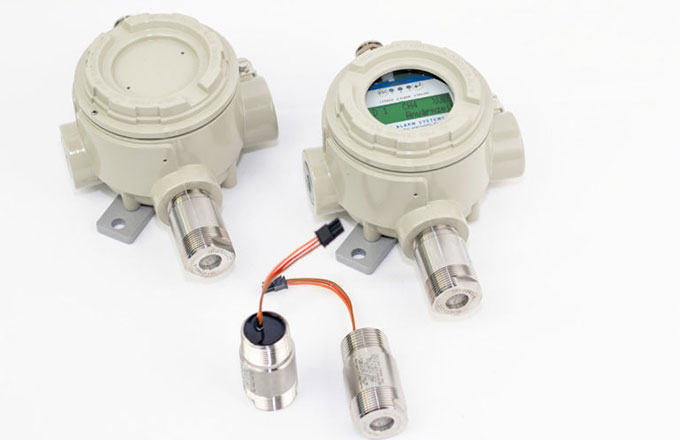
The microprocessor-based gas sensor with 4–20 mA / RS-485 Modbus output signal, alarm and fault relay (all SIL2 certified) is used to monitor the ambient air to detect combustible gases and vapours by means of a catalytic sensor element (Pellistor) in accordance with Directive 2014/34/EU. For sensors without LC display, calibration is done via a handy calibration device or the PC software. Sensors with LC display have an integrated calibration routine that is started from the outside with a permanent magnet without opening the housing. In addition, the background lighting changes from green to red in the event of an alarm or error.

MSR-Electronic’s PolyXeta2 gas sensor

Benefits

  • MSR-Electronic has ATEX and IECEx certificates for electrical explosion protection and metrological testing as well as SIL2 for the safety functions 4-20 mA, RS-485 and relay (pellistors only).
  • 2 versions: with flameproof enclosure or ignition protection type
  • Enclosure: additional FM and CSA certificate for Class I, Div. 1
  • Continuous monitoring
  • Microprocessor with 12-bit converter resolution
  • Self-monitoring
  • Easy calibration / calibration service by replacing the sensor head
  • Proportional 4–20 mA output
  • Serial interface to the control centre
  • Reverse polarity and overload protected

Further information on MSR products can be found here in the current MSR-Electronic online catalog or in the webshop www.msr-24.com.

The installation of the system was carried out by MSR’s partner Aurel.

HEP Group once again relies on cooperation with MSR-Electronic

Using energy once, profiting twice – that is the principle of combined heat and power (CHP). Whereas electricity and usable heat were usually generated separately so far, cogeneration combines these processes. The result is that less fuel is required overall. Its application offers enormous potential for climate protection and conservation of resources. The increased use contributes to reducing CO2 emissions and lowering the demand for primary energy.

The Croatian energy company HEP-TE-TO Sisak

HEP TE-TO Sisak (HEP Group) is a Croatian energy company in the Sisak Moslavina district, south of Zagreb. It has been engaged in the generation, distribution and supply of electricity for more than a century. For the last decades it also deals with the distribution and supply of thermal energy and natural gas.

The entire thermal power plant consists of various production units. The highly efficient combined heat and power unit EL-TO, Unit C. This is powered by natural gas, generates electricity of 235 MW and a thermal output of 50 MWt. Natural gas is an ideal fuel for CHP plants and at the same time a naturally occurring gas consisting largely of methane gas. In the gas-processing industry, gas warning systems from MSR-Electronic can reduce fire and explosion risks immensely, as they provide very early warning of dangerous situations.

Copyright HEP Group

Stationary gas detectors for safe methane gas monitoring

MSR-Electronic develops and produces reliable fixed gas detectors. The permanent monitoring and storage of the measured values serve the primary explosion protection and thus the safety of human life and equipment. Once again, after a carbon monoxide gas detection system in 2016, the HEP Group relies on MSR-Electronic and this time on a methane gas monitoring application.

PolyXeta PX2 gas detector

The PolyXeta2 PX2 gas detector by MSR for the ATEX zone is used for detecting methane gas leakage. The microprocessor-based gas sensor with output signal as well as alarm and fault relays (all SIL2 certified) monitors the ambient air for combustible gases and vapours using: an infrared sensor element and a catalytic sensor element (pellistor). Analog signal values (4–20 mA), such as measured values and alarm activation, are sent to the DCS (Distributed Control System). The digital signal of the detector is sent to the ventilation cabinet to activate additional fans and to shut down the air chambers.

The 4–20 mA / RS-485 Modbus output signal makes the sensor suitable for connection to: PolyGard2 gas controller series from MSR-Electronic, other controllers from MSR-Electronic, and automation devices from MSR. As an option, the PolyXeta2 sensor is also available with LCD and relay output.

Sensors with LCD have an integrated calibration routine that is started from the outside by means of a permanent magnet without opening the housing. In the event of an alarm or error, the backlight changes from green to red. The calibration of sensors without LCD display is carried out via the handy MSR calibration device STL06-PGX2 or the PC software PCE06-PGX2.

The methane gas detectors were installed near the gas turbines and in the final gas filtration area at unit C, in zone 2, by the Croatian MSR partner Aurel d.o.o.

Further information on MSR products can be found in the current online catalog or in the webshop.

MSR-Electronic’s methane gas detector PX2

MSR-Electronic’s methane gas detector PX2


Gas Detection in Commercial and Institutional Buildings

 Why it’s critical and how to make the right choice

By Renato Torres, EN-54 Life Safety Systems Portfolio Director, Honeywell

In most European countries, commercial and institutional buildings are not governed by strict regulations for gas detection. Gas detection is often not well understood or applied in these applications.

There are several challenges to implementing gas detection solutions in commercial and institutional buildings. Many gas detection systems operate independently of building management systems (BMS) or fire and smoke detection systems. This makes them cumbersome to manage and maintain. Building managers and fire engineers need flexible and scalable solutions that are easy to use and maintain.

Gas hazards in commercial and institutional buildings

Gas monitoring is critical in facilities like hospitals where oxygen is stored and used as part of normal daily operations. Storage facilities are another area of concern where oxygen leaks can increase the risk of fire or explosion.

Besides hospitals, light industrial plants use gases for production systems, welding or inert blankets. Industrial environments have the added complication of dust, water and other gases that might be present in the environment, which can be damaging to sensitive detectors and electronics.

Underground car parks also can pose a risk. Exhaust fumes contain carbon monoxide, which is particularly dangerous because it is invisible and has no odor. Liquefied petroleum gas (LPG)-powered vehicles may use underground parking areas, which adds the risk of an explosive atmosphere caused by an LPG leak.

What are the challenges?

Detection systems are critical for keeping workers and the public safe from toxic and flammable gases. Yet, regulations governing gas detection are not always in place, nor are they consistent from one area to another. In the absence of clear regulations, the onus is on facility managers and fire engineers to implement robust systems that will provide adequate warning of gas leaks. As such, it is critical to select the right technology partner that can advise on the best approach for their application.

Many facilities have smoke and fire detection systems, but gas detection systems are less widespread. If they are installed, they tend to be independent of other building systems making them more cumbersome to manage, thus potentially increasing the risk that a gas leak may go unnoticed. An integrated approach covering fire and smoke detection, gas detection, and building management could help facilities manage their risks comprehensively.

Hospitals and light industrial plants are not static. Wards get changed from one service to another, and new wings are added. Light industrial facilities also expand and can increase the volume and type of gases they use over time. Many legacy detection systems are not flexible or scalable, lacking the adaptability to meet the changing needs of an organization. Newer systems from leading technology suppliers can overcome these shortfalls.

Selecting the right gas detection solutions

Honeywell supplies gas detection solutions for commercial and light industrial applications, including parking garages and hospitals. There are three main solutions applicable to these environments:

PARK

The PARK system provides CO monitoring for parking garages. This gas detection system can sound audible alarms to warn people of danger. It can activate common ventilation systems when the CO level exceeds safe limits. A PARK2000 panel can manage up to 32 CO detectors, divided into up to two zones, and the PARK5000 model can manage up to 80 CO detectors, divided into up to five zones.

NFG-8

The Notifier NFG-8 system meets Safety Integrity Level (SIL) 1 using 4-20mA gas detectors and is ideally suited to the light industrial environment. This solution allows for three different threshold limits and several output options. For example, NFG-8 can control ventilation, activate warning signs, and communicate with third-party BMS devices.

AM4000G

The AM4000G is an addressable system that can cover the needs of an entire building, including its parking garage. Up to 396 sensors can be connected to the AM4000G on four loops using the reliable two-wire Fieldbus communication. This solution allows various hazardous conditions to be managed independently using complex cause-and-effect scenarios.

Key benefits

Benefit Description
Flexibility Honeywell gas detection solutions can scale from small systems for specific applications to large addressable solutions that cover all the needs of an entire building. They can operate as standalone systems for gas detection or integrate with other systems like building management or fire and smoke detection.
Reliability Honeywell is a global supplier of gas detection technology to buildings and parking garages. Experience with multiple customers across multiple industries and locations gives Honeywell unique insight into how products are used and enables solution designs that meet the needs of customers. Honeywell offers reliable gas detection systems that deliver consistent performance using the best available technology.
Rated casings Honeywell supplies both IP55 and ATEX-rated casings. IP55 casings are certified against dust or moisture ingress while ATEX versions can be used in dangerous environments, depending on the specific needs of the area. These solutions cover the full spectrum of needs for light industrial applications where some areas require rated casings and others do not.
Mobile application for calibration and maintenance A mobile application from Honeywell enables users to perform calibration, programming changes, and maintenance on detectors. This tool is easy to use and saves technicians time, especially when performing regular tasks like bump tests or limit changes.

Working with a technology partner

Many management teams for commercial and institutional buildings like hospitals and light industrial plants lack detailed knowledge of gas detection systems. It is advisable to work with a technology partner who understands their solutions and the environment in which these solutions are applied.

Gas detectors must be installed correctly to provide the desired protection. For example, CO detectors should be installed at an equivalent height to the average human. This is because CO has a similar density to air. It does not accumulate at floor or ceiling level; therefore, detection must occur at the height of most significant risk, where humans can breathe in the toxic gas.

All gas detectors experience drift over time. Their readings will become less accurate unless they are regularly checked and calibrated. Regulations do not always cover these critical aspects of the long-term effectiveness of gas detection systems. Trusted technology suppliers have the technical expertise to advise users on their system’s appropriate maintenance and calibration schedules.

Conclusion

Commercial and institutional buildings are not well regulated regarding gas leak detection, but this does not mean the risks are low. Gas leaks can cause serious incidents, like fires and injuries, including the loss of life.

Honeywell offers gas detection solutions for commercial and institutional buildings, including hospitals, parking garages, and light industrial plants. Its team of experts and channel partners can help advise on the best solutions to solve difficult problems.

Click here to find out more about Honeywell products.


Keeping US schools safe from guns requires more than stricter laws

Source: William Pao, asmag.com

From time to time, we hear about school shooting incidents in the United States. While stricter gun control laws are being considered and debated, schools themselves should also invest in security technologies to help prevent further tragedies.

Ever since Columbine, school shootings have emerged as a major societal problem in the United States. According to Sandy Hook Promise (a non-profit named after another infamous school shooting incident), the U.S. has had 2,032 school shootings since 1970. The recent event in Uvalde, Texas, where a gunman fatally shot 19 students and two teachers at an elementary school, further triggered debates on whether stricter gun control laws should be legislated – a question that, somehow for Americans, is not so simple to answer due to the country’s unique history, culture and heritage.

“A unique mix of tradition, politics and business interests makes tougher regulations unlikely, even where there is popular support for such measures,” said Jason Goodrich, Customer Success Director of CriticalArc. “The level of support varies widely depending on which state you are in, and concerns about the reliability of police response mean than even some citizens who were previously averse to gun-ownership now feel motivated to arm themselves.”

“In the aftermath of this (Uvalde) tragic school shooting, school leaders, teachers, parents, and administrators are debating, yet again, how the next incident might be prevented. At the same time, there is a national debate around policy decisions: Should gun sales be restricted? Should teachers be armed? Those questions will not be answered overnight,” said Alan Stoddard, President of Cognyte North America.

While new legislation is currently being considered in the US Senate, it’s indeed not feasible at the moment to expect the passage of any far-reaching gun control laws given the Second Amendment of the US Constitution, which says “the right of the people to keep and bear arms shall not be infringed” (even though there’s a prerequisite: A well-regulated militia being necessary to the security of a free state). A conservative supermajority in the US Supreme Court certainly won’t help much either.

For the time being, then, schools need to invest in technologies to effectively protect students, teachers and staff. “The assumption should be that any current laws around gun ownership will be circumvented by a determined assailant. This means that schools and colleges should focus on preparing for, deterring, and stopping active threats,” Goodrich said. “Given this reality, they have no choice but to invest in technologies and to look for the best available options to strengthen their defenses.”

Technologies available

Luckily, we now have technology advances to make campuses safe. “We have a new generation of tech that is now helping with this mission – deter and response – in many education settings. New technologies also include highly accurate 3D indoor positioning capabilities and heat mapping tools that can be used to improve incident rehearsals, revealing areas for improvement by individual responders and entire teams, and allowing better training and performance review,” Goodrich said.

Video surveillance and access control solutions can also play a part. “Access control guards the perimeter of the school’s property, including each route and entry. Robust access control processes will ensure that students, teachers, and visitors know where to enter the campus, what to do once they get inside, and how to exit the property. Exhaustive access control can keep potential criminals out of your establishment and often sets the tone for the rest of your safety efforts,” said Scot Sturges, Director of Business Development for North America at ACRE.

It’s also important to note that deploying better security measures in schools is a collaborative effort between all stakeholders, from government/law enforcement to manufacturers to educators.

“To say the recent tragedy in Uvalde could not have been prevented is of no service to the issue at hand. What I can say is we as an industry need to do better. As the providers of the technology that helps mitigate such issues, it is imperative we take a stand. Together, we can help protect our schools but we have to do it collaboratively and in conjunction with local authorities and government,” said John Rezzonico, CEO of Edge360.

“School leaders and their communities have a long list of considerations today when it comes to safety – ranging from mental health to ADA compliance to COVID-19 and from legislation and policies to training, procedures and assessments as well as products and technologies, among other things. Just like there’s no one-size-fits-all safety plan for individual schools, there’s no single solution for making schools safer. Ultimately, this means a holistic and collaborative approach to school safety is necessary – and experts of all kinds must work together,” said Ken Cook, Director of National School Safety at Allegion US.

“The recent shooting in Uvalde is heartbreaking and tragic. As a parent, the fact that schools have become a battleground is disheartening. Over the following months, we’ll see a debate over gun control and whether or not teachers should be armed. These questions are not simple to answer, but we can work collaboratively within our communities and the industry to find a solution,” said Tom Reilly, President of Commend. “Overall, we need to get down to basics. Schools and educational leaders must communicate about the risks, the technology infrastructure, and standard operating procedures. Even the relationships students develop with teachers, counselors, and other personnel are critical to identifying risks or irregular behavior.”

There are technologies that keep schools safe from guns

School shooting has become a severe problem in the United States. In the absence of far-reaching gun control laws, US schools are turning to technology to protect students, teachers and staff from guns. This article discusses some of the school safety technologies available.

Prevention

The best security measure is prevention. In many instances, damage could have been minimized if threats were detected and identified early. In this regard, various technologies can play a role.

First, analytics can be helpful. “Threat detection software that is tied into a validation system is very helpful in the early detection of a threat. For example, a video analytic would register a gun, then alert a human to verify the potential threat. This occurs prior to a shot being fired and is geared to aid in prevention,” said Jason Goodrich, Customer Success Director of CriticalArc. “Facial recognition has improved and could be used to alert facilities about a known threat attempting to make entry. LPR could also be useful if a known threat is attempting to enter.”

Door security also figures heavily in preventing the gunman from entering school premises in the first place. “We have long-standing physical security solutions for school buildings and other public spaces … and those include door locks (electronic and mechanical), as well as emergency exit devices, access control products, keys and credentials, door closers, security glass and the doors themselves. These solutions have really always been a part of the building design process and security ecosystem,” said Ken Cook, Director of National School Safety at Allegion US.

“While it is not the only step in preventing threatening or violent individuals from accessing a building, door security is often the first step. Schools can implement a two-way intercom system at the entrance which is an important first layer of protection. Intercom systems can enable front desk personnel to not only talk to an individual, but also clearly identify the person when the system includes an integrated IP video camera,” said Brad Kamcheff, Marketing Manager at Aiphone.

It is important to point out that, for the different school security systems to work seamlessly, integration is important.

“An open platform approach combined with the ability to integrate with other third-party systems allows schools to benefit from other best-in-class technologies to promote a more robust security posture and permit a coordinated emergency response when necessary,” said John Rezzonico, CEO of Edge360.

Finally, data sharing is critical. In the recent Uvalde incident, for example, authorities could have acted earlier had the gunman’s troubled social media messages been intercepted in time.

“Often, individuals on a troubled path will make remarks or act in a way that gives a clear indication that all is not well, and sometimes people will notice this. Making it easy for them to share their concerns with the right authorities at the right time should be a benchmark of prevention,” said Goodrich. “Our new-generation solutions can allow anonymous reports, to encourage people to share their concerns. This effort can also be supplemented by social media monitoring, and by closer engagement between police or security personnel with the communities they serve.”

Response

Once the outer perimeters have been breached, security measures must be in place inside the school premises to minimize casualty. A combination of access control, video surveillance and other technologies can help.

“Time is of the essence in an emergency, and just a few seconds can mean the distinction between security and catastrophe. Therefore, it’s crucial to support systems that initiate a lockdown and alert security to the whereabouts of students, instructors, and other staff in the facility,” said Scot Sturges, Director of Business Development for North America at ACRE. “Emergency exits are also required when the need for emergency evacuation arises. Schools can operate cameras, warnings, or corrective action to ensure entryways stay shut, except during a crisis.”

“A combination of video surveillance and two-way intercom systems can prove to be valuable. Video surveillance is key in providing the school’s security with the ability to monitor multiple places at once, especially in the event of an armed person attempting to enter the premises. In the classroom, it is equally important to ensure that teaching staff have access to security tools and can easily communicate with the front office in the event of an emergency. An intercom system installed in each classroom enables a teacher to reach the front office quickly,” Kamcheff said.

Communications with the outside world is also critical so law enforcement and rescue workers can get to the scene at the shortest time.

“I believe emergency notification and support systems used across agencies and public sector organizations can be very beneficial to streamlining communication,” said Alan Stoddard, President of Cognyte North America. “By leveraging intelligent devices, including mobile phones, modern emergency response solutions enable schools to dispatch the optimal responder during an incident based on proximity, availability, and experience. Because you can see the whereabouts of every potential responder, as well as all relevant geographical information and the location of life-saving equipment and other resources, response efforts are rapid and intelligent.”

“It goes back to communication. Ensuring law enforcement and first responders are at the scene immediately is all about streamlining how we share information. Having a clear line of connection with law enforcement and a plan laid out in advance is crucial. Unified communication can streamline this process, allowing various agencies to collaborate and share information to ensure the most effective and quick response,” said Tom Reilly, President of Commend.

Afterthoughts

Despite these technology advances, certain challenges still persist. One is the fact these solutions are not widely adopted in schools yet, due to budget constraints or limited resources.

“Many schools have legacy access control systems that need updating. If surveillance is in use, most schools are not employing the full capabilities of data analytics and many legacy CCTV systems cannot take advantage of advances in data analysis tech,” said Goodrich. “The new generation of unified emergency alert, location pinpointing, team coordination and communications solutions are being deployed to great effect in higher education settings, on university and college campuses. These solutions are not being used widely in schools yet, but there is huge potential benefit to adopting them.”

Further, training and education on these solutions are also required. “School systems often focus on what to purchase for proactive security measures and how to manage staffing to prevent unwanted intruders. They make significant investments in access control, video surveillance, artificial intelligence, and in some areas, metal detectors. But the simple fact is that all these investments are useless if no one is trained to use them and no one is trained in the correct standard operating procedures to follow when an incident happens,” Stoddard said. “We have to ensure schools are well-versed in how to use their investments and how they can leverage their functionality to adopt a more proactive stance.”

Ten “deadly sins” when installing a video surveillance system

We are all humans, so we all make mistakes. However, there are such common cases that you should be aware of and avoid. Specialists of Partizan company have collected, systematized and listed them to say once and for all – it should not be like that!

 1. DHCP remains enabled after adding to NVR

Most CCTV cameras have DHCP enabled by default. What does it mean? A static IP address does not work, but a dynamic IP address, on the contrary, is active. That is, the CCTV camera, after entering your local network, will find its own IP address. The plus is that you don’t need to input this address manually each time. And the minus is that these addresses can change every time the router is rebooted. The result is that after the reboot, the CCTV camera will get a completely different IP, the client will get a terrible black screen instead of an image, and you will receive urgent calls: “Hey, where did my CCTV camera go?”. Do you really need it?

2. Outdated firmware and password

There are also simple, trivial, but surprisingly widespread reasons for incorrect device operation. The thing is, even if you bought your device yesterday, it doesn’t mean that a new firmware didn’t appear while it was in stock. Always check its relevance and install the latest version. Ideally, you should check the firmware once every few months. Regarding the password — often users and even installers are too lazy to change passwords and sometimes leave it at the default: admin, 1111, etc. A good chance for a hacker!

3. Time synchronization is disabled. Incorrect playback time

A non-obvious mistake, but it can also cause pain and suffering. If we have a desynchronization in time, then even knowing when the alarming event occurred, it will be very difficult to find it in the archive. By the way, there is an easy way to synchronize the recorder (and therefore the CCTV camera) with real-time. Just add the NVR to Partizan Cloud and our service will do everything instantly and clearly.

4. Settings, connection and recording

It may seem obvious to some, but there is one simple thing. If you want the recording to be turned on only by alarms, motion detection or at certain intervals – no one will do it except you. Enter the settings yourself. Now about the connection. There are CCTV cameras that can be connected using the “native protocol”, and there are all others. With the native protocol, everything is finally clear: company’s cloud CCTV camera can be easily connected to its cloud recorder, the SH camera to the SH recorder. But if the connection takes place, for example, according to the Cloud-camera scheme to the SH-recorder (or vice versa), or in general a third-party CCTV camera is used, the Onvif protocol should be used.

5. Incorrect installation of your CCTV camera

The topic, of course, is very broad, moreover, there are many different opinions. So, at this point, we will try to derive a common “denominator” that is understandable even for a new installer. A good, professional installation of video equipment is when:

a) The correct branded accessories are used, including cable junction boxes.

b) The cables are not visible next to the CCTV camera and they do not stick out in all directions. They should be brought inside the building, or at least hidden in PVC pipes or corrugations.

Of course, budgets can be “cut”, but this does not mean that you have to compromise on quality.

6. Incorrect viewing angle or CCTV camera installation location

It is also a rather versatile field for discussion, so let’s highlight the most important points.

  • There is a large object close to the CCTV camera – tree, wall, lamp post, etc.). Such proximity can lead to “reflection” of IR illumination, and at the same time to CCTV camera blindness.
  • The CCTV camera is aimed at a glowing lantern or at a sunrise/sunset. This also results in CCTV camera blindness or image illumination.
  • IR diodes in the dome CCTV camera are under its body. In this case, the backlight is reflected from the housing into the lens. The result is that the CCTV camera stops “seeing” at night.
  • Dirty lens glass or dome CCTV camera sphere. A very simple, but surprisingly common cause of poor image quality.
  • The CCTV camera is installed on a metal or conductive surface without grounding. This is trivially dangerous, because it causes the risk of short circuits and even the CCTV camera catching fire.
  • The CCTV camera is at a low altitude. A real find for criminals and vandals!
  • The dome CCTV camera is installed without proper protection from above. If the model does not have a high degree of resistance to dust and moisture (at least IP66), moisture form of rain or snow can get inside the equipment.
  • The CCTV camera is installed in close proximity to high-voltage power lines. This causes not only a high risk of electric shock, but also provokes interference in image transmission.

7. Bad Internet

Probably everyone knows about such a problem, but not everyone is aware of its depth. By the expression “bad Internet” we primarily mean two points: low connection speed and changes in flow transmission. And if everything is clear with the first parameter, then in the second case, even at high speeds, sags and entire seconds of video may drop out. So make sure that the speed of your Internet is adequate for both input and output, and the connection is stable, without losing data packets.

8. Incorrect cable connection

It is not good if the cable of the installed CCTV camera is less than 30 cm from the power cable. It is a very bad idea to put the wires of the video surveillance system and the home electrical network in one box. This is especially true for analog CCTV cameras. Therefore, it is always worth laying the CCTV camera switching separately. So there will be no obstacles or unnecessary picture jumps in the image.

The second point is the considerable distance between the CCTV camera and the recorder. For a coaxial cable, problems with image transmission can begin as early as 500 meters. And the optimal distance is the “hundred meter” familiar to many. It is always better to work with the correct lengths of cable than to be faced with the fact that the video signal does not arrive normally, or the CCTV camera does not have enough power. If we are talking about IP CCTV cameras with a POE system, then the distance to the recorder should be 50-80 meters.

When dealing with an analog system, it is worth remembering that problems may also arise when connecting several CCTV cameras to one power supply unit. Imagine that we have two CCTV cameras. One is at a distance of 10 meters from the power supply unit, the other is at a distance of 50 meters. So, after six months, you can unexpectedly encounter, for example, the failure of the IR illumination of the remote CCTV camera. And the issue here is not the quality of the equipment. It is all about incorrect switching. Therefore, we advise using a separate power supply for each CCTV camera. Why? The CCTV camera must receive its “legal” 12 volts and the correct amperage. And a considerable distance can cause a drop in power supply.

And, of course, always and everywhere you should use the right cables. Trying to save money, some installers “throw away” aluminum or steel wires. But what may be OK for budget Internet in the entrance, will not work for the video surveillance system. Such cables simply will not transmit a normal video stream. Our minimum is copper twisted pair of category 5e. We will not emphasize the correct crimping of the twisted pair. This is an axiom!

9. Low-quality or inappropriate third-party equipment

Use quality routers! We usually recommend the following brands: MikroTik, Zyxel, Cisco, HP, Linksys. Everything will be fine with them. The same can be said about POE equipment. All the above mentioned brands make decent switches.

Hard drives! This is generally the key to success for a video surveillance system. Partizan is an authorized European dealer of Toshiba and we use HDDs of this brand for our recorders. We consider its products to be ideal in view of:

  • Possibility of long-term stable work in 24/7 mode
  • Simultaneous recording support from 32 CCTV cameras
  • Ability to withstand multiple write/overwrite cycles
  • Spindle rotation speed optimal for NVR
  • Resistance to vibrations, high temperature, voltage drops
  • Correct interface (Sata 3)
  • High data transfer rate

10. Incorrect calculation of power and quality of components

You should not save money on third-party components of the video system! Let’s say, the cost of a high-quality power supply unit and a low-quality one will not differ that much. This is a matter of tens of dollars, not, say, hundreds or thousands. But you should always remember that a low-quality product can damage the equipment or cause the quality of the image to deteriorate (bands and waves in the picture, etc.).

We recommend using power supplies with an additional power reserve of at least 30% compared to the expected power consumption of the video surveillance system. It will definitely not be superfluous, and it will protect you and the client from unpleasant surprises.

Of course, these are far from all the mistakes that happen in our field. However, by keeping at least these simple points in mind, you can make life much easier for yourself and your customers. As they say, go and install quality, professional CCTV and do not make more mistakes.


Siemens’ new natural extinguishing agents protect business continuity in critical areas

Siemens Smart Infrastructure introduces its new natural agent extinguishing portfolio, Sinorix NXN. Focusing on the protection of lives, assets and business continuity, the new fire extinguishing portfolio combines simplicity with advanced technology to modernize traditional fire safety. The agents consist of the natural gases argon, nitrogen and carbon dioxide. They are ideal for specific application areas such as storage rooms for chemicals (argon), critical electrical infrastructure (nitrogen) or unmanned areas (carbon dioxide). The new Sinorix NXN portfolio uses only agents and compounds that are naturally found in our atmosphere and do not harm the environment. It also has a reduced ecological footprint, thanks to its compact and versatile product design.

Environmentally-friendly and sustainable portfolio

The new Sinorix NXN extinguishing agents are chemically inert and do not create harmful reactions or byproducts on contact with fire. Even in case of an incident, the activated extinguishing agents do not leave any residue behind for clean up or disposal and therefore ensure a rapid resumption of business operations. Inert agents have poor electrical conductivity properties making them ideal in any application where protection of mission critical infrastructure is important. Argon, nitrogen or carbon dioxide offer excellent extinguishing properties for fire Classes A (solids), B (flammable liquids) and C (flammable gases), whereas argon is optimally suited for fire Class D (metal fires) and nitrogen for Class E (electrical fires). The new Sinorix NXN natural extinguishing agents feature zero ozone depletion potential (ODP) and they are not subject to regulatory restrictions or phaseout.

In pure form or mixed compounds, natural extinguishing agents provide outstanding properties to combat a wide variety of fire hazards. Their respective traits give Sinorix NXN great flexibility when designing the appropriate fire safety concept. To be specific, nitrogen is most suitable when protecting critical electrical infrastructure, such as that typically found in switching rooms, energy storage systems or data centers. Argon is the perfect fit for areas at risk of metal fires and for chemical storage rooms. Whereas, carbon dioxide is used in local, unmanned applications, such as oil baths and transformer stations.

In addition, the extinguishing products follow EN standards and guidelines, and are backed by appropriate certifications, including VdS and CNPP to ensure sustainability of the extinguishing solution.

New design concept

The new ADVtechnology (Advanced Double Actuation Valve) by Siemens saves costs and increases efficiency through all lifecycle phases of a fire extinguishing system. The product portfolio has been simplified by introducing multi-use components that are the same for all agent types. This makes the design process more flexible and efficient (for example, calculations for new configurations or new agents are made more quickly). With the help of the ADVtechnology, cylinder exchange as well as time needed for installation (up to 25 % faster) has been drastically improved. Now users can now install and maintain an extinguishing system more easily and much faster.

Building lifecycle support

Siemens operates a Competence Center in Vienna and a testing facility in Switzerland, where new and special extinguishing solutions are tested and improved. These facilities provide specialized expertise for new and highly challenging applications. Additionally, Siemens supports the full building lifecycle with the latest digital tools including specification texts, BIM data, as well as online product selection, configuration, ordering and online calculation tools. Access to Siemens expertise, design know-how and experience avoids over-engineering and minimizes project costs while increasing fire safety.

The new Sinorix NXN extinguishing systems are developed for easy integration in complete fire safety solutions, including fire detection and evacuation to increase safety and reduce risks. This integration also optimizes facility management by enabling cloud-based, digital services that substantially reduce operational and maintenance costs.


Uniarch – Life in Focus, Record Your Wonderful Life by Uniarch

Uniarch is a new brand created by Uniview Technologies. With more than 10 years of experience and technology accumulation, we provides easy-to-use and cost-effective products in Uniarch, ranging from IP security system to video conference devices, for home and SMB business worldwide.

With its “Life in focus” in mind, Uniarch is paving the way for the changes: to achieve that, we make effort in transforming people’s day to day lives, as well as businesses of every size. Via optimizing for ease of use, we leave rooms for what’s matter the most. By business empowerment, we entail creating an environment that fosters growth. Uniarch envisions a world where enables everyone to a fulfilling life.

Uniarch includes IP cameras and video recorders that is the optimal option for the small-to-medium business applications such as residential, retail stores. They are capable of providing Ultra 265, maximum 95% bandwidth and storage reduction, wide dynamic range to ensure excellent image with significant foreground and background illumination difference.

Similarities Between Uniview and Uniarch
With this new line from Uniview, you’re going to get several of the same features you’re used to, as well as having full compatibility with any products you already have. Uniarch cameras work seamlessly with Uniview NVRs. However, there are some additional features Uniarch NVRs will only support with Uniview cameras, like auto tracking and human body detection. Uniarch cameras do not include these features, but many Uniview models do. Any Uniview cameras currently on your EZView app will be able to be seen together with your new Uniarch cameras since they share a cloud account. It is a bonus that Uniarch is compatible with most Uniview products, but Uniarch is also a full line on its own. Meaning, you’ll be able to get cameras, recorders, and monitors all under this line of products. You can expect the same stunning quality of imagery across both product lines.

Differences Between Uniview and Uniarch
With the Uniarch camera, to bring it more into the consumer realm, you can expect some other difference in the way the camera is put together. In most Uniview products, and most professional cameras in general, they’re going to have a durable metal build. They’re going to be feature rich and include things like AI and smart events. In typical consumer products you’re just going to see basic motion detection. Uniview products have these enhanced features, but some of these are not really necessary for basic consumer needs.The Uniarch is made of a durable, weatherproof plastic instead of metal, but it’s still going to hold up really well. It has basic motion detection but won’t have the AI capabilities.


Multi-credential flexibility for access control

Suprema, a global leader in access control, biometrics and time & attendance solutions, shared partner testimonials about its security controller CoreStation that helps facilitate building multi-credential access control systems. Suprema CoreStation is a biometric-enabled security controller that provides great system design flexibility with credential options ranging from PIN, RF card reader, mobile access to fingerprint and face recognition.

Powerful performance

Meyer, a partner in Turkey, was able to construct a face recognition access control system for its customer using Suprema CoreStation and Suprema face recognition terminals.

“CoreStation offers unrivaled matching speed. The customer preferred to connect the face recognition terminals to CoreStation instead of directly to the server for stronger security. This meant that all user data was saved in CoreStation and data had to be transferred to CoreStation for every matching operation. Despite this configuration, users do not notice any delay in authentication thanks to CoreStation’s powerful performance,” said Orcun Bayindir, CEO of Meyer.

IQ trading, a partner in Ukraine, enabled fingerprint recognition access control system for a banking customer. Andrii Glukhov, technical support lead at IQ trading, cited CoreStation’s scalability, enterprise level memory and interlock zone support as advantages.

“Using Suprema CoreStation, we connected 26 two-sided doors with high performance fingerprint authentication. CoreStation is a unique, powerful controller that can store up to 500,000 users, 1,000,000 fingerprint templates and 5,000,000 logs, providing uninterrupted service regardless of network issues. We were also able to create sequential passages with interlock zones, increasing overall security level and eliminating the possibility of a person entering the second door without closing the first one,” said Glukhov.

Easy to integrate

Absolon, a partner in Europe, provided mobile access solution to Crestyl, a leading real estate developer in Czech, using CoreStation. The site had over 100 doors with 1,500 employees and required a secure yet flexible controller that could be easily integrated with third party systems. Crestyl was operating a third party system C4 software and was looking for a way to add mobile credential without a major system overhaul. CoreStation, together with Suprema BioStar 2 and Suprema XPass D2 readers, was a great answer because of CoreStation and BioStar 2’s integration flexibility. C4 was integrated with BioStar 2 via BioStar 2 API and XPass D2 were selected for mobile credential compatibility.

“CoreStation’s appeal lies in the gamut of credential options it supports. Partners and customers can enable PIN, RF card, mobile access as well as biometric credentials like face and fingerprint with Suprema’s intelligent controller,” said Hanchul Kim, CEO of Suprema Inc.

Commitment to Security Standards and Compliance

Suprema’s four-door access control panel CoreStation is its first controller that acquired UL 294 compliance, a certification that evaluates the safety and reliability of the product. Suprema’s compact outdoor RFID reader, XPass D2 is SIA OSDP verified, meaning that the device conforms to the SIA Open Supervised Device Protocol (OSDP) standard and the related performance profiles. It ensures higher security than a common access control communication protocol by constant monitoring of wires and protecting with high-end AES-128 encryption.

Going Deeper: Mine Security

Established long before data mining and bitcoin mining, mining the earth continues to be a major economic driver. The International organizing committee for the world mining congress issues a yearly World Mining Data report. The 2021 report states that world mining production in 2019 was 17.9 billion metric tons (roughly the weight of 96,000 Boeing 747 Jumbo jets). Most of the production (58.9%) was in Asia, followed by North America (15.8%), in terms of countries, China, U.S., Russia and Australia are the four biggest mining nations. In the last few years, Australia and China have seen the most growth and surpassed Africa, especially in the production of minerals like Lithium, Gallium and Niobium needed for the battery industry, demand for which doubled since 2015.

Challenges in mining security and safety

The mining industry faces extreme and multi-faceted challenges in both security and safety. The key concern of security managers in the mining sector are keeping employees safe, however, they are also tasked with preventing theft of valuable raw materials and equipment, choosing equipment that can work in extreme environmental conditions, maintaining compliance with health, safety and environmental regulations and more often than not, working in politically unstable countries.

Working in harsh conditions

Mining security faces three main challenges: harsh conditions, large areas and high costs for installing comprehensive solutions. Compared to commercial-use security systems, mine security systems must work in harsh environments. Dust, humidity, fog, low light, heavy water flow, flammable gases and extreme temperature are common. At the depths of mines, the temperatures could reach in excess of 45 degrees Celsius and the environment is constantly moist and humid. The outside climate in countries like Australia, South Africa or Russia can also be challenging with freezing temperatures in winter or searing desert heat in summer.

“When considering these conditions, equipment should be tested and certified with appropriate impact and ingress ratings, and this should be further evidenced and supported by the manufacturer through long product warranties. Reliable equipment ensures the system continues to do its job and the business continues to operate profitably whilst protecting its workforce” emphasized Mike Margrain, National Technical Manager for Gallagher in Australia.

Equipment therefore needs to be ruggedized and customized to mining operations. Operators need sealed, waterproof units with vibration dampers, which can function over a wide temperature range. All cables need to be secured in airtight or waterproof material, preventing dust and other particles from damaging them. Explosion-proof devices must be installed with appropriate cable management systems.

Cabling technique for example is different for mines, since drilling or attaching cables to rock can only be done by engineering personnel. The solution is pre-installed infrastructure cabling that provides power and communications for conveyor systems or vehicle workshops to most underground points.

Ensuring mine employee safety

Employee safety is the primary concern in the harsh working environments in mines, and verifying authorized personnel is the first step in accomplishing this.

Access control at mines should only admit personnel who passed safety inductions, medical checks and training. Added features include license renewal and expiry notifications. Management is increasingly aware of the cost related to worker safety failures, loss of lives and loss of material and equipment. Other than passing government regulations, increasing the level of security and safety could save money, increase productivity, reduce losses in infrastructure and cut production downtime.

“In underground operations, it is paramount that the location of workers is known due to the elevated risk in these environments. Cardholder location tracking is implemented to ensure workers can be accounted for in the event of an emergency, or to safely manage underground blasting” explained Margrain and described how this works in the field: “Providing electronic ‘tagging’ stations and implementing long-range tracking of personnel ensures the control room operators not only know how many people are in locations underground, but in which area each worker resides. Integrating this data into firing procedures ensures explosives cannot be triggered until all personnel are accounted for in safe areas. Tagging portals which provide feedback to the worker with personal information (and photo ID images) provide peace of mind that the system has indeed logged their location as they travel to different areas while on shift. Furthermore, long-range tracking of workers can be employed in underground operations where travel is required in buses, light vehicles, or machinery. This ensures the location data can be captured without requiring personnel to exit vehicles in dangerous locations to present to a physical access point. The method of access credential utilized for this safety data becomes extremely important as the risk of missed movement can have real implications for personnel health and safety”.

In addition to controlling access, monitoring the work zone is essential for protecting employees. The use of video surveillance underground helps to monitor miner safety by viewing rock falls or accidents in real time, speeding up search and rescue time, and help inhibit illegal activity such as theft or pirate miners. For large areas, radar integrated with video detects if a worker is in a hazardous area or is near hazardous materials or gases. It secures transport and storage of ammonia nitrate, explosives and other hazardous materials.

Should an accident occur, the operational health and safety (OH&S) solution must track miners by access control, sensors and RFID systems. The solution should generate “muster reports” quickly, providing the exact number of individuals in an area to the control room personnel at any given time.

Access control solutions in mines

Access control in the mining and resources sector is generally used less for security and more to manage governance, risk, and compliance; “it’s all about protecting the safety of workers and ensuring business continuity,” said Gallagher’s Margrain. “This includes managing personnel competencies to only allow access to those that hold active qualifications and inductions for the site, or within a particular onsite area.  Contractors may also perhaps only enter if they hold current insurance and have an active work order. In many countries, there are state or government legislated licenses that a worker must hold before they can work on a mining site. These competency level controls will differ depending on what role a worker has and where they are working — for example, there will be different enforcement rules for someone working underground, than those working only on the mine surface” he added.

“Fatigue is a significant risk to workers at an organization that operates 24/7, particularly to those who work night shifts or are working in dangerous environments. We see these rules being applied in more stringent ways for such personnel to prevent a worker from breaching fatigue policies during their shift. An access control system allows sites to quickly locate workers for risk assessments and a potential change of personnel – not only saving time, but also preventing disruption to the site. This type of management (with appropriate enforcement and proactive dynamic notifications) therefore becomes even more important for personnel that are working underground,” explained Margrain. To prevent theft, most attention is focused on access control and intrusion detection for storage, processing areas and areas where heavy machinery is present.

Whilst biometric access control has rapidly increased in popularity in recent years, the uptake in the mining and resources industry has been slow. The primary reasons for this are because daily work environments can impact the ability to reliably match workers via biometrics, due to workers becoming dirty or wearing PPE (personal protective equipment).

Video surveillance in mine security

Security requirements differ by the mine type. Open-pit mines are based on authority and risk levels and put emphasis on access control, while underground mines — with a higher requirement for safety — put emphasis on people location management.

The large area of mines poses a challenge to security. Fencing and lighting might be very expensive, and even with the most comprehensive security solution installed, surveillance is not considered as a viable option for many underground mines, due to harsh conditions and extended tunnel length. Large mines can have hundreds of kilometers of tunnels, which simply cannot be effectively monitored by cameras.

Intrusion detection in mines

While priority areas depend on the site, a mine’s security profile is generally developed from the outside in, making perimeter security the first concern. However, although perimeter fencing is important, it is often impractical due to the large and difficult landscape of mine sites.

Video surveillance can detect perimeter intrusion. Day and night cameras are suited for open areas with good light over long distances. Infrared cameras can perform close-range monitoring at low light entry and exit points. For dark outdoor areas, thermal imaging cameras can see intruders.

Preventing equipment theft

Some mine vehicles are worth millions of dollars and are costly for downtime and repairs, so monitoring and securing equipment is important. Other than asset tagging, sensor solutions such as onboard vehicle collision alert technology also help protect property. The collision alert system detects hazards in the vehicle’s path and alerts drivers for potential collisions, preventing damage to the vehicle and protecting worker safety. Solutions like these provide invaluable production data feedback in difficult-to-reach areas. When integrated with access control, mine companies can make sure that only authorized personnel can operate the vehicle. The option of combined driver & vehicle identification increases security as you know exactly who was driving which vehicle.

Driver-based automatic vehicle identification (AVI) ensures that a vehicle can never leave, or get access to a secured area unless occupied by an authorized driver. Vehicle and driver access traditionally requires the driver to stop and badge or present their access card. This can often result in traffic congestion around access points/gates. Current solutions allow vehicles (both trucks and cars) to activate gates far enough in advance (up to 10m, at speeds up to 200 km/h) which eliminates the need for vehicles to stop, ensuring an uninterrupted flow of traffic. This is a notable feature for mining sites where it is disruptive to stop and start heavy machinery.

Trends in mine security

The United States Mine Safety and Health Administration (MSHA) maintains a database of all mine-related accidents and fatalities in the U.S. MSHA accident reports show that footage from video surveillance is often used in the forensic investigation of accidents.

On May 2, 2020, Rodger A. Zimmerman, a 56-year-old front-end loader operator died when he was engulfed by material inside a collection container (hopper) at Enon Sand & Gravel mine. Zimmerman entered the hopper to clear a blockage caused by material inside the hopper. Once inside, a large amount of material dislodged, engulfing Zimmerman. Video evidence from the mine’s surveillance system verified entry into the hopper to dislodge blockage from underneath was a common practice and occurred repeatedly on previous days captured on the video. The surveillance video showed miners on the belt structure and/or inside the hopper not wearing safety belts or harnesses and not equipped with lifelines, while the belt was operating and without engaging in lock-out-tag-out (LOTO) procedures.

Today’s video analytics can be used to detect and stop this type of accident before happening. Video analytics can raise an alert when employees are getting too close to dangerous equipment or if they are not wearing the right safety equipment like a hard hat or safety harness. Hikvision for example installed a system in a coal mine in China that increased worker safety by monitoring the areas around winches and other equipment, and by sending alerts if employees get too close. The Hikvision solution was also configured to support specific mining-safety applications, such as constant monitoring of surface water levels in different areas of the mine. Constant seepage from rock formations means that surface water can accumulate in different areas of the mine, which is a problem in terms of potential flooding, damage to infrastructure, and worker safety risks. The Hikvision system monitors surface-water levels constantly and allows the mine staff to take action to deal with any problems that arise before water levels exceed safe limits.

Ai-driven video analytics are gaining traction as a means to minimize false alarms. Avigilon’s H4 Thermal camera for example is embedded with Avigilon self-learning video analytics to provide long-range perimeter protection and leverages thermal technology to operate under challenging conditions while minimizing false alarms. It detects the movement of people, vehicles and partly camouflaged objects in complete darkness or areas with challenging light conditions.

Security systems are also used to drive compliance with OH&S regulations. Access control manufacturer Gallagher allows cardholder information to be recorded in the Gallagher system and shared bi-directionally with existing HR/people management systems for accurate, real-time use. Staff records provide a full audit trail to ensure compulsory training and testing are undertaken. This minimizes corporate liability and enables organizations to meet their Duty of Care.

Mobile smartphone devices are commonly used to spot-check workers on-site (i.e., to validate they are trained and inducted to be where they are, or performing their current task), as well as being able to be used for mobile evacuation procedures and access control movements.

Compliance driving product requirements

Given the risks associated with mining operations, government legislation can be stringent but differ immensely in different parts of the world.  “We have seen an increase in concern around fatigue and exposure, and the need for reporting to assist with state levy calculations. Cases of corporate manslaughter against negligent management have certainly created more interest in systems which can demonstrate duty of care and protect workforces,” said Margrain. In many cases, not only do such system implementations meet those goals while ensuring business continuity, but they also demonstrate a reduction of operational cost through improved efficiency. Margrain recommended factoring this into vendor selection: “Having a system with governance, risk, and compliance solutions that can be tailored to meet changing requirements, without significant reinvestment, should be factored into vendor selection. By working with their vendor, sites operating in unique conditions like that of mining, can design a system that is tailored to the specific needs of their site and ensure health and safety requirements are met at the required level”.

(Source: asmag.com)

Dahua Technology contributed to the Winter Olympics

The Beijing 2022 Olympic and Paralympic Winter Games have come to a successful end, with China setting a new medal record in its history of the Winter Olympics. Dahua Technology took on the responsibility of securing Yanqing’s Olympic Venues and Shougang Park. Guided by the “Winter Olympics of Science and Technology”, Dahua fully integrated many digital intelligence technologies, such as video Internet of Things, universal sensing, AIoT and AR, into this grand event, making great contributions to the success of the 2022 Winter Olympics.

 Challenge

Located 75 kilometers northwest of Beijing’s city center, Yanqing has two competition venues, the National Alpine Ski Centre and the National Sliding Centre, and other supporting facilities, such as Yanqing Olympic Village and Publishing Center. The entire zone is featured with complex terrain and a changeful climate. Another competition venue Big Air Shougang was located in Shougang Park. It staged the freestyle skiing and snowboard Big Air competitions at the Games. Big Air Shougang is the world’s first permanent venue for Big Air. Following the Winter Olympics, the venue will be used for various sports competitions and athlete training. Meanwhile, many Olympic landmarks, such as offices for the Organizing Committee of the Winter Olympics and training venues, have been set up in Shougang Park. The security of the wide range of roads, public areas, all kinds of venues and supporting facilities in the park was a top priority.

Solution: Safeguard the Yanqing Venues with intelligent systems

Dahua conducted several surveys in Yanqing Zone and tailored various intelligent systems such as intelligent traffic camera, AR panoramic solution, walk-through metal detector, ecological environment monitoring system and so on for mountain scenarios. This not only provided a security guarantee for the Winter Olympics events, athletes, audience and staff, but also facilitated the security management of Yanqing’s Olympic venues by improving the overall prevention, early warning and management efficiency.

The mountain road to Yanqing’s Olympic Venues is rugged and prone to traffic accidents at night, especially under rain and snow. By upgrading the intelligent traffic camera system in the core road sections, Dahua effectively solved the pollution caused by the white light explosion and flash at night on mountain roads, improving the safety of drivers and greatly reducing the incidence of traffic accidents. Meanwhile, Dahua also realized real-time sensing and intelligent management of vehicle entry and exit, which improved the road traffic management, traffic safety and civilized travel during the event.

According to the geographical features of Yanqing Zone and the complexity of management, Dahua innovated and deployed AR panoramic solution. Combined with the full-realm sensing ability of IoT, Dahua created a large live map that displayed the venues and surrounding infrastructures. Through the panoramic map, the staff were able to supervise the overall dynamics and details of the competition area at any time to conduct emergency operations and improve management efficiency and safety. Dahua walk-through metal detector appeared at the entrances of various venues, to help with fast temperature monitoring, intelligent identification and early warning of not wearing a mask, and rapid detection of metal contraband. This speeded up the traffic and reduced potential security risks timely. The efficiency of security work was promoted at the same time.

Assistance in declaring the winner

 The sliding events bobsled, luge, and skeleton are the fastest games in Winter Olympics. Racers moving through the complex and narrow course at super speeds present an extraordinary challenge to the judges’ scoring and of course to athletes’ safety as well. Dahua Technology developed an intelligent video tracking system based on our industry-leading intelligent video sensing capability. The system captured the fleeting video image of high-speed athletes sliding down the track, displayed the video images of athletes passing through different slopes at high-speed seamlessly and orderly, and recorded every detail of the entire competition. With zero interference to the racing tracks, the Dahua intelligent video tracking system provided data support for the athletes’ training before the competition and a strong basis for the referee’s decision and game’s fairness during the competition.

To facilitate the “ecological Winter Olympics”, Dahua intelligent environment online monitoring system was in place to collect environmental temperature, humidity, wind, wind direction, noise, atmospheric pressure, weather and other data of the competition area all the time, to help managers grasp the dynamic changes of various environmental factors in real-time, and provide environmental data support for the events.

In the management center, Dahua built up a digital intelligent management platform for Yanqing Zone by using video IoT and visualization technologies including Dahua high-definition LCD screen and distributed seat management system. In this way, real-time views and visual scheduling of the overall operation of the whole competition area were realized. Thus, real-time response and efficient command in the case of emergencies were achieved, while refined management and information decisions were supported.

Equip the Shougang Park with AI innovations

In Shougang Park, Dahua fulfilled the demand of intelligent management. By applying intelligent panorama, multidimensional sensing, access control management and other artificial intelligence innovations, based on a unified intelligent management platform, Dahua built a comprehensive modern safety management system covering all roads, public places and venues in and outside the Shougang Park.

It greatly realized the real-time warning of all kinds of risks in the park, contributed to the innovative upgrade of the security management mode of the park, comprehensively improved the comprehensive services and management of the Winter Olympics.

Result

On the field, the Winter Olympics athletes were competing fiercely for medals; outside the stadium, Dahua technical team was trying their best to provide services for both Olympic and Paralympic Winter Games in Yanqing Zone, Shougang Park, National Conference Center and other perimeter areas. They pushed their limits and accomplished the task of securing the Olympic venues successfully in more than two consecutive months.

The team delivered high-quality services including video technology development for specific events, solution formulation, installation and commissioning, and on-site technical support, helping to create a simple, secure and wonderful Winter Olympics.

Dahua provided security services with high quality and high standards. Based on technology innovations and scenario-oriented application of digital intelligence, it has contributed to the success of many wonderful urban activities and boosted digital intelligence upgrades in thousands of industries. In the future, Dahua will continue to focus on customer needs and create more products and solutions for customers through innovative technologies.