Home 2024 (Page 21)

Access solutions can impact sustainability performance across the full life-cycle of a building

London, April 2024 – Embedding sustainability within any organization requires a broad, strategic perspective. Scrutiny should include the physical infrastructure itself: According to the IEA, buildings consume around 30% of global energy*.

 These considerations are already part of many architecture and design workflows. The demand for green building certifications, for example, is growing among decision-makers in the built environment space, according to a recent survey of 4,000 professionals**.

Yet the entire building life-cycle is equally important. Even when the building is in use, many design and specification decisions also impact ongoing sustainability performance and energy management. The choice of access solutions is one which can contribute to an overall sustainability strategy.

From the initial ideas stage through to product supply and the maintenance, repair or retrofitting of older premises, access control procurement choices matter in at least these 4 different ways.

Stage #1: Specification support for greener buildings

From doors and door closers to complete digital access solutions, ASSA ABLOY manufactures and supplies products for almost any building or opening. “This range gives us uniquely broad-based knowledge about standards and certifications,” explains Dikesh Pattni, Specification Manager at ASSA ABLOY Opening Solutions EMEIA.

“Our locally based specification experts can help customers choose solutions which reduce energy use, for example, or door products which improve the thermal efficiency of indoor spaces.”

ASSA ABLOY offers in-depth support for architects and developers seeking accreditation in any of six leading green building certifications: BREEAM, LEED, Green Star, WELL, DGNB, HQE***. Specifiers can be confident that ASSA ABLOY devices benefit from ongoing supply-chain innovations which specifically target reducing embodied carbon.

In Poland, for example, developer Torus aims for the highest level of LEED certification for all their new properties in the Gdansk area. Where possible, they choose products which have Environmental Product Declarations (EPDs) and Green Circle documentation, favouring access solutions which reduce both carbon footprint and energy costs.

ASSA ABLOY have provided expert knowledge, delivered by the local BIM and specification team. They supplied products which are manufactured to eco-design principles and help reduce ongoing energy use: Robust, reliable, battery-powered Aperio® wireless access control devices which secure doors consume much less energy than a comparable wired solution. HID Signo door readers have an Intelligent Power Mode (IPM) which saves 41% in energy compared to equivalent readers without IPM configuration****.

Detailed, product-specific EPDs highlight the concrete benefits delivered by ASSA ABLOY’s investments in using more reusable and recyclable materials, and in embedding low-energy and eco-design principles across its operations — detailed information which will be essential when the European Performance of Buildings Directive is implemented from 2026.

Stage #2: Fast, easy installation with less materials used

Installation of any building solution can be energy intensive. However, businesses reduce energy use by choosing a wireless digital access solution: ASSA ABLOY offers a range of options from smart-key operated access management systems to locking devices powered by energy harvesting technology.

With solutions which require no wiring around the door, there’s no drilling or cabling, which reduces power consumption. There’s much less damage to the building fabric. And because wireless installation is faster, fitters make fewer journeys to and from the site.

“The lack of wiring significantly reduces materials use, reduces costs, and ensures quick installation,” confirms Torus’ Roman Sokolowski.

In addition, implementing smart product design principles — such as the common template shared by multiple ASSA ABLOY Cam-Motion Door Closers — helps installers get the job done quickly and accurately, saving time, costs, and energy.

Stage #3: Reduced energy consumption during use

Use stage for any digital building system means ongoing energy consumption, 24/7 and year-round for most business premises. Traditional wired security and access systems can be surprisingly power-hungry.

Wireless systems work differently, however. During operation, instead of an ‘always on’ mains electricity connection powering lock magnets, wireless devices only ‘wake up’ when presented with a credential. Energy use in operation is eliminated altogether if locks are powered by energy harvesting technology. These self-powered devices do not require batteries or any other external electricity source.

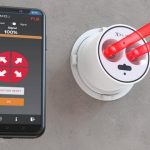
At A Place To, a 400-apartment mixed-use development in Esbjerg, Denmark, doors are secured with ASSA ABLOY PULSE key-operated electronic cylinders with energy harvesting technology. PULSE devices are self-powered: The cylinder’s encrypted electronic security is energized with power generated by key thrust. “It was a big plus with PULSE that keys and locks are battery and cable free,” says Peter Høpfner, A Place To’s COO and Founder.

Smart key technology also offers the opportunity to cut wasted journeys. ASSA ABLOY’s award-winning CLIQ® Connect keys and app are designed to minimize travel to and from a base to collect, return, update or revalidate access rights. With CLIQ Connect, everyone carries their own programmable CLIQ key and keeps its permissions up-to-date on the move via a Bluetooth connection to their smartphone — meaning fewer miles driven and less money wasted on unnecessary fuel.

“CLIQ Connect offers an easy win for businesses examining the impact of a mobile workforce on their sustainability performance,” says Stephan Schulz, CLIQ Product Manager at ASSA ABLOY Opening Solutions EMEIA. “And of course, spending less on fuel will also help with budget concerns, too. There’s a concrete, immediate ROI.”

Furthermore, the option to deploy ASSA ABLOY devices which can be unlocked with mobile keys stored securely on a user’s smartphone, instead of cards, fobs or traditional metal keys, reduces materials use and further cuts unnecessary travel. Granting or amending someone’s access is done over the air, with no need to return to base or an update point and no physical credential to issue or manage.

Stage #4: Less frequent, less invasive maintenance

Every building system needs maintenance. However, they don’t all require the same level or frequency of maintenance visits. Less maintenance translates to fewer journeys and lower energy consumption. Again, wireless access technologies with a proven track record of reliability and durability hold a significant advantage.

Many ASSA ABLOY wireless locks, including Aperio, use standard batteries which are optimized for a long lifetime — typically 2 years or more, although this varies by model and usage. Under normal circumstances, a battery change is the only maintenance they need, unlike wired systems where specialist electrical maintenance is a frequent requirement.

Programmable key systems with electronic or electromechanical devices are likewise designed for minimal lifetime maintenance. An eCLIQ cylinder, for example, has an integrated lubricant reservoir which ensures it typically remains maintenance-free for up to 200,000 cycles. Battery-powered eCLIQ keys have a typical lifetime between battery changes of up to 10 years.

“We have made energy efficiency a driving force behind the development, design and manufacturing of our innovative solutions,” adds Olympia Dolla, Head of Sustainability Program at ASSA ABLOY Opening Solutions EMEIA. “Energy harvesting technology, mobile keys and energy efficient devices help enhance sustainability performance right away — and equip you with the flexibility for challenges to come.”

To learn more, download a free Access Solution Sustainability Guide at https://assaabloy.com/emeia-blueprint/en/documents/solutions/topics/sustainability/ASSA-ABLOY_Sustainability_Brochure_A4_Landscape_04_2024_FINAL.pdf

SALTO Announces Minority Investment in Trustech

SALTO, a global leader in pioneering building access, identity management and electronic locking technology, has made a minority investment in Italian-based company Trustech.

This new partnership shows SALTO’s commitment to innovative smart building solutions aiming to increase their energy efficiency and decreasing their CO2 footprint. Trustech focuses on the development of pioneering energy management solutions to reduce energy consumption, while measuring and certifying energy savings. Designed for seamless installation without the need for expensive wiring, the solutions are ideal both for existing and new buildings seeking to enhance sustainability while providing tangible economic advantages to operators.

“We’re thrilled to collaborate with Trustech, a dynamic new company founded by a team uniquely skilled in innovative technology”, stated Aznar Sethna, CSMO SALTO Wecosystem. “Together, we are committed to developing groundbreaking products that promise not only significant energy savings but also represent a new benchmark in environmentally conscious living and working environments.”

“The partnership between a prestigious worldwide player like SALTO is an ideal synergy to quickly spread into the market the benefits of our disruptive innovation”, remarked Alberto Vuan, founder and CEO of Trustech. “Together, we aim to provide a concrete and measurable contribution for more sustainable buildings and reduce CO2 emissions by leveraging our proprietary algorithms capable of certifying energy savings at single room level.”

Financial terms of the deal were not disclosed.

Building a Strong Cybersecurity Foundation for Your Video Solutions

In today’s digital world, it’s little surprise that cybersecurity is top of mind in many boardrooms. Indeed, 96% of CEOs say that it’s essential to their organisation’s growth and stability, according to Accenture.

And they are right to be concerned, because cybercrime is projected to cost the world a staggering $9.5 trillion USD in 2024 according to research firm, Cybersecurity Ventures. Such losses can be business-ending, without even considering the cost of reputational damage and unscheduled downtime.

By Jos Beernink, Vice President EMEA at Milestone Systems

The cyber-risks of video

Being aware of the risks of an insecure video surveillance system – and how to mitigate these – is therefore a critical skill for all security leaders. Cameras, connected sensors, and video management software (VMS) can present attractive targets for malicious actors, thanks to the data collected by them. This data can be used for blackmail or to gather confidential information. Hackers can sell footage of your building layout and staffing levels at different times of the day to criminals, for example.

IP cameras can also be used as gateway devices for larger attacks, including global distributed denial of service (DDoS) attacks that use connected cameras and other devices to send a flood of traffic to targeted websites and other infrastructure.

When it comes to protecting businesses, no two systems will be the same. The protections for a school will be very different to that of a data centre or solar farm. The first step in protecting your organisation and its surveillance systems, therefore, is understanding what needs to be protected, how, and from whom. Plus the potential damage that can occur when (not if) an attack happens.

The NIS2 Directive

Protecting your camera and video systems is about to become even more important due to the incoming NIS2 Directive, a Europe-wide legislation that aims to boost the overall level of cybersecurity in network and information systems. Any surveillance installation that falls within targeted “essential” industries will be impacted by this (these include the energy sector, transport, banking, public administration, and digital infrastructures).

Under NIS2, users are required not only to assess their own systems, but also conduct a comprehensive risk assessment to ensure their entire supply chain is compliant. In today’s interconnected systems, achieving compliance across the supply chain can be challenging.

By way of an example, the Log4j vulnerability recently affected millions of computers across the world, and highlights the direct impact on systems utilising this open-source logging library as a small part of their software suite. It’s notable that a few software manufacturers, including Milestone Systems, which prioritize secure design and avoid any use of open source, remained unaffected.

The NIS2 Directive recognises that physical security threats pose a significant risk to organisations with digital operations. Installing cameras and other systems to control access to digital assets like server rooms and data centres is vital. Such organisations will need to take active, ongoing, steps to ensure their video network’s security is as robust as possible.

The importance of physical security

One unique aspect of video networks is how many devices are located in public, potentially vulnerable, areas. Most organisations need to install cameras to monitor busy areas, entrances and exits to restricted areas, or remote parts of a site. This can have the effect of putting cameras at higher risk; making it easier for attackers to gain access and disconnect devices. This means that multi-layered security to keep devices safe and separate from the wider IT network is essential. It also means that without adequate protection, a video surveillance system can be less secure than a classical IT system. That’s worth bearing in mind when addressing your video and IT network cybersecurity as a whole.

Everyone’s responsibility

The NIS2 Directive emphasises that IT and security work together to build a robust cybersecurity strategy. Your IT team will need to be closely involved when implementing your video cybersecurity strategy. They will work with you on some of the foundational elements of protecting your VMS and connected devices, because of their experience in areas like virtual private network (VPNs) and virtual local area networks (VLANs).

Knowing who takes care of what, can help you to assign accountability for things like upgrades, auditing, and penetration testing. Sometimes an external party, like a manufacturer or installer, is responsible for some aspects of your cybersecurity. Therefore, when starting your cybersecurity strategy, you’ll need to check:

  1. Assess the nature of the business – and its goals.
  2. Determine the local rules and regulations.
  3. Confirm who is responsible for maintaining your system.
  4. Ask who monitors your system. Unusual traffic or alerts of technical errors can be an indication of a cyber-attack.
  5. Be clear about who has access to your video and computer network. Is the level of access appropriate to their needs? Does an operator have too high a level of access, or does someone who has left your organisation still have login credentials?

Speaking of access, you’ll also need to consider physical elements like who has access to a VMS server room. Alarms and access control measures can help to prevent unauthorised individuals from getting into sensitive areas where your video data is located.

Consider the human element

It’s worth considering your overall training program, as the human factor can be a significant weakness in your cybersecurity — accounting for between 88 to 95% of data breaches, according to a joint study by Stanford University Professor Jeff Hancock and security firm Tessian. Even something as simple as re-using a personal password to log into a VMS account, or falling for social engineering attacks (like an ‘urgent’ email from a manager requesting account details) can undermine every technical cybersecurity feature you implement.

Hence why regular training for your security team is important, as it can keep them updated on the latest threats and new ways to protect themselves and your system from harm. User control can also assist here, with admin and data access rights only given to those who require it. Assigning different VMS user credentials will (hopefully) prevent password sharing and allows you to remove a user’s access when they leave your company.

Foundational cybersecurity measures

Alongside this, there are some basic foundations that you can ensure you’re following to make your video system less attractive to attackers. These include updating your cameras’ firmware and VMS device drivers to the newest versions. Updates are typically made on an ongoing basis, so make sure your camera manufacturer issues regular security updates that include vulnerability patching and additional protections against new threats. Much like how keeping your smartphone or laptop updated reduces the risk of a hack, staying up to date with your VMS and camera updates will make them less attractive to hackers.

Disabling your cameras’ built-in admin account, or changing the default password is one of the first things to do when installing a new device. Then you can ensure your cameras are only supporting HTTPS (the secure version of HTTP).

To ensure the best protection, your chosen password should be a combination of lowercase and uppercase letters as well as special characters and numbers. They should contain no easily guessable words or phrases – using the word ‘password’ is an absolute no! Passwords also shouldn’t contain any information that identifies a user, or that a hacker could gain off of their public profiles and social media. As importantly, VMS accounts shouldn’t be shared by multiple users.

Keep your networks separate

Generally speaking, it’s a good idea to keep your video network separate from your wider IT network. You can do this through VPNs (which is essential if you have people accessing your systems remotely, outside of your local network), and through VLANs that keep your video system partitioned and isolated from your other computer systems. If your cameras or VMS are compromised, for example by someone accessing a device located on the street or from an operator unwittingly using a USB with malware on it, a hacker cannot use your video system to access more of your organisation’s data. It serves to limit the damage.

The importance of multi-layered security

A widescale breach in 2021 offers a hard lesson in what can potentially go wrong when you fail to secure your camera systems effectively. A cyber-attack on a system provider in the USA exposed video recordings from 150,000 cameras, but also the sensitive financial information of high-profile customers. Hackers gained access to the provider’s systems using a username and password that was exposed in the public domain. This illustrates the importance of good password habits (regular password changes, using hard-to-guess passwords, and training people not to share their passwords with others).

Over 100 employees had ‘super admin’ privileges in the provider’s system, which gave access to footage from thousands of customer cameras, unknown to them. Setting the right access level for each user, ensures that the risk and potential spread of a hack is limited. Put another way, the more admins you have, the more targets there are for hackers to exploit.

Finally, alongside camera footage, hackers could also access sensitive financial and customer information through the breach. Separating your video network from your IT network limits how far a hacker can go if they do access your system. It prevents them from accessing your business’ financial and product data, operations, and other sensitive systems.

Cybersecurity is continuous

With all that said, every system will have vulnerability and the cybersecurity space is constantly evolving. Being aware, in control, and responsible when using video will go a long way in protecting your organisation.

To help you on your journey towards a cybersecure video network, Milestone Systems is hosting a series of cybersecurity webinars. Whether you are starting out on cybersecurity or are looking at building on existing cyber measures, these webinars and events will help you build resilience in your video system. More details of these webinars, including the first webinar on the foundational elements of a video cybersecurity strategy, can be found here: t.ly/nuvno.

Learn what Milestone can do for your organization. Our video management software (VMS) can be customized to meet your every need. From keeping people and property safe to operating businesses more efficiently. We invite you to experience the power and functionality of Milestone’s VMS software through the exclusive Demo Trail, providing a hands-on experience with our state-of-the-art video management solutions.

About Milestone Systems

Milestone Systems is a leading provider of data-driven video technology software in and beyond security that helps the world see how to ensure safety, protect assets, and increase business efficiency. Milestone enables an open platform community that drives collaboration and innovation in the development and use of network video technology, with reliable and scalable solutions that are proven in more than 500,000 customer sites worldwide. Founded in 1998, Milestone is a stand-alone company in the Canon Group. For more information visit: www.milestonesys.com. For news and other press releases, visit our Newsroom.


Genetec VP Appointed to SIA Board

Genetec Vice-President of Global Marketing, Andrew Elvish, has been appointed to the Security Industry Association’s (SIA) board of directors for an initial two-year term.

The SIA Board of Directors is comprised of industry professionals representing a broad spectrum of interests in the security industry. These industry leaders share their time and expertise to help move the association forward for the members and grow the global security industry. As the leader of the Genetec global marketing team, Andrew has key insights about the changing landscape of international security, high-technology marketing, and product innovation.

“It’s a privilege to join such a talented group of industry leaders, and I’m excited for the opportunity to make valuable contributions to the association’s mission of further advancing the global security industry,” said Andrew Elvish.

“As a recognised leader in the security industry, SIA feels fortunate to welcome Andrew Elvish, as part of the well-respected, dedicated, and experienced Board of Directors. Andrew is an impressive and accomplished leader who will share his global vision and expertise, and help to drive our association and industry forward,” said SIA CEO Don Erickson.

Openings Studio Presents Clear Visualisation for BIM Projects

Assa Abloy Opening Solutions has launched a video showcasing the possibilities BIM software offers in creating and visualising openings for complete door, frame and hardware schedules and specifications.

Openings Studio integrates with design software, meaning door assets can be designed, priced, manufactured, installed, inspected, and maintained from the same data, ensuring a seamless and transparent connection from design intent through to product in service.

This unique time and cost saving application ensures compliance, giving peace of mind. There’s the option to create door solutions from scratch, or select from a customised library, making it simple to create modifications to meet project specific standards.

Door solutions can be exported with ease through various types of reports in PDF, Microsoft Excel and Word formats. During construction, submittals can be reviewed, and materials can be tracked for ordering and delivery.

Additionally, requests for Information (RFIs) can be officially logged and managed, and directives can be changed. Cut sheets and installation guides are also housed within the programme.

Ideal for both new construction and existing openings, Openings Studio also allows facilities managers to have a single point of reference to inspect, record, maintain, and service doors, hardware, and access control systems.

Brian Sofley, Managing Director at Assa Abloy Opening Solutions UK & Ireland, explains: “Managing door projects in traditional spreadsheet programmes can be extremely inefficient and ineffective, with limited ability to share that information easily. Openings Studio streamlines communication in the estimation, specification, ordering and delivering process, making sharing information effortless.

Workflow and door projects are digitalised and all the door information is stored in the cloud, allowing it to be securely accessed from anywhere in the world via a desktop computer smartphone or tablet.”

“This is a gamechanger for building owners, facilities managers, contractors, locksmiths, distributors, consultants and more,” he concludes.

Tdsi Now Offers Products From Til Technologies

Tdsi is now offering the Microsesame Cube Supervision Software and Tillys Cube Access Control Hardware from its fellow Vitaprotech Group member Til Technologies to customers in the UK and Ireland. The Tillys Cube Access Control Units and Microsesame Cube Software are ANSSI certified, making them ideal for deployment across the critical infrastructure space.

Tdsi is now supplying and supporting the range of powerful Microsesame Cube Supervision Software and Tillys Cube Access Control Hardware suite of Multifunction Control Units and Specialised Modules.

John Davies, Managing Director of Tdsi commented, “Til Technologies has built up a highly impressive track record of developing and producing class-leading electronic security systems for building supervision, access control and intrusion since it was established in Aix-en-Provence, France, in 1988. With its respected ANSSI certification, the range perfectly complements our Gardis range of hardware and software, making it an obvious inclusion into Tdsi’s product portfolio in the UK.”

Denis Castanet, Managing Director of Til Technologies also commented, “We already have extensive reach across the French security market but are keen to build upon this in other regions as well. Tdsi is very well respected within the UK, making it the perfect partner to introduce and promote our products in this lucrative and impressive market. As Vitaprotech Group sister companies we already have a perfect synergy to deliver the best security technology in the UK and beyond.”

Til Technologies has an extensive portfolio of projects, with over 6,000 sites equipped with its products. These include large and well-known national French customers such as French Ministries, SNCF, the French Post Office ‘La Poste’, EDF, AXA, and the French military shipbuilder Naval Group. Its systems also protect a number of prestigious buildings, such as the ‘Tour First’ in la Défense, Marseille’s Vélodrome stadium, and Le Château de Versailles.

Axis Launches All-In-One Monitoring Device

Axis Communications has released a multipurpose dome camera combining sharp video, two-way audio, actionable analytics, and LED indicators to help improve safety, security, and operational efficiency.

This all-in-one device makes it possible to optimise staff resources with proactive surveillance. For instance, it can be used for tele-sitting to observe patients in healthcare environments. Or to remotely detect and respond to loitering in retail environments.

The Axis Q9307-LV dome camera comes with coughing fit and stressed voice analytics adding an extra audible dimension to active incident management. It offers a great solution for remote monitoring and communication. With Axis Live Privacy Shield, it’s possible to remotely monitor activities while safeguarding privacy in real-time. In addition, it includes both an LED indicators and an Audio LED so it’s clear to see when the camera is recording or when audio is being used.

Including Lightfinder 2.0, Forensic WDR, and OptimizedIR, it delivers sharp 5 MP image quality under any light conditions. With four built-in microphones and a built-in speaker with echo cancellation, this all-in-one audio-visual device offers clear two-way audio communication with great noise suppression. This makes it easy to transmit and receive audio even from remote locations.

Some of the key features include: 5 MP video with two-way audio, preinstalled audio and video analytics, remote monitoring while safeguarding privacy, withstands chemical wipe-downs, and cost-efficient all-in-one-device.

This multipurpose dome camera promises to ensure a cost-efficient solution and with just one device to install, it offers one-drop installation. Additionally, video and audio analytics are included at no extra cost. It’s vandal-resistant and can withstand daily wipe-downs with chemical detergents without deteriorating the plastic. Furthermore, Axis Edge Vault, a hardware-based cyber security platform, safeguards the device and protects sensitive information from unauthorised access.

Survey Finds Integration With Other Systems Still a Big Challenge

Brivo, a global leader in cloud-based access control and smart building technologies, has shared some of the findings from its 2024 Top Global Security Trends Report, detailing the most important changes for physical security teams across the globe.

This is Brivo’s seventh annual trends report, and it is based on 850 responses from security professionals across the U.K., U.S., and Europe, asking the opinions of physical security teams in financial services, technology & IT, manufacturing, retail and more.

Among the key trends detailed in the report is the desire to integrate new security technology with existing systems to better manage people and facilities. Another key trend is high expectations of AI technology, with a need for greater skills and access to data.

The report also shows the continuing evolution of the CSO (Chief Security Officer) role in leading AI implementations. While more important than ever, many lack the appropriate budget or authority to take full advantage of new technologies—posing a challenge to upgrading security systems.

Key findings from the report include:

  • 36% of security teams lack confidence in their system’s ability to keep their employees and facilities safe, with this rising to almost half in front-line roles.
  • Ease of integration with other systems was a bigger barrier to adopting new technology than budget constraints.
  • 60% of large enterprises in the U.S. will invest over $1 million annually in AI over the next three years.
  • 74% of security professionals see the CSO role as increasingly important in organisations but agree that increased authority and budget are needed to meet security objectives.

“This year’s report has a lot to be optimistic about,” said Steve Van Till, founder and CEO of Brivo. “The security industry wants to embrace new technologies, and there is investment and belief in new advances. At the heart of these changes will be the CSO, and they will need support to make this a success.

“Security integrators have an opportunity to be trusted advisors to the CSO. Getting technological change right and integrating it into the greater organisational strategy will require strong partnerships.”

The full report is available from Brivo and is called “2024 Top Global Security Trends: Empowering CSOs and security teams to enable technology and AI”.

Acre Integrates Management System with Feenics

Acre security, a global leader providing innovative security solutions, has completed a successful integration between Feenics Access Control Solution and its Enterprise Visitor Management Software. This integration, according to the company, marks a significant advancement in enhancing security protocols and streamlining visitor management processes for businesses and institutions worldwide.

The integration of Feenics and Acre Enterprise Visitor Management brings together two powerful solutions under one unified platform, empowering organisations to seamlessly manage access permissions while efficiently monitoring and tracking visitor activities. By bridging the gap between access control and visitor management, Acre security continues to demonstrate its commitment to delivering comprehensive security solutions tailored to the evolving needs of modern businesses.

Key benefits of the integration include:

  • Enhanced Security: Organisations can strengthen their security measures and mitigate potential risks with synchronised access control protocols with visitor management processes.
  • Streamlined Operations: The seamless integration enables smooth data flow between Feenics and Acre Enterprise Visitor Management, eliminating the need for manual input and reducing administrative burden.
  • Improved Visitor Experience: Visitors can now enjoy a frictionless entry process, while administrators gain real-time insights into visitor traffic and activities.
  • Customised Solutions: Acre security remains dedicated to providing tailored security solutions, allowing organisations to adapt the integrated Feenics and Acre Enterprise Visitor Management platform to their unique requirements.

“We are excited to announce the integration of our Feenics and Acre Enterprise Visitor Management solutions, which represents a significant milestone in our mission to deliver comprehensive security solutions. This integration underscores our commitment to innovation and customer satisfaction, as we continue to empower organizations with cutting-edge technologies to safeguard their assets and personnel,” says Caroline Laporte, Global Product Manager for Acre security Visitor Management.

“When customers work with us, they’re assured of the highest global standards in information security. This collaboration epitomizes the unified Acre portfolio, transitioning from a federation of brands to a cohesive entity. The Feenics and Access Visitor Management partnership is a prime example, enhancing customer support significantly,” adds David Liu North America Head of Sales for Acre Enterprise Visitor Management, commenting about the integration.


UNV Tri-Guard 2.0 Products Offer Nighttime Security and On-Site Protection

As application scenarios become increasingly complex, traditional security systems encounter issues such as difficulty retrieving evidence due to low-quality nighttime images and numerous false alarms triggered by non-target objects.

In response, UNV released the innovative and powerful Tri-Guard Technology. Tri-Guard technology combines ColorHunter technology, smart intrusion prevention, and active deterrence to deliver a highly efficient and powerful solution that effectively responds to complex scenarios.

On top of this, in 2024, UNV released Tri-Guard 2.0 Products based on Tri-Guard 1.0 models, which are upgraded in three core features: ColorHunter technology with F1.0 super large aperture, Active Deterrence with Red & Blue light and Smart Intrusion Prevention with color retrieval. Instead of only relying on the recorded videos as evidence after an event, Tri-guard 2.0 technology makes it possible to act during the event with its Active Deterrence and Real-time Alarm functions. This series can prevent events from happening in the first place.

F1.0 Super Large Aperture

Tri-Guard 2.0 IPCs adopt F1.0 super large aperture which greatly improves image quality. The F1.0 aperture lens of Tri-Guard 2.0 cameras increases the light input by 2 times and 4 times compared with F1.4 and F2.0 cameras respectively. With an ultra-large aperture paired with an ultra-high resolution of 8 MP and a frame rate of 30 fps, users can capture the details of their targets even at night.

Better Hardware

Bullet and turret cameras with Tri-Guard 2.0 technology have built-in red and blue twin-wick light, which is more eye-catching than white light. In addition, the built-in 3W high-power speaker can provide an extremely clear alarm sound. When facing more complex scenarios, the Audio/Alarm interfaces can be linked with more devices to protect the user’s safety.

Color Retrieval

Prime II Tri-Guard 2.0 series of products add a color retrieval function. After triggering the SIP or UMD function rule, the camera will judge the target attributes and collect the color information. This function currently supports the color of people’s upper and lower garments, the color of motor vehicle bodies, and the color of non-motor vehicle upper parts retrieval. Color information can be quickly found with UNV’s NVR after color attribute information has been collected. This function can effectively save the user’s search time.

Three Light Modes

In terms of light modes, there are three options to choose from. IR mode, warm light mode, and dual light mode can meet different needs.

IR mode can be often used in the corners of a courtyard. Warm light mode is more suitable for the road and other places that need warm light as a small street lamp to provide lighting scenes. Dual-light Mode is Tri-Guard’s signature mode. When no one triggers the alarm, the white lights are off and the IR light keeps the image information. If a stranger enters, the white lights will turn on and the camera can catch more details. Therefore, the dual-light mode that integrates active deterrence and ColorHunter is the best choice for users.

Application

Prime II Tri-Guard 2.0 series contains 4/5/8MP resolution options. This series has built-in red and blue lights, a microphone, and a high-power speaker. Its F1.0 super-large apertures with ColorHunter technology offer a better image performance at night. Therefore, this series is suitable for no entry, no parking, danger areas, and so on.

For more information please visit www.global.uniview.com.

If you have any business queries, please contact chenkexin@uniview.com