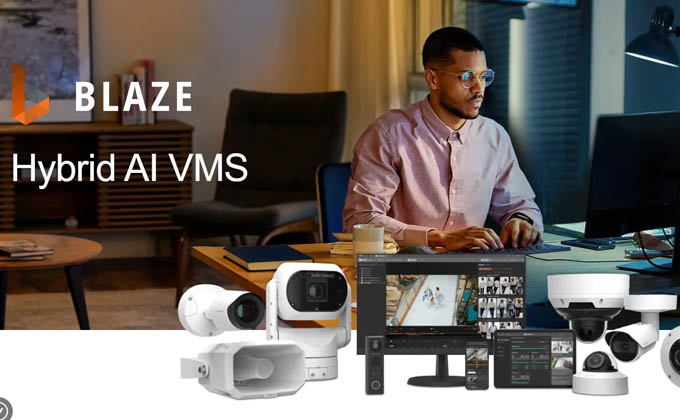
IQSIGHT has introduced a new brand identity positioned around “intelligence-first” video security, describing the move as the evolution of Bosch Video Systems and a signal of expanded AI-enabled capabilities across its portfolio
In the announcement, the company says it is aiming to move beyond traditional video surveillance by turning video data into “practical, actionable intelligence” that helps customers see clearly, understand context in real time, and make faster, data-driven decisions. IQSIGHT adds that while the brand has progressed, its foundation remains anchored in more than 60 years of engineering experience and long-term reliability in demanding environments.
“As security environments become more dynamic and complex, customers need intelligence they can trust,” said Sabrina Stainburn, adding that the company’s focus is on delivering accurate alerts and insights that provide foresight into events and patterns, while building on a legacy portfolio to address changing threats.
IQSIGHT intends to deliver that intelligence “at the edge” and within existing video management system environments, using cloud capabilities only where they add value to avoid unnecessary complexity or overhead while maintaining reliable performance.
In the press release, IQSIGHT also confirmed it will showcase its latest AI-led offerings at ISC West in Las Vegas from March 25–27, including advanced analytics for object classification, counting, and attribute detection (such as vehicle models and clothing colours), as well as GenAI-driven scene understanding intended to interpret complex environments without training on specific behaviours.
The release adds that IQSIGHT’s “intelligence-first platform” will power its latest camera generation, and that it is working with leading VMS partners, including Genetec and Milestone Systems, to deliver scalable outcomes for customers across sectors such as education, government, critical infrastructure, transportation, and smart city environments.
Intersec 2026, the world-leading exhibition for security, safety and fire protection, has recorded its largest, most internationally diverse and strategically significant edition to date. The three-day event, which celebrated its 27th edition, was held under the patronage of His Highness Sheikh Mansoor Bin Mohammed bin Rashid Al Maktoum, Chairman of the Dubai Ports and Borders Security Council, and welcomed 44,764 trade visitors from 151 countries, with a 60/40 domestic versus international split, reinforcing Intersec’s position as the global meeting point for government authorities, regulators, industry leaders and solution providers shaping the future of security, safety and resilience.
Spanning over 65,000 square metres of gross exhibition space, Intersec 2026 featured 1,180 exhibitors from 56 countries, supported by 10 international country pavilions and a comprehensive programme of 14 conferences and specialist features, reflecting the growing complexity and convergence of physical, digital and human safety and security.
International Participation Underscores Intersec’s Global Scale
Global participation remained a key feature of the 2026 edition, with 82% of total exhibitors coming from international markets, underscoring the event’s role as a global marketplace. Exhibitor participation was led by the world’s foremost safety, security and technology markets, including the United States and China; high-growth economies such as India and South Korea; and Europe’s most established industrial and innovative hubs, including France, Germany, Italy, Türkiye, and the United Kingdom.
The United Arab Emirates remained the event’s largest and most influential domestic exhibiting market, reflecting the country’s growing prominence across the global security, safety and fire protection landscape.
This momentum is being driven by bold national initiatives that continue to strengthen regulatory frameworks, accelerate the adoption of advanced technologies, and embed resilience, innovation, and convergence across the entire ecosystem.
Technology and Solutions Aligned With Global and National Priorities
This leadership was clearly reflected on the exhibition floor, where solutions aligned with national and international priorities were brought to life across five core sectors, including Homeland Security & Policing, Cybersecurity, Commercial & Perimeter Security, Fire & Rescue, and Health & Safety. Together, exhibitors showcased next-generation technologies, integrated systems, and operational solutions that address critical challenges, including infrastructure protection, emergency response, cyber resilience, workforce safety, and crisis preparedness.
Intersec Global Underscores Platform’s Evolution
Intersec 2026 marked a significant milestone, unveiling the new Intersec Global identity during a press conference attended by strategic partners and industry leaders. As part of the Global platform, the evolution of Intersec’s sectors reflects a deliberate macro-to-micro narrative, moving from safeguarding nations to protecting individual lives within a unified international framework. At the macro level, National Security & Resilience supports ministries, police and border authorities shaping sovereign risk strategy, while Cybersecurity underpins digital governance and critical infrastructure protection.
This extends into Surveillance & Physical Security for built environments and smart cities, and Fire, Rescue & Emergency Response for civil defence and climate-driven readiness. This culminates at the micro level with Safety & Wellbeing, aligned with ESG priorities and workforce protection, safeguarding people in their daily environments and demonstrating how Intersec Global connects national resilience with human-centred safety across its worldwide ecosystem.
Dishan Isaac, Show Director of Intersec at Messe Frankfurt Middle East: “This edition represents a pivotal moment for the platform, highlighting its expanded scale and the increased engagement from the global safety and security community. The launch of the Intersec Global identity reflects the on-the-ground reality, emphasising an international ecosystem rooted in Dubai, with increasing involvement from both established markets and high-growth regions.
“With a significant increase in international exhibitors and visitors, the quality of dialogue has been excellent. From strategic policy discussions to frontline operational challenges, the focus has been firmly on real-world resilience, readiness and collaboration. The breadth of engagement from government authorities, critical infrastructure operators, emergency services and the private sector reinforces Intersec Global’s role as an international platform where meaningful partnerships are formed, knowledge is shared, and industry progress is accelerated.”
Intersec Awards Celebrate Leadership and Industry Excellence
Industry achievement took centre stage at the Intersec Awards 2026, held during a prestigious gala dinner in Dubai. Now in their fifth edition, the Awards recognised excellence across 17 categories, celebrating leadership, innovation, talent, and impact in security, safety, and fire protection. Headline winners included Khalid Mubarak of Dubai Municipality, who received the H.H. Sheikh Mansoor bin Mohammed bin Rashid Al Maktoum Emirati Rising Star Award, and Albadr Jannah of Saudi Aramco, named Industry Leader of the Year for his sustained contributions to advancing security and resilience at regional and global levels.
The Women Trailblazers in Security, Fire Safety and HSE award was presented to Jazyah Aldossary, also of Saudi Aramco, recognising her leadership in driving professional excellence, inclusion and safety culture.
“Now in their fifth edition, the Intersec Awards highlight the individuals and organisations setting the pace for leadership, innovation and impact across security, safety and fire protection. This year’s winners reflect the depth of talent shaping the industry, from rising Emirati professionals and women leaders to global figures whose work continues to strengthen resilience and best practice worldwide,” concluded Isaac.
Government Partnership Key to Future Success
Intersec benefits from the strategic support of key UAE authorities, including the General Command of Dubai Civil Defense (DCD) and the Security Industry Regulatory Agency (SIRA), underlining its alignment with national resilience and safety priorities. The event will return to Dubai from 12-14 January 2027 at the Dubai World Trade Centre, continuing to build on its role as the world’s leading platform for advancing safety, security, and resilience across nations, networks, infrastructure, and people.
TOA Electronics Europe has introduced Eduardo Coutinho, Sales Executive responsible for a broad territory across Southern and Southeastern Europe, including Bosnia and Herzegovina, Croatia, Serbia, Slovenia, Albania, North Macedonia, Montenegro, Bulgaria, Romania, as well as Portugal.
As part of its internal “TOA Spotlight” series, the company highlighted his role in developing the partner network and working with integrators on regional projects. Coutinho emphasized that the most important aspect of his work is cooperation with partners and customers, as well as following projects from the initial idea to a fully implemented solution in close coordination with the company’s engineering team.
According to TOA, managing such a wide regional responsibility requires a combination of international experience and an understanding of local needs, particularly in projects involving public address and audio communication systems across different sectors. The company states that through long-term partnerships and the adaptation of solutions to local requirements, it aims to deliver reliable and standardized audio installations that meet both global and regional standards.
Ajax Systems has introduced new updates that further enhance the integration of its solutions with monitoring centers, enabling broader compatibility and easier migration from existing systems. The latest versions of Ajax Cloud Signaling and Ajax Translator PRO now support the ADEMCO 685 communication protocol, allowing monitoring companies to connect more easily to their existing infrastructure and transition from third-party software platforms. At the same time, Ajax Translator PRO has added support for connection via a Serial (COM) port, simplifying integration with various receivers and legacy systems.
According to the company, these upgrades open the solutions to a wider range of monitoring centers, particularly those switching from third-party software or upgrading from earlier versions of Ajax Translator. The updates are available through Ajax PRO Desktop 5.42 and Ajax Translator PRO 2.6.0, aiming to increase deployment flexibility and facilitate system modernization without the need to fully replace existing security equipment.
Hytera, a global provider of critical communications technologies and solutions, has officially opened a new office in the Phaya Thai district of Bangkok, marking ten years of presence in Thailand and an important milestone in its local development. The ribbon-cutting ceremony was led by the company’s CEO, Yelin Jiang, together with customers, partners, and employees, celebrating the anniversary of operations in the country.
From its early days in the Dindaeng district to the relocation into a modernized facility, the office has grown alongside Hytera’s business in the Thai market, supporting an expanding base of customers and partners. “Thailand is an important and dynamic part of our global network. Although this year marks the tenth anniversary of our local office, our presence in the market spans more than two decades. The new office confirms our long-term commitment to local development and cooperation with partners and customers,” Jiang stated.
Following the opening ceremony, a celebratory dinner was organized for partners and clients. On that occasion, Lynn Lin, Hytera’s Country Manager for Thailand, thanked stakeholders for their long-standing trust and cooperation, emphasizing that the company’s success belongs to everyone who has helped build its market presence. She added that the new premises will further strengthen cooperation and support the development of communication systems in the country.
Hytera entered the Thai market in 2005 and has since delivered numerous projects for institutions and infrastructure organizations, including the Ministry of Industry, the Department of Provincial Administration, the Royal Thai Police, the Provincial Electricity Authority, Aeronautical Radio of Thailand, Thai Oil, and PTT Exploration and Production, as well as major commercial developments such as the One Bangkok complex.
Axis Communications has released its first annual Axis Perspectives report, a research-based publication analyzing the evolution of intelligent video and its expanding use across industries. Based on global research, expert analysis, and real-world use cases, the report shows how video technology is moving beyond traditional security and becoming an important tool for safety, operational efficiency, and business intelligence.
The findings indicate a turning point in how video is used: although security remains the core function, organizations increasingly view cameras as business sensors that generate data and insights to improve performance, reduce costs, and automate processes. According to the report, video systems are evolving from passive monitoring tools into active contributors to enterprise decision-making.
As an example, the report highlights BMW Group, which uses cameras for AI-driven quality inspection (AIQX), enabling precise automated inspections that improve product quality and production efficiency.
“More and more organizations see video as a strategic source of data, insight, and automation across the entire enterprise. Axis Perspectives reflects our commitment to providing data-driven guidance so customers can scale proven innovation and turn it into measurable business value,” said Peter Lindström, Chief Commercial Officer at Axis Communications.
The research shows that the use of video for business analytics nearly doubled within a single year—from 20% to 38%—while 42% of companies use it to improve operational efficiency. Infrastructure modernization is the main investment driver for 64% of end users, and cybersecurity has become a critical priority for 44% of organizations.
At the same time, cloud adoption in physical security is accelerating, expected to grow from 27% to 44% within the next two years. Additionally, 41% of users now demand unified platforms, confirming system integration as a key success factor.
The report also introduces a five-stage intelligent video maturity model, ranging from passive and reactive systems to proactive, predictive, and autonomous operations, enabling companies to assess their current capabilities and plan further transformation.
Axis states that the goal of the report is to provide partners and customers with context and strategic insight into the future role of intelligent video and connected technologies. As the inventor of the first IP camera and a long-standing leader in network video, the company continues to guide the evolution of video surveillance from a security function into a key component of modern business and infrastructure environments.
Hikvision, through its Onboard Security program, has introduced Hikauto Cloud — a comprehensive SaaS platform designed for fleet management and improving the safety of transport operations. The solution is intended to simplify the daily work of operators and fleet managers by combining monitoring, analytics, and resource management within a single platform. It provides users with full field visibility through real-time GPS tracking, live streaming, and video playback, allowing them to check road activity at any moment.
The platform also includes an instant notification system with customizable alarm rules, real-time alerts, and an integrated evidence center, enabling faster incident response and easier documentation. In addition, automatically generated reports on mileage, speeding, and driver attendance help companies turn collected data into concrete operational decisions.
Hikauto Cloud also enables centralized management of devices, vehicles, and vehicle groups from one location, simplifying the administration of larger transport systems.
Hikvision notes that the platform is not only intended for vehicle tracking, but also for optimizing operations, enhancing safety, and supporting business expansion. More information about Hikvision Onboard Security solutions is available at: https://lnkd.in/eFrkyr4b
Milestone Systems has introduced a new extension for its XProtect platform called XProtect Video Summarization, a tool that uses generative artificial intelligence to convert video footage into clear text summaries of events. The goal of the solution is to help operators understand situations more quickly without lengthy video playback. The text summaries enable faster alert verification, more efficient filtering of false alarms, and quicker incident documentation. The technology has been trained on compliant real-world video from different parts of the world, with the first application focus on traffic and plans to expand to other scenarios.
To present the solution, Milestone will host a webinar on March 11, where participants will have the opportunity to see a live demonstration of XProtect Video Summarization, learn more about the market need for video summarization, and explore the NVIDIA vision technology that underpins the solution.
The event will also include public safety use cases, implementation guidance, and a Q&A session. The webinar will be led by Ben Cahill, Keith Harris, and Roland Harwood from Milestone Systems, with the participation of Alex Pazos from NVIDIA. Organizers stated that registered attendees who cannot join live will still receive a recording of the event along with written answers to all submitted questions.
When buying new devices, hardware warranty is often prioritized over software support. However, both are crucial for optimal device performance. This article highlights the importance of software support in physical security systems and showcases the industry-leading Axis software support.
Hardware and software are in a symbiotic relationship: the hardware provides the physical foundation, while the software enables a device to perform a range of functions. Without hardware, software lacks a platform, while without software, hardware is unusable.
Axis hardware warranty covers manufacturing defects for 5 years, but the actual service life of a device is often double that. That’s because Axis provides software support through AXIS OS for about 8 to 12 years.
The role of software support is to address product usability issues, often resolved through bug fixes. Given today’s cyberthreat landscape where there is a need to maintain security and stay ahead of legislation, software support also addresses newly discovered vulnerabilities through security patches. At Axis, software support also involves new feature releases with device software upgrades, further improving the capabilities of a product after purchase.
Axis software development represents 80% of its R&D organization. Even though software development and maintenance are challenging and costly, Axis is committed to providing long support periods at no additional cost to customers. This reflects how important we believe software support is to ensure the long-term usability and security of our products. Let’s look at the benefits of Axis software support below.
Benefits of Axis software support
Choice of software support that best fits your needs
Users of AXIS OS-based products – from cameras, intercoms, loudspeakers to access control products – can choose either an AXIS OS release on a long-term support (LTS) track, or an active track.
The LTS track is focused on bug fixes and security patches to address security vulnerabilities and ensure compatibility with third-party systems. The active track offers continuous feature growth in addition to bug fixes and security patches to maximize device functionality and security. For Axis products running on Microsoft Windows®, the Long-Term Servicing Channel (LTSC) is used to provide long-term support with security updates and a focus on stability. It is ideal for devices such as video management software servers, and systems that require consistency.
It’s important to note that Axis, system integrators, and end customers have a shared responsibility for keeping the software up to date to maximize cybersecurity. Axis provides software updates that include security patches, and as a next step, system integrators and end customers must install them.
Access continuous feature growth
Updating an AXIS OS-based device with an AXIS OS version on the active track allows users to truly future-proof the device over time. You get continuous feature growth, whether it be additional cybersecurity functionality, such as MACsec, FIPS 140-2 Level 1 or other updates such as new analytics.
Security considerations integral to software development
Axis has in place the Axis Security Development Model (ASDM) to ensure that software addresses security considerations throughout a product lifecycle, before and after a product is introduced to the market and when it reaches its end of life. This includes vulnerability management. As a Common Vulnerabilities and Exposures Numbering Authority (CNA), Axis vulnerability management policy informs customers about the conditions under which vulnerabilities will be patched. In addition, Axis provides a security notification service that enables customers to take timely action and keep their systems up to date.
Compliance
Legislation increasingly requires customers to be informed about the security of their products, including their physical security systems. In Axis Trust Center we share information about how Axis implements security compliance, transparency, data protection, and privacy. For example, products running AXIS OS 11 or higher are certified to the ETSI EN 303 645 cybersecurity standard. Standards like ETSI EN 303 645 and EN 18031 aim to strengthen security measures for IoT devices and ensure software updates throughout the product lifecycle. In the EU, initiatives like the Cyber Resilience Act and the Radio Equipment Directive (RED) emphasize the need for regular software updates. The UK’s Product Security and Telecommunications Infrastructure (PSTI) Act also mandates transparent disclosure of software support and security updates.
“Innovation and leadership go hand in hand. Axis Communications’ commitment to transparency is unmatched, for example by being first out in our industry to disclose end-of-software support dates and SBOMs. This underscores our dedication to provide best in class software support in the physical security industry” – Andre Bastert, Global Product Manager for AXIS OS
SBOM is crucial for transparency and IT security. It provides detailed insights into software components to enable the following benefits:
Transparency and traceability
Gives detailed insights into all components in the software, including both proprietary and open-source components. This helps customers identify dependencies, search for potential vulnerabilities or outdated versions, and assess Axis cybersecurity posture.
Regular maintenance of SBOMs also helps Axis identify and fix security vulnerabilities and outdated components at an early stage. This proactive approach significantly reduces the likelihood of data leaks, system failures, and damage to reputation.
Efficient response to security incidents
In the event of a security incident, SBOM enables quick and precise analysis of whether and to what extent a system is affected. This allows customers to take immediate countermeasures and avoid major damage. Axis notification service for security vulnerabilities and other security-related issues enables customers to react to potential threats immediately and update systems accordingly.
Compliance and risk mitigation
A SBOM helps customers comply with legal and regulatory requirements. At the same time, it minimizes risks that can arise from undocumented software components.
Clearly stated end of software support date
Axis publishes the end date for software support on the web pages of its devices. Axis device management software applications also provide information on end-of-support dates for connected devices. This provides transparency so that customers know what to expect prior to purchasing a product. It also enables customers to prepare for product retirement and replacement in a timely manner.
Software support is the new standard for long-term usability and security
Software support is essential to network products. While the hardware warranty is crucial in the initial phase, software support is not only invaluable, but indispensable throughout a product’s life for optimizing usability and continued security.
In the IT industry, extended support is common to prolong the service life of products. This approach enables companies to protect their investments and react flexibly to changing security requirements. And due to cybersecurity regulations, software updates are increasingly a legal requirement. Axis software support is among the longest in the physical security industry, providing significant value for customers. The existence, length and extent of the software support should, therefore, be important considerations as they not only help maximize the potential of devices, but crucially support the secure, long-term operation of the network products.
Siemens Smart Infrastructure has introduced Siprotec V, a software-based version of its protection and control system for power grids designed for digital substations. The solution replaces dozens of individual protection relays traditionally installed in substation cabinets by running their functions as virtual applications on an industrial server located within the facility. In this way, the functions of up to 60 devices can be consolidated into a single platform, simplifying installation and reducing the need for numerous cables and panels.
According to Siemens, capital investment costs can be reduced by up to 25%, while the space required for equipment in the facility can be lowered by up to 45%. Thanks to reduced copper cabling, CO₂ emissions per substation can drop by up to 50%, along with approximately 20% lower lifecycle costs. Virtualization also enables digital testing of configurations before commissioning, faster deployment, and easier upgrades without hardware replacement.
The platform supports advanced analytics and real-time grid monitoring applications, allowing operators to detect faults more quickly and prevent power outages. Siemens states that Siprotec V represents a step toward software-defined power systems and the modernization of critical infrastructure while maintaining high standards of cybersecurity and reliability.