Home Archive by category Vertical Solutions (Page 4)

Vertical Solutions

Schneider Electric Bulgaria has opened the first-of-its-kind industrial geothermal system in its Smart Factory in Plovdiv

The innovative geothermal system was developed in response to Schneider Electric’s global sustainability goals and uses “dry” closed boreholes, in which a fluid circulates and is heated by the natural temperature of the earth. The heat pump units produce hot water for heating and hot water for domestic use, providing over 70% savings in electricity for heating and cooling the plant. The system does not use groundwater resources and contributes to achieving the company’s carbon neutrality goals.

“It is a pleasure and a huge responsibility for us to be pioneers in the field of carbon neutrality. Through the geothermal system we are opening today, we once again stand firmly behind Schneider Electric’s commitment to decarbonization on a global scale. Energy management, together with sustainable development, is the essence of our business and our core competence,” explained Martin Yordanov, Director of Schneider Electric’s Smart Factory in Plovdiv.

“Decarbonization is not a one-day goal. For Schneider Electric, it is an adventure in which we invest time and energy to track our consumption, analyze processes, properly manage the resources we have, and eliminate waste. The new geothermal installation is just one of the steps on our way to the goal. In recent years, Schneider Electric Bulgaria has implemented a number of projects aimed at decarbonization, which illustrate our desire, dedication and aspiration step by step to achieve carbon neutrality,” commented Mr. Martin Ganchevski, project manager for the installation of the geothermal system.

The opening ceremony was attended by representatives of national and local authorities, including Ms. Angelina Boneva, Deputy Minister of Regional Development and Public Works, Mr. Ivan Stoyanov, Deputy Mayor for Ecology and Health of the City of Plovdiv, Mr. Dimitar Ivanov, Mayor of Maritsa Municipality, Mr. Yordan Dashev, Mayor of the village of Radinovo, and Mr. Plamen Panchev, Executive Director and Founder of the Trakia Economic Zone (TEZ).

Ms. Angelina Boneva defined Schneider Electric as a pioneer in the dual transition, emphasizing the importance of the company’s high ambitions for creating sustainable solutions through cooperation with universities and the use of the latest technologies. “It is an honor and pleasure for me to attend such an event. Schneider Electric Bulgaria is a large company that “swirls” its own ecosystem and raises the general standard. I am very glad that the high ambitions of Schneider Electric are transferred here – to the city of Plovdiv and among the local communities. These are the places in Bulgaria recognized as the best for investments, because the local authorities work hand in hand with business. Sincere congratulations and respect to Schneider Electric Bulgaria”, said Ms. Boneva during the ceremony.

As a representative of the local government, the Deputy Mayor for Ecology and Health of the city of Plovdiv, Mr. Ivan Stoyanov, also expressed his satisfaction at attending an event with a contribution to ecology. “I am glad that local business and business in general are helping the municipalities and the administration to introduce such successful models together. We have something to learn from you and we will be helpful in any way we can. In the person of the Municipality of Plovdiv, you have a partner and a friend,” said Mr. Stoyanov.

Last but not least, Mr. Plamen Panchev from the Thrace Economic Zone (TEZ) expressed his satisfaction with the fact that Bulgaria is leading in the implementation of modern technologies, emphasizing that partners like Schneider Electric are key to the implementation of carbon neutrality projects. “As Ms. Nikolova shared, the success of the decarbonization mission is entirely possible. Bulgaria is now not only a world-class country in this area, but is also a leading force in the implementation of modern technologies in the field. TEZ is one of the best examples in Europe for the implementation of carbon neutrality projects, and this is possible because we have partners like Schneider Electric Bulgaria, who are fulfilling the goals they have set themselves,” he shared.

The geothermal system at Schneider Electric’s Smart Factory in Plovdiv will improve its energy efficiency and help combat climate change by providing renewable energy sources integrated with digital solutions. With this innovative approach, Schneider Electric underlines its commitment to its goals of carbon-neutral operations by 2025, carbon-neutral footprint by 2040 and suppliers with zero net carbon emissions by 2050.

“The system developed by ReEnergy Engineering represents a significant step towards energy independence for the Smart Factory in Plovdiv. With this project, Schneider Electric is not only building infrastructure for the future, but also once again demonstrating its commitment to carbon neutrality and sustainability,” added the company’s team in our country.

Revolutionary Safety and Efficiency in the Pharmaceutical Industry

Research and development of new active ingredients and dosage forms are of central importance in the pharmaceutical industry. It is equally important for pharmaceutical production to obtain active ingredients from microorganisms or mammalian cells in large fermenters. The addition of bacteria, fungi or enzymes produces organic substances that are further processed in various steps such as grinding, granulating, coating and tableting.

The risks without gas monitoring

Imagine a pharmaceutical plant releasing a toxic gas such as carbon dioxide (CO2 ) or a combustible gas such as methane (CH4 ) during a fermentation process. Without reliable gas monitoring, this gas could escape unnoticed into the environment, which could have catastrophic consequences. Employees would be at risk, production processes could be interrupted and the financial losses due to necessary repairs and downtime would be enormous. Recognising such dangers at an early stage is virtually impossible without adequate monitoring.

The DGC-06 digital gas controller: a game changer in gas monitoring

With the DGC-06 digital gas controller, MSR-Electronic GmbH has developed a ground-breaking solution that masters the challenges of gas monitoring and at the same time significantly secures production.

The state-of-the-art measuring, warning and control controller system continuously monitors and analyses up to 128 gas sensors. Flexible, freely adjustable alarm thresholds recognise dangerous gas concentrations immediately. Appropriate countermeasures are then initiated.

The DGC-06 impresses with a number of remarkable features:

Reliability and availability

One of the outstanding features of the DGC-06 is its high reliability and availability. The system is equipped with self-monitoring and can optionally be connected to an uninterruptible power supply (UPS). This ensures that the system remains fully functional even in the event of power failures.

Versatile application possibilities

The DGC-06 is suitable for more than 50 different gases and can be used flexibly in various areas of gas measuring technology. This makes it an ideal solution for the various requirements in the pharmaceutical industry.

Simple operation and configuration

The operation and configuration of the DGC-06 is extremely simple. The intuitive menu navigation and the option of parameterisation via the PCE06 software enable quick and uncomplicated commissioning without the need for special programming knowledge.

Seamless integration

The controller can be seamlessly integrated into existing control systems. Thanks to various interfaces and protocols, centralised monitoring and control is possible, which further increases the efficiency of production processes.

The difference the DGC-06 makes

By implementing the DGC-06 digital gas controller, pharmaceutical companies benefit from a significant increase in safety and efficiency. The system not only ensures the protection of employees and systems, but also optimises production processes. Unforeseen breakdowns and faults can be minimised and operating costs sustainably reduced.

The DGC-06 was developed for large systems, tunnels or even for extensive connections. Everything is possible, from complex garages to access functions that are switched by gas alarm.

The DGC-06 gas controller series can monitor and evaluate up to 128 gas sensors, including 96 digital and/or 32 analogue sensors (4-20 mA). There are 4 freely adjustable alarm thresholds per sensor.

For alarm signals, the controller system has up to 128 relays with potential-free change-over contact and up to 16 analogue outputs with 4-20 mA signal.

Future proofing mobility in cities

Keeping public transport and mobility services fit for purpose is a principal challenge for city authorities. Recent studies show that leading cities take important steps to develop people- and planet-centric transportation options. Surveillance technology plays a vital role in delivering the high quality, efficient, and safe services these cities provide. Here’s how.

ThoughtLab’s recent From Future Vision to Urban Reality report, sponsored by Axis, explores the most effective strategies and digital solutions city leaders are using to prepare for the future. When it comes to urban mobility, the importance of real-time data is front-and-center. Surveillance technology provides much of this data as well as valuable insights used to power services. Transport authorities use it to enable systems such as traffic management, parking, public transport, and digital payments.

But knowing where and how to invest is a challenge in itself. Fortunately, the nature of surveillance technology means that any pilot scheme or local initiative immediately provides a feedback loop of learning, improvement, and verification ahead of major city-wide investments thanks to their rich, real-time data. This is also what makes surveillance technology such a vital component of digital twin initiatives. In fact, traffic management is the leading use case for digital twin modelling, with cities across the world already benefiting from their application.

Here are just a few examples of the top ways future-ready cities are leveraging surveillance technology to enhance their urban mobility, taken from our latest ebook, Surveillance technology for future-ready cities. Our report supplements the ThoughtLab study, providing further context, example use cases, and tangible next steps for city authorities through the lens of surveillance technologies.

Smart signaling 

Getting traffic light signaling right can be the difference between gridlock and free flowing traffic. Surveillance systems are used to collect queue length data at these hotspots. By collating data and identifying patterns over hours, days, and weeks, systems can present optimized signal timing profiles. Similarly, real-time data can also be used to control variable speed limits or open and close lanes, using pre-set rules.

Identifying the causes of accidents 

Understanding how and why accidents occur requires data. Surveillance footage provides you with detailed accounts that enable forensic levels of analysis into driver behavior trends. You can identify dangerous behavior patterns such as sharp lane changes or stops, drivers heading in the wrong direction, as well as speeding hot spots and red-light violations. You can then use this analysis to inform new policies and preventive measures, and then use it to gauge their effectiveness.

Rapid incident response 

In the same vein, surveillance systems can provide automatic incident detection. Cameras can detect unusual or sharp changes in direction, or when a car stops in the middle of a road. When an incident occurs they can then trigger escalation protocols, such as notifying staff or first responders. Smoke and heat detection provides further valuable information. All of which helps expedite response times and can save lives.

Intelligent parking 

Surveillance data supports many functions vital to parking systems. As well as spotting spaces to inform availability signage, license plate recognition enables frictionless automated payment systems. Both of these help to reduce bottlenecks at entrances and make journeys smoother.

You can also use these cameras to spot parking violations, such as identifying double parking, overtime, illegal parking, and even measuring whether vehicles have parked far enough from corners, as well as your typical security functions.

Encouraging alternative travel 

One of the most frequently cited deterrents to using alternative forms of travel is a lack of safety, especially at night. In-vehicle installations on trains and buses make real-time, multi-camera, interior and exterior footage readily available to security personnel, even while vehicles are in motion. This enables virtual patrols of vehicles, proactive monitoring during busy periods or known events, and quick reactions to security alerts.

Outside, in parks and on main pedestrian routes, smart poles, equipped with lighting, cameras, speakers, and intercom help points can provide much needed assurance to the public, helping create established safe walking and travel routes.

Learn more 

Surveillance technology doesn’t only help cities tackle mobility challenges. Axis-powered solutions are supporting local authorities across the world drive new efficiencies, productivity, and save money, while improving sustainability, safety and the lived experience of citizens.

Aurel: MSR-Electronic Drives Emission-Free Hydrogen Aviation Forward

MSR-Electronic and AeroDelft are working together to promote innovative hydrogen technology in aviation through gas monitoring for a sustainable future.

The central focus of this collaboration is the full-scale Phoenix – a ground-breaking aircraft that runs on liquid hydrogen and is completely emission-free. AeroDelft is pursuing the goal of establishing sustainable solutions in aviation and overcoming dependence on fossil fuels.

The full-scale Phoenix, a manned, two-seater Sling 4 aircraft, is powered by hydrogen fuel cells and is scheduled to take off on its first flight in 2026. With its zero-emission propulsion system, which operates entirely without combustion, AeroDelft is sending a clear signal for the future of aviation. The prototype of the Phoenix plays a central role in the project and makes it possible to gain important insights into the handling of liquid hydrogen in order to develop the most efficient version of the full-scale Phoenix.

In this pioneering project, the innovative gas sensors PX2 of the PolyXeta®2 product series from MSR-Electronic are used. These sensors are crucial for precise gas monitoring and thus make a significant contribution to the efficiency and safety of the aircraft.

Solution from MSR-Electronic

The stationary PolyXeta2 gas detectors from MSR-Electronic are used in this project to ensure the safety and efficiency of the hydrogen system. The PX2-1 series gas detectors with Ex db ignition protection are suitable for use in Zones 1 and 2, while the PX2-2 series with Ex ec ignition protection is designed for Zone 2. They continuously monitor the ambiant air for combustible gases and vapours in accordance with guideline 2014/34/EU.

The microprocessor-controlled gas detectors have a 4-20 mA / RS-485 Modbus output signal as well as alarm and fault-signal relays (SIL2 certified). They are also optionally available with an LCD display, which changes the backlighting from green to red in the event of an alarm or fault.

Application

The PolyXeta2 gas detector PX2 is used in industrial areas such as the oil/gas industry, biogas plants, petrochemicals, power stations etc. in Ex zone 1 (PX2-1) or 2 (PX2-2). The PolyXeta2 gas detector is also suitable for commercial areas, such as gas transfer stations, and for use on ships, shipyards and offshore platforms. With the 4-20 mA / RS-485 Modbus output signal, the PX2 is suitable for connection to the PolyGard2 gas controller series from MSR-Electronic GmbH as well as to other controllers or automation devices.

ZERTIFIKATE / EIGENSCHAFTEN Gaswarngerät PX2

  • ATEX (1/2) and IECEx certificates for electrical ex-protection
  • SIL2 for the 4-20 mA, RS-485 and relay safety functions
  • Housing: Additional FM and CSA certificate for Class I, Div. 1
  • Continuous self-monitoring
  • Microprocessor with 12-bit converter resolution
  • Reverse polarity protected, overload protected
  • Simple calibration
  • Calibration service by replacing the sensor head
  • Proportional 4-20 mA output
  • Serial interface to the control centre
  • Alarm and fault-signal relay

Optional:

  • LCD display with status LEDs
  • SSAX1 sensor head connection as an alternative to SX1
  • Stainless steel housing
  • IP66 protection type with SplashGuard accessories

AeroDelft is using cutting-edge technology to ensure that the full-scale Phoenix has a range and endurance that outperforms conventional fuels and batteries: just 10 kg of liquid hydrogen can fly the aircraft for almost three hours, covering a distance of about 400 km.

The aim is to bring about lasting change in the aviation industry. AeroDelft is committed to international cooperation in the development of certification guidelines for safe hydrogen propulsion. The “partnership with MSR-Electronic is an important step towards achieving this goal and ushering in a new era of emission-free flight, says Emil Wes Lambert, Partnerships Manager AeroDelft.”

Together, MSR-Electronic and AeroDelft are shaping the future of aviation – safely, sustainably and inspiringly for the entire industry.

Aurel: Stainless Steel Housing for Industry Revolutionises Gas Detection Systems

Gas detectors play a crucial role in many industries to ensure safe operation and prevent dangerous accidents. We are pleased to announce the launch of our new stainless steel housing for stationary gas detection systems, specially designed to withstand the demanding conditions in industrial environments.

The stainless steel housing impresses with its robust design and ensures maximum safety in hazardous zones. Thanks to ATEX certification for Zone 1 and Zone 2, the housing is designed for use in potentially explosive atmospheres and offers reliable protection even under extreme temperature conditions. It is also resistant to salt water.

Gas hazards in the chemical industry

One area in which gas detectors are indispensable is the chemical industry. A variety of gases are used here, which can be toxic, flammable or explosive depending on the application. A typical gas that is frequently found in chemical production is methane (CH₄). Methane is colourless and odourless, but highly flammable, and can cause explosions in poorly ventilated areas if it mixes with air. Gas warning systems are therefore essential to protect employees and equipment from dangerous gas concentrations.

The new stainless steel housing offers the necessary reliability and resistance in these high-risk environments. Thanks to its high temperature resistance and corrosion protection, it is suitable for a wide range of applications, from the chemical industry to power stations.

Benefits 

  • Maximum safety: Ideal for potentially explosive atmospheres (ATEX zone 1 and zone 2)
  • Temperature resistance: Stable function with extreme temperature fluctuations
  • Salt water resistance: Excellent for maritime applications
  • Durability: High-quality and robust stainless steel construction for a long lifetime

With this new product, MSR-Electronic is setting new standards in terms of safety and durability in industrial gas detection systems.

Overview of some gas hazards in various industries

Gas hazards do not only occur in the chemical industry. Air quality monitoring is also crucial for safety in other industries, such as the oil and gas industry, mining and food production. The most common gas hazards are:

  1. Carbon monoxide (CO): A colourless and odourless gas that is produced by incomplete combustion and can lead to fatal poisoning in enclosed spaces.
  2. Methane (CH₄): A highly explosive gas found in the oil and gas industry as well as in landfills and sewage treatment plants.
  3. Hydrogen sulphide (H₂S): A toxic gas that smells like rotten eggs in low concentrations and can be fatal at higher concentrations.
  4. Ammonia (NH₃): An irritant gas found mainly in food processing and fertiliser production.
  5. DMC and EMC: Lithium-ion batteries are indispensable for electric vehicles and battery storage systems. However, in the event of malfunction or damage, a “thermal runaway” can occur. In this condition, the battery overheats and releases dangerous gases such as dimethyl carbonate (DMC) and ethyl methyl carbonate (EMC). These gas emissions are a crucial warning signal for potential safety hazards.
  6. Oxygen displacement: Working with gases in industry as a whole poses a significant risk. The oxygen content in the ambiant air can drop dangerously, leading to danger of suffocatio. Even low oxygen concentrations can lead to unconsciousness and serious damage to health. Therefore, constant monitoring and adequate ventilation in enclosed spaces are essential to ensure the safety of workers

Ambient System Modernizes Voice Alarm Systems in Swedish Railway Stations

Ambient System, a leading provider of Public Address and Voice Alarm (PAVA) systems, has announced a major agreement with the Swedish Transport Administration (TRVT) to modernize analog sound systems in railway stations across Sweden. The project focuses on enhancing passenger safety and communication while minimizing noise pollution for surrounding communities.

Under a long-term framework agreement, Ambient System will provide a comprehensive solution that includes the smartVES intelligent Public Address System, EN54 certified loudspeakers and amplifier modules for platform displays and railway station clocks. The system is designed to withstand Swedish climate and demanding platform environment.

“We are pleased to be working with TRVT on this important project,” said Adrian Zawistowski, Sales Director at Ambient System. “Our advanced solution for station and platform sound systems will provide passengers with clear and reliable communication while minimizing noise for nearby residents.”

A key feature of Ambient System’s solution is intelligent sound level control, which automatically adjusts the volume of announcements to the ambient noise level. This ensures that announcements are clear and audible to passengers without disturbing the surrounding community. The system also includes remote diagnostics and self-test functions, which allow TRVT to monitor and maintain the system from a central location.

The project is currently being implemented under the framework agreement.

About Ambient System

Ambient System is a leading provider of Public Address and Voice Alarm (PAVA) systems for various applications, including transport, education, healthcare, and commercial buildings. The company’s systems are designed to meet the highest standards of safety, reliability, and performance.

About the Swedish Transport Administration

The Swedish Transport Administration (TRVT) is responsible for planning, constructing, and maintaining Sweden’s national transport infrastructure, including roads, railways, and waterways.

Contact:

Katarzyna Lenczewska

Marketing Manager

(+48) 601 316 929

k.lenczewska@ambientsystem.pl

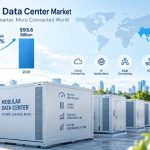
Panduit Micro Data Center

Definition of Micro Data Center A Micro Data Center (MDC) is a compact, versatile solution that integrates hardware, software, and cabling, serving as a comprehensive network hub. Similar to a telecommunications or network room but on a smaller scale, the key feature of an MDC is that it consolidates the entire data center infrastructure into a single enclosure — including electronic devices, patch panels, cable management, grounding/bonding, power, and copper/fiber cabling — designed to meet the demands of manufacturing environments.

The MDC represents the next phase in the evolution from tower computing systems to rack and cabinet-based deployments in manufacturing. It supports various business applications, such as:

  • Process and event monitoring, process historian, production tracking, and Overall Equipment Effectiveness (OEE) reporting. • Control network management, outer loop control, and recipe downloads. • Quality control, material handling, maintenance, batch tracking, and asset management. • ERP integration (e.g., scheduling, reporting, material consumption).

In addition to serving as a standalone system for these applications, the MDC can also function as a network hub that connects cabling and switches. In large manufacturing complexes or remote locations, it can act as a data collection node that transmits manufacturing data to the enterprise (e.g., Store and Forward). MDCs can also host Virtual Machine (VM) systems, enhancing reliability and optimizing server utilization.

More Meaningful Connections From a logical architectural perspective, the MDC is situated between the manufacturing plant and the enterprise data center, often separated by a demilitarized zone (DMZ) and a firewall to prevent direct traffic between the enterprise and manufacturing networks. This separation protects against viruses and unwanted intrusions while ensuring maximum bandwidth for manufacturing processes. Additionally, it allows each network to operate independently, ensuring that disruptions in one do not affect the other.

The NEMA 12-rated MDC protects Industrial Automation and Control Systems (IACS) by preventing the ingress of solid foreign objects and water. This robust design allows the MDC to be installed directly on the plant floor, eliminating the need for a dedicated control room or telecommunications closet. Placing the MDC near production equipment reduces the number of connections, shortens cable lengths, and facilitates quick access for maintenance, enhancing network reliability and performance. Furthermore, this proximity minimizes potential failure points, reduces network latency, and simplifies troubleshooting and diagnostics.

Physically, the MDC is typically installed in a secure space, such as a control room, production office, or telecommunications closet, located near the production environment but separate from it to protect equipment from dust, moisture, vibrations, and corrosion. This strategic placement shortens cable lengths, improves network performance, and simplifies maintenance access, further ensuring high reliability and quick responsiveness.

Panduit MDCs are a smart choice because they combine industrial durability, rapid deployment, integrated cable management, and compliance with key standards, making them a more reliable, cost-effective, and flexible solution compared to many competing products.

Rondo 1, an Architectural Icon of Warsaw, Protected by ICT

The unique shape of the building, comfortable working conditions and location in the very center of the city make Rondo 1 one of the most prestigious skyscrapers in Central and Eastern Europe.

Rondo 1 is the first AAA class high-rise building built in Warsaw (192 meters height, 41 above-ground storeys, 103 000m2 of total area). It was designed by world-renowned architects from the American studio Skidmore, Owings & Merrill.

The office building consists of two buildings: a 40-storey glazed tower (Building B) located parallel to Jana Pawla II Avenue and a 10-storey Building A, located at Swietokrzyska Street, with a façade made of opaque frosted glass. Rondo 1 offers office and service space that meets the highest standards. Premises for rent can be arranged in any way to fully meet the needs of even the most demanding tenants.

Rondo 1 was the first European skyscraper to receive the LEED® Gold ecological certificate in the “Existing Buildings” category. In 2016, the recertification process was completed, as part of which Rondo 1 received the highest ecological certificate – LEED® Platinum.

The LEED® certificate in the “existing buildings” category is characterized by continuous verification of the building’s operating parameters and requires continuous improvement of the efficiency of its operation in order to meet the newer and more stringent requirements of the certification system. The process evaluated, m.in other things, sustainable location, efficient use of water and energy resources, and materials used.

Rondo 1 is one of the most characteristic office buildings in the very center of Warsaw. It is chosen by companies that care about reputation, high quality office space and that everything is close by; to the railway station, to fashionable restaurants, shopping mall or cinema.

Integrated Control Technology (ICT) enterprise access control solution, Protege GX helps to control people flow and security for this iconic building. Every morning, thousands of people pass through gates secured by Protege GX. Each gate is equipped not only with entry/exit readers but also with OTIS panels. Thanks to seamless integration between Protege GX and OTIS – each user passing a gate is automatically assigned to one of many elevator cabins – which will allow to reach default destination floor in fastest way. This functionality is crucial to relieve the traffic of thousands of people in the morning hours. ICT readers equipped with secure MIFARE and DESFire technology have also BLE (Bluetooth Low Energy) option to allow flexibility for users to use any type of  access credentials.

ICT certified partner xPro Security Technology, a long-standing partner in Poland  was instrumental to implement the  Protege GX system which includes over:

  • several dozen system controllers
  • hundreds of door expanders
  • dozens of intelligent and monitored power supply’s 4A
  • several hundred of proximity RFID readers

Server-based access control system, Protege GX, uses its native HLI lift integration to talk to a dozen  of OTIS elevators. Another dozen elevators are managed by input-output expanders.

“We are very proud that our solution not only secures this iconic building but also makes it more efficient at managing the flow of employees through the integration with the lift system” says Milos Kohout, Sales Director for Central and Eastern Europe .”This type of projects show the flexibility of our Protege GX  platform and, when combined with the knowledge of our partner xPro Security, it delivers a successful solution, saving time for all users of the building.”

Tenzor Acquires the Operations of COPS@ Intelligent Traffic Signaling Systems

Tenzor has taken over the management and operations of the COPS@ business segments, including the entire portfolio of intelligent traffic signaling solutions. This strategic step enables Tenzor to expand its presence in the field of Intelligent Transport Systems (ITS) and provide both existing and new customers with a broader range of advanced solutions for traffic safety and optimization on roads and in industrial environments.

With over 30 years of experience in integrating technical systems into comprehensive solutions for risk management, safety, and business optimization, Tenzor d.o.o. is well-positioned to leverage advanced technologies and expertise to further enhance traffic safety.

Miha Senčar, CEO of Tenzor d.o.o., stated: “At Tenzor d.o.o., we have extensive experience in integrating technical systems into comprehensive solutions for risk management, safety, and business optimization. By incorporating the COPS@ system into our portfolio, we will continue to develop innovative, high-quality solutions to improve traffic safety and enhance the efficiency of road and industrial traffic management.

The transition will be seamless for existing users. Tenzor d.o.o. remains committed to maintaining the high standards of products and services that COPS@ users have come to expect.”

What is COPS?

COPS@ is an advanced intelligent traffic signaling system designed to enhance safety in road and industrial traffic. By utilizing modern technologies, it detects hazards in real time and alerts drivers to critical situations, significantly contributing to the reduction of traffic accidents. Widely implemented in urban and suburban environments, COPS@ enables efficient traffic flow management while improving overall road safety and traffic fluidity.

More information at www.cops-systems.com.

Protecting Critical Infrastructure with Senstar’s Advanced Security Solutions

In an era where threats to critical infrastructure are increasingly diverse and complex, protecting essential facilities has become paramount for national security and operational resilience. Critical infrastructure includes the vital sectors that keep society functioning—such as energy, water, transportation, healthcare, and IT. Disruptions in these areas can have severe consequences, making effective critical infrastructure protection (CIP) essential.

Critical infrastructure comprises both physical assets and digital systems that support essential services. Given the growing threats from cyberattacks, physical intrusions, insider threats, and natural disasters, CIP requires a comprehensive approach combining physical and cybersecurity measures. Effective CIP involves risk assessments, regulatory compliance, security technologies, and rapid incident response, all designed to protect infrastructure from disruptions and ensure continuity.

The Evolving Threat Landscape

Today’s critical infrastructure faces several primary threats:

  • Cyber Threats: Increasingly digitized infrastructure is vulnerable to cyberattacks, with hackers targeting industrial control systems (ICS) and SCADA networks. Successful attacks can disrupt essential services, cause financial losses, and jeopardize data security.
  • Physical Intrusion: Facilities like power plants, substations, and data centers are susceptible to physical breaches. Given their often remote locations, traditional security alone may be insufficient to deter or detect intrusions.
  • Insider Threats: Individuals with authorized access, such as employees or contractors, can inadvertently or intentionally compromise security, making insider threat detection essential.
  • Environmental Risks: Natural disasters like hurricanes and earthquakes pose ongoing threats to infrastructure, especially as climate change increases the frequency and severity of these events.

Senstar’s Solutions for Critical Infrastructure Protection

Senstar has over 40 years of experience developing perimeter and physical security systems specifically tailored to the needs of critical infrastructure. Here’s how Senstar’s technology helps safeguard these vital assets.

  1. Perimeter Intrusion Detection Systems (PIDS)

Senstar’s perimeter intrusion detection systems, fence-mounted, buried or above ground, detect intrusions at the perimeter to prevent unauthorized access. Key benefits include:

  • Scalability: Systems can be tailored for small or large facilities.
  • Reliability: These solutions function effectively even in harsh environments, maintaining accuracy in extreme conditions.
  • Minimized False Alarms: Advanced algorithms filter out noise from environmental factors, ensuring accurate detection.
  1. Video Management Systems (VMS)

Senstar’s Symphony Common Operating Platform integrates video surveillance with other security measures to enhance monitoring capabilities:

  • Scalability: Senstar Symphony supports facilities of all sizes, from single sites to multi-location deployments.
  • Intelligent Analytics: AI-driven video analytics, which can detect suspicious behavior, loitering, or potential threats in real time.
  • Centralized Control: Provides security teams with a unified platform to manage multiple sites and respond rapidly to incidents.
  1. PSIM Integration

Senstar’s integration with Physical Security Information Management (PSIM) platforms enables centralized control and coordinated incident response. This provides real-time situational awareness, improving the facility’s ability to respond swiftly and effectively to potential threats.

  1. Cybersecurity for Physical Security Systems

Recognizing the importance of cybersecurity, Senstar embeds secure protocols, user authentication, and encryption in its systems to protect against unauthorized access and cyber threats.

Benefits

Senstar’s solutions offer critical infrastructure operators a comprehensive security system that provides:

  • Early Detection: Proactive identification of potential threats before they escalate.
  • Cost Efficiency: Integrated systems reduce operational costs and improve security effectiveness.
  • Scalability: Modular systems are adaptable for both small and large infrastructure setups.

As threats to critical infrastructure grow, Senstar’s advanced solutions offer essential layers of protection. Senstar supports robust, resilient, and scalable CIP strategies that help safeguard society’s most vital services. Investing in Senstar’s technology not only enhances security but builds infrastructure resilience, ensuring essential services remain uninterrupted.