Global Video Surveillance Market to Reach $30.9 Billion by 2030
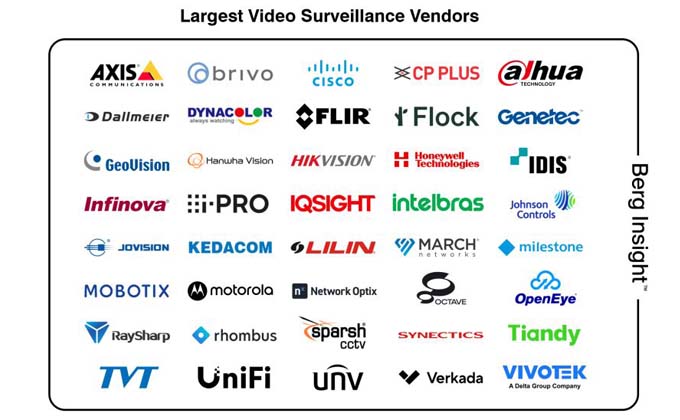
The global professional video surveillance market reached a value of $22.2 billion in 2025, representing a 4.8% increase compared to the previous year, according to the latest research by Swedish market intelligence company Berg Insight. According to the report The Global Video Surveillance Market, published in November 2026, the market is expected to grow by a further 8.1% this year to approximately $24 billion, before reaching $30.9 billion by 2030, at a compound annual growth rate (CAGR) of 6.8%. The analysis covers sales of professional surveillance cameras, recording hardware, and video management software, but excludes revenue from system integration, access control, peripheral equipment, and consumer products.
Market growth is primarily driven by increasing demand for the protection of people, property, and infrastructure, alongside technological advances in camera resolution, image processing, artificial intelligence, and the adoption of cloud and hybrid architectures. These innovations enable more accurate threat detection, faster incident response, and broader use of video analytics in everyday business operations.
The research also highlights changes in the global market landscape, particularly following several years of decline in China’s video surveillance market, where earlier growth had been strongly supported by large-scale government public safety projects. Another challenge is the rising cost of memory components and data storage drives, with availability increasingly constrained by the rapid expansion of AI data centers, while trade tensions and tariffs are adding further pressure on equipment prices.
Berg Insight identifies Axis Communications, Dahua Technology, Hanwha Vision, Hikvision, and Motorola Solutions among the leading surveillance camera manufacturers, while Genetec, Milestone Systems, Network Optix, March Networks, and Verkada are among the prominent providers of video management software and cloud-based platforms.
Analysts also point to the growing integration of video surveillance with other security systems, the increasing importance of hybrid cloud architectures, and ongoing challenges related to cybersecurity and privacy protection.