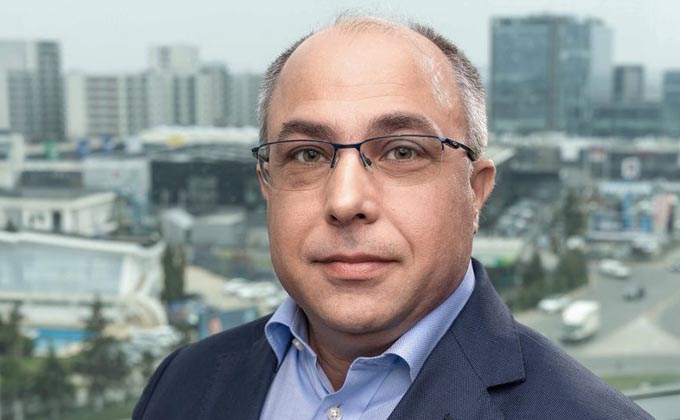
In a conversation with Tomislav Jovanović from Mercury Solutions, we explore how artificial intelligence is redefining the way we perceive security. From his engineering beginnings in developing AI models to connecting technology with real client needs, Tomislav explains why technology alone is not enough if it does not solve real-world problems.
We discuss smart cameras that are no longer passive observers, but active systems that analyze, recognize, and support decision-making – as well as a future in which intelligence becomes an integral part of the devices we use every day.
How does a professional journey from a translation assignment at a security trade show in Italy lead to a key role in developing modern access control systems on a global scale? In a conversation with Laura Caretta from Telaeris, we explore topics that push the boundaries of traditional security thinking.
Laura explains why mobile and handheld biometric solutions address the limitations of traditional, fixed systems, and how the concept of “security where it’s needed” has become critical across industrial sites, energy facilities, educational institutions, and government organizations.
The interview also presents concrete real-world examples, including complex international projects such as the deployment of systems at a petrochemical site in Abu Dhabi, with full software integration and more than 100 devices now operational in the field.
The discussion touches on the future of the industry – the convergence of security and IT, cybersecurity, cloud and SaaS models – as well as the human side of the security sector, which, as Laura points out, once it draws you in, rarely lets go.
In the latest episode of the a&s Adria podcast, we speak with Marco Zittino, International Sales Manager at AVS Electronics, who has been shaping the security industry for over three decades. Marco shares his professional beginnings at a small distributor in Italy, his growth through various positions, and his eventual joining of AVS, where he has led international sales for more than ten years. He discusses the key factors behind AVS’s success – the strong synergy between sales and the R&D team, production in Italy, and constant technological innovation. He particularly highlights the importance of customizable solutions for industrial, government, and critical infrastructure sectors, surpassing traditional plug-and-play systems.
Marco also shares his insights on the future of the industry: integrating multiple technologies into a unified platform, the role of artificial intelligence in detection, and the challenges of educating the market. The podcast includes fascinating perspectives – from the impact of September 11 on global security to the vision of the Adria Security Summit as a democratic platform that emphasizes product quality over company size.
This conversation is full of experience, insights, and inspiration for professionals looking to follow trends and innovations shaping the future of the security industry.
With the start of the new school term, security guards are being deployed in schools across Croatia, becoming a visible part of everyday life in many educational institutions. As reported by dnevnik.hr, security personnel are already undergoing specialized training to prepare them for work in the sensitive school environment. The training programme includes self-defence techniques, proper use of security equipment, and procedures for handling various risk situations. Special emphasis is placed on psychological preparation and responding to real-life scenarios, ranging from communication with distressed parents to dealing with unauthorized visitors.
Security guards in schools will not carry firearms, relying instead on physical readiness and standard protective equipment. The practical part of the training lasts a total of 60 hours, with instructors noting a high level of preparedness among participants. The programme includes both individuals already working in schools and unemployed candidates who see this initiative as a new professional opportunity. The job is considered attractive due to regular working hours and stable employment conditions. Security guards emphasize that the safety of children is their absolute priority and that their role in schools is primarily preventive.
Hikvision Adriatic/Malta has announced the organization of an informal networking event for partners and visitors during ISE 2026, which will take place from February 3 to 6 in Barcelona. According to the company, a “happy hour” will be held at their booth every day of the exhibition starting at 4:00 PM. The event will take place in Hall 3, at Booth 3Q100, where Hikvision will present its solutions in the field of integrated security and audiovisual systems. This format is designed to encourage more relaxed discussions, experience sharing, and networking with professionals from the security and ICT industries.
Visitors will have the opportunity to explore current technology trends in an informal setting and engage with company representatives about the development and application of Hikvision solutions. Hikvision notes that such gatherings contribute to strengthening partnerships and fostering more open dialogue within the industry. The company invites interested visitors to register for the exhibition and include their booth in their ISE 2026 agenda.
The company Krobel notes that an increasing number of small business users face the same challenge—the need for a reliable video surveillance system within a limited budget. In response to these requirements, Krobel recommends HiLook equipment as an affordable yet functional solution for users seeking a balance between cost and quality. HiLook cameras enable direct connection to the network and mobile applications, without the need for an additional recorder, which significantly reduces overall system costs. This approach simplifies installation and shortens deployment time, which is particularly important for smaller facilities and projects with limited resources.
Krobel emphasizes that, although HiLook is positioned as a “consumer” solution, system reliability is not compromised, as the technology is based on a proven platform from the same manufacturer. For customers with larger budgets, the company continues to offer professional video surveillance systems with more advanced infrastructure and broader integration capabilities. Nevertheless, as highlighted by Krobel, in many scenarios HiLook solutions represent a rational choice that meets essential security requirements without unnecessary additional costs.
More information about the HiLook video surveillance portfolio is available on the Krobel website: http://www.krobel.hr
Italy’s antitrust authority has fined Apple €98.6 million (approximately $116 million) over the way the company implemented its App Tracking Transparency (ATT) feature, concluding that it restricts competition within the App Store ecosystem. According to the regulator, Apple abused its dominant market position by imposing additional user consent requirements on third-party developers when collecting data for personalized advertising.
While the Italian authority does not dispute the purpose of the ATT feature itself or its stated goal of strengthening privacy protection, it takes issue with the fact that independent developers are required to obtain user consent twice in order to comply with European data protection rules. The regulator argues that this “double consent” requirement is disproportionate to the objective of protecting personal data and harms developers whose business models rely on advertising, as well as advertisers and advertising intermediaries.
Apple said it strongly disagrees with the decision and will appeal the fine, arguing that the ruling overlooks the benefits ATT provides to users. “At Apple, we believe privacy is a fundamental human right, and App Tracking Transparency gives users a clear and simple choice about whether they want to be tracked,” the company said in a statement, adding that the rules apply equally to all developers, including Apple itself.
The Italian decision follows a similar move in France, where Apple was fined €150 million earlier this year over the same consent mechanism, further underscoring the growing regulatory pressure in Europe on major technology companies and their role in balancing privacy protection with market competition.
The Croatian Personal Data Protection Agency (AZOP) has imposed an administrative fine of €1.5 million on a bank for multiple violations of the General Data Protection Regulation (GDPR). The proceedings were initiated following a user complaint claiming that the mobile banking application collected a list of all installed applications and programs on clients’ mobile devices.
The supervisory authority found that the bank processed the personal data of 433,922 users without a valid legal basis through software embedded in mobile banking applications for Android and Huawei devices. The disputed program scanned the content of mobile phones and centrally stored, among other data, complete lists of installed applications, which was assessed as a serious, excessive, and unjustified intrusion into users’ privacy.
During the proceedings, the bank referred to regulations in the field of payment services, but the Agency concluded that these rules do not justify such data collection practices. It was additionally established that users were not provided with clear and transparent information about the processing of personal data when contracting mobile banking services.
The information available via the application was general in nature, intended for visitors to the bank’s website, and did not specifically relate to data processing within the mobile app. The Agency also determined that the bank failed to apply the principle of “data protection by design,” as it could have implemented less intrusive solutions, such as processing only applications included on a so-called blacklist.
It was particularly emphasized that certain applications may reveal sensitive data, including information related to health, political views, or religious beliefs. This is the thirteenth administrative fine imposed by the Agency in 2025, bringing the total amount of fines issued this year to €6.7 million.
Aurel d.o.o. highlights smart parking systems as one of the key solutions for improving the functionality of public garages, commercial buildings, residential complexes, and shopping centres. In environments where parking availability is a limited resource, the lack of timely information often leads to wasted time, increased user frustration, and an overall poorer user experience.
Within its portfolio, Aurel deploys smart parking systems from the German manufacturer MSR Traffic, which use real-time data to display the number of available and occupied parking spaces and enable vehicle guidance to free levels, individual parking spaces, and exits.
These systems allow real-time identification of free and occupied spaces, active driver guidance through on-site signage, and detailed analytics for more effective management and capacity planning. The solutions are based on precise sensors installed at each parking space, LED indicators for navigation within the facility, and centralized monitoring of the entire parking area.
According to practical assessments, smart parking systems can significantly reduce the time spent searching for a parking space, increase garage capacity utilization by up to 30 percent, and contribute to lower CO₂ emissions by reducing unnecessary vehicle circulation. Their modular architecture allows deployment in facilities of various sizes—from small garages to complex systems with more than a thousand parking spaces.
Aurel emphasizes that smart parking systems represent a long-term, cost-effective investment for investors and facility managers seeking to improve operational efficiency, enhance user experience, and optimize the use of available space.
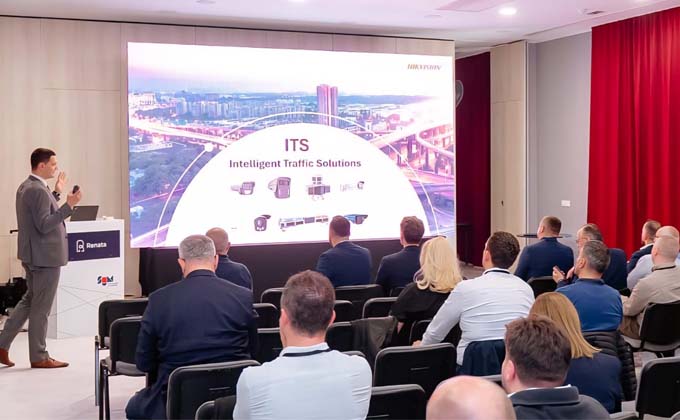
Hikvision, one of the world’s largest global manufacturers of innovative video surveillance solutions and AI-powered smart technologies, today held a presentation and its traditional annual gathering in Belgrade under the title “New Year, New Technology, New Vision.” The event brought together more than 200 distributors and system integrators from across the region and was hosted at the Crowne Plaza Hotel.
This exclusive year-end gathering focused on innovation, strengthening partnerships, and presenting Hikvision’s latest technological achievements.
“We continuously invest in the development of new technologies, innovation, and progress, while at the same time helping our clients to continuously improve and grow,” said Milica Gajić, Marketing Manager at Hikvision.
During the presentation, it was emphasized that by applying advanced algorithms and artificial intelligence in video surveillance and security solutions—integrated into cameras and software platforms—Hikvision significantly enhances accuracy, efficiency, and the speed of video content analysis. These technological advances were presented by Marko Matijević, Presales Manager of Hikvision’s Adriatic Group for the markets of Serbia, North Macedonia, and Montenegro.
“We had the opportunity to see a significant technological leap compared to existing solutions in the field of technical security. The application of AI algorithms enables systems to learn, process data faster, and become far more functional,” Matijević emphasized.
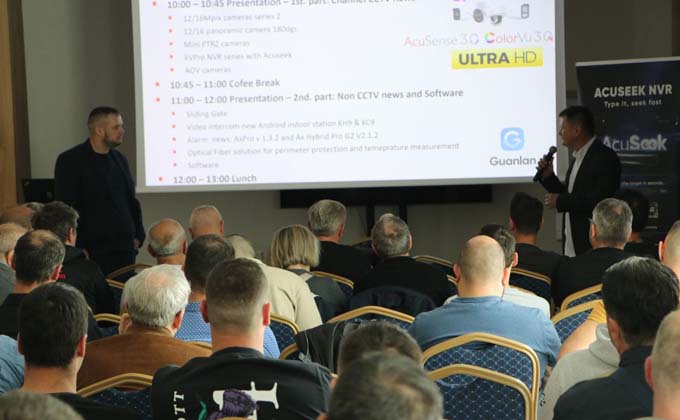
The presentation was divided into two thematic sections. The first focused on CCTV technologies, highlighting the ColorVu 3.0 and AcuSeek solutions, while the second covered non-CCTV products, including AX Hybrid Pro G2 alarm systems, access control solutions, intercom systems, professional displays, and the HikCentral Professional V3.0.1 integration platform, which brings together Hikvision’s complete security ecosystem.