Home Technology and Products Archive by category Fire Systems

Fire Systems

Kamir: Fit Faster. Save Time: Introducing Apollo’s New Discovery Base Sounder

Apollo Fire Detectors announced the latest addition to its portfolio of life-saving devices – the Discovery Base Sounder. It is engineered to transform the installation process and give you the unparalleled combination of ease, speed, and reliability. No more stripped wires or loose connections – installation is now easier than ever before.

Simply twist and click. It’s that simple. With previous models being – in the words of one installer – “well known for being awkward to install… [and] time consuming”, we knew that something needed fixing. Now, with its modular design, installation is up to four times faster, giving you peace of mind and letting you to work more efficiently.

Adjustable volume levels and tone settings ensure it adapts seamlessly to changing regulations – no matter the environment. Whether in a school, office block, or residential building, the Discovery Base Sounder allows you to adapt to every situation.

Product Manager Jason Green says “The Discovery Base Sounder was made to meet the needs of installers, no matter the complexity of the project. Ultimately, it is designed to make their life easier.”

Apollo goes further to ensure peace of mind. As the only UK fire detector manufacturer with an in-house fire lab and a dedicated team of validation experts, each product is rigorously tested. And tested again. From dust and insect intrusion tests to evaluations in extreme temperatures and humidity, every detail is considered. It’s this precision that makes Apollo a sound you can rely on and a name you can trust.

In moments that matter, hear Apollo. The Discovery Base Sounder doesn’t just deliver safety — it does so with care, reliability and decades of expertise – and faster than ever before. Keeping you safe from fire. Always.

Interested in learning more about the Discovery Base Sounder? Visit www.discoverybase.apollo-fire.co.uk.

About Apollo Fire Detectors

Apollo Fire Detectors is a leading manufacturer of fire detection solutions, dedicated to creating products that protect people and property from the devastating effects of fire. With a commitment to innovation, quality, and reliability, Apollo Fire Detectors Ltd has established itself as a trusted partner in the fire safety industry, serving a global clientele.

Igniting Safety: Bosch’s New Zagreb Experience Hub Redefines Fire Protection in the Adria Region

The opening of the Experience Hub in Zagreb is also a clear recognition of the local Bosch team and its long-standing contribution to the market. Built on nearly two decades of commitment, expertise, and close customer engagement, the Croatian team has played a key role in positioning Bosch Building Technologies as a trusted partner across the Adria region.

Equally important is the role of Bosch partners. Installers, designers, distributors, and integrators are at the heart of Bosch’s business model, transforming technology into reliable, compliant, and effective fire safety solutions. By investing in local training, flexible education formats, and direct partner support, Bosch reinforces the region’s strategic importance and confirms that sustainable growth in fire safety is only possible through strong local teams and strong partnerships.

Since entering the Croatian market in 2008, Bosch has steadily built its presence through projects, technological innovation, and close collaboration with partners across the Adria region and Southeast Europe. Over the years, the evolution from Bosch Security Systems to today’s Bosch Building Technologies division has reflected a broader transformation of the market itself—towards integrated, intelligent, and future-ready safety solutions. Within this journey, fire protection has emerged as a strategic growth pillar, driven by increasing regulatory demands, complex building environments, and the need for higher professional standards.

A significant milestone in this development is the opening of the Bosch Experience Hub for fire detection systems in Zagreb. Launched in 2025, the center represents more than an investment in infrastructure; it is a regional platform for education, innovation, and collaboration. As Danijel Jerković, Business Development Manager for Fire Safety Systems in the SEA region, explains, the Hub is designed to strengthen Bosch’s position by ensuring partners have direct access to the latest technologies, hands-on training, and practical expertise. At the same time, it creates a space where end users can better understand how advanced fire detection solutions protect people, assets, and business continuity.

Covering the entire Adria cluster—15 countries and nearly 80 million people—the Zagreb Experience Hub reflects the diversity of the region. Training programs and presentations are tailored to local regulations, market maturity, and technical requirements, ensuring relevance and real-world applicability. Installers, designers, integrators, and distributors benefit from certified, practice-oriented training that translates directly into higher-quality system design, installation, and commissioning.

From a technical perspective, the center is focused on Bosch’s AVENAR fire detection system. As consultant Nino Belicki highlights, the modular training environment allows participants to configure, program, and troubleshoot systems in realistic scenarios. This hands-on approach, combined with design training using Bosch’s Safety Systems Designer software, ensures that both installers and planners can deliver solutions precisely aligned with project needs. Certified training, valid for two years and complemented by further qualification paths, underlines Bosch’s long-term commitment to competence development.

Ultimately, the Zagreb Experience Hub strengthens the regional fire safety ecosystem—raising standards, accelerating technological adoption, and reinforcing trust across the value chain.

Aikom International at NADMEX 2025

Aikom International will be present at NADMEX 2025, the international event dedicated to emergency management and resilience, taking place in Istanbul from December 4 to 6. The fair represents a key meeting point for institutions, operators, and companies developing innovative safety and emergency solutions.

At this edition, Aikom International will participate as the official distributor at the stand of its partners Zimer and Sinora, two established companies in professional communication and civil protection. Both are Aikom partner clients and share a technology path based on Motorola Solutions platforms and infrastructure.

Zimer will showcase its advanced solutions for critical communication and monitoring in complex environments. At the same time, Sinora will focus on its field solutions, designed to support mobile operations, mission-critical tasks, and emergency scenarios. All technologies on display at the stand are based on Motorola Solutions products, ensuring reliability, interoperability, and high performance.

This event will also provide Aikom International with the opportunity to present its newly established Turkish distribution entity, offering local system integrators fast deliveries and on-the-ground support. This initiative strengthens Aikom’s international presence, bridging technology, partners, and the market with a more immediate and tailored service.

The Aikom team will be available at the stand to meet operators and stakeholders, explore collaboration opportunities, and present solutions tailored to diverse operational needs, consolidating the company’s role as a key partner in critical communication and operational safety.

Click here for more information and registrations for NADMEX 2025

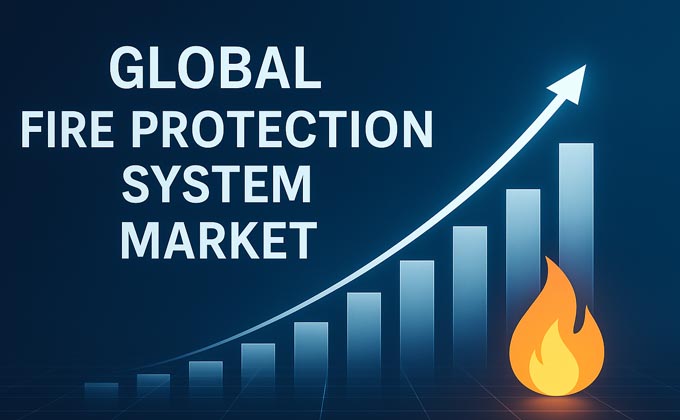
MarketsandMarkets: Global Fire Protection System Market Shows Strong Growth

According to analysis by MarketsandMarkets, the value of the global fire protection system market is projected to reach USD 85.06 billion in 2025 and grow to USD 118.14 billion by 2030, representing a compound annual growth rate (CAGR) of 6.8%. This growth is driven by rapid urbanization, the construction of smart and commercial buildings, and increasingly stringent fire safety regulations across industrial and residential sectors.

Technological advancements, including IoT-based fire detection, AI-powered analytics, and automated suppression systems, are significantly improving safety and operational efficiency. Growing awareness of life and property protection, coupled with government initiatives to strengthen building codes, continues to boost market demand. Rapid industrialization and the development of smart cities are also opening new opportunities for manufacturers and service providers in this sector.

The fire suppression segment remains the dominant part of the market, widely adopted across commercial, industrial, and residential buildings. Integrated solutions combining smart monitoring, predictive maintenance, and IoT analytics are increasingly sought after, enabling proactive risk management. Manufacturers are also focusing on developing eco-friendly, modular, and residue-free systems that comply with evolving safety standards.

The commercial segment is experiencing robust growth as demand increases for advanced fire protection systems in office buildings, shopping centers, hotels, and educational institutions. End users are prioritizing solutions that ensure regulatory compliance while minimizing downtime and improving operational continuity.

On a global scale, the Asia-Pacific region leads in growth rate, driven by rapid infrastructure development and stricter fire safety regulations in countries such as China, India, Japan, and South Korea. The surge in high-rise commercial buildings and industrial facilities, together with heightened awareness of life and property safety, continues to fuel demand in this region.

According to the report, key players shaping innovation and safety standards in the global fire protection system market include Johnson Controls, Honeywell International, Siemens, Robert Bosch, and Eaton.

Saving lives and improving health: Electrical smoke ventilation systems in modern buildings

Fire safety is a fundamental requirement in modern construction as it saves lives, property, and investments.

Electrical smoke ventilation systems not only ensure safe evacuation routes and minimize structural damage during a fire but also enhance everyday building functionality.

Beyond emergency use, these systems integrate comfort ventilation for daily use to improve indoor air quality and comfort for building users.

For building owners and users, these systems represent a solution that delivers on every level – from compliance and cost-effectiveness to safety and user experience.

The ability of electrical smoke ventilation systems to combine reliability, energy efficiency, and advanced technology makes them indispensable in modern construction.

What are electrical smoke ventilation systems and how do they work?

Electrical smoke ventilation systems are designed to remove smoke and heat during a fire. By creating controlled airflows, they keep escape routes clear and minimize damage to the building.

Electrical smoke ventilation systems typically consist of:

  • Electric opening systems: Open and close ventilation points like skylights.
  • Smoke and heat detectors: Trigger the system when dangerous levels of smoke or heat are detected.
  • Control panels: Automatically activate the system or allow manual activation during an emergency.

When triggered, the system opens strategic ventilation points to create natural airflow. This process, called Natural Smoke and Heat Exhaust Ventilation (NSHEV), achieves:

  • Smoke-free escape routes for safe evacuation.
  • Lower temperatures to protect the building’s structural integrity.
  • Improved visibility for firefighters, enabling faster response.

The precision and reliability of electrical systems ensure consistent performance in critical moments.

Why choose electrical systems?

There are various technologies on the market for smoke ventilation. However, electrical solutions offer several key advantages, including:

  1. Low maintenance and service costs: Electrical systems have very few maintenance demands. In the event of service or a fault alarm, skylights can be closed remotely from the control panel, eliminating the need for manual intervention on the roof.
  2. Built-in comfort features: The electrical system has an integrated option for natural ventilation/climate control (comfort). Upgrading existing systems to comfort ventilation only require the addition of specific accessories.
  3. Great reliability: Electrical systems are less sensitive to environmental factors like temperature changes, ensuring consistent performance. Systems like those from Actulux are tested to operate reliably in both extreme heat during summer and freezing winter conditions, making them suitable for a variety of climates.
  4. Communication and integration: Electrical solutions can be easily adapted to modern building automation systems and allow remote monitoring and control. They work seamlessly with centralized controls, enabling real-time communication of alarm/fault signals from the control panel.
  5. Local compliance: Electrical systems can be adapted to meet regional safety regulations, ensuring smooth integration into local construction standards.

Benefits of electrical systems for building owners

Building owners benefit significantly from electrical smoke ventilation systems, both in terms of safety and cost efficiency.  The key advantages for building owners include:

  1. Low maintenance and long lifespan: Electrical systems require minimal upkeep, helping to reduce operational costs over time.
  2. Regulatory compliance: Meeting strict safety standards simplifies approval processes with local authorities.
  3. Integration with building automation systems: Electrical solutions can be seamlessly integrated with alarms and centralized control platforms, providing full oversight of the building’s safety measures.

For building owners, these systems represent a forward-thinking investment in operational efficiency and safety.

Benefits of electrical systems for building users

The ultimate beneficiaries of electrical smoke ventilation systems are the people who live, work, or visit the building. Benefits for users include:

  1. Enhanced safety during fires: These systems ensure clear evacuation routes by removing smoke quickly and effectively.
  2. Improved indoor air quality and comfort: Many electrical systems double as ventilation solutions for daily use, improving air quality and comfort.
  3. Peace of mind: With advanced monitoring and self-testing, occupants can trust that the system is always ready to protect them in an emergency.

For building users, these systems deliver both immediate safety and long-term benefits, improving their overall experience within the building.

Please insert this text in a factbox:

Why must skylights open in the event of a fire?

Opening skylights is a crucial aspect of fire safety as it allows smoke and heat to escape, protecting both lives and the building itself. Smoke poses the greatest threat during a fire, often being the primary cause of fatalities due to reduced visibility, toxic inhalation, and blocked escape routes.

By opening skylights strategically, smoke and heat are expelled, providing several critical benefits:

  1. Smoke removal: Open skylights create natural airflow, allowing smoke to rise and escape. This prevents it from accumulating in hallways and other critical areas.
  2. Clear evacuation routes: By removing smoke, escape routes such as staircases and corridors remain accessible, giving occupants a safe path to exit the building.
  3. Structural protection: Heat trapped inside a building can weaken its structural elements, increasing the risk of collapse. Proper ventilation lowers the temperature, protecting the building’s integrity.
  4. Support for firefighters: Ventilating smoke and heat improves visibility and prevents fire from spreading, enabling first responders to work more effectively.

Modern electrical systems automate this process, ensuring that skylights open quickly and strategically during a fire, saving precious time and lives.

Advanced Launches Upgraded MxPro 5 and Axis EN Fire Panels

Advanced, a global leader in fire and life safety systems, is proud to introduce the latest enhancements to its trusted MxPro 5 and Axis EN fire panels. Building on the strong foundation of the existing solution, these updates are designed to improve performance and versatility, ensuring even greater peace of mind for users.

This upgrade brings a significant boost in performance, with faster power-up times and greatly reduced configuration transfer durations. Users will also enjoy enhanced configuration capabilities, supporting more complex cause-and-effect programming. These improvements make it easier than ever to manage larger and more advanced fire safety systems. Powered by a state-of-the-art processor, the enhanced panels deliver eight times the processing power of previous models, allowing for faster response times, improved system reliability, and the ability to handle more complex installations with ease.

A key advancement is the introduction of an upgraded power supply unit, designed to offer easier replacement, improved support for third-party equipment, and extended battery life. This ensures that the panels operate with greater reliability and uninterrupted performance. In addition to these hardware upgrades, Advanced has introduced a new, intuitive programming tool – ConfigTool (PC-Net-022) – which is compatible with next-generation panels. This tool provides a vastly improved user experience, with easier navigation and up to ten times faster configuration transfer times, now typically taking less than 30 seconds.

The MxPro 5’s versatility is further enhanced by its support for a variety of the latest wired and wireless protocols, including leading open protocol providers Apollo, Hochiki, Argus and Nittan, bringing greater system design flexibility to meet the requirements of a wide variety of sites.

These upgrades have undergone rigorous testing and are FM-approved to EN 54 Parts 2 and 4, affirming their compliance with the highest international fire safety standards.

Backward Compatibility for Seamless Upgrades

On top of these extensive improvements, the next-generation MxPro 5 and Axis EN panels are also fully backward compatible with existing models. This ensures that current users can easily and cost-effectively upgrade their systems without disruption. The panels retain their familiar external appearance and part numbers, simplifying the integration process, while the internal design has been refined to accommodate the enhancements.

About Advanced

Advanced is a leading provider of intelligent fire systems and solutions, committed to promoting safety through innovative technology and education. Our extensive portfolio includes fire detection systems including false alarm management, multiprotocol fire panels, evacuation alert systems and emergency lighting, trusted by professionals worldwide.

Advanced is owned by FTSE 100 company Halma PLC – a global group of life-saving technology companies with a clear purpose to grow a safer, cleaner, healthier future for everyone, every day.

For media inquiries, please contact: arobertson@advancedco.com

AUREL MSR: Why Aren’t All Gas Sensors Mounted at the Same Height?


Different gas characteristics and complex interactions in the environment mean that not all gases are detected at the same height. The height and positioning of a gas sensor are therefore of crucial importance for detecting dangerous gases and vapours early on.

Why are gas sensors mounted at different heights?

Gas density

Not all gases are detected at the same height, as gases concentrate at different heights due to their density. A gas may be heavier or lighter than the air. Heavy gases tend to sink downward, while lighter gases rise upward. As a result, a heavy gas that remains near the floor will not be detected in higher areas and a light gas that rises upward will not be detected near the floor.

For example, carbon monoxide in the garage is measured at almost the same density as air and at breathing height. Carbon dioxide, on the other hand, has a relative density of 1.53 and is measured near the floor. Methane has a relative density of 0.56, moves quickly to the ceiling and is measured in that area.

Gas distribution

Gas distribution in the environment is also of crucial importance. The way in which a gas is distributed in a room depends on various factors, such as ventilation, temperature and the position of the source.

The concentration of gases is thus higher near the potential source than it is near the floor or ceiling. Positioning the gas sensor correctly ensures that a hazardous gas concentration will be detected immediately, before it spreads through the room.

Reaction times and sensitivity

Different reaction times and gas sensor sensitivity are also of crucial importance. A gas sensor located near the floor will react to gas that accumulates there faster than a gas sensor near the ceiling.

What else affects the gas sensor height?

Environmental conditions: Environmental conditions in the industry vary. By placing gas sensors at a variety of heights, differences in temperature, air current, or gas distribution, for example, are easier to detect.

Adapting to process requirements: Some processes require gas sensors to be placed in specific locations in order to monitor and control the relevant parameters. This is particularly true of complex production environments such as beverage manufacturing and automatic processing machines. The atmospheres in these areas are often made up of inert gas, which changes the specific density of gases relative to one another. One example of this is measuring oxygen in an argon atmosphere.

Safety standards: Placing gas sensors at different heights helps to ensure safety by monitoring potential hazards or gas leakages on different levels of a building or a plant and triggering an immediate alarm in the event of a hazard. These safety standards may be required by standards. So for example, a sensor height of 1.5-1.8 m is defined in garages for measuring carbon monoxide.

How are the gas sensors mounted?

The gas sensors are mounted in housing that protects them from outside influences. For comprehensive IP protection, the housing is installed with the gas sensor head pointing down. If the gas sensor is mounted at the wrong height, for example, the gas cannot be detected early. If the gas sensor is mounted mechanically incorrectly, the sensor’s IP protection is not guaranteed. It must also be clarified whether there is an air current and whether the gas sensor should be mounted on the ceiling or floor.

In garages, for example, there is a static current. A sensor here can detect the gases within a radius of 7-11 m, corresponding to approx. 400 m².

Which type of connection does MSR-Electronic offer?

MSR-Electronic uses a 3-conductor system for analogue gas sensor connections and a 4-conductor system for bus connections. The 3-conductor connector for the 4-20 mA connection is a stable connection type for an analogue connection. Each individual gas sensor is connected to the controller by means of complex wiring.

With the bus connection, on the other hand, only one cable is placed leading from the controller to the area being monitored. The individual bus users, such as “small light bulbs”, are mounted on a string of lights. The gas sensors are addressed here and communicate digitally with the controller.

Effective Strategies for Managing False Fire Alarms

False fire alarms can lead to substantial financial costs, operational disruptions, reputational harm, and even put lives at risk, Vladimir Zrnic, Regional Sales Manager for Europe at Advanced explains.

False alarms are a persistent issue that cost UK businesses over £1 billion annually. The implications aren’t just financial; repeated false alarms make people complacent, delay reactions in real fire emergencies, and put both lives and property at risk.

European fire services are already under increased pressure from issues such as wildfires, which have burned almost twice as much surface area in Spain, France, Italy, Croatia, and Greece compared to last year, and false alarms can divert them from these real emergencies.

False Alarm Strategies
Effective false alarm management begins with a thorough fire risk assessment and proper fire system design. Two primary approaches are detector technology, which screens false signals, and intelligent fire panels, which analyse sensor data to verify alarms. State-of-the-art systems integrate these methods to significantly reduce false alarms.

Intelligent fire panels

Combining data from detectors with an intelligent fire panel enhances false alarm management. Multi-sensor detectors can switch between heat and smoke modes, and double-knock programming ensures alarms are verified by multiple detectors. Advanced’s AlarmCalm system, featured in panels like MxPro 5, Axis EN, and Go, includes software detector technology that allows time to confirm the presence of fire before triggering a full fire alarm.

Intelligent fire panel applications

Apartments: False alarms often stem from everyday activities like cooking or shower steam. With AlarmCalm, if a verification sounder is activated by cooking smoke, a resident can press the AlarmCalm button to silence the sounder allowing residents to manage these alarms, reducing unnecessary evacuations.

Shopping Centres: In environments like supermarkets, where bakery ovens and other heat sources are common, if smoke from an oven activates a multi-sensor detector a verification countdown timer can begin. If the smoke clears and no heat is detected the system will return to normal, avoiding unnecessary shop evacuations.

Manufacturing: High temperatures, dust, and chemicals in manufacturing plants can trigger false alarms. Here, verification delays help ensure that alarms are genuine, if no further detectors are activated the system will reset, reducing disruption and maintaining productivity.

Offices: Varied occupancy offices can also benefit from flexible programming. With AlarmCalm, virtual building areas can be created independent of traditional fire zones, false alarm management can be tailored to specific needs to enhance safety and efficiency.

False alarms are more than just a nuisance—they compromise safety and incur substantial costs. Robust solutions like AlarmCalm combine advanced detection and intelligent fire panel technology to significantly reduce false alarms across diverse settings. By implementing such systems, businesses can protect their operations, reputation, and most importantly, their people.

For more information on Advanced’s AlarmCalm, visit: https://www.advancedco.com/solution/alarm-calm/

Mobile Children’s Heart Hospital Receives Bespoke Advanced Fire Protection

A mobile children’s heart hospital, built in El Salvador, was recently equipped with an Advanced wireless fire safety system, ensuring top protection for children undergoing heart surgery, their doctors, and staff.

Run by Kinderherzen, the mission of the hospital is to ensure that children born with serious heart conditions receive the treatment they need to go on and enjoy healthy lives. Kinderherzen operates in Germany and mobilises doctors to provide critical care for young patients in areas of the world with limited medical services.

Working alongside fellow Halma company Crowcon, Advanced was approached to devise a reliable fire safety system that would be easy to install, uninstall, and reinstall as the mobile hospital moved between locations across Europe.

For speed and ease of setup, Advanced’s innovative solution was to create a bespoke, wireless fire alarm system. At the centre of the installation is an Axis EN single-loop panel paired with a translator and 19 devices including point detectors, sounder-beacon bases, and call points covering various rooms within the hospital.

The system was pre-programmed at Advanced’s headquarters in Newcastle upon Tyne (UK) and shipped to El Salvador, ready for immediate fitting to minimise on-site setup time.

The wireless nature of the system not only simplifies the installation process but also provides flexibility for future expansions or reconfigurations of the hospital layout. This adaptability is particularly important for a mobile facility that may need to adjust its setup based on the specific needs of each location it serves. The ability to quickly and efficiently adapt the fire protection system without extensive rewiring or hardware changes ensures that high safety standards are maintained at all times.

Despite logistical challenges, the installation process was incredibly efficient thanks to the use of special mounting plates for the control panel, translators, detectors, and sounders, which reduced setup time to less than half an hour.

Speaking about the project, Paul Duffy, Technical Services Manager at Advanced, said: “We are extremely proud to support Kinderherzen in their mission to provide critical medical care to children in need. Given the temporary nature of the hospital, the fire alarm system needed to be robust but highly versatile. The reliability and ease of use of Advanced equipment make it perfect for this unusual brief, ensuring the ideal combination of mobility, performance, and safety.”

This Axis EN wireless installation ensures Kinderherzen staff can carry out their essential work with peace of mind that their team, facilities, and patients are protected by the highest standards of fire safety.

To learn more about Axis EN, visit: www.advancedco.com

For more information please contact:

Vladimir Zrnic

vzrnic@advancedco.com

+44 (0)345 894 7000

Fire Protection in Retail, Leisure & Entertainment Sites

Fire safety equipment in dynamic retail, leisure, and entertainment settings must be versatile, reliable but also discreet. Vladimir Zrnic, Regional Sales Manager for Europe at Advanced, outlines some important considerations when choosing the right fire safety solutions for these demanding settings.

 Avoiding false alarm harm

In leisure and retail venues, false fire alarms can be particularly unwelcome, disturbing people’s precious downtime, disrupting purchases and harming business reputations.

Effective management requires advanced detectors and fire panels capable of flexible alarm verification and investigation delays.

In hotels for example, automated verification timers can distinguish false alarms caused by shower steam or smoking from real emergencies. In theatres, multisensors and specialised modes can avoid unnecessary evacuations due to theatrical effects like dry ice smoke, ensuring safety and smooth operational continuity.

Safe, phased evacuation

Safe evacuation in large venues like shopping centres and hotels relies on effective cause-and-effect programming alongside the latest sounder or voice alarm integration to facilitate the evacuation of those most at risk during a fire.

Selecting a fire panel brand with sophisticated cause-and-effect capabilities is crucial for effectively managing evacuations during dynamic fire conditions and reacting to the spread of fire and smoke through multiple areas simultaneously.

Out of sight

Aesthetics are crucial for integrating fire safety equipment seamlessly into retail and leisure interiors.

Designer repeater panels with flush touchscreens look more attractive than standard fire panels but still provide full functionality during fires. Alternatively,custom finishes are available to help panels blend with the décor or branding, and colour-coordinated or low-profile detectors also help improve the look of fire safety equipment.  Some fire systems also allow control of LED blinking to minimise distractions in venues like cinemas and hotels.

Style and safety assured

Layout changes are frequent in some retail settings, so using scalable wireless systems is a wise option. Cable-free fire equipment is flexible and saves on installation costs, plus, EN54-13 compliant fire panels ensure continuous monitoring and fault detection, promptly alerting staff to hidden issues for timely resolution.

Clear communication

Larger venues can complicate emergency navigation, potentially delaying responses. Some manufacturers, such as Advanced, offer custom solutions such as digital mimics with colour-coded LEDs for simplified fire location identification.

In modern buildings, seamless integration of fire and building management systems is crucial for safety and efficiency. Advanced’s technologies, for example, streamline setup and save time by using a common industry protocol. This allows the creation of a system that consolidates data from multiple sources for monitoring via a single central location/PC or the Cloud.

In summary, choosing the right fire protection equipment for retail and leisure venues isn’t straightforward. However, checking that a manufacturer’s product range offers robust solutions to the common challenges outlined above is a great way of ensuring fire safety for retail and leisure venues and peace of mind for those enjoying them.

 To find out more about the features mentioned in this article, please visit advancedco.com or contact Vladimir Zrnic vzrnic@advancedco.com or call +44 (0)345 894 7000.