Home Archive by category Vertical Solutions (Page 11)

Vertical Solutions

Integrating cyber-physical: Security in Banks without Breaking it

Cyberattacks on financial institutions are becoming more prevalent. Some media reports suggest that more malware was targeted at banks in 2019 than any other industry. Cyberattacks are also becoming diverse, ranging from simple phishing attacks to complex attempts to access credit cards and bank accounts. This is hardly news anymore though, banks, by the very nature of what they handle, make an attractive threat. But what is concerning is the increasing number of ways in which cyber and physical security threats converge. Integrated digitalized solutions for operational, as well as security purposes, are increasingly becoming a normacross industries. The downside of it all is this emerging security threat. In this article, we take a look at the new kinds of security threats that customers in the banking vertical should be aware of in 2020, how these can be mitigated with a proper framework, the role of systems integrators and how the right solutions can be used in the right ways.

What Kind of Cyber and Physical Security Threat to Expect in 2020?

In Britain, some of the largest retail banks have been forced to halt processing foreign currency orders after a cyberattack on exchange provider Travelex. In Africa, operations at several banks were affected after attack by Russian hackers.

There is no doubt that there will be more incidents taking place in the future, given the nature of the technology and how hackers continue to successfully exploit vulnerabilities. But even more, concerning is how physical security is now connected to cybersecurity. With physical security solutions becoming more and more digitalized and integrated, an attack on either of the domains could have wide-ranging repercussions.

“Financial organizations are battling a growing number of physical and digital security threats,” said James Somerville-Smith, Global Customer Marketing Leader – End-User Programs at Honeywell Commercial Security. “According to new research from Honeywell Commercial Security, which surveyed 1,000 large financial institutions across the UK and North America, physical security incidents in large financial institutions have increased across all access points, with half of respondents reporting that incidents affecting employee access systems, physical safety of staff and data centers have gone up over the last year.”

Sophisticated Attacks and Higher Loss
According to Joon Jun, President of the Global Business Division at IDIS, we are likely to see organized cybercriminals continuing to find and target any weakness they can exploit.

“With increased global political instability, we can also expect more state-sponsored cyberattacks on banks and other critical infrastructure where an attack can damage productivity and result in major disruption and financial losses,” Jun said.

On the cybersecurity front, major attacks and threats to the banking sector are focused in three areas, sensitive data exfiltration, ransomware attacks, and denial of service attacks targeting IoT devices, along with risks induced by third party vendors with weak internal cyber hygiene, according to Kevin Sheridan, Director of Financial Institution Services for Convergint.

Convergence of Attacks
Alarmingly, several attackers have taken advantage of physical security solutions that are in place. For instance, hackers gaining access to surveillance cameras at ATMs are able to access the pin codes that customers enter. Jun pointed out that theft of biometric data as hackers look to bypass multi-factor authentication (MFA). This danger was
highlighted last year when Kaspersky Lab researchers identified the selling of digital fingerprints together with
associated personal data on the dark market.

Finding Method in The Madness
To tackle these growing problems of attacks on integrated security systems and avoid security breaches of any kind, banks must plug the gaps between standalone platforms by integrating their physical and digital security systems across the entire enterprise.

“As many financial institutions are both multisite and multiregional, such as retail banks with HQs and then branches, this means striking a careful balance between global central integration control and different regions using different systems and equipment – or locally monitored systems with global remote management as a possibility,” Somerville-Smith said.

However, an even major issue is that while cyber and insider threats make for more fascinating stories, physical security can often be overlooked. Jun explains that these risks have not gone away though and include bank and ATM robbery, cash-in-transit attacks, social engineering to gain access to restricted areas, and corporate espionage.

Plus, banks should also be considering the safety of their airspace, with drones posing not only a terrorist threat to corporate enterprises but cyber threats too as they have the capability to Wi-Fi spoof and trick employees and visitors into thinking they are connecting to a trusted network in order for hackers to gain access into a bank’s corporate network as well as harness personal data including banking details.

Creating a Framework for Cyber-Physical Integration in Banks

In the UK and North America, financial institutions are shifting towards a global management system of physical security. Asurvey from Honeywell Commercial Security shows that half of the respondents (47 percent) said their company’s security is managed at a global level, with all branches under the same enterprise or integrated system, and a further third (32 percent) said they were planning to shift to a global model.

With integration playing an important role across both security measures and markets, enterprise solutions featuring remote oversight and management are going to grow in popularity.

A Holistic Approach

“The keyword is ‘integrated’,” explains Martin Koffijberg, Director, Business Development, Banking and Finance at Axis Communications. “A failure to look holistically at both physical and cybersecurity – to connect the physical with the logical – will inevitably create vulnerabilities. It is important to adopt some form of Enterprise Security Risk Management or Converged Security approach.”

Both physical and IT security should follow the same cybersecurity principles and be evaluated in the same way, Koffijberg added. The first step has to be an acknowledgment from physical security practitioners that these security devices are connected to the network and, while performing security operations, create new risks to a business that hasn’t been seen with older technologies.

Framework Components

First, thorough and continued risk assessments need to be part of every physical security manager’s playbook. Today, many banks in the West have implemented sophisticated physical identity and access management (PIAM) policies, which control not only access into buildings but into the corporate network too.

“These feature useful functions like shutting down access to networks when an employee leaves their laptop, desk or building,” Jun said. “Other functions include enforcing two-factor authentication before login and the use of analytics to flag suspicious network access or unusual activity.”

Speaking about his company’s experience in dealing with the situation, Kevin Sheridan, Director of Financial Institution Services for Convergint, said that their larger financial clients are focused on four key elements of securing their operational security systems to mitigate the risk of any potential vulnerabilities. These are:

1. Device Identification
With the volume of connected devices integrated into physical security systems at financial institutions, awareness of what devices are deployed, where they are deployed, and what their operational status has become more important than ever.

2. Device Hardening Protocols
Password management is a focal point of our most sophisticated clients. Changing default passwords, while seemingly a rather basic activity, is something that many institutions have struggled to achieve given the volume
of IoT devices deployed.

3. End-to-End Encryption
Physical security system architectures are increasingly having this level of network architecture as a requirement of physical security system design.

4. Patch Management
Keeping your systems up to date with the latest firmware patches and software updates, when combined with the aforementioned elements, reduces the attack surface significantly.

The Human Factor And AI
When designing a comprehensive security solution with a holistic approach, technology is only part of the problem to be dealt with. The other part is the people who use the technology. To mitigate physical breaches, human error, and surveillance monitoring, it’s also important to address the problem of fatigue.

“That’s where deep learning and AI solutions can transform control rooms operations for major financial institutes, including those that operate 100s or even 1000s of cameras across large and multiple sites,” Jun said “Because deep learning learns over time, it distinguishes between environmental factors versus actual threats, such as an intruder or suspicious loitering. This translates into fewer false alarms and reduces the chance of control room operators shut down alarms, resulting in a quicker, more appropriate response to incidents.”

Solutions Critical to Fighting Cyber-Physical Threats in 2020

Physical security systems and devices that are connected to the network are endpoints that can potentially introduce significant cyber risk into an organization. Physical security devices are frequently overlooked by IT departments and oftentimes, are not properly patched, updated, or managed.

“These devices are typically configured with default passwords, open ports, and protocols, and they run legacy firmware versions with known vulnerabilities,” explained Kevin Sheridan, Director of Financial Institution Services for
Convergint. “Hostile actors can exploit these vulnerabilities, allowing them to gain an initial foothold into an organization’s network. These compromised devices can then be used as a foothold within the network to pivot to other devices or systems.”

Properly hardening camera, card reader, video management, and other connected systems prior to their initial deployment, and properly managing them throughout their lifecycle, will significantly reduce the attack surface that can be exploited, thereby reducing risk.

Major Factors to Consider
According to James Somerville-Smith, Global Customer Marketing Leader – End-User Programs at Honeywell
Commercial Security, there are four key considerations to bear in mind when integrating cyber and physical security systems:

1. You must ensure that all physical hardware components are cyber secure in their own right
2. All intelligence and data must be protected behind a strong and comprehensive firewall
3. Access to sensitive areas such as data rooms needs to be protected by multilayered accreditation
4. Systems in sensitive areas are protected via local security so that personnel is not able to access systems unless they have properly badged into the restricted area. This will avoid giving system access to personnel in areas that they have got into illegally (e.g., by tailgating), with any breaches being flagged immediately to a central control room so that a response team can be sent to check the breach

Sheridan added that besides properly managing the cybersecurity of the actual physical security devices deployed at a client’s site, it is also imperative that the integrator itself has a strong internal cybersecurity program to ensure the integrator is not the vector for sensitive client data to be compromised.

From Technology to a Process
Martin Koffijberg, Director, Business Development, Banking and Finance at Axis Communications is of the opinion that the concept of cybersecurity should be looked at as a process rather than a technology. You can have the best security-related features built into technology, but if they haven’t been enabled or set up correctly your investment in this is lost and the associated risk increased.

This is no different for physical security technologies than any other IT device connected to a network. This has recently been highlighted by the UK Surveillance Camera Commission’s Secure by Design, Secure by Default certifications for manufacturers.

Balancing Costs and Efficiency
It’s not unusual for global banks to now hand over their technical physical security deployments to ICT departments. Cybersecurity risks are making convergence happen in some sectors, including banking, far more rapidly than the advent of IP surveillance did. It’s not unusual now to see surveillance decisions made by heads of IT and cybersecurity (or those people at least being major influencers on purchasing decisions) but this trend is occurring more in the west than elsewhere.

“However, these set-ups are out of the reach of many banks and are seen as too expensive to implement and maintain,” Jun said. “This is compounded by the fact cybersecurity experts in some parts of the world are hard to come by.”

Jun stressed on the importance of cost-efficiency, concluding that banks need the most cost-effective local NVR and centralized serverbased solutions available, and ones that use proprietary protocols and custom file structures which make them unfamiliar to cybercriminals and therefore very difficult to hack. Plug-and-play solutions could also play a key role, as they are easier to install compared to traditional systems.

Bank Security Challenges and the Role of Systems Integrators

There is no question on the need to come up with a comprehensive security framework that would integrate cyber and physical systems in the banking sector. Unfortunately, to implement such an effective framework, banks must overcome certain challenges.

For instance, legacy operating systems can be difficult for financial clients to justify replacing. If an access control platform, for example, isn’t investing in the cybersecurity feature set of their system, it can put clients in a tough position. A well-connected integrator with scale can help a client make sense of both the capabilities of their existing systems, as well as alternative platforms.

“In addition, there are many operating silos within financial institutions, with their own operating mandates and business objectives,” said Kevin Sheridan, Director of Financial Institution Services for Convergint. “Coordinating the cyber posture of those operating entities is absolutely essential. ATM/ITM groups, facilities, physical security
departments, and IT might have different priorities, but they all utilize physical security systems to deliver services to their internal and external stakeholders.”

In the past, many of these operating silos used a variety of integrators, both regionally and within lines of business, but in today’s environment, the most risk-aware clients are single sourcing integration services such that the security protocols are uniform across the entire enterprise.

The Human Factor
Some of the other challenges include the lack of understanding, at a high-level, concerning the risks posed by insecure IoT devices, including IP cameras. Confusion is fueled by mixed messages from vendors about “strong cybersecurity credentials” when in truth some have cameras that are far from secure- with even some devices listed on websites revealing vulnerabilities or backdoors that can be exploited.

“Security is still too often seen as a cost, and therein lies the danger – it is a mistake to just provide a budget for a surveillance upgrade without fully considering cybersecurity threats,” said Joon Jun, President of the Global Business Division at IDIS. “Equally dangerous may be avoiding decisions about upgrades or even maintenance, because strong security is not seen as a business asset. After disaster strikes, it’s too late for boards to discover that a successful cyber-attack via an IoT device, just like a physical attack, can be both disastrous and costly.”

What The Systems Integrator Can Do
Having seen the challenges, it is obvious that constant education, training, and skilling are essential. Every individual can essentially create a potential vulnerability, and a chain is only as strong as its weakest link. According to Martin Koffijberg, Director, Business Development, Banking and Finance at Axis Communications, this means that systems integrators (SI) need to work closely with the manufacturers of physical security equipment to stay abreast of both cybersecurity enhancements and potential vulnerabilities (and, critical, the action required to mitigate these).

“The way that security systems have been designed and manufactured has fundamentally changed over recent years,” Koffijberg said. “The importance of installation and commissioning security systems, combined with an understanding of how corporate networks need to be configured to protect the integrity of the device and network has changed, and human error poses the biggest risk.”

In other words, SI should prepare themselves by investing in technologies and top cyber talent on both the offensive and defensive sides, to better understand the risks that physical security devices can introduce into an organization’s network.

Kevin Sheridan, Director of Financial Institution Services for Convergint, explained that technology investments in credential management, scalable enterprise patch management, and firmware deployment platforms, as well as detection and response capabilities, are some of the tools needed to help reduce the risks often associated with
physical security devices.

“Follow a tried and true published standard; the National Institute of Standards and Technology’s (NIST)
Cybersecurity Framework,” Sheridan added. “It provides a common language that allows staff at all levels within an organization – and at all points in a supply chain – to develop a shared understanding of their cybersecurity risks. The Framework not only helps financial organizations understand their cybersecurity risks (threats, vulnerabilities, and impacts) but how to reduce these risks with customized measures.”

UNV thermographic fever screening solution

As the emergence spreading globally and the cases of Coronavirus rapid growing in Europe, the national economy in each country is hit hard. Thus resumption of work and production as well as back to school becomes serious challenge to economic recovery currently. For this epidemic situation, abnormal body temperature is one of the symptoms of pneumonia, it is essential to effectively detect and control the flow of people from areas with high incidence of the epidemic.

In order to help organizations respond to the epidemic situation, Uniview recently releases the latest thermographic fever screening products and solutions which will make a fast preliminary human skin-surface temperature screening without any contact and better to prevent infection from entrance area.

For the UNV newly thermographic fever screening solution, it consists of optical & thermal bi-spectrum camera, blackbody, AI NVR and tripods, which is an all- in- one delivery solution with easy to install and available for rapid and temporary deployment. The bi-spectrum camera adopts 4MP 1/8 inch optical sensor and 384*288 thermal detector to provide clearer image and measure temperature differences in people entering the field of view, besides the camera is built in mic and speaker and red & blue alarm flash light which is easy to warn personnel on site when cases happen. UNV solution uses blackbody device to help calibrate the temperature measurement, making it more accurate and stable especially in less controlled environments where the elements can influence the reading. At the back-end, the AI NVR will allow two bi-spectrum cameras to access in and record simultaneously, and it can provide intuitive demonstration interface to visually display temperature status, mask wearing status, abnormal (elevated) temperature counts, not wearing mask counts and total counts, etc. Moreover, in this smart solution, AI technology ensures thermographic cameras only detect human skin-surface temperature based on face detection, which will filter false alarm caused by other heat source, such as hot water or food.

With its sophisticated component in hardware and excellent performance in image and software, UNV thermographic fever screening solution can support no more than ±0.3℃(with blackbody)deviation at recommended range of 3~6 meters, and be widely applied to multiple scenes such as schools, hospitals, commercial buildings, transportation hubs, etc.

Vanderbilt & ComNet launch new online resource for customers

ACRE brands Vanderbilt and ComNet have recently released an Online Events and Learning page on their website, www.vanderbiltindustries.com/online-events. The launch of this new resource is in response to the current postponement of tradeshow events amidst the Covid-19 pandemic.

Speaking about the new online resource, Oleg Lesiv, ComNet Sales Manager – Eastern Europe, says: “I believe this new online resource from Vanderbilt and ComNet will greatly assist our customers during this time, and it matches our motto of supporting them on every step of their security journey. That is the primary goal of this new Online Events and Learning page.”

The resource takes a customer-first approach by highlighting and making available in one area Vanderbilt and ComNet’s customer value adds. These include free online training services, multilingual customer service support, and free product demonstrations.

Lesiv continues: “As a further way to reach our customers with news and information about our products during this time, we are also beginning to host multiple webinars. These will be delivered by our in-house experts and will be a great opportunity for our customers to engage directly with some of the top minds behind these products in our company. Our new Online Events and Learning resource page has all the details about our upcoming webinars and how customers can register to attend these online events.”

Award-winning products

The Online Events and Learning approach by Vanderbilt and ComNet is built on a foundation of customer-focused core values such as empowerment, collaboration, and high performance. The current fruits of these core values will be on display for visitors to the Online Events and Learning page to see. For instance, detailed and engaging webinars include ComNet’s Port Guardian and Vanderbilt’s cloud-based intrusion solution SPC Connect and access control system ACTpro.

ACTpro, in particular, embodies the customer-first and high-performance approach being talked about. It is a product that has continued to evolve based on customer requirements from the field, with its latest features including a “best-in-class” rules mapping engine and PoE Ultra controllers, plus Bluetooth readers and Biometric fingerprint readers that were recently added to the portfolio.

New webshop delivers

Also weighing in on the launch of the Online Events and Learning page is Vladimir Majer, Vanderbilt Sales Manager – South Eastern Europe. “This new online resource helps our customers and shows that Vanderbilt and ComNet are all-round solution companies,” Majer states. “The resource page contains numerous tools to help a buyer’s journey from start to finish. Also highlighted on our Online Events and Learning page is our webshop platform. This has been available to our customers for less than a year, but already it has proved very popular with our customer base,” Majer explains.

The webshop optimizes the goal to serve customers 24/7 and presents a simplified, intuitive interface that makes it easy to navigate and use. How-to videos assist with any questions that may arise, and an improved product hierarchy and centralized Asset Management System (AMS) ensure all support materials are relevant and up to date.

The Online Events and Learning page can be found at www.vanderbiltindustries.com/online-events.


SMART INVENTORY MANAGEMENT HELPS RETAIL IN OPERATIONS, REDUCE SHRINK PROVE

Special Feature
Retailers today are looking for smarter, more time-efficient, more cost-effective ways of inventory management. Traditional methods of inventory management are time-consuming and prone to human error, which costs businesses time and money. By deploying smart inventory management solutions such as autonomous inventory robots, smart shelves, RFID, etc., retailers are able to reduce shrinkage and improve overall business efficiency. The average shrink rate in the retail industry in 2018 was roughly 1.4 percent, which translates to US$50.6 billion, according to the 2019 National Retail Security Survey by the National Retail Federation. The majority of survey respondents indicated that they will allocate more money to loss prevention efforts, with a majority of that going toward technology. The need for more advanced inventory management solutions in retail has driven retail technology providers to develop smarter, easy-to-use solutions. Furthermore, with new challenges facing retailers, these solutions may be the key to improving business operations and providing customers with a better in-store shopping experience.

Smart Inventory Management Provides Retailers with Real-Time Data
Utilizing smart inventory management, like autonomous inventory robots, smart shelves and RFID, is helping retailers become more operationally efficient and reduce shrinkage.

Smart inventory management is enabling retailers to make informed decisions based on real-time inventory data. Today, as the retail market shifts more toward omnichannel and cross-selling, the need
for accurate data has become more important than ever for retailers to make informed decisions. “Smart or real-time inventory is an innovative way to control cost and operations using data to minimize inefficiencies,” said Sergio Ramos Jubierre, Product Manager for Stockbot and Head of Retail at Pal Robotics. Traditional inventory management is done by hand, which Jubierre notes is only appropriate for small retailers (i.e., less than 500 square meters). However, on a bigger scale this method is costly and time consuming, as well as more prone to human error. By automating the inventory process retailers can not only save time and money, but also increase operational efficiency and reduce the dreaded retail shrink. In fact, a recent report estimates the global retail automation market will reach US$19 billion by 2023, according to MarketsandMarkets.

Autonomous Inventory Robots Provide Real-Time Data

Autonomous robots have found their way into an entire gamut of industries, including retail. Several robotics companies have developed autonomous inventory robots specifically to help retailers automate the inventory process and provide a plethora of other valuable data. Pal Robotics created Stockbot, its autonomous inventory-taking robot system for retail. Equipped with RFID and a vision camera, Stockbot provides retailers with the necessary data to make informed inventory decisions. The robot is able to autonomously move around and perform inventory while the shop is open with customers. Furthermore, it does not require any additional equipment or complicated setup. “Due to the high amount of data Stockbot is able to generate it has a positive impact on customers, employees and management,” Jubierre said. “By being able to localize products Stockbot positively influences the in-shop customer experience, and, therefore, the brand reputation as well.”

Smart Shelves Tell Businesses When to Restock

Smart shelves have been around since the early 2000s and have become an alternative emerging technology in the retail business. By utilizing various types of sensors (e.g., light, optical, weight, etc.), smart shelves not only keep track of current stock availability but can also measure customer interest and enhance the in-store shopping experience. Recently Amazon launched the Dash Smart Shelf aimed at small businesses. The shelf has a built-in scale that can be set up to automatically place orders with Amazon to restock when supplies are low; alternatively, it can send notifications to alert the business if automatic ordering is not wanted. Kroger, the US’s largest supermarket chain and world’s fifth-largest retailer, partnered with Microsoft to develop its EDGE smart shelf. The shelf is powered by Microsoft Azure and connects to IoT devices. The technology aims to enhance the grocery shopping experience by connecting to the customer’s smartphone shopping list and highlighting similar items on the shelf. It also allows Kroger to better manage its inventory and eliminate paper and tags by enabling stores to quickly change prices on digital displays.

Analytics Predict When to Reorder

Retail analytics are often integrated with a store’s point-of-sales (POS) system, analyzing data to help retailers better optimize their inventory and make pricing decisions. The National Retail Federation’s 2019 National Retail Security Survey reported that 55.6 percent of retailers surveyed have already implemented some kind of POS analytics across all its stores. “Analytics are now available closer to the retailer decision maker due to the ability to have more computing and cleverer analytics software close to the data user,” said Harley Feldman, Co-Founder and CMO of Seeonic. Feldman pointed out that more analyzed data will become available to retailers as analytics algorithms improve and computer processing power grows. He added that data capture will also continue to improve as better RFID tags are created to deal with distance, metal and liquids. Demand for RFID (radio frequency identification) is on the rise in the retail sector. This is partly a result of the growing need for real-time inventory tracking and the growth of omnichannel retailing, according to a report by Frost & Sullivan. Retailers have been using RFID for quite some time; however, as analytics have improved and the need for more data has increased, more and more retailers are adopting

RFID solutions. “Soft goods retailers are already beginning to see real benefits from RFID,” said Don Taylor, VP of Business Development at Newave Sensor Solutions. According to Taylor, some soft goods retailers are already quoting 10- to 30-percent inventory savings with RFID while keeping more goods on their shelves and improving inventory accuracy. “We have found that using real-time technology such as RFID, when compared to current inventory methods, is much more accurate,” Taylor added. “This technology provides more information to manage and track products and is far less labor intensive and more accurate.” He noted that audits in particular are highly inaccurate, being just a spot check. “The analogy is that audits are like a photo at one point in time compared to real-time smart technology that is like a video showing exactly what was happening over a specified period of time,” Taylor explained.

How RFID Can Improve Real-Time Inventory Management for Retailers Retailers are driving growth in the RFID market, using the technology for real-time inventory tracking and to improve customer experience.
Retailers are driving growth in the RFID market, using the technology for real-time inventory tracking and to improve customer experience.

Advantages of RFID in Retail

Harley Feldman, Co-Founder and CMO of Seeonic opined that using passive RFID tags is the best method for counting in-store inventory. He explained that using RFID tags gives retailers the ability to perform in-store inventory much more quickly and accurately than manual counting, while also allowing them to easily collect inventory data electronically. Data from RFID also provides retailers with the ability to use analytics to monitor store inventory, such as time-on-shelf by SKU or item, react to changes in demand more quickly, and monitor items from the time they enter the store until sold. Still, there are challenges to using RFID. For one, the technical limitations of 10 to 15 feet of read distance and difficulty with metal and liquid items can be problematic; although, future developments in RFID are expected to improve upon these issues. Then there is the issue of the item’s manufacturer needing to be the one to create and attach the RFID tags. Over the last few years, though, it has become more commonplace for manufacturers to place RFID tags on merchandise, especially in apparel, Feldman noted. The cost of an RFID solution is also a barrier — costs include readers, antennas, the tags, etc. “The tags are typically in the US$0.06 to $0.09 range and carry the SKU of the retail item along with a unique serial number for that individual item,” Feldman said. However, as the technology continues to develop and advance, and as demand continues to rise, the price for RFID is expected to decrease making costs more affordable.

RFID and Smart Shelves

To get around the issue of tagging each individual item, Newave developed a patented RFID system to track merchandise availability in real-time without tagging each item with an RFID label. This system focuses on grocery, convenience and mass merchandise retailers. Newave’s Smart Shelf system provides retailers with information on shelf item movement in seconds using the company’s patented wave RFID antenna technology. When an item leaves the shelf, Newave’s Smart Shelf sees it even when it is not tagged. Based on criteria set by the retailer for low inventory limits, the Smart Shelf software signals an alert in real time that can be sent on-site to store managers, or remotely to merchandising and loss prevention personnel as well as suppliers. It can also trigger an audio alarm message and a video capture alert within the store. “Newave’s Smart Shelf system strives to make it easy to get real-time in or out-of-stock shelf information available anytime to any authorized person or group,” explained Taylor. Such a system could greatly lower costs by providing on-shelf merchandise availability without the need for tagging the products on the shelf.

WHAT RETAILERS WANT IN A SMART INVENTORY MANAGEMENT SOLUTION
Retailers are looking for smart inventory management solutions to help reduce shrink, improve the customer experience and boost overall operational efficiency.

Today more than ever brick-and-mortar retailers need smarter, more efficient inventory management solutions. The most common methods of retail inventory management currently used are technologies and processes that have been around for several years. “Unfortunately retailers continuing to use these methods will still see out-ofstocks at a minimum of 4 to 8 percent of sales, and scanning bar codes for shelf management has proven to be very labor intensive. In many cases, retailers do not have the personnel to monitor and manage their inventories and shelf availabilities. This drives the consumer to other stores or online shopping,” explained Don Taylor, VP of Business Development at Newave Sensor Solutions To combat these issues and to keep customers coming into physical stores, retailers want to improve the in-store experience by reducing out-of-stocks, personalizing in-store ads and having store personnel focus on customer needs. Retailers are also looking for solutions capable of automated tracking of shelf inventories, faster scanning of products, ease of installation for new systems, reduction of labor costs and real-time visibility to a problem at the shelf. According to Harley Feldman, Co-Founder and CMO of Seeonic, the top issue requested by retailers is inventory accuracy by SKU currently on shelves in retail stores. “Retailers are satisfying more and more customer demand, especially ‘Buy Online and Pick Up in Store (BOPIS)’ orders, from store inventory. Therefore, the inventory accuracy is critical to satisfying customer demand accurately and quickly,” he said. Other requests such as data for time items spend on shelf and times items are removed and returned to shelf can be performed more accurately with the serialized data available from the RFID tags, Feldman added.

Easy-to-Deploy Solutions and Positive ROI

Deploying a smart inventory management solution requires time and money — two things retailers want to spend less of. To overcome those obstacles companies like Pal Robotics and Newave Sensor
Solutions have developed solutions that are easy to deploy and guarantee good ROI. “We have created a ready to deploy solution that doesn’t need any layout modifications or additional store installations,” said Sergio Ramos Jubierre, Stockbot Product Manager and Head of Retail at Pal Robotics, of its autonomous inventory-taking robot Stockbot. Pal Robotics provides clients with leasing options that could allow retailers to deploy Stockbot with no upfront cost and positively impact operational optimization and return on investment (ROI). “Stockbot generates data that can be integrated and manipulated for numerous application, such as store floor management, supply chain visibility, process automation and accuracy, omnichannel retailing, promotional activities, returns, locating items, loss prevention and cross selling. Those have a direct impact on store/brand reputation, customer satisfaction and thus on sales,” Jubierre explained. Taylor explained how the soft goods retailers that first adopted RFID into their store operations have seen a good ROI and are continuing to expand RFID use. Retailers are also beginning to move away from handheld RFID scanning and toward fixed portal readers, which allows them to better utilize store resources and improve productivity. Major mass merchandise retailers are also beginning to use RFID portals in their distribution centers to track cartons and pallets going in and out. Newave believes this will evolve into more store-level use of RFID technology. For instance, the company, along with its partner, recently completed installation of over 1,500 dock door portals for a leading international retailer. Within days the RFID solution paid back with a 25-percent improvement in productivity by day two after installation.

Overcoming Retail Challenges with Smart Inventory Management
The retail sector faces many challenges when it comes to implementing smart inventory management, ranging from cost to resistance to change.

Implementing new technologies always comes with its challenges — this is no different in the retail sector. Nowadays retailers face new challenges. Among these are dealing with growing demand and the dynamic nature of product movement. Other challenges originate from the side of operation and logistics. Sergio Ramos Jubierre, Stockbot Product Manager and Head of Retail at Pal Robotics highlighted scalability, tracking, automation and reporting as some of the biggest difficulties that need to be tackled. Additionally, speed of delivery is a problem encountered by both customers and retailers. Challenges with RFID in Retail Jubierre pointed to RFID technologies as a compelling solution for the retail industry. In addition to RFID tags, the fast-moving consumer goods (FMCG) sector has adopted barcodes. “Due to the low margin in the FMCG sector barcodes are the preferable choice for food retailers,” he said. The cost of RFID tags is most definitely a barrier to adoption for certain smart inventory management solutions, as is the cost of the technology needed to read the tags and collect the data. However, the price of RFID tags is dropping and will continue to do so with the projected growth in volume. “Metal and liquid-filled items will benefit from newer tag designs,” explained Harley Feldman, Co-Founder and CMO of Seeonic. The number of manufacturers adding RFID tags to their products will also continue to grow as more and more retailers demand the tags be added. “Since it is more efficient to add RFID up, but it provides the ability for retailers new to RFID to add the technology more easily,” Feldman said. He explained that automatically collecting RFID data is desired, but the cost to do so is still high. As a result, most retailers still use handheld RFID scanners to collect real-time inventory as they are flexible, inexpensive and readily available. Unfortunately, handheld scanners require a person to use it resulting in labor costs.

Challenges with Smart Shelves

In regard to using smart shelves for inventory management, it can be costly since the retailer may have to replace its existing shelving to incorporate new sensing devices. Don Taylor, VP of Business Development at Newave Sensor Solutions explained how in many cases Newave’s Smart Shelf can retro-fit to existing shelving to reduce the cost of installation. In fact, Newave’s Smart Shelf solution has helped retailers reduce out-of-stocks by 60 percent in the first few months after installation. To achieve accurate information on smart shelves, Taylor noted the retailer needs to already have some disciplines in place. Newave requires a product planogram, so that they can monitor and track every SKU. “Retailers need data to be able to determine if they have achieved a positive ROI on their new technology investment. Newave can provide real-time information to any authorized smart device on out-of-stocks, low inventories and missed sales to name just a few categories that will assist the retailer in formulating an ROI,” Taylor said. According to Newave, its technology will deliver a positive ROI in less than a year.

Championing New Technologies

In order for more smart inventory management solutions to be adopted, it is important that retailers are educated on the benefits of these new technologies. Oftentimes it is the lack of education on new technology, not understanding how it works, how it can benefit a business, that keeps them from adopting smart solutions. Retailers need an internal champion to drive new technologies through their stores. By providing proper training to retailers, they will have the knowledge needed to understand and push for new smart technologies.

Helping to monitor temperature in unsure times

Keeping people safe and healthy in unsure times is a very modern challenge. Authorities and companies alike are scrambling to find ways to help manage this and reduce risks. Hikvision offers temperature measurement solutions to help them build processes and infrastructures to prevail.

Taking the temperature of the situation
Temperature is an important indicator of physical health. In many scenarios, people with abnormal temperatures could have a health issue. To have a proper effect, it’s crucial that this is detected and monitored quickly and accurately. But traditional methods of temperature measurement are time-consuming and can put operators at risk. At times like these, technology can provide an efficient alternative.
With advanced detectors and algorithms, Hikvision’s Temperature Screening Thermographic Cameras are designed to detect elevated skin-surface temperatures. This means they can be used for rapid and preliminary temperature screening in hospitals, stations, airports and other public places. The cameras have an accuracy rate of up to ±0.5°C, giving a valuable indication of which persons should be further tested for fever.
It takes just one second to detect a person’s skin-surface temperature, and the system can measures multiple people at the same time. This means it is efficient in an entrance, for example, where a number of people will be passing at the same time.
The use of AI technology means non-human heat sources, for example a hot coffee, are ignored, reducing false alarms.
Once a person is identified by the camera as having a higher skin-surface temperature, they can be flagged for further measurement. The system can also be useful to monitor a situation, providing useful anonymous data from a safe distance supporting end users’ potential analysis or research.
All this is also achieved with fewer people, not only making it easier to manage and more efficient but also reducing the overall risk of unnecessary exposure.

Flexible solutions
Hikvision’s thermal portfolio has a number of options to help with temperature screening. For example, a Turret/Bullet Camera with AI combined with iVMS 4200, a laptop and a bracket can be used as a quick solution that can be easily and quickly installed. For higher accuracy, a solution with a Blackbody calibrator gives an accuracy of ±0.3°C. There’s also a more mobile option, using a Handheld Camera that can connect to a smart phone or PC through wifi to a Hik-Thermal app. This also features a built-in speaker for audio alarm.
There are also solutions that combine temperature screening with access control, allowing lobbies to be monitored and, if necessary, people measuring above a certain skin-surface temperature refused entry until they are double-checked by alternative methods.
It’s important to remember that Hikvision’s temperature screening thermographic cameras are designed for the detection of skin-surface temperatures so as to achieve rapid preliminary screening in public areas. Actual core body temperatures should be further confirmed using clinical measurement devices.
This is just one element of a complex infrastructure to overcome challenges in unsure times. It can also give managers and researchers useful information, collected in a safe manner. Hikvision is committed to developing technologies to empower vision for decision-makers and practitioners, and enhance safety and advance sustainable development around the world.

VIVOTEK: How the IP Surveillance Industry Manages and Enables Social Distancing

Video Analytics During COVID-19
1. Queue management and crowd detection
Queue management was designed to optimize customer experiences and reduce wait times. During the pandemic, the queue management is focused on manage customer flows and avoid physical queues
2. People Counting
In response to the entry control management, there is no doubt people counting solution is the idea video analytics for supermarket chains. It can easily identify occupancy level and real-time monitor the number of people entering and exiting a store, thereby providing customers and staff with a safer environment.
3. Crowd Detection
Crowd Detection video analytics can be used to identify how many people present in a given area. Stores and business’ can n effortlessly manage social distances between customers, automatically sending alert notifications when exceeding the maximum capacity.
4. Personal Proactive Equipment (PPE) detection
Personal Proactive Equipment (PPE) is equipment that can protect the user against health or safety risks at work. Items including safety helmets, gloves, eye protection, high-visibility garments, safety footwear and so on. During the COVID-19 pandemic, it can identify people who are not wearing masks, hardhat, vest or other critical equipment.

Smarter is Safer: Crowd-Control Solutions
These AI-driven video analytics and smart-edge cameras are enabling IP surveillance solutions to better assist users to manage their business under the increased pressures of pandemic conditions. VIVOTEK, a global IP surveillance solution provider aims to provide a solution for retail businesses to maintain maximum occupancy as well as a safer and healthier environment. VIVOTEK Crowd Control Solutions can easily monitor the number of people entering and exiting a store, thereby providing customers and staff with a safer environment. This intelligent people-counting camera and analytics system can be deployed at points of entry to areas with a higher likelihood of social interaction such as shops, supermarkets, pharmacies, banks, and restaurants.
Below are benefits of VIVOTEK’s Crowd Control Solutions.
1. Social Distancing Compliance
Putting safety first, implementing VIVOTEK’s Crowd Control Solution enables effective management of crowds in places where social distancing must be upheld.
2. High Accuracy
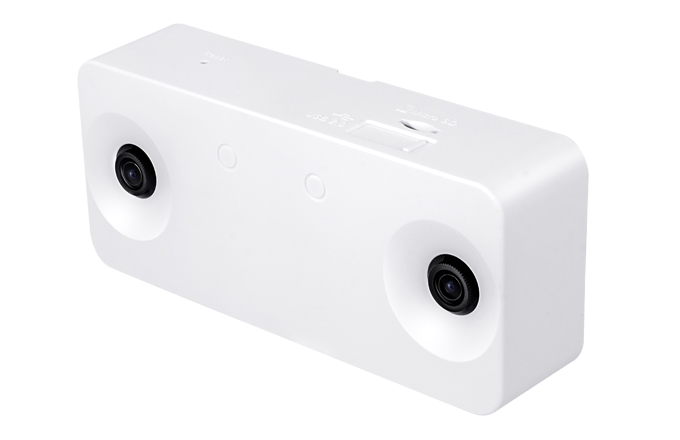
When retailers recruit security staff or part-time employees to manually count traffic this leads to a less than satisfactory result. VIVOTEK’s 3D counting camera provides precise tracking and a counting accuracy of up to 98%. This accuracy is further increased by the ability to transfer large datasets.
3. Real-time
Combing AI with deep-learning analytics, video data can be gathered, analyzed, and applied in real-time, enabling retail businesses to respond promptly to any change.
4. Lowered Risk of Infection
The deployment of VIVOTEK’s Crowd Control Solution also means a minimization of physical contact, providing both customers and employees a safer working and shopping environment.

We Stand Together
COVID-19 has changed our lives and the way we interact and communicate. It also has a growing impact on the global economy. From AI to video analytics, VIVOTEK’s Crowd Control Solution has become essential at this time of social distancing. The need for social distancing will eventually end. In a post COVID-19 world, the solution can be redeployed as a Retail Business Intelligence Solution to optimize retail operations. Until then VIVOTEK will continue to stand together with and serve our customers, while providing AI-based solutions in our fight against the pandemic.
Learn more about VIVOTEK’s crowd control solution. (link to EDM or product page)

ZKTeco Adds Body Temperature Screening & Mask Detection features to Security Solutions

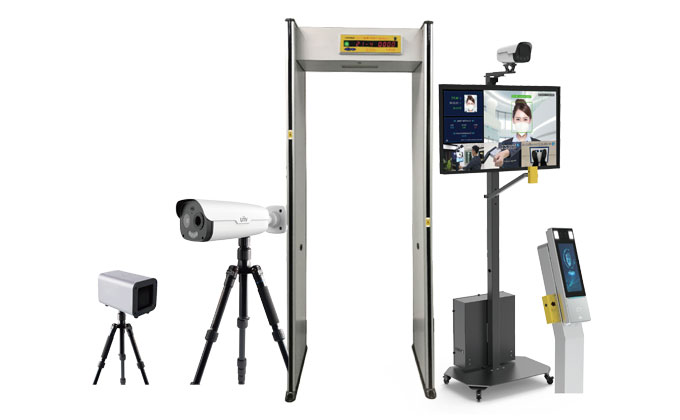
Security and access control management company ZKTeco, top leading multinational manufacturer of biometric market, has recently incorporated to some of its access control readers, IP surveillance cameras and walk-through metal detectors some upgrades to now have body temperature screening and mask detection capabilities.

Now that critical period of COVID19 is nearly ending, still much of the global population remains socially isolated to prevent the spread of disease. The question is how to return back to certain normality and of course how to return to work after lockdown, regardless of how this reincorporation is going to be scaled, one thing is for sure, we have to be cautious not to reignite infections rate and that means we have to return to our physical working places counting with the necessary measures to avoid spreading risk of contagion. For that, there are three basic guidelines we need to follow: social distancing and no contact, everyone must wear masks and regular check for symptoms.

In words of ZKTeco’s Europe CEO, Fernando Ducay, “Our newly released security solutions with body temperature detection have become a real ‘need to have’ especially in recent times, as they help identifying and restrict people having elevated body temperatures from entering large highly dense public places including schools, hospitals, as well as commercial & residential properties” . Not only that he added “Besides securing people’s environment, we would like to also protect their health and do our best to prevent the spread of the coronavirus”

At ZKTeco we made an effort to deliver new capabilities to our solutions that respond to the rules enforced due to the coronavirus pandemic, adding the necessary features like temperature screening and mask detection to our security solutions to grant compliance with such guidelines and permit returning to normal functionating while keeping our people and business safe and secure preventing outbreak of disease.

More flexible working helps to maintain social distance and no contact. For example, flexible clock-in and clock-out time to prevent too many people from entering and leaving the office building at the same time or smart working, activities that can be monitored on site or remotely with our cloud time and attendance solution called GoTimeCloud.

So, what about controlling access of people not wearing mask or having a body temperature measurement over recommended? No contact and body temperature measurement are granted with our Touchless Biometric devices.

ZKTeco recently took a deeper step into the facial recognition market with the launch of its new series of visible light facial recognition (VLFR) products. The company says VLFR overcomes the shortcomings of previous facial recognition products and uses deep learning to improve recognition and reliability, and it is far better at catching fake faces. The deep learning systems deals with the lighting situation, the not 100% dead-straight images of faces, as well as spoofing. By passing its recognition software through ‘continuous training’, it has been able to enhance the performance of its recognition algorithms to a stage where it is now ready for real-world use.

The VLFR system ZKTeco developed beats fake faces through its anti-spoofing algorithm, which conducts liveness detection by learning how to differentiate lighting, texture, and resolution. The system also uses two cameras. One is a visual light camera that is used for recognition and verification, the other is an infrared camera used to detect fake faces. People who try to verify a fake identity by using a picture on paper or on their phone or tablet, for example, will quickly find their access is denied. Even using a high-definition video of a face will not be accepted. The utility of these systems is in the flexibility of the verification process, people can be recognized ‘on the move’ as they approach the point of entry. The VLFR system will detect their face and track and identify them as they approach. It is also able to recognize an enrolled face with a deflection angle of 30% – left to right, and up and down. It can detect and recognize faces, more than one at a time, and it can also capture faces in a certain area, for example at a sporting event or in retail environments.

Thanks to the incorporation of thermal sensors and improvements developed in firmware, our access control readers’ facial recognition capabilities are also able to identify individuals wearing protective masks — for example, healthcare workers — allowing them to safely keep the masks on during the biometric verification process, in addition to their touchless palm and facial recognition sensors — capable of detecting a person’s body temperature within 0.3/0.5ºC deviation range from 0,5 m away, allowing them to be used for entry and exit screening in public venues where an abnormal body temperature could be an indicator of COVID19 and therefore warrant restricting access to an individual who may be showing symptoms. Installers have a wide range of possibilities for installing them, as they are suitable for almost any support: on wall or desktop, integrated to turnstiles and speed gates or simply with a pedestal on floor.

Not only that, ZKTeco’s ZN-T5/W IP surveillance camera, which has both thermal and visible light capabilities, when paired with the ZN-TH01 — which uses black body radiation technology for recalibration — can read the body temperature of a group of up to 30 people from up to 5 meters away, with an accuracy within 0,3º degrees Centigrade.

Rounding out ZKTeco’s solutions that have temperature sensors is the ZKMD3180-TD walk-through metal detector, which scans people for both metal objects and a body temperature that falls within a specified ‘safe’ range. Audio and visual alarms sound to indicate when an individual with a body temperature that falls outside of the accepted parameters walks through the device.

To complete upgrade of our access control and time and attendance systems with temperature measurement and mask detection feature, a new module has been added to our existing software for access control, ZKBioaccess and ZKBiosecurity, and the functionality also has been incorporated in our cloud time and attendance application GoTimeCloud, so that, reports can show temperature status and the use of mask associated to every log and confirm if entrance is granted or not.
Let us get a closer view of mentioned solutions.

Temperature Detection Systems available
ProfaceX-T and V5L-TD are designed for traditional access control and time and attendance tasks. Both have anti-spoofing algorithm so, no video no picture will work and of course are 100% Touchless Access. The Rapid facial recognition within 0.3 sg. Work even in total darkness or bright sunlight (<50,000 Lux). Face verification is also possible while wearing protective mask and temperature measurement is extremely accurate with measurement deviation of ±0.3°C average performance and measurement deviation of ±0.5°C, without the need of a black body since the sensor is thermocouple based. Measurement distance comes from 30 to 50 cm.

Then, which are the differences between these two devices? Proface X we can say is big brother of these device family, showing more capacity in general. We are very proud to say is the The Govies Government Security 2020 Platinium Awarded thanks to its unbeatable features.

ZKMD3180S, our metal detector with temperature sensor, is available with 18 or 33 over-lapping detection zones and sensitivity for each zone is adjustable in increments 0-255. The unit is easy to assemble as there are only 2 pieces to be mounted. Infrared remote control and 4-8 hours backup battery are optionally available. The sound & LED alarms located on both sides indicate clearly where metal is detected. Automatically counts people and alarms and it is completely safe to operate and walk through as well as completely harmless to heart pacemaker, pregnant women, magnetic media, etc. Body temperature detection average performance measurement is by ±0.3°C and accuracy measurement deviation is ±0.5°C for a measurement distance up to 50cm.

ZN-T5/W & TH-01 ZKTeco’s Body Temperature Measurement Network Camera & Portable Black Body is the perfect solution when temperature needs to be detected at a longer distance and for more than one individual at the same time. Our cameras of course ONVIF compatible are featuring smart body detection and body temperature measurement for up to 30 individuals. Main characteristics of the system are on-board temp-detection algorithm, one IP address two channels, effective pixels 400×300, sensitivity ≤40mK, thermal: 8mm fixed lens and visible: 2.7~12mm motorized lens. The temperature measure accuracy is 0.3ºC and response time ≤30ms with 17 color control.

Which scenarios will need body temperature measure solutions in a short term?
All size business will request them indeed since taking temperature to employees, visitors or even clients will become essential to stop outbreak of the disease, in fact, many countries have already regulated officially and included as mandatory. Any business can find perfect solution in ZKTeco’s offer when looking for thermal devices as prevention tool.

Many workers use public transportation to reach their working places, services like metropolitan bus and metro, same than any other scenario involving people crowd, they need to control symptoms like body temperature under accepted threshold to avoid spread of contagion.

In all countries we need that people from our financial and public institutions are kept safe from any risk of disease to help working them hard to recover our weakened economy in these troubling times. Our solutions can help in preventing such risk.

And what about when we are finally able to normally enjoy our free time again? Gyms and sport centers will require an easy and cost -effective way of upgrading existing systems at their entrance, with the capability of body temperature screening. Our installing kit specifically designed to adapt to turnstiles allows a smooth assemble of the reader and people over temperature threshold allowed will be access denied. Not to talk about touristic places, think about Museums or historical buildings, traffic of people inside touristic places can be safely managed with our metal detectors incorporating thermal sensor identifying if people getting in is fever detected for immediate action.

Last but not least, we need to think about preserving our future and how to take best care of our future generations which will role the country soon we need to keep students at any educational centers safe and secure.

From standalone to networked solution for environments requiring more complex solutions, ZKTeco is able to offer you best possible solution to try to prevent the spread of disease.

Bespoke Gas Suppression Solution from Advanced Secures Historical Archives of Belgrade

A custom-engineered gas extinguishant system from fire systems leader, Advanced, is now protecting thousands of culturally important collections at the Historical Archives of Belgrade.

The Archives play an important role in Belgrade, preserving some of the city’s most important cultural and social assets, including 34,000 books and journals, documents, photographs, works of art and other artefacts spanning the 16th to the 20th centuries.

Advanced’s local partner in Serbia, TVI Ltd, undertook the fire protection work designing and engineering a bespoke gas suppression system to meet the site’s specific needs. Advanced’s ExGo gas extinguishant control panel was installed alongside a TouchControl touchscreen fire system repeater panel to protect the archive’s vast, 2,400 sq metre storage facility.

The installation involved the extensive interfacing of TouchControl with the ExGo panel, enabling the end user to see the status of the suppression system remotely via 3D interactive maps. The ExGo panel has been programmed with substantial logic in order to achieve cause and effect that activates relays and sounder circuits. These circuits are then used as mass-notification devices and integrate with a bespoke engineered system using Touch Control.

Radomir Kerkez, Electrical Engineer at TVI Ltd, said: “As part of the public procurement process for this project, we specifically requested Advanced to be specified as we knew its solutions were capable of delivering high-performance and reliable protection. Going forward we hope to install Advanced fire protection across the rest of the 4,890 sq metre facility.

Vladimir Zrnic, Advanced’s Regional Sales Manager for Southern Europe, said: “The Historical Archives of Belgrade required a suppression system that effectively and reliably protects the Archive’s contents in the event of a fire. Our ExGo gas extinguishant solution met TVI’s requirements, combining performance, quality and ease of use, while the unique interfacing of our TouchControl repeater panel with ExGo provides the end user with complete visibility of the system’s status.”

ExGo has been developed specifically for sensitive and strategic assets such as server rooms and data centres, control rooms, as well as historic and cultural attractions. It is suitable for almost all single-flooding area applications and includes a range of control options and devices. It is approved to EN54 parts 2, 4 and 13 as well as EN12094-1 and is among the first systems to combine these with EN12094 in a single solution. (EN12094-3 relates to the integrated manual release on the front of the panel). ExGo can be integrated into Advanced’s Axis EN fire system or any third-party alarm system.

TouchControl is a fully-functional remote terminal and repeater featuring integrated graphics, called Active Maps. The 10inch HD touch device offers fire panel and network control and reporting and allows users to immediately identify zones and devices in fire, fault, disablement and test using dynamic colour-coded status buttons.

Advanced, owned by FTSE 100 company Halma PLC, protects many sensitive and strategic assets around the world with its ExGo gas extinguishant control panels, including the Hong Kong – Macau – Zhuhai Bridge, Romanian National Library and 1,600km of Sudanese oil pipeline.

D-Link Announces range of highly affordable Wi-Fi 6 Routers

The all-new DIR-X1560 and DIR-X1860 Wi-Fi 6 routers provide fast speeds, greater capacity and less network congestion in modern smart home networks

[LOCATION – DATE, 2020] – D-Link, a global leader in smart home and networking technology, has announced the availability of two all-new, cost-effective Wi-Fi 6 (802.11ax) routers – the AX1500 Wi-Fi 6 Router (DIR-X1560) and AX1800 Wi-Fi 6 Router (DIR-X1860).

Specifically designed with the modern smart home in mind, the DIR-X1560 and DIR-X1860 provide seamless and highly reliable combined Wi-Fi speeds of up to 1,500 Mbps and 1,774 Mbps respectively. Both routers provide a simple way to upgrade an existing home network to next-generation Wi-Fi 6 and are engineered to maintain a growing number of connected devices and smart home gadgets to run at any one time.

The DIR-X1560 and DIR-X1860 offer dual-band Wi-Fi with up to four simultaneous streams, which allows hassle-free 4K streaming, gaming or video calls. Both routers come fully equipped with a host of new technologies to enhance connectivity experience for users. These include 1024 QAM to boost throughput to all connected devices by up to 25% and 80 MHz for extended bandwidth. Both have built-in power amplifiers and include beamforming features to increase a Wi-Fi network’s reach and minimising blackspots. All together creating up to four times greater capacity and making connectivity 38% faster.

Both smart routers feature Multiple-User MIMO (MU-MIMO) technology and Orthogonal Frequency Division Multiple Access (OFDMA), a signature element of Wi-Fi 6. OFDMA provides exceptional capacity by splitting a channel into four sub-channels and supports faster bandwidth and connectivity distribution to devices, eliminating congestion and network queues.

What’s more, the DIR-X1560 and DIR-X1860 both support voice assistant capabilities, allowing users to enable or disable Wi-Fi access, check log-in credentials or reboot the system via voice-enabled smart speakers, such as Amazon Alexa or Google Assistant.

Easy to set up, users can access how-to guides to install their new router via D-Link’s dedicated app. Once installed, users are provided with many management tools and parental control features that allow users to tailor network access enabling safer internet connectivity.

Key features of D-Link’s DIR-X1560 and DIR-X1860 Wi-Fi 6 routers include:
– Wi-Fi 6 (802.11ax) technology provides faster speeds, greater capacity and less network congestion.
– Combined dual-band wireless speeds up to 1,500 Mbps/1,774 Mbps ensures optimal Wi-Fi experience to all devices, whether it’s video streaming, online gaming or web browsing.
– OFDMA and MU-MIMO technology communicate more data to more devices while simultaneously reducing latency.
– Profile-based parental control allows you to control when devices have access to the Internet.
– Better battery life of battery-powered connected devices with Target Wake Time (TWT) technology.
– Automatic firmware updates ensure that the AX1500 Wi-Fi 6 Router stays up-to-date with the latest features.
– SPEEDTEST powered™, allowing you to find out the true speed of your Internet, straight from the router.

Availability and Pricing
Contact your local D-Link office for more information
http://www.dlink.com

About D-Link
D-Link has designed, developed and manufactured award-winning networking, wireless, video surveillance, storage and home automation solutions for 30 years. As a global leader in connectivity, D-Link is transforming business networks and equipping businesses to operate more efficiently. It is also a key enabler of the smart home, making it easy and affordable for people around the world to monitor, automate and control their home from anywhere, anytime using their smartphone or tablet.

D-Link’s extensive ranges of innovative, high-performing and intuitive technologies are available for both businesses and consumers through its global network of channel and retail partners and service providers.

Mobotix: Il Caravaggio International Airport Causes Video Surveillance To Take Off

Security at airports has become indispensable and entails continuously increasing requirements. The only way to keep satisfy the most demanding standards day after day, is to constantly further develop the technology in use. Video surveillance is a crucial contribution to airport security; this technology has a great deal of potential, as long as the current configuration is not taken as the final goal in terms of development. “Since the technological developments and the need to increase the security level were clearly evident, we could no longer put off considering a flexible video surveillance system, one that would be ready to meet the security and analysis requirements and guarantee a high level of performance,” says Ettore Pizzaballa, Manager of Information Systems at SACBO S.p.A. The important expansion phase at the Il Caravaggio International Airport terminal, which involved building a long gallery of shops and expanding the passenger boarding area, made the situation even more complex and challenging. This added another piece to the puzzle, alongside the usual airport security scenarios.

Safety And Security: The Winning Combination For A Project With More Than 300 Video Surveillance Cameras

Il Caravaggio International Airport is the third-largest airport in Italy in terms of traffic, with a volume of over 11 million passengers. Security is crucial when it comes to an airport infrastructure of this size, and a great deal of attention is required to maintain the necessary level of surveillance. Introducing MOBOTIX technology enhanced the quality and resolution of the surveillance images. In turn, this further improved the activities carried out together with the constantly present police forces operating at the Il Caravaggio International Airport terminal, thereby providing suitable support for investigations. “Inside the airport, not all the halls are homogeneous in terms of height and lighting; thanks to MOBOTIX, we were able to achieve excellent image quality under all conditions.” Video surveillance has also turned out to be a valuable additional tool for improving operating procedures related to safety: “We can analyze aircraft and vehicle movements in the maneuvering areas to help train operating personnel. Even the luggage is constantly under surveillance: If a piece of luggage stops or is stuck where employees can’t see it, the system immediately sends a notification to employees”. Over 300 MOBOTIX video cameras have been installed, both indoors and outdoors. Several different models were used in keeping with respective needs, including the c25, i25, M24/25, Q24/25, S15, S15 SurroundMount, M15/16 and T25. Each one of these cameras is active 24/7. The new VoIP infrastructure and NAS recording allow the different control rooms to share the images.

Perfect Synergy Between Hardware And Software

When it comes to ensuring state-of-the-art security, though, even the most advanced hardware technology does not suffice to cover all of the related tasks. A less visible component plays an important role in ensuring the efficiency of MOBOTIX solutions. “In addition to the image quality, we were also impressed by the option to receive thoroughly customizable software based on our specific requirements – not to mention the video analysis functionality.”

Video Analysis Takes Top Priority

At this point, it is actually easy to spontaneously develop ideas for the future, expanding the field of application of a system that boasts continuously developing potential, and utilizing the video surveillance infrastructure and its video analysis applications in order to obtain immediate and concrete results. The benefits are numerous: “The video analysis software allows us to immediately detect abandoned objects, locate the optimum route for vehicles in the maneuvering area and better understand how the flow of passengers moves inside the terminal (which we need to plan optimal routes), studying which type of traveler goes directly to the gate and which one stops instead to make purchases at the shops. The software also allows us to constantly monitor the lines at security checks and check-in and boarding areas in real time,” summarizes Pizzaballa.